
















Portugal’s Algarve Boosts Year-Round Tourism with New Wellness Retreat in 2027
-
Travel, Health, Food, Weather
-
-
12 mins
-
Travel and Tour World
-
Rituparna Dutta Choudhury
-


Portugal's new Algarve wellness retreat targets year-round tourism as 2025 data exposes a seasonal challenge.
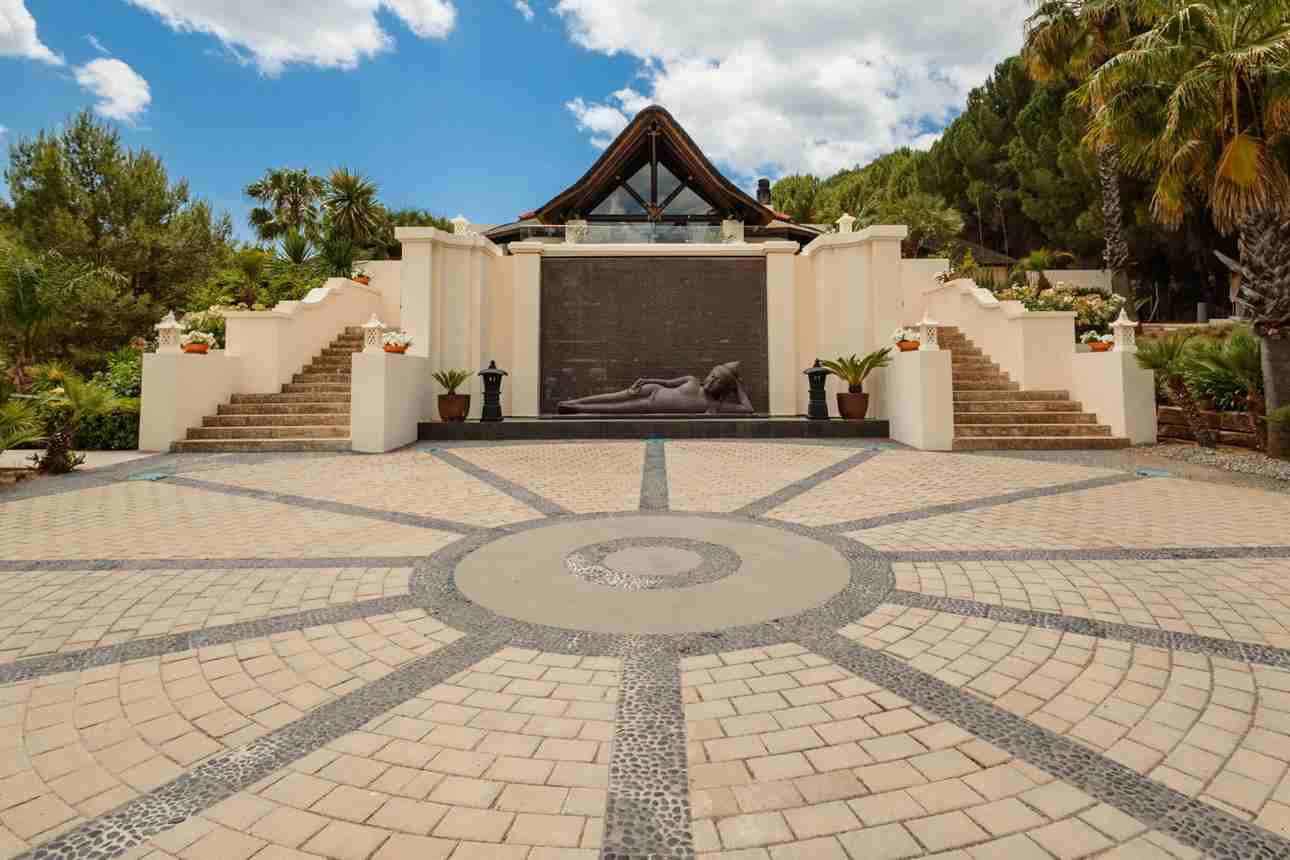
Image Credit: Shanti Som Wellness Retreat
With respect to the proposal for the launch of a 22-unit luxury wellness retreat in February 2027, Algarve, a major tourist destination in Portugal, has yet to develop a reputation as an all-year-round tourist destination which will help in ensuring the reasons for attracting visitors all year round except for its famous beaches during the summer season. Named Shanti-Som Algarve, the retreat located in a renovated 19th century farmhouse near Faro will offer six different wellness programs focusing on relaxation, fitness, yoga, Pilates, and personal well-being. This project has come at a time when Portugal is endeavoring to reduce its dependence on seasonal tourism. Based on the official statistics on tourism in Portugal, there were roughly 20.8 million overnight stays in Algarve in 2025. It helps us get an idea of the significance of this place in terms of tourism in Portugal. Demand for international tourism is limited only to the peak times.
Algarve’s 20.8 Million Overnight Stays Reveal a Tourism Economy Facing an Important Seasonal Test
Portugal’s Algarve remains one of Europe’s established international holiday destinations. Its beaches, coastal resorts, golf facilities and mild climate have helped create a large tourism economy supported by visitors from across Europe and beyond.
However, annual tourism totals do not tell the complete story.
The Algarve Sustainable Tourism Observatory recorded approximately 20.8 million overnight stays in 2025, including about 16 million associated with international visitors.
Domestic tourism followed a different seasonal pattern from international demand. International overnight stays reached their highest monthly level in July, at approximately 2.09 million, while domestic overnight stays peaked in August at 1.17 million.
January represented the weakest month for both segments.
This concentration creates challenges for hotels, tourism businesses and employment planning.
Accommodation providers must respond to strong summer demand while maintaining commercially viable operations during quieter periods.
The seasonality indicator nonetheless shows improvement, falling from 44% in 2022 to 40.8% in 2025.
That is an encouraging development, but it does not mean the underlying seasonal imbalance has disappeared.
A new generation of wellness retreats could complement existing tourism activity by offering experiences that are less dependent on beach weather.
Why a February 2027 Opening Could Matter More Than Another Summer Luxury Hotel
The opening date is one of the most revealing aspects of the Shanti-Som Algarve project.
The property is scheduled to begin welcoming guests from 1 February 2027, placing its debut outside the Algarve’s traditional summer peak.
According to the retreat’s official website, the property will offer 22 guest rooms within a renovated 19th-century farmhouse, situated inland from Olhão in the eastern Algarve.
Its main activities are designed around yoga, Pilates, fitness, relaxation and other structured wellness experiences.
Unlike conventional beach holidays, these activities can be offered in different seasons, although demand may still vary according to weather, school holidays, flight schedules and personal travel preferences.
This does not mean February will automatically become a successful trading period.
The property’s occupancy, advance reservations and expected room revenue have not been independently verified.
Nevertheless, the planned opening offers an example of the type of tourism product that could operate throughout the calendar year.
Portugal’s national Tourism Strategy 2027 explicitly identifies the reduction of seasonality as a priority, aiming for the lowest recorded seasonality index by 2027.
Shanti-Som is a private development rather than a stated government initiative, but its proposed operating model is consistent with that broader objective.
Portugal’s Government Has Already Identified Wellness as a Strategic Tourism Opportunity
The growth of specialist wellness accommodation is not occurring in isolation from Portugal’s tourism policy.
Turismo de Portugal formally identifies wellbeing as an emerging tourism asset in its national Tourism Strategy 2027.
The strategy groups healthy living, sporting activities, nature, mindfulness and specialised wellbeing services within this category.
It also identifies the development of tourism across different territories and seasons as important to the country’s long-term competitiveness.
This provides an official policy context for understanding why rural wellness developments may have economic relevance.
Portugal is seeking to build a visitor economy that captures value from a broader range of experiences.
That approach extends beyond increasing hotel capacity.
It involves using natural landscapes, cultural identity, health-related services, local gastronomy and destination infrastructure to develop more varied tourism products.
For the Algarve, specialist retreats may appeal to guests who have previously regarded the destination mainly as a summer beach holiday location.
A wellness stay in February, March or November can serve a different purpose from a traditional August family holiday.
The two products do not need to compete directly.
Instead, they may attract different travel occasions and contribute to broader destination demand.
The 22-Room Farmhouse Reflects a Shift Towards Smaller, Experience-Led Accommodation
Shanti-Som Algarve’s small accommodation capacity is central to its business model.
The property is being developed within a restored Portuguese farmhouse surrounded by rural scenery, with 22 rooms rather than the extensive capacity associated with larger coastal resorts.
The operator describes its accommodation as intimate and designed for rest, using natural textures and understated interiors.
Its heritage setting also differentiates it from purpose-built holiday complexes.
The significance lies in how the property combines accommodation with organised experiences.
Rather than depending exclusively on room bookings, the retreat’s commercial proposition incorporates programme-based stays, wellness facilities, meals and specialist activities.
This can create opportunities for visitors to spend on experiences within the property.
It can also offer a distinctive travel product to people seeking quieter surroundings.
However, the financial success of such a model depends on factors including operating costs, staffing, programme participation and occupancy.
A small number of rooms does not automatically guarantee stronger profitability.
The wider tourism implication is that accommodation diversity can help destinations address different visitor motivations.
Portugal’s Record €29.1 Billion Tourism Receipts Strengthen the Case for Higher-Value Experiences
Portugal’s national tourism figures illustrate why the economic value of visitors is becoming an important consideration.
According to the latest 2025 tourism report published by Turismo de Portugal in October 2026, the country recorded 82 million overnight stays and 32.5 million guests.
International tourism receipts reached €29.1 billion, an increase of 5% compared with 2024.
The same report identified growth of 6.9% in total accommodation revenue and 6.6% in room revenue.
These indicators demonstrate that Portugal’s tourism economy is expanding in financial terms as well as visitor activity.
The distinction is important for smaller hotels.
A specialist retreat may generate income through a combination of accommodation, food, treatments and structured services.
However, programme revenue should not be confused with national tourism receipts, which represent a much broader statistical measure.
The strongest policy argument is therefore not that a single small hotel will change Portugal’s tourism economy.
It is that a more varied accommodation sector could help generate revenue from a wider range of visitor needs.
For the Algarve, this may be especially relevant during months when traditional holiday demand is lower.
Six Wellness Programmes Introduce Another Reason to Visit the Algarve Outside Summer
Shanti-Som Algarve will provide six different programmes designed around individual wellbeing interests.
These include relaxation, yoga, Pilates, detox, strength and fitness, and burnout and nervous system recovery.
The strength and fitness option focuses on physical activity, resistance training and healthy ageing. Meanwhile, the burnout programme combines techniques such as meditation, breathing exercises and coaching.
The programme-based approach is relevant to the Algarve’s broader tourism ambitions because it creates reasons to travel that are not necessarily tied to coastal recreation.
Visitors may choose a retreat because of its specialist activities rather than the season in which they are travelling.
However, these are commercial wellness services, not verified medical treatments. The World Health Organization identifies burnout as an occupational phenomenon rather than a medical diagnosis.
Comparison: Algarve Wellness Retreat Programmes and Their Tourism Appeal
| Programme | Main experience | Potential travel segment | Seasonal relevance |
|---|---|---|---|
| Relaxation | Rest, massage and gentle activities | Short-break travellers | Year-round |
| Yoga | Guided practice and mindfulness | Yoga holiday visitors | Year-round |
| Pilates | Strength, movement and posture | Active wellness travellers | Year-round |
| Detox | Structured dietary programme and gentle exercise | Nutrition-focused wellness guests | Year-round |
| Strength & Fitness | Resistance training and guided fitness | Active ageing and fitness visitors | Year-round |
| Burnout Recovery | Meditation, coaching and stress-management activities | Travellers seeking rest from work pressures | Year-round |
Programmes are confirmed by the operator. Travel segments and year-round applicability are editorial assessments, not verified booking-demand forecasts.
The key advantage of this variety is flexibility.
A visitor travelling in February may seek a structured indoor fitness holiday, while someone travelling in October might prioritise yoga and the surrounding countryside.
This creates the possibility of attracting multiple visitor segments without changing the destination’s core geographical identity.
Faro Airport’s Record 10.4 Million Passengers Provide a Powerful Connectivity Foundation
Accessibility remains an essential consideration for international tourism.
Shanti-Som Algarve is located near Moncarapacho, approximately 25 minutes by road from Faro Airport, according to the operator’s detailed travel information.
This location gives the retreat proximity to one of Portugal’s important leisure aviation gateways.
Official data published by ANA Aeroportos de Portugal shows that Faro Airport handled more than 10.4 million passengers in 2025.
The figure represented a 5.8% increase compared with the previous year.
Commercial aircraft movements reached 67,510, an increase of 6.3%, while available seats rose by 7.7% to approximately 12.17 million.
These statistics demonstrate the airport’s established capacity to support large volumes of leisure travel.
For a small wellness retreat, international accessibility could improve its appeal to visitors planning short or medium-length stays.
A relatively brief airport transfer may also make the property convenient for guests who prefer not to hire a car.
However, airport passenger growth should not be interpreted as a prediction of demand for Shanti-Som.
The retreat’s future performance will depend on its own booking conversion, pricing and service delivery, as well as the availability of suitable flights throughout the year.
British and German Holidaymakers Could Be Important Audiences for Portugal’s New Wellness Offering
The Algarve’s established international tourism markets provide another important part of the story.
Official regional figures show that visitors from the United Kingdom generated approximately 5.7 million overnight stays in the Algarve during 2025.
Germany followed with about 1.9 million overnight stays.
Together, these two markets accounted for approximately 7.6 million overnight stays in the region.
This helps explain the potential audience for specialist tourism products in southern Portugal.
British and German visitors already know the Algarve as a holiday destination.
A countryside wellness retreat offers a different reason to consider returning, potentially during a different season.
The distinction is particularly relevant because encouraging repeat visitors to experience new aspects of a destination can complement efforts to attract entirely new markets.
Nationally, Portugal’s 2025 tourism report identified the United Kingdom, Germany, the United States, Spain and France as its five largest source markets for international overnight stays.
For hospitality operators, these existing travel markets could provide an established audience for new experiences.
However, there is no published evidence that Shanti-Som Algarve has secured a particular number of British or German bookings.
Their significance is based on established tourism patterns rather than confirmed demand for the new property.
Ria Formosa’s Protected Landscape Offers an Alternative to Conventional Algarve Beach Holidays
The geographical setting of Shanti-Som Algarve is another part of its tourism proposition.
The retreat is located in the eastern Algarve, within reach of the Ria Formosa coastal landscape.
According to Portugal’s official tourism website, Ria Formosa Natural Park extends for approximately 60 kilometres along the Algarve coast.
Its environment includes tidal channels, marshland, islands and sandy beaches.
The protected landscape supports numerous bird species and offers nature-focused visitor experiences, including designated walking routes and wildlife observation.
For wellness travellers, access to these surroundings can complement activities organised inside the retreat.
It also provides an alternative to the heavily resort-oriented image commonly associated with the Algarve.
Visitors interested in rural landscapes, coastal ecology and outdoor recreation may discover aspects of southern Portugal that differ considerably from its established beach destinations.
This geographical variety could be important when marketing the region for off-season holidays.
Yet increased activity around protected natural areas must also be managed responsibly.
Tourism development should support conservation objectives and avoid placing unnecessary pressure on environmentally sensitive locations.
Heritage Restoration Creates Opportunities, but Sustainability Claims Must Be Measured
Converting a historic farmhouse into hospitality accommodation introduces another important dimension: the relationship between tourism, heritage and environmental responsibility.
Shanti-Som Algarve’s renovation preserves the use of an existing rural property while adapting it for modern accommodation and wellness activities.
That provides a distinctive setting for visitors.
It may also create opportunities to maintain architectural features associated with the Algarve’s agricultural past.
However, the environmental benefits of adapting an existing building depend on how the project is designed and operated.
Portugal’s Tourism Strategy 2027 sets an objective for more than 90% of tourism businesses to adopt measures supporting efficient energy and water consumption, alongside improved waste management.
This ambition is particularly relevant when evaluating properties offering swimming pools, spa facilities, landscaping and other resource-intensive services.
The existence of a renovated farmhouse does not independently establish strong environmental performance.
Reliable assessments would require information about water consumption, energy sources, waste reduction, operational efficiency and procurement practices.
These figures have not been independently established for Shanti-Som Algarve.
For the wider industry, the lesson is clear: heritage tourism and environmental sustainability can complement one another, but environmental claims should be supported by measurable outcomes.
Tourism Analytics Show the Algarve Is Already Improving Its Seasonal Balance
One of the most important findings in the official Algarve tourism data is that the region’s seasonality index has already improved.
The index declined from 44% in 2022 to 40.8% in 2025.
At the same time, regional accommodation revenue performance strengthened.
According to the Algarve Sustainable Tourism Observatory, revenue per available room, known as RevPAR, increased from €64.10 in 2022 to €78.50 in 2025.
That represents growth of approximately 22.5%.
What the Data Means for Travellers and Tourism Businesses
| Verified indicator | Latest finding | Tourism significance |
|---|---|---|
| Algarve overnight stays | 20.8 million in 2025 | Established visitor market |
| International overnight stays | Approximately 16 million | High dependence on overseas travel |
| Seasonality index | 40.8% in 2025 | Seasonal concentration remains relevant |
| RevPAR | €78.50 in 2025 | Improved accommodation revenue performance |
| Faro Airport passengers | More than 10.4 million in 2025 | Strong international access |
| New retreat capacity | 22 rooms planned for 2027 | Specialist boutique accommodation |
Sources: Algarve Sustainable Tourism Observatory, ANA Aeroportos de Portugal and Shanti-Som’s official property information.
The next question is whether specialised tourism products can contribute to further improvement over several years.
Relevant performance indicators would include winter occupancy, length of stay, visitor spending, employment stability and the proportion of guests returning outside the summer season.
Without such measurements, claims that individual luxury retreats are transforming the regional economy would be premature.
What Travellers Should Consider Before Planning an Algarve Wellness Holiday in 2027
Shanti-Som Algarve is accepting bookings for arrivals from February 2027, according to its official website.
The retreat’s range of programmes allows travellers to select experiences based on their interests and available time.
However, choosing a wellness holiday requires more than comparing facilities.
Visitors should examine programme inclusions, minimum-stay requirements, cancellation policies and the cost of optional services.
The property’s official booking information indicates that programme prices are calculated per person, with specific requirements varying between retreats.
The strength and fitness programme, for example, advertises a minimum stay of five nights.
For travellers planning a short Algarve break, these conditions can materially affect the total holiday cost.
Travel timing also matters.
Those seeking coastal sightseeing alongside wellness activities should assess weather conditions and the seasonal availability of local services.
Visitors whose main priority is organised indoor and on-site activities may have greater flexibility.
The retreat’s location near Faro Airport provides convenient access, but travellers should verify transport availability and transfer arrangements before confirming their stay.
Editorial Analysis: The Algarve’s Next Tourism Opportunity Is About Value, Not Simply Visitor Numbers
The Shanti-Som Algarve development should not be interpreted as evidence of an immediate transformation in Portugal’s tourism economy.
With only 22 rooms, its direct influence on regional overnight-stay totals will inevitably be limited.
Its significance is instead structural.
The property reflects a model in which heritage accommodation, specialist services and countryside experiences are combined to attract visitors with different travel motivations.
Such models may help mature tourism destinations develop additional markets without relying exclusively on new large-scale accommodation.
Portugal’s official strategy supports this direction through its emphasis on reducing seasonality, developing wellbeing tourism and increasing tourism’s economic value.
The regional data also demonstrates why diversification remains relevant.
The Algarve continues to attract millions of visitors, but international demand remains concentrated in particular months.
Encouraging tourism throughout the year could support more consistent commercial activity, although success would depend on actual demand and the operating economics of individual businesses.
For hotel investors and destination managers, the relevant question is not whether wellness tourism will replace beach tourism.
It is whether the two can complement each other to create a more balanced visitor economy.
Conclusion: Portugal’s Algarve Has an Opportunity to Turn Seasonal Tourism Strength Into Year-Round Economic Value
Algarve region of Portugal plans to diversify its future opportunities, providing an alternative to the resort as the only one for the summer season with Shanti-Som. The facility that will be opened in February 2227, will be a mixture of Portuguese style and wellness services. Having 20.8 million stays forecasted in 2025, the flow of tourists in the region is satisfactory. Nevertheless, it is time to find out how the region could minimize the seasonality of the tourism flow. In terms of tourism, the small wellness retreats can attract more tourists, stay in the area longer and thus provide business opportunities for local residents. Although the economic efficiency of the project was not confirmed yet, it shows the importance of specialization nowadays. For the international tourists, Algarve offers much more than beach resorts and sun.
The post Portugal’s Algarve Boosts Year-Round Tourism with New Wellness Retreat in 2027 appeared first on Travel and Tour World














































































