
















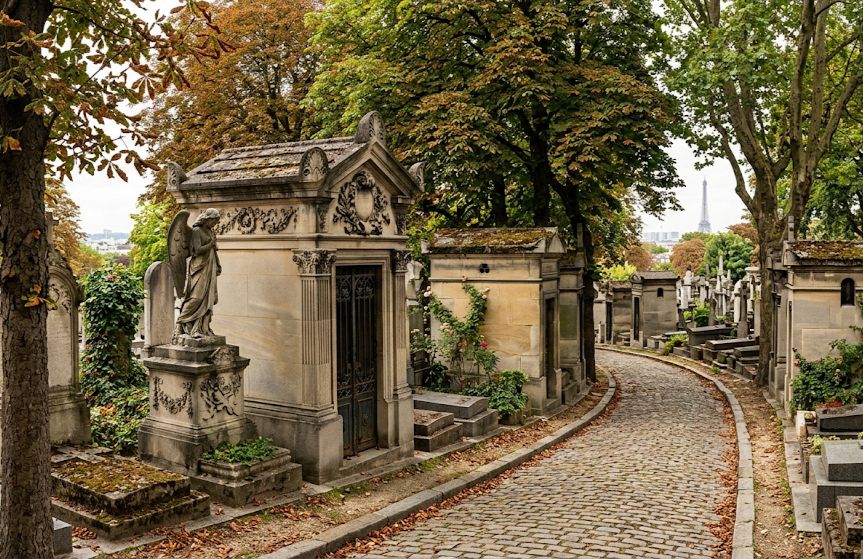
Père-Lachaise Follows Highgate and More as Europe’s Most Mysterious Cemeteries Beckon Global Travellers for an Unforgettable Halloween Escape
-
Travel, Food, Weather
-
-
11 mins
-
Travel and Tour World
-
Sarannya Acharya
-


Explore Europe’s most mysterious cemeteries, from Père-Lachaise to Highgate, for an unforgettable Halloween escape filled with history and intrigue.
Père-Lachaise follows Highgate and more as Europe’s most mysterious cemeteries beckon global travellers for an unforgettable Halloween escape. Across Europe, these historic cemeteries reveal fascinating stories, extraordinary monuments and remarkable cultural heritage. From Père-Lachaise in Paris to Highgate in London, each destination offers global travellers a different perspective on history, architecture and remembrance. Moreover, Halloween creates an appealing opportunity to explore these mysterious cemeteries through thoughtful cultural journeys. Travellers can discover famous graves, atmospheric pathways and hidden historical treasures. Travel And Tour World urges readers to explore the entire story and discover Europe’s most unforgettable Halloween escape destinations.
Graveyard Tourism in Europe: Visitor Statistics, Historic Cemeteries and a Detailed Halloween Travel Guide
Graveyard tourism is opening an unusual window into Europe’s history, architecture, literature and cultural traditions. From Paris’s celebrated Père-Lachaise Cemetery to Prague’s extensive Olšany burial complex, historic cemeteries offer travellers experiences beyond conventional museums and monuments. However, their popularity varies significantly, and visitor statistics are not published consistently across destinations.
The strongest measurable example is Père-Lachaise in Paris, which attracts approximately three million visitors annually. London’s Highgate Cemetery recorded 93,855 visitors in 2023, according to its charitable operator’s annual reporting. Prague’s Olšany Cemeteries, meanwhile, cover more than 50 hectares and contain an estimated two million burials since their establishment in 1680.
For travellers planning Halloween holidays, these destinations offer a combination of historic monuments, famous graves, landscaped grounds and local cultural experiences. The following guide examines their scale, available statistics, sightseeing opportunities, accommodation considerations, regional food and practical itineraries.
European Graveyard Tourism: Key Statistics and Comparisons
The available evidence shows that Europe’s historic cemeteries differ greatly in scale, visitor infrastructure and the quality of published tourism data. The following table separates documented figures from information that remains unavailable.
| Cemetery or destination | Established | Published size or scale | Visitor statistics |
|---|---|---|---|
| Père-Lachaise, Paris, France | 1804 | Approximately 43 hectares; about 70,000 burial concessions | Approximately 3 million visitors annually |
| Highgate Cemetery, London, UK | 1839 | Two historic sections, East and West | 93,855 visitors in 2023 |
| Olšany Cemeteries, Prague, Czechia | 1680 | More than 50 hectares; 12 individual cemeteries | No verified annual visitor series located |
| Vår Frelsers Gravlund, Oslo, Norway | 1808 | Historic urban cemetery | No verified annual visitor series located |
| Dean Cemetery, Edinburgh, Scotland | 1846 | Victorian monuments and historic burial sections | No verified annual visitor series located |
| Staglieno Monumental Cemetery, Genoa, Italy | 1851 | Extensive monumental cemetery and sculptural heritage | No verified annual visitor series located |
Sources: City of Paris, Prague City Tourism, the Friends of Highgate Cemetery Trust and the relevant municipal or heritage authorities. Figures refer to different types of measures and should not be interpreted as directly comparable rankings.
What the numbers reveal
Père-Lachaise is the clearest example of a cemetery functioning as a major visitor attraction while remaining an active burial ground. Paris’s municipal information reports approximately 10,000 funeral ceremonies annually across the cemetery and crematorium facilities. This demonstrates why visitor management and respectful conduct remain essential.
Highgate presents a different model. It is operated by a charitable trust, which funds conservation and visitor services through its activities and other income. Its annual report recorded 93,855 visitors in 2023, up from 83,574 in 2022. The increase was 12.3%, based on those published figures. Attendance nevertheless remained below the reported 2019 pre-pandemic figure of 103,290.
Olšany demonstrates the importance of distinguishing cemetery size from tourism demand. Its more than 50 hectares, approximately 25,000 tombs, nearly 200 chapel tombs, 65,000 graves and 20,000 urn graves describe its physical and memorial scale. They do not represent annual visitor totals.
Five-Year Visitor Statistics: What Can Be Verified?
Travellers and tourism researchers may want annual figures covering 2021–2025. However, the reviewed official material does not provide a complete, comparable five-year visitor series for these six cemeteries. Inventing missing totals would misrepresent the evidence.
Père-Lachaise Cemetery, Paris
| Year | Annual visitor figure | Evidence status |
|---|---|---|
| 2021 | Not verified | No annual total located in the reviewed municipal sources |
| 2022 | Not verified | No annual total located |
| 2023 | Approximately 3 million | Municipal sources provide an approximate annual attendance figure, not a year-specific count |
| 2024 | Not verified | No year-specific total located |
| 2025 | Approximately 3 million | Official municipal information continues to describe attendance at roughly this level |
The 2023 and 2025 entries should not be treated as audited annual counts. The municipal source describes typical annual attendance, so it cannot establish a precise year-on-year trend. Paris separately reported that more than 200,000 people visited its cemeteries around All Saints’ Day in 2025. That figure covers Parisian cemeteries collectively and cannot be attributed to Père-Lachaise alone.
Highgate Cemetery, London
| Year | Visitors | Change from previous year |
|---|---|---|
| 2021 | Not verified | Not calculable |
| 2022 | 83,574 | Not calculable from the verified series |
| 2023 | 93,855 | +12.3% |
| 2024 | Not verified in the reviewed source | Not calculable |
| 2025 | Not verified in the reviewed source | Not calculable |
Highgate’s 2023 attendance exceeded the 2022 total by 10,281 visits. The trust also recorded 17,653 guided-tour participants in 2023, compared with 7,278 in 2022. Guided-tour attendance therefore increased by approximately 142.6%. These are reported figures for two years, not evidence of a continuous annual trend.
Other European cemeteries
| Destination | 2021 | 2022 | 2023 | 2024 | 2025 |
|---|---|---|---|---|---|
| Olšany, Prague | Not verified | Not verified | Not verified | Not verified | Not verified |
| Vår Frelsers Gravlund, Oslo | Not verified | Not verified | Not verified | Not verified | Not verified |
| Dean Cemetery, Edinburgh | Not verified | Not verified | Not verified | Not verified | Not verified |
| Staglieno, Genoa | Not verified | Not verified | Not verified | Not verified | Not verified |
These entries mean that comparable annual totals were not found in the sources reviewed for this article. They do not mean that the cemeteries received no visitors. Researchers seeking a complete time series would need year-specific operational reports or formal data from the responsible authorities.
Six Graveyard Tourism Destinations in Europe: In-Depth Traveller Guide
1. Père-Lachaise Cemetery, Paris, France
Best for: Literature, music, sculpture and cultural history.
Established: 1804.
Area: Approximately 43 hectares.
Annual visitors: Approximately three million.
Entry: Free.
Recommended time: Two to three hours.
Père-Lachaise is one of Europe’s most prominent cemetery attractions, combining thousands of memorials with landscaped avenues and remarkable funerary sculptures. Visitors can explore the graves of Jim Morrison, Oscar Wilde, Édith Piaf and Frédéric Chopin. Paris authorities also provide downloadable maps to help locate important monuments. The cemetery remains active, hosting approximately 10,000 funeral ceremonies annually across the cemetery and crematorium facilities. Travellers should avoid ceremonies, respect mourners and check the latest access information before arrival. The tomb of Héloïse and Abélard is undergoing restoration and is expected to remain unavailable until August 2027.
What to do: Follow a self-guided route, study sculptural details and explore the cemetery’s historical sections. Afterwards, discover the surrounding neighbourhood’s cafés and bakeries.
Where to eat: Explore neighbourhood brasseries around Boulevard de Ménilmontant and Avenue du Père-Lachaise. Regional dishes, pastries and café breakfasts suit a relaxed sightseeing day.
Where to stay: Look around the Gambetta, Père-Lachaise and eastern 11th arrondissement areas for metro access and neighbourhood restaurants.
2. Highgate Cemetery, London, United Kingdom
Best for: Gothic architecture and literary history.
Established: 1839.
Reported visitors: 93,855 in 2023.
Guided-tour participants: 17,653 in 2023.
Entry: Paid; check current prices.
Recommended time: Two to three hours.
Highgate offers one of London’s most atmospheric historic landscapes. Its Egyptian Avenue, Terrace Catacombs and Victorian memorials are major attractions for visitors interested in funerary architecture. Karl Marx, George Eliot, Christina Rossetti and Michael Faraday are among its notable residents. The cemetery’s charitable operator recorded 93,855 visitors in 2023, a 12.3% increase from 2022. Its West Cemetery is accessible through guided tours, while access arrangements differ between the two sections. Confirm ticket availability and current seasonal opening times before visiting.
What to do: Book a guided tour, explore Victorian memorial design and combine the visit with Highgate Village.
Where to eat: Try a traditional British pub meal, a bakery lunch or a café in Highgate Village.
Where to stay: Consider accommodation around Archway, Highgate or central London with convenient Underground connections.
3. Olšany Cemeteries, Prague, Czechia
Best for: Central European history and funerary art.
Established: 1680.
Area: More than 50 hectares.
Complex: 12 individual cemeteries.
Estimated burials: Approximately two million since establishment.
Entry: Check local access arrangements.
Olšany is Prague’s largest burial complex and one of the most extensive cemetery landscapes in Czechia. Prague City Tourism documents approximately 25,000 tombs, nearly 200 chapel tombs, 65,000 graves and 20,000 urn graves. Its monuments range from Baroque designs to Art Nouveau memorials. The grounds also include military burial areas and memorials associated with prominent Czech figures. The nearby New Jewish Cemetery contains Franz Kafka’s grave, while Vyšehrad Cemetery offers another important collection of Czech cultural memorials. Published physical statistics should not be confused with annual visitor counts, which were not verified.
What to do: Explore its historic sections, examine architectural styles and visit the nearby New Jewish Cemetery where appropriate.
Where to eat: Prague offers traditional Czech meals, including goulash and local pastries, alongside international cuisine.
Where to stay: The Žižkov and Vinohrady districts provide useful bases for exploring the eastern side of central Prague.
4. Vår Frelsers Gravlund, Oslo, Norway
Best for: Norwegian literature, art and national history.
Established: 1807; opened for use in 1808.
Location: Central Oslo.
Entry: Confirm current municipal guidance.
Recommended time: Around one hour.
This historic cemetery is particularly rewarding for travellers who want to explore Norway’s cultural heritage. Henrik Ibsen, Bjørnstjerne Bjørnson and Edvard Munch are buried there, allowing visitors to connect literature, painting and national history in one location. Oslo Municipality describes the cemetery as an important cultural-historical monument. Its landscape and memorials also reveal how public figures and wealthy families expressed status through funerary architecture. Annual visitor totals were not verified, so the site’s significance is better measured through its documented heritage than unsupported tourism estimates.
What to do: Follow a respectful walking route, locate significant graves and combine the visit with Oslo’s museums and city-centre attractions.
Where to eat: Sample Norwegian open sandwiches, seafood or traditional baked goods in central Oslo.
Where to stay: Central Oslo offers convenient transport connections, especially for travellers planning a short cultural break.
5. Dean Cemetery, Edinburgh, Scotland
Best for: Victorian architecture and Scottish intellectual history.
Established: 1846.
Location: Near Edinburgh’s historic New Town.
Opening: October to March, 9am until dusk, according to the cemetery’s official website.
Entry: Confirm arrangements before arrival.
Dean Cemetery offers an alternative to Edinburgh’s busiest attractions. Its memorials commemorate architects, philosophers, artists and academics associated with the city’s development. Notable residents include architect William Playfair, philosopher Dugald Stewart, portrait painter Henry Raeburn and early photographer David Octavius Hill. The cemetery’s landscape makes it suitable for visitors interested in historical sculpture and the evolution of Victorian memorial design. The operator publishes seasonal opening guidance, but a verified five-year visitor series was not located.
What to do: Examine the monuments, learn about the cemetery’s residents and walk towards nearby heritage areas along the Water of Leith.
Where to eat: Edinburgh’s cafés and restaurants offer Scottish soups, baked goods, oatcakes and contemporary local dishes.
Where to stay: The West End and New Town offer convenient access to Dean Cemetery and other central attractions.
6. Staglieno Monumental Cemetery, Genoa, Italy
Best for: Monumental sculpture and Italian artistic heritage.
Designed: From 1835.
Location: Genoa, Liguria.
Entry: Free.
Published annual visitor total: Not verified.
Recommended time: Two to three hours.
Staglieno is an important destination for travellers interested in monumental sculpture and nineteenth-century Italian history. Designed initially by architect Carlo Barabino and subsequently developed by Giovanni Battista Resasco, it contains memorials reflecting Neoclassical, Realist, Symbolist and Art Nouveau influences. The Municipality of Genoa provides visitor information, thematic routes and guided-tour options. Independent exploration is also possible, and an information point offers maps and assistance during published operating hours. Visitors should check for weather-related closures because safety alerts can suspend visits or cultural activities.
What to do: Follow an official thematic route, appreciate the sculpture and learn about Genoa’s maritime and commercial history.
Where to eat: Explore Genoese focaccia, pesto dishes and seafood in the city’s neighbourhood restaurants.
Where to stay: Central Genoa or areas near Brignole railway station can provide practical transport connections.
Practical Travel Planning: Food, Accommodation and a Five-Day Route
| Day | Destination | Suggested itinerary | Suggested overnight base |
|---|---|---|---|
| 1 | Paris | Visit Père-Lachaise, then explore eastern Paris and local cafés | Paris |
| 2 | London | Travel to London; visit Highgate if arrival time permits | London |
| 3 | London | Guided cemetery tour and neighbourhood sightseeing | London |
| 4 | Prague | Travel to Prague and explore the historic centre | Prague |
| 5 | Prague | Visit Olšany and, if time allows, the New Jewish Cemetery | Prague |
This itinerary covers three countries, but it involves intercity travel and is best suited to travellers with flexible schedules. Paris–London rail journeys and onward travel to Prague should be booked separately. Travellers wanting to visit all six cemeteries should plan a longer trip, adding Oslo, Edinburgh and Genoa rather than rushing between cities.
Food and accommodation budget guide
The following amounts are planning estimates, not verified current prices. Actual costs vary by season, booking date and travel style.
| Expense | Indicative daily budget per person |
|---|---|
| Budget accommodation | €50–€100 |
| Mid-range accommodation | €100–€220 |
| Meals and drinks | €25–€65 |
| Local public transport | €5–€15 |
| Paid cemetery tours | Allow an additional amount depending on the site |
| Intercity transport | Varies substantially by route and booking date |
Accommodation figures are per person for budgeting purposes and may assume shared rooms. Paris and London can cost considerably more during busy periods. Confirm prices directly before booking.
Essential Advice for Halloween Cemetery Visits
- Check official opening hours and seasonal closures before travelling.
- Book guided tours where required, especially at Highgate.
- Carry a map and allow enough time for large sites.
- Wear sturdy shoes and prepare for rain or uneven paths.
- Avoid disturbing funeral ceremonies, mourners or active burial work.
- Follow photography restrictions and never climb on monuments.
- Check transport connections before visiting cemeteries outside city centres.
Conclusion
Père-Lachaise follows Highgate and more as Europe’s most mysterious cemeteries beckon global travellers for an unforgettable Halloween escape filled with history, architecture and cultural discovery. From Paris and London to Prague, Oslo, Edinburgh and Genoa, these remarkable destinations invite visitors to explore famous graves, artistic monuments and fascinating stories from the past. Moreover, Halloween offers an exciting opportunity to experience Europe beyond its traditional tourist attractions. Travellers should plan their visits carefully, check official opening hours and respect these sacred places. Travel And Tour World encourages global travellers to discover these extraordinary European cemeteries and create meaningful memories this Halloween.
The post Père-Lachaise Follows Highgate and More as Europe’s Most Mysterious Cemeteries Beckon Global Travellers for an Unforgettable Halloween Escape appeared first on Travel and Tour World




































































