










Queensland EV Charging Gaps Are at the Heart of the Need to Unlock Better Road Trips and New Tourism Growth
-
Travel, Food
-
-
7 mins
-
Travel and Tour World
-
Baydahi Roy
-

Queensland EV charging gaps may deter inland tourists, reduce access and weaken local spending.
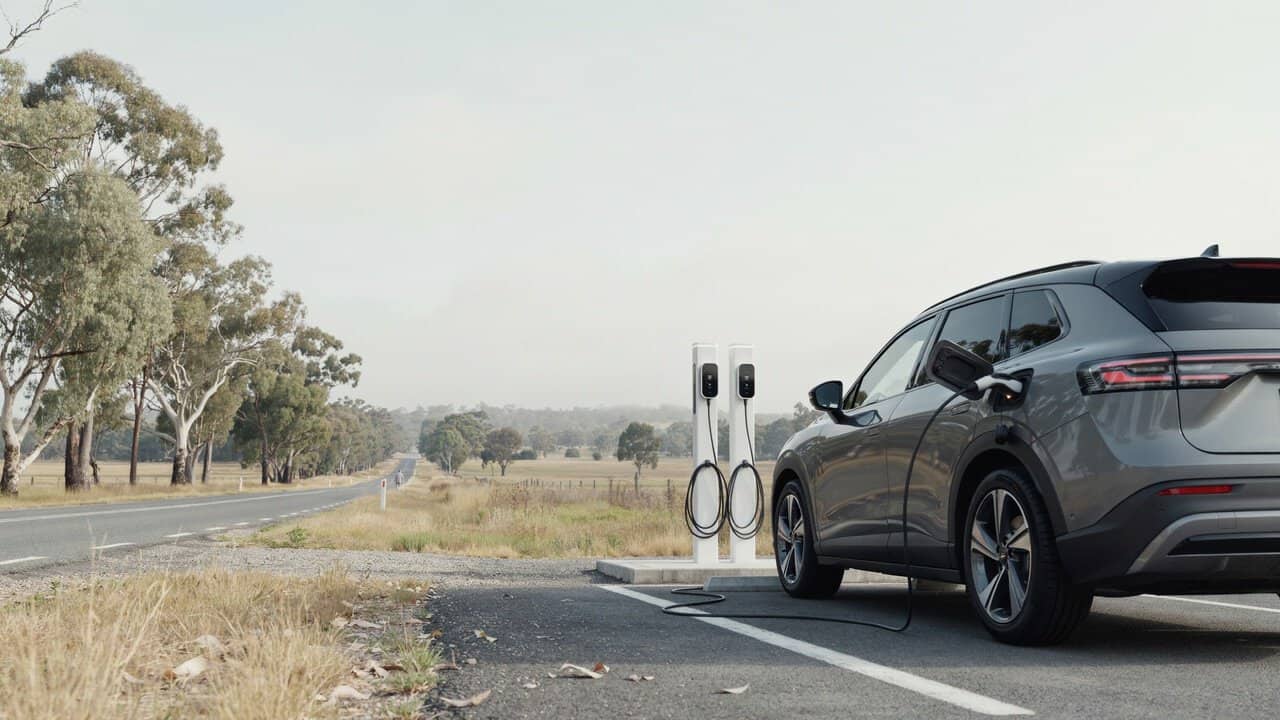
Reliable charging stations are essential for electric vehicle travel. Not surprisingly, the absence of fast charging stations along some routes in Queensland creates charging gaps. As of July 2026, the final phase of the Electric Super Highway was completed. Fast charging locations along this highway and other routes in the state are helpfully located to provide charging for local residents and visitors. While the network has continued to improve, there are reports of charging stations that are unreliable and have been unaddressed for an extended period. Because the network is large and growing, travelers should be aware of reliability issues of individual charging stations.
What official evidence says about Queensland EV Charging Gaps
The central development concerns the difference between statewide infrastructure coverage and dependable regional access. Queensland has completed a substantial public charging network, but the official information reviewed does not provide comprehensive performance figures for every site. The following percentages represent an editorial assessment of the story’s verified focus. They are not government statistics or measures of economic impact.
| News component | Share of story | Officially verified finding | Relevance to travellers | Official source |
|---|---|---|---|---|
| Charging infrastructure | 40% | Three phases have created 54 fast-charging locations | Supports longer electric journeys across Queensland | Queensland transport authority |
| Regional tourism access | 25% | The network is promoted for use by residents and tourists | Links charging with road trips and destination access | Queensland tourism authority |
| Zero-emission transport policy | 20% | Targets include 50% of new passenger sales by 2030 and 100% by 2036 | Indicates growing future demand for public chargers | Queensland Government strategy |
| Charger reliability | 10% | No official statewide uptime or repair-time ratio was found | Travellers must confirm station availability independently | Official transport information review |
| Visas and passports | 5% | No entry rule or travel-document change is connected with the issue | International visitors face no new border requirement | Australian immigration framework |
| Total | 100% |
The evidence confirms the scale and tourism purpose of the network. It does not establish that every charger operates continuously. It also does not verify the claimed length of the reported Kingaroy outage. The actual story therefore concerns regional travel confidence within a completed network, rather than a newly announced government charging programme.
The current position of Queensland EV Charging Gaps
The Electric Super Highway is complete rather than delayed or awaiting construction. Official information updated on 24 July 2026 states that the network provides 54 fast-charging locations across Queensland. It reaches from Coolangatta to Port Douglas and connects Brisbane with Toowoomba. Its regional reach extends much farther through additional inland locations. Travellers can use the network when planning electric journeys, but they should still check current station information before leaving.
Kingaroy forms part of the completed regional network. The town sits around 218 kilometres north-west of Brisbane and connects with the D’Aguilar and Bunya highways. These roads provide access to South Burnett communities, rural attractions and nature-based destinations. However, no official notice located during this research confirms that its charger remained broken for several months. No official record also confirms that repairs occurred before an event involving more than 20 vehicles or an electric car towing a caravan.
How Queensland’s electric highway developed over time
Queensland established the Electric Super Highway to support longer journeys in low-emission and zero-emission vehicles. The early network concentrated on major coastal corridors, where population centres and visitor destinations create consistent transport demand. Its reach between Coolangatta and Port Douglas connected southern Queensland with tourism centres farther north. The Brisbane-to-Toowoomba connection also extended the system westwards from the capital.
The later expansion targeted more rural and remote communities. Its official location list includes Kingaroy, Esk, Stanthorpe, Goondiwindi, Miles, Roma, St George, Cunnamulla and Charleville. It also includes Longreach, Barcaldine, Blackall, Winton, Hughenden, Richmond, Julia Creek, Cloncurry and Mount Isa. Completion of this phase brought the state-supported network to 54 locations and expanded its role beyond established coastal routes.
Queensland released its Zero Emission Vehicle Strategy for the 2022–2032 period. The strategy set an ambition for zero-emission vehicles to represent 50% of new passenger-vehicle sales by 2030. It raised that goal to 100% by 2036. It also included an interim ambition of 200,000 light zero-emission vehicles by 2027. These targets provide important context for the charging network because increased vehicle numbers will raise demand for regional facilities.
The original supporting material also contained regional EV growth percentages. It claimed increases of 97.8% in Western Downs, 95.6% in Gladstone and 87.2% in Somerset. Further figures included 60.3% for the Sunshine Coast, 47.1% for the Gold Coast and 43.4% for Brisbane. No corresponding official statistical publication was found during this review. Those ratios cannot be presented as verified data and have therefore been excluded from the factual findings.
Why Queensland EV Charging Gaps matter to tourism
Electric-vehicle motorists plan journeys differently from petrol or diesel drivers. They must consider battery range, charging speed, connector type and the distance to another station. Those factors become more important in inland Queensland, where towns and essential services can be widely separated. A charger on a route map may provide confidence during planning. However, travellers need accurate operational information before depending on one regional site.
A functioning charger can also support local tourism activity. Motorists may use charging time to visit cafés, shops, museums or visitor attractions. Some may stay overnight when dividing a longer journey into shorter sections. Accommodation providers may benefit when they offer dependable charging or accurate information about nearby facilities. Nevertheless, no official assessment reviewed for this article measures the visitor spending generated by the Kingaroy charger or any revenue lost during an alleged outage.
The wider importance extends beyond South Burnett. Official tourism information promotes Queensland Country, Outback Queensland and numerous drive holidays. These experiences depend heavily on road transport because many attractions sit outside metropolitan areas. National parks, wineries, rural communities and scenic routes become more accessible when motorists can confidently recharge. Reliable infrastructure can therefore influence whether electric travellers include regional destinations in their itineraries.
This does not make every equipment fault a statewide tourism crisis. One unverified incident cannot establish the performance of all 54 locations. However, Charging Gaps become significant where travellers have few practical alternatives. The issue is therefore local in its immediate effect but statewide in its planning relevance. It concerns transport infrastructure, sustainable tourism, regional development and visitor confidence rather than aviation, border policy or immigration.
How the regional charging situation came together
Network coverage expanded beyond the major cities
The immediate verified development is the completion of the three-phase state network. Its expansion reflects an official effort to make longer electric journeys possible across a geographically large state. Coastal corridors received earlier coverage because they connect the largest population centres and heavily visited destinations. Later locations extended that access towards rural and remote communities. This rollout created the physical foundation for electric touring but did not itself prove continuous station availability.
The positioning of chargers near established highways also connects transport planning with visitor services. Motorists who stop to recharge may have access to food, shops and local facilities. This can turn charging time into a visitor stop. However, that economic relationship remains contextual unless official spending data measures the result. Infrastructure can create an opportunity for regional businesses without guaranteeing additional income.
Policy targets are increasing the importance of reliability
Queensland’s zero-emission vehicle targets provide the strongest policy background. Reaching 50% of new passenger sales by 2030 would significantly increase the number of vehicles requiring public or private charging. The longer-term goal of 100% by 2036 would deepen that demand. Regional stations will become more important if vehicle growth extends beyond metropolitan centres and popular coastal routes.
The federal transport direction provides additional background. Australia’s national electric-vehicle policy supports wider charging access, improved vehicle choice and lower transport emissions. This national direction does not directly confirm the Kingaroy claims. It instead shows that regional charging sits within a broader transition in road transport. Queensland’s completed network forms one part of that national shift.
Reliability data remains the main evidence limitation
Official public information clearly describes the network’s size, reach and policy purpose. It provides less detail about individual station uptime, fault frequency or average repair periods. No network-wide official ratio for these performance measures was located during this research. That limitation prevents firm comparisons between coastal and inland reliability.
Motorists should not assume that an installed station is automatically available. They should check the listed operator’s current information and identify another charging location before undertaking a remote journey. This practical approach recognises the difference between infrastructure coverage and operating certainty without making unsupported claims about the overall network.
Important travel checks include:
- Confirm the planned charger’s status before leaving.
- Identify at least one alternative station on the route.
- Check charger and vehicle connector compatibility.
- Review current access hours, fees and payment methods.
- Maintain enough battery capacity for an unexpected diversion.
- Allow additional energy for hills, heat and air-conditioning.
- Consider the extra consumption created by towing.
- Review official road conditions and national park alerts.
- Confirm overnight charging directly with accommodation providers.
- Carry any cable required by the vehicle or charging station.
International visitors should also review the electric rental vehicle before departure. Queensland’s regional distances may be greater than expected, particularly on inland routes. Travellers should understand the vehicle’s realistic range and charging requirements. The infrastructure issue does not alter Australian visas, passports, entry procedures or border checks.
What happens next for Queensland EV Charging Gaps
The final phase of the construction program has been completed. At the time of writing, no new government initiatives had been announced to address the Kingaroy report. The relevant authorities have not released the duration of the outage, if there will be an upgrade of the Kingaroy facilities, or when a review of the distribution system will be undertaken. The last announced status was that there are 54 locations on the system. The authorities have not released performance data for the individual locations. It is reasonable to assume that the system will remain as announced.
Interest will increasingly be on the quality of the system rather than the quantity. Users of the system will be disappointed if there is inadequate information on the operation of the system and inadequate alternative systems to use. The system could rapidly reach its capacity, especially if further increases in the use of electric vehicles occurs. The Queensland Government has initiated a number of key projects to facilitate the use of low emission vehicles. The next step will be to determine if the continued confidence of users of transport and energy systems will be maintained..
The post Queensland EV Charging Gaps Are at the Heart of the Need to Unlock Better Road Trips and New Tourism Growth appeared first on Travel and Tour World