
















North Dakota Tourism GDP Expansion Outpaces Global Markets As International Travelers Discover The Spellbinding Magic Of Pure Prairie Escapes
-
Travel, Food, Entertainment, Currency
-
-
10 mins
-
Travel and Tour World
-
Upasana Chatterjee
-


Discover how North Dakota outpaced global tourism GDP in 2026 with $3.4B in visitor spending, record airport boardings, and major destination launches.
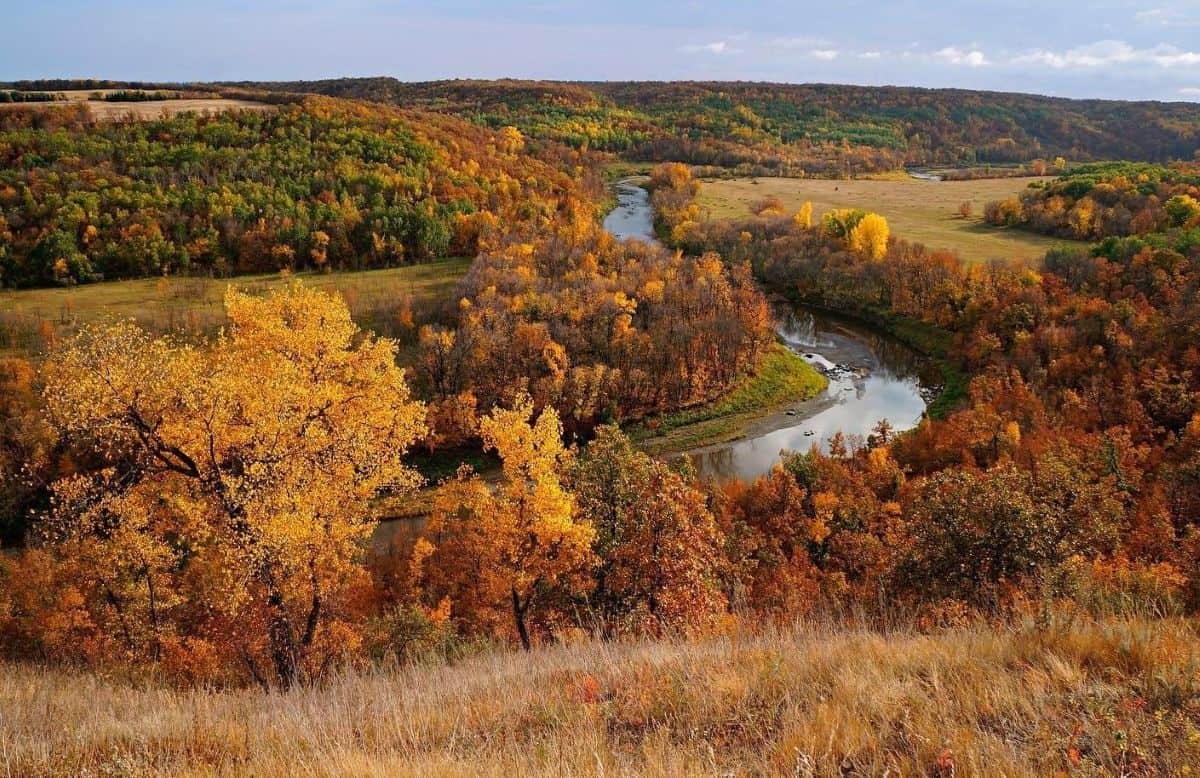
There is a magic blowing across the North Dakota prairies this year that no economic model could have predicted. Once written off by road‑trippers as endless open sky the Peace Garden State has suddenly stolen the global spotlight. It has completely shattered tourism benchmarks. From the wild sun‑drenched badlands of Medora to bustling main streets a powerful wave of travel energy flows. Over $3.4 billion, in visitor spending is bringing communities to life. North Dakota is not just bouncing back. North Dakota is rewriting what rural travel looks like. North Dakota invites the world to slow down and rediscover something authentic.
Why Is North Dakota Suddenly Skyrocketing Past Global Tourism Trends in 2026?
Why is North Dakota suddenly skyrocketing past global tourism trends in 2026? In an extraordinary economic plot twist, the rugged Peace Garden State has officially outpaced worldwide leisure market benchmarks. Driven by state-funded infrastructure investments, international border stabilization, and signature destination launches, North Dakota’s tourism sector expanded rapidly.
Following market adjustments in 2025, when a dip in cross-border traffic reduced spending by $57 million, official economic impact assessments from the North Dakota Department of Commerce highlight a swift, lucrative rebound. This astonishing financial recovery has been firmly anchored by record annual visitation, targeted capital deployment, and major patriotic events celebrating America’s Semiquincentennial. Travelers are pouring across state lines and northern borders to witness history unfolding firsthand in the heartland.
How Did North Dakota Outpace Global Tourism GDP and International Visitor Spending Growth in 2026?
North Dakota achieved this landmark economic feat through targeted capital injections, strategic marketing alignment, and high-impact regional developments that maximized traveler retention. The North Dakota Department of Commerce implemented precise economic strategies designed to shift visitor behavior from brief transit stays to multi-day immersive vacations. By aligning major opening dates with national anniversary celebrations, the state captured immense media visibility and high-spending demographic segments.
State officials prioritized infrastructure grants that modernized lodging, expanded outdoor trail systems, and enhanced cultural preservation centers across several counties. The resulting uptick in average daily spending per traveler generated over $3.4 billion in annual visitor expenditures, supporting more than 45,000 jobs statewide.
What Landmark Infrastructure and Anchor Destinations Fueled North Dakota’s Explosive Growth in 2026?
The cornerstone of this unprecedented boom was the long-awaited opening of The Theodore Roosevelt Presidential Library in Medora on July 4, 2026. Built to ultra-rigorous international environmental standards under the Living Building Challenge, the facility stands as the nation’s only presidential library situated directly within the wild natural landscape that shaped its commander-in-chief. This landmark opening sparked an unprecedented wave of heritage tourism across the region, while the adjoining Theodore Roosevelt National Park earned global distinction as one of Lonely Planet’s Top 25 World Destinations.
Complementing this anchor institution, the state awarded $4 million in capital grants across seven major regional developments to expand overnight lodging capacity and agritourism hubs. By diversifying regional attractions beyond seasonal sight-seeing, the state successfully elevated average visitor dwell times, ensuring that dollars spent remained in local rural economies.
How Did Canadian Cross-Border Recovery and Targeted Marketing Drive Spending Back Over $3.4 Billion?
Canadian travelers have historically represented the primary baseline for North Dakota’s international visitor economy and retail commerce. After border volatility and currency fluctuations caused a $57 million decline in Canadian tourist spending during 2025, stabilized cross-border policy and targeted trade incentives triggered a sharp spending surge throughout 2026. Northern border crossing stations reported consistent double-digit percentage gains in vehicular crossings, returning key retail centers to peak operational capacity.
In parallel, the North Dakota Division of Tourism executed a high-impact multi-channel marketing campaign focused on high-intent non-resident drive markets and international transit gateways. By synchronizing state promotions with National Travel and Tourism Week and local business incentives, regional hospitality providers experienced record occupancy levels. This synchronized strategy expanded the state’s total annual travel economy to over $3.4 billion, supporting more than 3,000 distinct local businesses.
Which Specific Rural Community Projects Earned Strategic State Grant Funding in 2026?
In Sterling, the Black Leg Market & Eatery secured a massive $1.5 million grant to construct extensive UTV trail networks, full-service RV facilities, and luxury guest cabins. This project blended working-ranch agritourism with outdoor recreation, capturing high-spending travelers exploring central prairie routes. Meanwhile, in Mountain, a $300,000 cultural investment funded the construction of the Icelandic Rootshús, a dedicated genealogy, library, and heritage center honoring the region’s rich Scandinavian-Icelandic lineage.
Further east in Casselton, Johnny’s Landing received $870,000 to execute an innovative adaptive-reuse project, converting historic agricultural granaries and grain bins into eco-friendly wellness cabins equipped with a historic water tower sauna. Down in the southwestern badlands of Bowman, Pioneer Trails Adventures utilized $82,500 to expand its archaeology tour fleets and public access trails across the world-famous Hell Creek prehistoric fossil formations. Together, these niche projects expanded the state’s travel portfolio, providing travelers with authentic, unforgettable experiences across every corner of the state.
How Gateway Airports in Fargo, Bismarck, and Devils Lake Are Handling Record Boardings and Load Factors
North Dakota’s commercial air transport infrastructure has seamlessly absorbed a remarkable surge in domestic and international arrivals throughout 2026. Across the state’s eight commercial service airports, total passenger boardings reached 868,664 during the first eight months of the year, reflecting sustained multi-regional demand. A stand-out milestone occurred in May 2026, when airports recorded 104,951 passenger enplanements, marking the second-highest May volume in state aviation history. This upward trajectory was led by Hector International Airport in Fargo, which achieved an all-time monthly record of 53,392 passenger boardings. Meanwhile, regional facilities such as Devils Lake Regional Airport simultaneously recorded monthly passenger milestones, proving that air travel gains extend far beyond primary metropolitan corridors into rural destinations.
Airlines serving North Dakota have systematically optimized fleet capacity to match this heightened passenger interest. Despite occasional schedule adjustments and regional runway maintenance projects, overall capacity reached 129,976 total available departure seats during peak operational months. This tight alignment between supply and travel demand pushed the average aircraft load factor up to 84 percent across regional flights, rising from 82 percent in previous baseline cycles. The high seat utilization rate demonstrates that carriers are filling aircraft more efficiently while delivering reliable transit access for vacationers, business travelers, and international transit visitors navigating the upper Midwest.
What Role Outdoor Recreation Plays in Driving North Dakota’s 4.3% Employment Growth and State Park Expansion
The natural environment remains a foundational economic pillar for North Dakota, directly fueling workforce development and state park infrastructure investments. Data from the Bureau of Economic Analysis reveals a 4.3 percent year-over-year expansion in state outdoor recreation employment, representing the highest growth rate recorded among all fifty U.S. states. This labor market surge spans outdoor gear outfitting, eco-lodging management, wildlife conservation, and regional park operations. The expansion highlights how natural resource management, big-game hunting, freshwater fishing, and scenic trail maintenance create stable, high-yield job opportunities for rural residents across every quadrant of the state.
Public park networks are rapidly expanding to accommodate increased foot traffic and long-term camping demand. A primary milestone in 2026 was the addition of North Dakota’s 14th State Park Campground, located within the scenic Pembina Gorge State Recreation Area near Walhalla, ND. This infrastructure expansion complements the state’s five National Park Service units, which generate continuous seasonal visitation across historic locations such as the Fort Union Trading Post National Historic Site and the Knife River Indian Villages National Historic Site. Together, these protected state and federal lands offer world-class outdoor recreation while anchoring the state’s broader tourism revenue stream.
How Direct Visitor Tax Revenue Alleviates Local Resident Tax Burdens Across Municipalities
Non-resident visitor spending provides critical financial support to state and municipal treasuries throughout North Dakota. Direct traveler expenditures generated $304.4 million in total state and local tax revenues, strengthening public safety funds, infrastructure maintenance budgets, and municipal services without increasing local rates. When accounting for direct, indirect, and induced economic multipliers, total annual visitor-related economic output climbed past $5.6 billion. This substantial output illustrates how travel activity ripples through local supply chains, building material suppliers, agricultural producers, and commercial service providers statewide.
The direct fiscal tax contribution from out-of-state travelers directly offsets tax obligations for local property owners and families. On average, sales tax receipts from non-resident lodging, dining, entertainment, and retail purchases generate a tax relief offset exceeding $700 per North Dakota household annually. This tax offset allows municipal governments in cities such as Bismarck, Fargo, and Grand Forks to fund public school systems, road rehabilitation projects, and emergency services. Consequently, the tourism sector functions not only as an economic growth engine, but also as a direct safeguard for resident financial stability.
How Hotel RevPAR and Occupancy Rates Are Performing Across Grand Forks, Bismarck, and Minot
North Dakota’s commercial lodging industry experienced exceptional revenue growth in 2026, driven by elevated overnight visitor stays. Statewide, the broader hospitality, food service, and retail sectors support more than 3,000 distinct tourism-related businesses. During peak summer execution windows from June through August 2026, commercial hotel occupancy consistently exceeded 78 percent across primary urban markets. This elevated demand enabled hoteliers to optimize room inventory while maintaining stable pricing structures during high-volume travel periods.
Urban business corridors achieved double-digit year-over-year gains in Revenue Per Available Room (RevPAR), the core financial benchmark for lodging performance. Leading hospitality hubs including Grand Forks, Bismarck, and Minot reported sustained surges in RevPAR during major travel quarters. This revenue growth was powered by a balance of corporate travel, regional sports tournaments, cross-border leisure trips, and heritage road-trippers. Increased lodging tax collections have provided municipal tourism boards with additional resources to market local cultural events and attract future convention business.
Why Experiential Rural Ventures Are Transforming Working Ranches into Multi-Million Dollar Assets
Agricultural properties across rural North Dakota are successfully diversifying their financial models by pairing traditional farming operations with luxury experiential travel. Nationally, agri-tourism and outdoor recreation trips generate over $2.37 billion in consumer spending, with North Dakota farm and ranch tours reporting an 18 percent surge in group bookings. Family-owned agricultural operations are capitalizing on this demand by converting unused land, historic structures, and scenic acreage into high-yield hospitality ventures that attract non-resident travelers seeking authentic prairie experiences.
State funding programs have accelerated these private capital transformations across rural counties. A prominent example is the $1.5 million state capital grant awarded to Black Leg Market & Eatery in Sterling, ND, which funded the installation of extensive UTV trail systems, full-service RV facilities, and luxury guest cabins on a working cattle ranch. Across the state, the addition of upscale eco-cabins and modern RV hookups has successfully extended average visitor stay durations by 1.8 days. By offering farm-to-table dining, guided trail rides, and hands-on agricultural activities, rural landowners are creating resilient, multi-million dollar capital assets that preserve family heritage.
How Heritage Tourism in Mountain and Dickinson Is Revitalising Ancestral Journeys
Cultural, ancestral, and genealogical travel has emerged as a high-value niche segment within North Dakota’s tourism ecosystem. Regional cultural centers and historic preservation sites experienced a 15 percent increase in international researchers seeking to trace family lineages and explore upper Midwest settlement history. Travel itineraries increasingly link Scandinavian cultural sites in northeastern North Dakota with Native American historical locations along the Lewis and Clark National Historic Trail. This growing interest in cultural identity travel draws academics, historians, and international families directly into smaller rural communities.
Public grants continue to safeguard and showcase this unique ethnic heritage for global audiences. In Mountain, ND, a $300,000 state grant funded the construction of the Icelandic Rootshús, establishing a dedicated genealogy library, archive, and research center celebrating the region’s deep Icelandic ancestry. Similarly, heritage exhibits near Dickinson, ND highlight the Scandinavian, German-Russian, and Indigenous legacies that shaped western prairie settlements. By preserving historical archives and supporting living history demonstrations, these communities convert cultural preservation into a sustainable driver of local commerce.
How the Badlands Fossils in Bowman and Hell Creek Formations Draw Prehistoric Adventure Tourists
Southwestern North Dakota has firmly established itself as a premier destination for paleontology enthusiasts, scientific researchers, and adventurous families. The region’s exposed geological strata provide rare access to millions of years of natural history within the world-renowned Hell Creek Formation. These prehistoric landscapes draw more than 100,000 annual badlands adventure travelers into southwestern counties to participate in fossil digs, rockhounding, and badlands hiking tours. Guided fossil expedition bookings increased by 22 percent year-over-year, demonstrating strong market demand for educational, hands-on scientific travel experiences.
Targeted financial awards have helped regional outfitters upgrade tour fleets and expand access to fragile fossil sites. A $82,500 state grant awarded to Pioneer Trails Adventures in Bowman, ND enabled the enterprise to acquire specialized off-road vehicles and construct improved access trails across prehistoric dig zones. These operational enhancements allow outfitters to offer safe, expert-guided paleontology excursions while protecting sensitive geological formations. The combination of rare fossil deposits and expanded tour infrastructure continues to position Bowman and the surrounding badlands as global hot spots for prehistoric eco-tourism.
How North Dakota Leveraged America 250 Celebrations to Drive Multi-State Patriotic Road Trips
Strategic national positioning around America’s Semiquincentennial (America 250) placed North Dakota at the heart of nationwide patriotic travel itineraries in 2026. The state welcomed 25.6 million total annual visitors, many of whom traveled along scenic highway corridors to participate in official historical events. Multi-state road trip itineraries connecting North Dakota travel hubs with neighboring national park routes in South Dakota and Montana increased by 35 percent. This surge in cross-border road trips brought steady drive-market traffic to small-town main streets, regional museums, and state monuments along major interstates.
The centerpiece of these national celebrations was the flagship opening of the Theodore Roosevelt Presidential Library on July 4, 2026, in historical Medora, ND. The library’s grand launch served as a major cultural anchor for America 250 travelers, driving record foot traffic into Theodore Roosevelt National Park and nearby gateway towns. By coordinating marketing campaigns alongside national anniversary events, state tourism leaders successfully captured high-spending road-trippers navigating the Upper Midwest. This event programming established North Dakota as an essential stop for travelers exploring the nation’s heritage landscapes.
The Final Verdict
When you stand beneath the unbroken North Dakota sky you quickly realize this boom was never just about cold economic statistics or packed hotel rooms. It’s about the pride of rural communities opening their doors to the world. By pouring heart, heritage and vision into places, like Medora, Sterling and Bowman the Peace Garden State proved that true magic isn’t manufactured its unearthed. As travelers journey home carrying memories of badlands and prairie hospitality North Dakota leaves an indelible mark standing tall as a place where the soul of the American West lives on.
Frequently Asked Questions
- What was the total economic impact of North Dakota tourism in 2026?
Statewide annual visitor expenditures exceeded $3.4 billion, supporting over 45,000 jobs and more than 3,000 local businesses across the state.
- When did the Theodore Roosevelt Presidential Library officially open to the public?
The library officially opened its doors on July 4, 2026, in Medora as part of the nationwide America 250 celebrations.
- How did Canadian visitor numbers recover after the 2025 spending drop?
Following a $57 million decline in Canadian tourist spending in 2025, border volume stabilized and grew rapidly throughout 2026 due to targeted state marketing and favorable trade conditions.
- What key grants were awarded by the North Dakota Department of Commerce in 2026?
The state awarded $4 million across 7 major developments, including projects in Sterling ($1.5M), Casselton ($870k), Mountain ($300k), and Bowman ($82.5k).
The post North Dakota Tourism GDP Expansion Outpaces Global Markets As International Travelers Discover The Spellbinding Magic Of Pure Prairie Escapes appeared first on Travel and Tour World














































































