


'Evolving crisis': Could El Niño bring needed rain to the 2 largest reservoirs in the US?
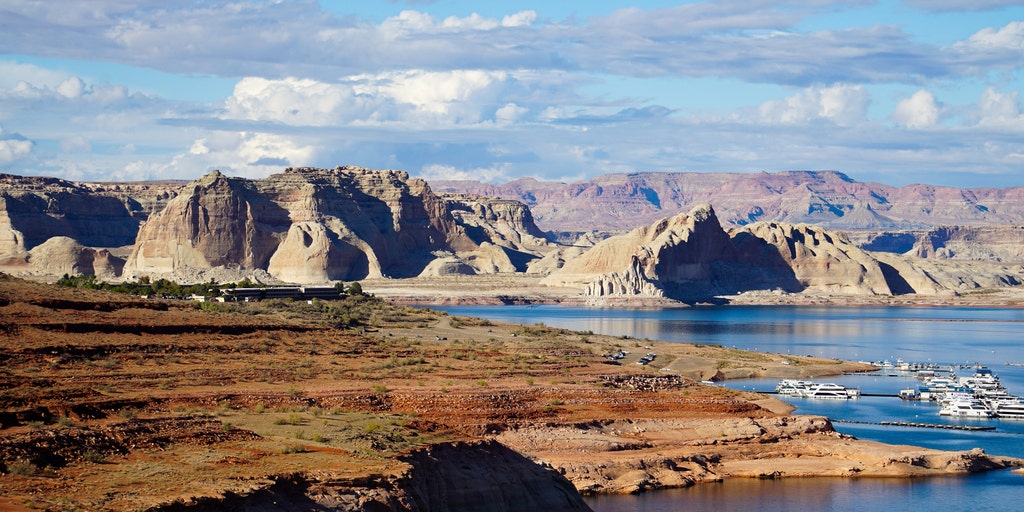


Lake Mead and Lake Powell, the country's two largest reservoirs, dropped to record-low storage levels this month, according to data and analysis from the Bureau of Reclamation and the University of Colorado.
LAS VEGAS, Nevada — Lake Mead and Lake Powell, the country's two largest reservoirs, dropped to record-low storage levels this month, according to data and analysis from the Bureau of Reclamation and the University of Colorado.
The combined storage of Lake Mead and Lake Powell fell to a record low of about 12.7 million acre-feet on July 12, breaking the previous record set in March 2023, according to the University of Colorado.
Lake Mead and Lake Powell are the Colorado River's two primary storage reservoirs. The river helps supply water to roughly 40 million people across seven Western states: Arizona, California, Colorado, Nevada, New Mexico, Utah and Wyoming.
PAN AMERICAN PLANE FOUND 2,000 FEET UNDER ATLANTIC OCEAN AFTER CRASH 74 YEARS AGO
The Colorado River is predominantly fed by snowpack from the Intermountain West, which received very little snow this past winter.
As of Thursday, Lake Powell is at a record-low 3,523 feet, according to the U.S. Bureau of Reclamation.
THESE EVERYDAY COMMODITIES MAY COST YOU MORE AS SEVERE DROUGHT TRICKLES DOWN TO CONSUMERS
This is the lowest combined storage level since May 23, 1957, when all of that water was stored in Lake Mead because Lake Powell had not yet begun filling during construction of Glen Canyon Dam, the university said.
However, some relief may be on the way this fall and winter.
According to NOAA, odds have increased that a Super El Niño will develop in the Central Pacific by this fall.
El Niño is one of three phases of a climate cycle called the El Niño-Southern Oscillation (ENSO). It describes natural temperature changes in the central Pacific Ocean that alter atmospheric circulation and can greatly influence global weather.
Some of El Niño's most significant impacts are felt across the Lower 48 during the winter months.
DOZENS OF BABY SEA TURTLE NESTS LOST AS TROPICAL STORM BERTHA BATTERS FLORIDA COAST
According to NOAA's Climate Prediction Center, California is expected to see increased chances of above-average rain due to a wider and wavier Pacific jet stream helping steer more storms into the region.
The jet stream acts as an atmospheric conveyor belt for storms, guiding them across the Pacific and onto the West Coast.
This could help mitigate potential water shortages and even replenish the snowpack across the Intermountain West and increase runoff into Lake Powell and Lake Mead next spring.
"Every day going forward, until runoff from the 2026-2027 winter snowpack begins next spring, a new record low will likely be set," the University of Colorado said. "This is a significant moment in the evolving Colorado River water supply crisis."
However, even an extremely wet winter would not reverse the steady 26-year decline in storage at Lake Mead and Lake Powell.
The post 'Evolving crisis': Could El Niño bring needed rain to the 2 largest reservoirs in the US? appeared first on Fox Weather