
















Australia Tightens Student Visa Rules From October 2026, Restricting Onshore Applications and Family Sponsorship for International Students
-
Travel, Health, Immigration
-
-
15 mins
-
Travel and Tour World
-
Samadrita Mukherjee
-


Australia student visa rules 2026 restrict onshore applications and family inclusion from 2 October. Check exemptions and key changes.
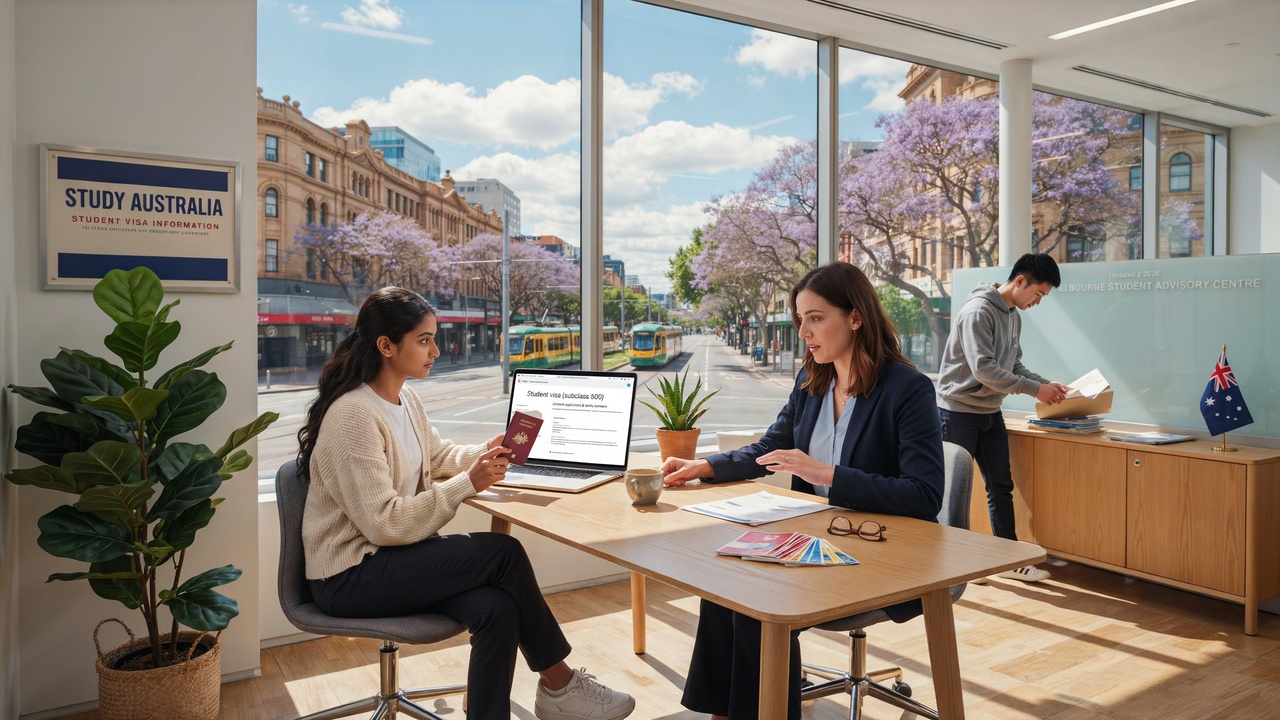
Australia has introduced stricter student visa rules from 2 October 2026, limiting the ability of international students and temporary visa holders to apply for a Student visa (subclass 500) while remaining in the country. The Australian Government has also restricted the inclusion of spouses and dependent children in new student visa applications, with exemptions for specific categories. The reforms affect prospective students from Asia, Europe, Africa, the Americas and other regions, particularly those planning to change visa status after arriving in Australia. Existing student visas remain valid, while applications submitted before the changes took effect continue under the previous arrangements.
The measures form part of a wider government effort to strengthen the integrity of Australia’s international education system and prevent temporary visas from being used primarily to extend residence rather than pursue genuine study.
One of the most significant consequences concerns people already in Australia on temporary visas. Many can no longer submit a new student visa application without leaving the country, even if they have secured admission to an Australian educational institution.
Family arrangements have also become more restrictive. Most new student visa applicants cannot include partners or dependent children unless they qualify for an exemption. In addition, the option for family members to join an existing student visa holder later as subsequent entrants has been removed.
Australia Student Visa Rules 2026 Introduce Major Changes to Onshore Applications
The Australian Government implemented the latest student visa reforms on 2 October 2026, changing the conditions under which certain temporary visa holders can apply for Student visas while physically present in Australia.
The Department of Home Affairs confirmed that the restrictions apply to Student visas under subclass 500 and also affect aspects of the Student Guardian visa under subclass 590.
The changes follow the government’s broader migration reforms, which seek to ensure that temporary visa categories are used for their intended purposes.
In particular, the new rules address visa hopping, where individuals move between temporary visa categories in ways that can prolong their stay without meeting the intended purpose of their original entry.
Australia continues to accept international student visa applications from eligible overseas applicants. The reform is therefore not a general ban on foreign students or a closure of the country’s international education sector.
Key Details of Australia’s October 2026 Visa Reforms
| Category | Confirmed information |
|---|---|
| Country | Australia |
| Effective date | 2 October 2026 |
| Responsible authority | Department of Home Affairs |
| Primary visa affected | Student visa subclass 500 |
| Additional visa affected | Student Guardian visa subclass 590 |
| Main change | Restrictions on Student visa applications made inside Australia |
| Temporary visa holders | Most can no longer switch to a Student visa onshore |
| Existing students | Further onshore applications generally restricted |
| Family members | Inclusion limited to specified exemption categories |
| Subsequent entrants | No new applications to join an existing student visa holder later |
| Existing granted visas | Remain valid under their conditions |
| Applications lodged before 2 October | Assessed under the earlier rules |
| Offshore applications | Remain available to eligible applicants |
| Future reform | New Student visa Transfer stream planned for 2027 |
The Department of Home Affairs has published guidance explaining how the changes affect applicants seeking further education, family reunification and continued lawful residence.
Australia Restricts Switching From Temporary Visas to Student Status
One of the central changes concerns foreign nationals who originally entered Australia for purposes other than study.
From 2 October 2026, most temporary visa holders cannot lodge a Student visa application while remaining in Australia.
This includes people holding Working Holiday Maker and Skills in Demand visas.
The restrictions build on earlier changes affecting other temporary visa categories, including Visitor and Temporary Graduate visa holders.
Previously, some applicants could move from one temporary visa category to another without departing Australia, provided they satisfied the relevant requirements.
Under the revised framework, many prospective students must now submit their applications while outside the country.
The Department of Home Affairs also states that applicants required to apply offshore must be outside Australia when their Student visa is granted.
This distinction is particularly important for people considering enrolling in a course after entering Australia for employment, tourism or another temporary purpose.
Receiving an offer from an educational institution does not automatically make someone eligible to apply for a Student visa from within Australia.
The applicant must first establish whether the relevant application-location rules permit an onshore application.
Visa Categories and Potential Impact
| Existing visa or applicant category | Position under revised rules |
|---|---|
| Working Holiday Maker visa holders | Generally cannot apply for Student visa onshore |
| Skills in Demand visa holders | Generally cannot apply for Student visa onshore |
| Visitor visa holders | Already subject to earlier onshore restrictions |
| Temporary Graduate visa holders | Already subject to earlier onshore restrictions |
| Existing Student visa holders | Further onshore applications generally restricted |
| Eligible doctoral students | May qualify for exemption |
| Eligible primary and secondary school students | May qualify for exemption |
| DFAT or Defence-sponsored students | May qualify for exemption |
| Applicants outside Australia | Can continue applying if eligible |
Applicants should distinguish between eligibility to obtain a Student visa and eligibility to lodge the application from a particular location.
An applicant may qualify academically and financially but still be required to depart Australia before submitting a valid Student visa application.
Existing International Students Face New Restrictions on Further Visa Applications
The October amendments also affect students who already hold a subclass 500 visa.
Most existing student visa holders can no longer submit another Student visa application while remaining in Australia unless they meet a specified exemption.
The change is particularly relevant to people planning additional qualifications, extending studies or changing their education pathway.
However, several exemptions recognise circumstances where remaining in Australia to continue education may be justified.
Exemptions for Further Onshore Student Visa Applications
- Government-sponsored students: Individuals sponsored by Australia’s Department of Foreign Affairs and Trade or Department of Defence.
- Doctoral students: Applicants undertaking qualifying doctoral studies.
- School students: Eligible applicants pursuing primary or secondary education.
- Provider default cases: Students whose education provider can no longer deliver their enrolled course.
- Course completion extensions: Students requiring up to 12 additional months to complete the existing course with the same provider.
- Higher-level course progression: Students who have completed their principal course and are moving to a higher-level qualification.
These exemptions are subject to the applicable legislative and visa requirements. They should not be interpreted as automatic approval.
The government intends to distinguish genuine educational progression and unavoidable course disruptions from repeated visa applications that do not demonstrate an appropriate study purpose.
Students considering a second qualification should therefore examine whether their proposed course progression satisfies the relevant exemption.
Australia Introduces Strict Rules for International Students Bringing Family Members
Another major element of the reform concerns the inclusion of spouses, partners and dependent children in Student visa applications.
From 2 October 2026, most applicants are no longer permitted to include family members in their initial or subsequent subclass 500 applications unless they qualify for an exemption.
The restriction applies to students applying from overseas as well as those eligible to lodge a further application inside Australia.
Previously, family inclusion formed an important part of study planning for international students who intended to relocate with their partners or children.
The amended arrangements narrow those opportunities considerably.
Family Inclusion Exemptions Under the New Rules
| Applicant category | Potential eligibility to include family |
|---|---|
| Doctoral students | Exemption available |
| DFAT-sponsored students | Exemption available |
| Department of Defence-sponsored students | Exemption available |
| Fully funded foreign government scholarship recipients | Exemption available |
| Eligible nationals of Pacific countries | Exemption available |
| Eligible nationals of ASEAN member countries | Exemption available |
| Certain existing student families | Transitional and continuing-study exemptions may apply |
| Other international students | Generally cannot include family members |
Eligibility remains subject to the specific requirements of the relevant exemption.
The policy distinguishes between ordinary applicants and those covered by specified government sponsorship, doctoral study or regional arrangements.
For international students considering relocation with a spouse or children, family eligibility must now be confirmed before committing to a study programme.
Subsequent Entrant Applications Are No Longer Available for Student Families
One of the clearest changes concerns subsequent entrants.
Previously, certain family members could apply to join a primary Student visa holder after the student’s original visa had been granted.
Under the new arrangements, this pathway has been removed.
The Department of Home Affairs confirms that family members cannot be added as subsequent entrants after a Student visa has been granted, and there are no exemptions to that restriction.
Even students who qualify for an exemption permitting family inclusion must arrange eligible applications at the appropriate initial or further application stage.
Where family members are included in a permitted combined application, the primary applicant and accompanying relatives must be in the same location when the application is lodged.
This introduces an important planning consideration for families who previously expected one person to begin studying in Australia before arranging for a partner or child to join later.
There are also limited provisions for eligible existing student families, including particular circumstances involving course completion or education provider default.
Those arrangements should not be confused with a general right to sponsor new dependants after a visa has been issued.
Existing Student Visa Holders Retain Their Current Immigration Status
The revised regulations do not automatically invalidate Student visas that were already granted before 2 October 2026.
Students holding valid subclass 500 visas can continue their studies subject to the conditions and expiry dates of those visas.
Likewise, previously granted visas held by eligible accompanying family members are not automatically cancelled because of the new application restrictions.
A separate transitional provision protects applications lodged before the commencement date.
The Department of Home Affairs states that Student visa applications submitted before 2 October 2026 will continue to be assessed under the rules that applied when they were lodged.
This also covers applications that already included family members.
Treatment of Existing and New Applications
| Application situation | Applicable arrangement |
|---|---|
| Student visa granted before 2 October 2026 | Continues under existing visa conditions |
| Application lodged before 2 October 2026 | Assessed under previous application rules |
| Family included in pre-October application | Previous application rules apply |
| New application from 2 October 2026 | Revised requirements apply |
| Existing student seeking another onshore visa | Must qualify for an exemption |
| Family seeking to join after visa grant | Subsequent entrant pathway unavailable |
| Certain existing families applying together | Limited exemptions may apply |
The distinction between an existing visa and a new application is essential.
Someone may continue holding a valid visa even though they would no longer qualify to submit the same type of application from within Australia.
International students should therefore review their current visa conditions and expiry dates before making decisions about additional courses or future residence.
Working Holiday Makers and Skilled Workers Face Greater Restrictions on Changing Visa Status
The updated application rules have consequences for foreign nationals who entered Australia under temporary visa programmes unrelated to education.
Working Holiday Maker visa holders are among those specifically identified by the Department of Home Affairs as affected.
These visas commonly support temporary travel and work experiences, subject to nationality and other eligibility conditions.
Under the new arrangements, most holders cannot simply enrol in an educational institution and apply for a subclass 500 visa without leaving Australia.
Skills in Demand visa holders are also covered by the expanded restrictions.
For temporary skilled workers considering a transition into formal education, the changes may require offshore application planning.
This does not mean a former worker or working holiday visitor is permanently prohibited from studying in Australia.
Eligible applicants may still submit a Student visa application from outside the country.
However, they must satisfy the relevant immigration requirements and remain offshore at the required stages of the process.
The need to depart Australia can affect travel arrangements, employment plans, accommodation commitments and the timing of course enrolment.
The government has not announced a universal exemption simply because an applicant already has an offer from a university or vocational institution.
Course Progression Becomes More Important for Students Seeking Further Education
Australia’s reforms place additional emphasis on whether a proposed course represents genuine educational progression.
This is relevant to students who complete one qualification and wish to undertake another without leaving the country.
Under the specified onshore exemption, eligible students who have completed the principal course covered by their current visa may be able to apply for another Student visa when progressing to a higher-level qualification.
The government has also announced tighter controls on changing education providers.
From 2 October 2026, the transfer restriction for most non-school students increased from six months to 12 months in their principal course.
This interim arrangement is intended to remain in place until 30 June 2027, with a new Student visa Transfer stream scheduled to commence on 1 July 2027.
School students remain subject to the existing six-month transfer restriction for their first registered school course.
Exceptional circumstances and situations involving a provider or course ceasing registration can allow transfers under the applicable rules.
The future Transfer stream is intended to prevent students from using an initial higher-education enrolment to move into lower-level vocational courses in ways that avoid the original visa assessment requirements.
This element of the reform will be particularly important for students considering a change of institution or qualification after arriving in Australia.
Australia Plans Further Student Visa Changes in 2027
The October reforms are part of a broader restructuring of Australia’s international education and temporary migration framework.
The government has announced that a new Student visa Transfer stream will commence on 1 July 2027. The planned arrangements will require affected international students seeking to change education providers to obtain a new visa before commencing their studies with another institution.
The policy is intended to limit transfers that undermine the original purpose of a student’s enrolment.
Under the announced approach, transfers would generally need to maintain or increase the Australian Qualifications Framework level of study, subject to applicable exceptions.
The government also intends to introduce similar restrictions on family inclusion for Temporary Graduate visa applicants.
However, the detailed implementation arrangements for the Temporary Graduate changes are still being developed.
Confirmed Changes and Future Measures
| Policy area | Implementation status |
|---|---|
| Restrictions on onshore Student visa applications | Effective 2 October 2026 |
| Limits on including family members | Effective 2 October 2026 |
| Removal of subsequent entrant applications | Effective 2 October 2026 |
| Extended provider-transfer restrictions | Effective 2 October 2026 |
| New Student visa Transfer stream | Scheduled for 1 July 2027 |
| Further Temporary Graduate family restrictions | Announced, with details still being developed |
The distinction between measures already implemented and those scheduled for 2027 is important.
International students planning future enrolments should consider both the current requirements and the possibility of additional administrative obligations when changing education providers.
Student Visa Costs Add Another Consideration for International Applicants
The Australian Government has also increased Student visa application charges, creating an additional financial consideration for overseas students.
From 1 July 2026, the standard application charge for a subclass 500 Student visa increased to AUD 2,500, although limited concessions apply.
Reduced application charges are available to certain eligible Pacific Island, Timor-Leste and ASEAN applicants, as well as qualifying applicants in specified English-language and non-award education sectors.
The fee increase is separate from the 2 October restrictions on application location and family inclusion.
Applicants who must leave Australia to lodge a Student visa application may also need to consider the practical cost of travelling overseas and remaining outside the country while the application is assessed.
These expenses will depend on individual circumstances, including the applicant’s location, travel arrangements and immigration status.
The government has not established a fixed processing time or universal additional cost arising from the offshore application requirement.
Important Financial and Administrative Considerations
| Requirement | Details |
|---|---|
| Standard Student visa application charge | From AUD 2,500 |
| Fee increase effective date | 1 July 2026 |
| Available concessions | Limited eligible applicant categories |
| Offshore application costs | Depend on individual circumstances |
| Tuition fees | Vary by education provider and course |
| Overseas Student Health Cover | Required where applicable |
| Financial capacity | Must satisfy relevant visa criteria |
| Family relocation | Subject to new eligibility restrictions |
Students should use the Department of Home Affairs’ official fee information when calculating their application costs.
They should also avoid assuming that a visa application fee guarantees approval or that tuition payments override immigration eligibility requirements.
Why This Matters
Australia remains an important destination for international education, attracting students seeking university degrees, vocational qualifications, research opportunities and international work experience.
The October 2026 reforms change how some of those students must plan their journeys.
For prospective students already in Australia, the restrictions can affect whether they may apply for a new visa without departing the country.
For families, the removal of subsequent entrant applications changes the ability of partners and children to join a student after their visa has been granted.
For education providers and recruitment agencies, the reforms increase the importance of checking visa eligibility before confirming study pathways.
The government’s stated objective is to reduce misuse of temporary migration arrangements while maintaining opportunities for genuine international students.
However, the new restrictions may create additional administrative and financial considerations for people who previously relied on onshore applications or later family reunification.
The long-term effects on international enrolments and student mobility cannot be established from the announcement alone.
What Travellers Should Know
International students planning to study in Australia should confirm their eligibility before arranging travel, accommodation or course enrolment.
The revised rules do not prohibit genuine overseas students from applying for subclass 500 visas. They change where certain applications must be submitted and who can be included.
Before Booking
- Application location: Confirm whether the Student visa application must be lodged outside Australia.
- Current visa status: Check whether an existing temporary visa permits an onshore application.
- Course progression: Determine whether the proposed qualification satisfies the applicable exemption.
- Family eligibility: Confirm whether a partner or dependent child can be included.
- Application timing: Understand that subsequent entrant applications are no longer available.
- Existing applications: Check whether an application lodged before 2 October 2026 falls under transitional arrangements.
- Course transfers: Review the current provider-transfer restrictions before changing institutions.
- Visa charges: Check the applicable application fee and any concessions.
- Immigration advice: Seek guidance from the Department of Home Affairs or an appropriately registered migration professional when circumstances are complex.
Students should also distinguish between permission to remain in Australia and permission to submit a particular visa application from within the country.
A valid temporary visa does not automatically provide access to every other visa category.
Frequently Asked Questions
When did Australia’s new Student visa rules take effect?
The updated rules for Student visa subclass 500 and relevant Student Guardian visa applications took effect on 2 October 2026.
Can international students apply for another Student visa while in Australia?
Most existing Student visa holders can no longer apply for a further subclass 500 visa onshore unless they meet a specified exemption, including certain doctoral studies, course completion extensions or genuine progression to a higher-level qualification.
Can international students still bring their spouse or children to Australia?
Family inclusion is now restricted to specified categories, including eligible doctoral students, certain government-sponsored students and qualifying nationals of Pacific and ASEAN countries. Limited provisions also apply to some existing student families.
Can family members join an international student after their visa has been granted?
No. The subsequent entrant pathway has been removed for Student visas. Family members cannot be added after the primary student’s visa has been granted.
Do the new rules cancel existing Student visas?
No. Student visas already granted remain valid according to their existing conditions. Applications lodged before 2 October 2026 are assessed under the rules that applied when they were submitted.
Australia’s International Education System Enters a More Restrictive Visa Environment
Australia’s October 2026 Student visa reforms represent a substantial change in the administration of temporary study migration.
The restrictions make it harder for many temporary visa holders to switch to student status while remaining in Australia. They also narrow the circumstances in which international students can include family members in visa applications.
At the same time, the government has retained exemptions for specified educational and sponsorship circumstances, while protecting existing granted visas and applications submitted before the implementation date.
The upcoming Transfer stream in July 2027 will introduce another stage of reform affecting students seeking to change education providers.
For prospective international students, the central consideration is no longer simply securing admission to an Australian institution. Visa application location, course progression, family eligibility and future study arrangements now require closer examination before travel plans are finalised.
Australia continues to accept eligible international students, but the revised framework places greater emphasis on planning study pathways before arrival rather than relying on changes to immigration status after entering the country.
The post Australia Tightens Student Visa Rules From October 2026, Restricting Onshore Applications and Family Sponsorship for International Students appeared first on Travel and Tour World




































































