










Saudi Arabia Transform Eco-Tourism as Farasan, Al-Qassar And More Lead Coral Island Conservation Revolution
-
Travel, Health, Food, Immigration, Culture, Weather
-
-
19 mins
-
Travel and Tour World
-
Shreya Saha
-


Discover how archipelago eco-tourism balances marine conservation and mountain heritage in Saudi Arabia.
Through the Arabian Peninsula, tourism is experiencing its own evolution in terms of how cloudscape mountains, agriculturally rich plains, and water off the coast are brought together under governments to form cohesive regional tours. Archipelago eco-tourism represents the center of this movement as the vulnerable marine sanctuaries cross paths with the long-standing maritime history. From the Farasan Islands of Saudi Arabia to the Musandam fjords of Oman, there is increasing interest coming up against historic coral stone communities. There will need to be pioneering environmental guidelines, architectural restoration, and infrastructure for meeting visitor numbers while protecting the sensitive marine ecosystems.
Architectural Conservation in Coral Archipelagos: Structural Science and Heritage Masonry
An ingenious vernacular response to unforgiving maritime climates is reflected in the historic settlements dotting the littoral zones of the Red Sea and the Arabian Gulf. For centuries, dense, shaded architectural quarters were constructed by coastal populations through the harvesting of fossilised reef formations and calcareous littoral slabs, engineered to dissipate intense solar radiation, promote passive convective ventilation, and endure punishing saline humidity. Today, the complex task of restoring these fragile coral structures without compromising their breathability or historic integrity is faced by regulatory authorities, including the Saudi Heritage Commission, Oman’s Ministry of Heritage and Tourism, and the Abu Dhabi Department of Culture and Tourism.
A deep technical understanding of how biogenic marine stone interacts with regional atmospheric forces is demanded in navigating the delicate balance between structural survival and modern visitor access. It was demonstrated through ad-hoc renovations carried out during the late twentieth century that the decay of vernacular masonry is accelerated by modern industrial materials, transforming low-maintenance historic structures into rapidly deteriorating conservation liabilities.
The Material Physics of Coral Stone and Lime Mortars versus Modern Concrete
Fossil coral stone—predominantly aragonite and calcite mined from dead coastal reefs or intertidal calcarenite platforms known as farush—is relied upon by the vernacular architecture of the Farasan Islands, Musandam, and Dalma Island. An open, interconnected cellular matrix with porosity levels between a quarter and nearly a half of total volume is exhibited by these marine building stones. When laid with traditional lime mortar—a vapor-permeable, low-modulus composite of slaked air lime, calcined gypsum, crushed marine shells, and pozzolanic clay additives known as sarooj—a dynamic moisture buffer is formed by the structural wall. Ambient moisture absorbed from humid maritime winds is evaporated through the lime joints, preventing internal hydrostatic pressure and facilitating the safe surface migration of soluble salts.
Widespread masonry failure was caused by the application of ordinary Portland cement during modern repair work. An impermeable, rigid matrix with high stiffness and minimal vapor permeability is formed by modern Portland cement. When ambient moisture penetrates cracks, outward evaporation is prevented by the dense cement coating. Water is forced into the softer, highly porous coral blocks by capillary action. Soluble salts—principally sodium chloride and magnesium sulphate—are caused to crystallise behind the cement skin rather than harmlessly efflorescing on the exterior. This process, known as subflorescence, generates expansive crystallisation pressures that far exceed the low compressive strength of historic coral stone, easily shattering its structural cellular matrix. The coral stone is reduced to powder beneath the cement crust, triggering structural delamination, deep fissures, and catastrophic collapse.
| Masonry Component | Traditional Coral & Lime System | Modern Portland Cement Infill | Structural & Environmental Impact |
|---|---|---|---|
| Primary Binder | Slaked hydraulic lime and unrefined gypsum | High-temperature sintered Portland clinker | High stiffness is introduced by modern clinker, causing stress-shearing against weak stone. |
| Pozzolanic Aggregate | Crushed ceramics, marine shells, calcined sarooj | Silica sand, synthetic plasticisers, basalt aggregates | Flexible micro-crystalline bonds are created by sarooj; capillary evaporation is blocked by synthetic aggregates. |
| Water Vapour Permeability | High diffusion capability | Extremely low diffusion capability | The wall is sealed by cement, driving water-soluble salts into fragile coral pores. |
| Expansive Salt Dynamics | Surface efflorescence; salts crystallise outwards safely | Destructive subflorescence; sub-surface crystallisation | Coral stone tensile thresholds are exceeded by internal salt pressures, causing delamination. |
| Thermal Expansion Compatibility | Matches coral stone thermal cycling | Mismatched coefficient | Mortar-stone interfaces are sheared by thermal cycling under extreme desert-coastal heat. |
Portland cement on historic coral stone is now banned under official restoration guidelines. Pure slaked air lime cured through carbonation, or naturally hydraulic lime mixtures blended with local pozzolanic aggregates calibrated to historical tensile ratings, are utilized by preservation teams. Exterior surfaces are coated with calcined gypsum plaster extracted from local mineral deposits, allowing walls to breathe while defending them against rain and sea spray.
Maritime Heritage Typologies: Defensive Watchtowers and Intertidal Hadrah Weirs
Specialised coastal infrastructures that supported historical maritime economies are included within island vernacular architecture. Three key structures are protected by conservation programmes across regional archipelagos: coastal defensive watchtowers, merchant trading houses, and intertidal stone fish traps known as hadrah stone fish traps.
Shipping routes were overseen from elevated headlands where defensive watchtowers and Ottoman-era garrisons, such as those on Greater Farasan and along the Musandam coastline, were positioned. Double-leaf masonry was utilized in these towers: a core of loose rubble and sarooj mortar was held by inner and outer faces of dressed coral blocks. Structural consolidation using low-pressure lime grouting is required during restoration so that the inner core is secured without dislodging the exterior stones.
Ancient sustainable fishing techniques are showcased along shallow bays and sandbars by hadrah stone fish traps. Tidal currents are utilized to catch fish passively by hadrah traps, which are built from unmortared limestone, coral boulders, and woven palm fronds. Fish moving offshore with the falling tide are intercepted by a long guiding stone arm running fifty to two hundred metres out from the beach, and are channeled into a circular stone holding chamber located in the low-tide zone.
Seasonal manual repairs with dry-stacked stone are required in the restoration of hadrah traps, allowing water flow through the walls to be maintained without modern binders. Unlike commercial trawling, the seabed is not dragged and plastic pollution is not created; instead, artificial reefs are formed that provide shelter for juvenile fish and enable selective harvesting without bycatch.
Environmental Carrying Capacities and Marine Sanctuary Governance
Substantial environmental pressures are introduced to delicate coastal zones by the rapid growth in island tourism. Dugongs, endangered marine turtles, and heat-resilient coral communities are sheltered within the fragile marine ecosystems of the Red Sea and Arabian Gulf, which cannot be sustained under unmanaged mass tourism. Dynamic carrying capacity frameworks have been introduced by conservation bodies, utilizing real-time spatial monitoring and legal zoning to safeguard marine biodiversity hotspots.
Enforceable operational rules that prevent anchor damage, reduce noise, and stop reef destruction are required if endangered marine life is to be protected while high-value eco-tourism is developed. Selective visitor access is balanced against the long-term ecological viability of core marine biospheres through this operational model.
| Marine Protected Area Zone | Primary Regulatory Objective | Permitted Marine & Tourism Activities | Prohibited Activities & Infrastructure Mandates |
|---|---|---|---|
| Core Conservation Zone (Sanctuary) | Strict preservation of biodiversity, fish spawning grounds, and nesting sites | Non-invasive marine research, acoustic monitoring, drone habitat surveys | All commercial and recreational fishing; motorized tourist vessels; diving; physical anchoring |
| Low-Impact Eco-Tourism Zone | Controlled public access to coral gardens and heritage sites | Guided diving on fixed moorings; sea kayaking; timed walking tours | Unanchored craft; single-use plastics; spearfishing; building permanent concrete infrastructure |
| Multi-Use Transition Zone | Supporting sustainable local livelihoods and transport corridors | Traditional hadrah fishing; licensed artisanal skiffs; scheduled public ferry transit | Industrial trawling; unregulated seabed dredging; dumping untreated wastewater effluent |
Ecosystem Mapping and Coral Cover Health in the Farasan Marine Reserve
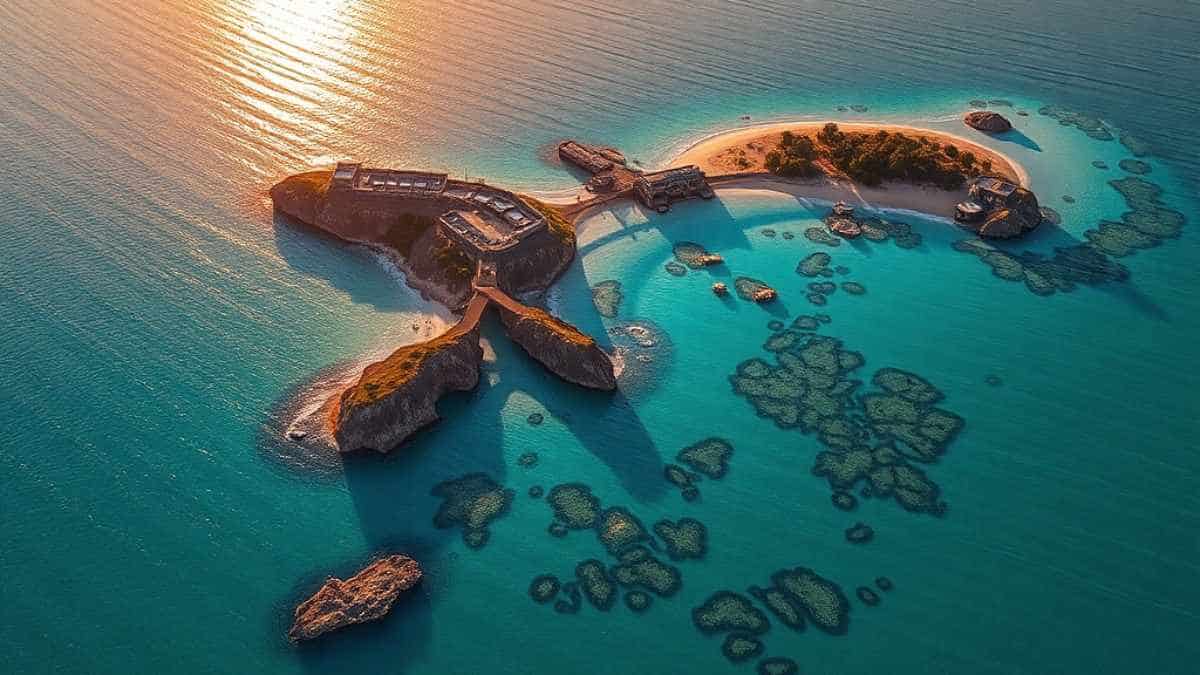
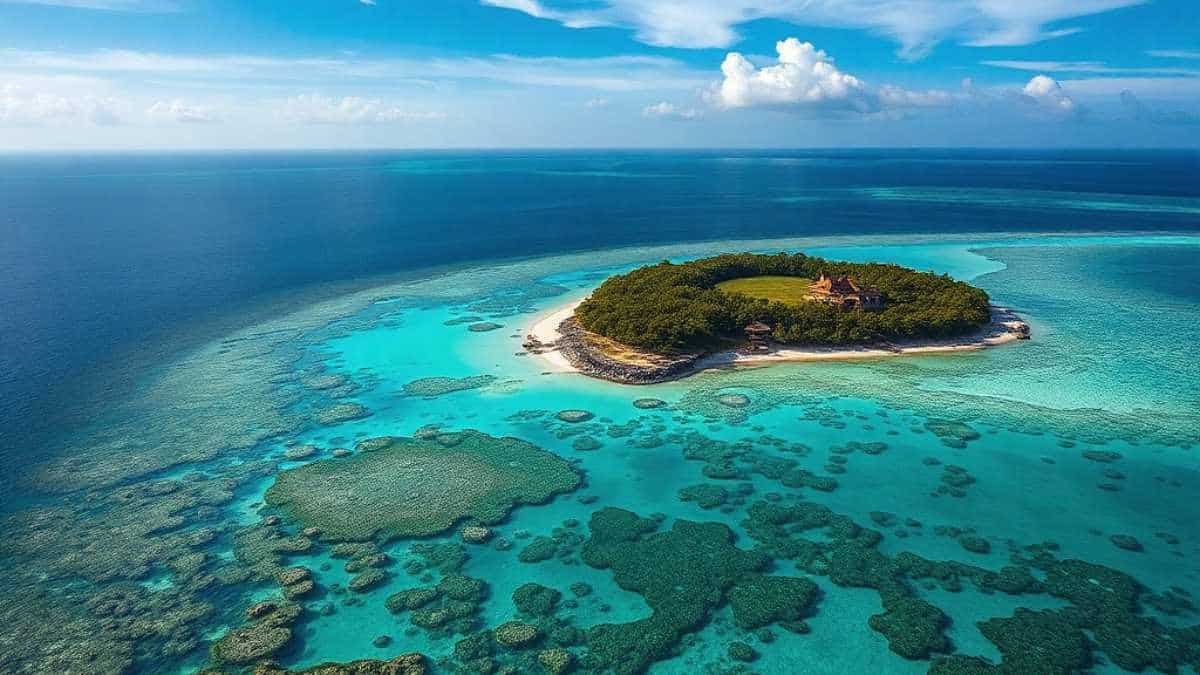
More than eighty-four coral islands, islets, and reefs are included within the Farasan Islands Marine Reserve, covering over five thousand square kilometres off Jazan. Managed by Saudi Arabia’s National Center for Wildlife, the archipelago was designated a UNESCO Man and the Biosphere Reserve in 2021 and was added to the Ramsar Convention list of wetlands of international importance in December 2025. Dense red and black mangrove forests, vast seagrass beds, and thriving coral reefs are sheltered within its shallow waters.
More than two hundred and thirty-one fish species, fifty genera of hard corals, and the world’s largest herd of endemic Farasan Idmi gazelles are supported by the sanctuary. The southern Red Sea’s premier breeding colony of pink-backed pelicans is also hosted on the islands, alongside significant populations of ospreys and vulnerable sooty falcons.
It has been revealed by surveys that living coral cover across outer patch reefs ranges between forty-two percent and sixty-five percent at primary monitoring sites. The backbone of mid-depth shelves is formed by massive Porites, Goniopora, and Favites colonies, while broad table acroporids are seen to flourish along exposed current channels.
However, elevated sea surface temperatures are recorded in the southern Red Sea during mid-summer. Although elevated thermal thresholds have been developed by local corals, the risk of coral bleaching, disease, and habitat loss is heightened when extended heatwaves are combined with unregulated boat traffic.
Spatial Zonation and Strict Visitor Allocation Frameworks
Strict spatial zonation frameworks are enforced by conservation managers to maintain ecological balance while archipelago eco-tourism is expanded. Maritime and terrestrial zones are divided into three management categories by the Farasan Marine Reserve: Core Conservation Zones, Low-Impact Eco-Tourism Zones, and Multi-Use Transition Zones.
Offshore drop-offs frequented by grey reef sharks and endangered Napoleon wrasse, as well as remote atolls used by nesting terns and pelicans, are protected within Core Conservation Zones. Recreational diving is restricted to designated Low-Impact Eco-Tourism Zones, where vessels are required to tie up to permanent submerged mooring buoys so that anchor damage to fragile reefs is prevented. Daily dive volumes are formally regulated based on total accessible reef area, mandatory diver safety buffer zones, daily site turnover rates, and environmental stress adjustments applied during periods of elevated water temperatures or fish spawning. Under this protocol, dive sites around Saqid Island are capped at twelve divers per site per day during the primary diving season from October to April, and certified marine guides are required for all excursions.
On land, visits to Al-Qassar Heritage Village are capped at two hundred and fifty people per day across timed entry slots. Historic coral-stone walkways are thereby protected from excessive wear, archaeological wells are safeguarded, and disturbance to nearby mangrove bird reserves is avoided.
Low-Impact Engineering: Off-Grid Microgrids and Modular Eco-Resorts
Alternative engineering strategies are required when remote island resorts are built in order to protect sensitive environments. Surrounding reefs risk being damaged and shallow freshwater lenses contaminated when conventional mainland construction—reliant on heavy concrete slabs, diesel generators, and shallow wastewater outfalls—is deployed.
Consequently, it is mandated by regional ministries that new island accommodations must operate as self-contained, closed-loop eco-lodges. Off-grid solar energy systems, zero-discharge water treatment, and modular construction are combined in modern eco-resorts, allowing tourism to be decoupled from environmental degradation.
| Infrastructure Domain | Mandated Technical Standard | Engineering Mechanism | Environmental Risk Mitigated |
|---|---|---|---|
| Desalination & Effluent | Closed-Loop Zero-Liquid Discharge | Seawater reverse osmosis paired with mechanical vapor recompression crystallisers | Hypersaline and thermal brine plumes that suffocate seagrass and benthic coral beds are eliminated. |
| Energy Generation | 100% Off-Grid Renewable Microgrid | Bifacial solar PV arrays with automated dry-cleaning robots, tied to lithium-iron-phosphate storage | Diesel generators are replaced, cutting carbon emissions, marine fuel spill risks, and acoustic noise. |
| Wastewater Treatment | Membrane Bioreactor and UV Disinfection | Subsurface tertiary biological filtration; 100% of treated greywater diverted to native plants | Raw sewage, nitrates, and surfactants are prevented from seeping into nearshore lagoons. |
| Structural Foundation | Removable Helical Steel Screw-Piles | Mechanically driven screw foundations elevated above natural sand and rock grade | Poured concrete slabs are avoided; natural sand movement, storm drainage, and animal transit are permitted. |
| Building Envelopes | Modular Prefabrication | Off-site factory construction using cross-laminated timber, cork insulation, and non-toxic coatings | On-site concrete batching, chemical spills, aggregate dust, and heavy truck impacts are eliminated. |
Zero-Liquid Discharge Desalination and Marine Benthic Protection
Fresh water remains scarce across arid Gulf and Red Sea islands, where shallow groundwater is easily depleted or contaminated by seawater. Concentrated brine—loaded with heat, chlorine, and chemical scale inhibitors—is returned straight into coastal waters by standard seawater reverse osmosis plants. In shallow, enclosed bays, this heavy brine sinks to the sea floor, creating oxygen-depleted dead zones where seagrass beds are killed, benthic organisms are stressed, and nearby corals are bleached.
To safeguard these habitats, zero-liquid discharge desalination is required for all new eco-resorts under current environmental mandates. Wastewater brine is processed through electrodialysis reversal and mechanical vapor recompression crystallisers. Residual moisture is evaporated by the equipment to recover clean distilled water, leaving behind dry salt cake.
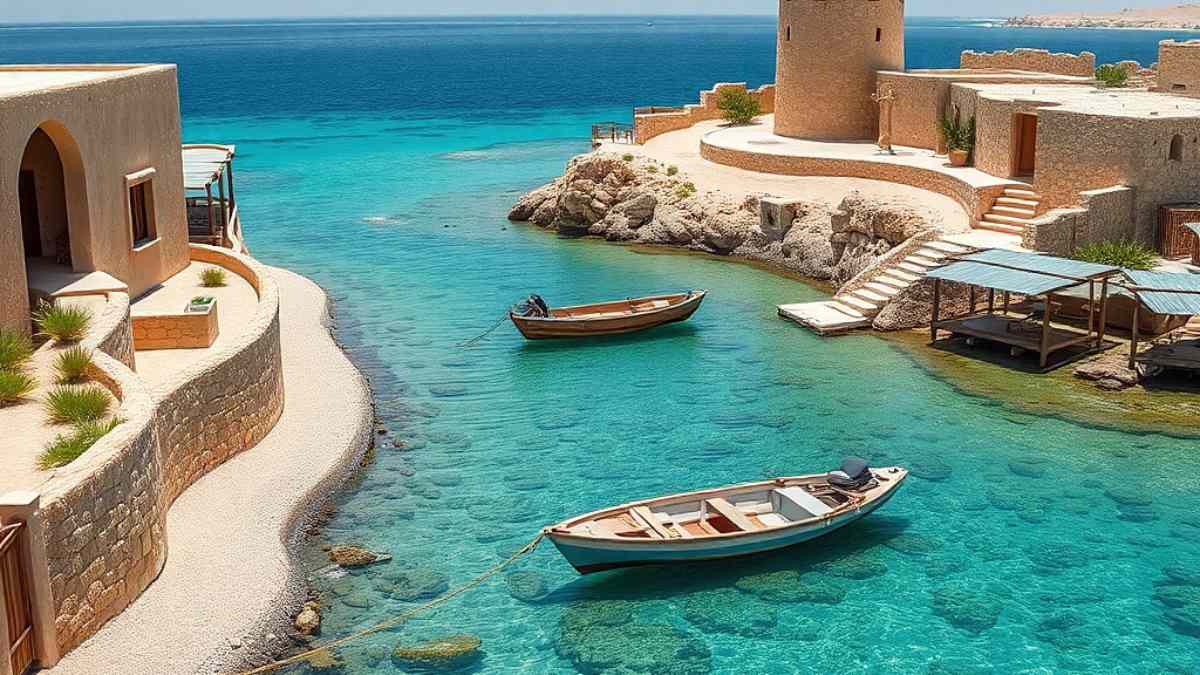
Resort cooling and washdown systems are supplied by the reclaimed water, while the recovered salt is utilized for industrial purposes or traditional fish curing. Kitchen and bathroom wastewater is treated using underground Membrane Bioreactors and ultraviolet disinfection. Native salt-tolerant plants are irrigated exclusively with the resulting treated water, ensuring that nutrient-rich runoff is prevented from washing into sensitive coral lagoons.
Solar Photovoltaic Microgrids and Modular Raised Foundations
A transition is being made in island energy systems from fossil-fuel generators to hybrid solar photovoltaic microgrids backed by lithium-iron-phosphate battery banks. Bifacial panels equipped with water-free cleaning robots are featured in these facilities, allowing dust and sea salt to be cleared without fresh water being wasted. Variable solar generation is matched to resort cooling loads by intelligent power management systems, shifting energy-intensive tasks such as water desalination to peak daylight hours.
Light, demountable prefabricated designs are used for eco-lodges to ensure delicate coastal soils are protected. Rather than wide concrete foundations being poured—which disrupts natural hydrology and destroys mangrove roots—structures are anchored on steel helical screw-piles driven into bedrock.
Main buildings framed in cross-laminated timber or recycled composites are positioned comfortably above the ground. Natural windblown sand movement is accommodated by this clearance, high seasonal tides are allowed for, and local wildlife—including hermit crabs and Arabian gazelles—is permitted to move without barrier fences. When the end of a facility’s useful life is reached, the screw-piles can be removed, allowing the site to be restored to its natural condition without buried concrete rubble being left behind.
Regional Case Studies: Archipelago Conservation Across the Middle East
The practical rollout of these conservation frameworks is demonstrated across three distinct regional archipelagos: the Farasan Islands of southwestern Saudi Arabia, the Musandam Peninsula of the Sultanate of Oman, and Dalma Island in the United Arab Emirates. A distinct operational response to balancing remote, high-value cultural and marine tourism with fragile ecological baselines is illustrated by each location.
| Destination | Primary Heritage Asset | Marine Ecosystem Character | Key Traditional Materials | Access Logistics | Regulatory Authority |
|---|---|---|---|---|---|
| Farasan Islands (Saudi Arabia) | Al-Qassar Heritage Village (400 stone houses) | Fringing reefs, mangroves, pelagic channels | Coral rag, raw gypsum, palm-frond thatch | Scheduled public vehicle ferry from Jazan Port | Saudi National Center for Wildlife & Heritage Commission |
| Musandam Peninsula (Oman) | Kumzar and Lima cliffside settlements | Deep limestone fjords, pelagic straits | Local mountain rock, beach stone, sarooj mortar | Boat-only access via traditional dhows or catamarans | Omani Ministry of Heritage and Tourism |
| Dalma Island (UAE) | Al Mraikhi Pearl Merchant Estate & Mosques | Shallow Gulf patch reefs, date palm oases | Fossil beach rock, calcined shell plaster, teak | Roll-on/roll-off vehicle ferry from Jebel Dhanna | Abu Dhabi Department of Culture and Tourism |
Farasan Archipelago (Saudi Arabia): Al-Qassar, Al-Mahfar, and Al-Hussain
Major national eco-tourism ambitions are balanced with international environmental conservation commitments in the Farasan Archipelago, situated roughly forty-two kilometres off the port of Jazan. The architectural centrepiece of the main island is formed by Al-Qassar Heritage Village, an ancient settlement of more than four hundred stone houses surrounded by date palms and supplied by shallow freshwater wells, most notably Aabida Well. Continuous occupation from Himyarite and Roman times has been shown by archaeological surveys, with carved southern Musnad inscriptions, Latin script dating to 24 BC, and late Islamic forts identified across the site.
Historically, seasonal relocation to Al-Qassar was undertaken by islanders during the hot summer storm season—a migration referred to as the Shidda—so that coastal heat could be escaped, dates harvested, and cool groundwater drawn from shallow wells.
Extensive restoration was overseen by the Saudi Heritage Commission to transform the complex into an active heritage site. Modern debris was cleared by restoration crews, stone perimeter walls were stabilised, and masonry joints were re-pointed using traditional lime mortar and unrefined gypsum mined on the island. Flat roofs constructed of mangrove poles and woven palm fronds were repaired to shield the interiors, while courtyards were resurfaced with white marine shell aggregate to reflect sunlight and lower ambient ground temperatures.
Traditional maritime customs are preserved along the coast within the fishing villages of Al-Mahfar and Al-Hussain. Coral boat ramps and palm-frond net drying sheds are retained by these settlements.
Al-Mahfar and Al-Hussain have been designated as low-density eco-lodge zones under planning guidelines. Historic coral architecture must be mirrored by all new developments, closed-loop renewable utilities must be operated, and fresh fish must be purchased from local crews working traditional hadrah traps, ensuring that fishing income is retained within the local community.
Musandam Peninsula (Oman): Kumzar and Lima Along the Strait of Hormuz
An arid limestone fjordland where sheer cliffs plunge into the Strait of Hormuz is formed by the Musandam Peninsula at the northernmost tip of Oman. One of the most isolated communities in the region is found at the remote settlement of Kumzar.
Accessible only by boat from Khasab, Kumzar is inhabited by roughly four thousand residents who have resided along this narrow canyon cove for centuries. Fame is held by the village for its unique language, Kumzari—the only non-Semitic Indo-Iranian language indigenous to the Arabian Peninsula, shaped by Arabic, Persian, and historical maritime trade.
Buildings in Kumzar are constructed of split mountain rock, beach stone, and sarooj mortar, stacked against the canyon walls. Strict planning regulations are enforced across Kumzar by Oman’s Ministry of Heritage and Tourism to ensure its cultural identity is protected. Large cruise groups are prohibited, day tours are required to remain offshore, and advance community permission alongside local guides is mandated for walking visits. Working stone fishing slips and communal mosques are maintained by the village, remaining protected from over-commercialisation.
The cliffside village of Lima is situated further south along the coast. Perched on steep limestone bluffs, managed marine eco-tourism has been integrated into Lima’s fishing harbour. Scheduled ferry services from Khasab and Shinas are operated by the Omani government, providing transport for residents while road construction that would alter the rugged coastal landscape is avoided. Eco-tourism here is centred on guided dhow diving excursions into deep fjord channels, where whale sharks, manta rays, and endemic soft-coral walls are protected from anchor damage through the deployment of permanent marine moorings.
Dalma Island and Sir Bani Yas (UAE): Pearling Foundations and Gypsum Mosques
Dalma Island, located in the Western Region of Abu Dhabi, is recognized as one of the earliest known human habitation sites in the Arabian Gulf, with archaeological evidence of Neolithic settlements dating back seven thousand years. Ancient Mesopotamian Ubaid pottery, stone tools, and carbonised date stones confirming early maritime trade were revealed during excavations by the Abu Dhabi Department of Culture and Tourism.
During the nineteenth and early twentieth centuries, Dalma was utilized as a primary gathering point for the Gulf pearl fleet, where boats were assembled each season to trade with merchants.
The restored home of Mohammed bin Jassim Al Mraikhi, a prominent twentieth-century pearl trader, is featured in the island’s historic centre. Traditional Gulf architecture is highlighted by the Al Mraikhi House—now functioning as the Delma Museum—and three historic mosques: Al Mraikhi, Al Dawsari, and Al Muhannadi.
Constructed from beach stone, fossilised coral, and lime mortar, doorways, windows, and prayer niches within the mosques are decorated with carved gypsum plasterwork. Ceilings are formed from a combination of imported mangrove poles, palm mats, and thick lime plaster to keep interiors cool.
Late-twentieth-century cement patches were removed by restoration teams, damaged joints were raked out, and breathable lime-gypsum mortars were re-applied.
On nearby Sir Bani Yas Island, archaeological protection is balanced with ecotourism through the erection of elevated tensile shade canopies over a sixth-century Christian monastery and ancient village ruins. Delicate plaster and coral walls are shielded from sun and driven sand by these canopies while air circulation is maintained.
Designing Tri-Ecosystem Itineraries: Micro-Climates and Regional Topography
Provincial route planning is being reimagined by regional destination management organisations as diverse cultural journeys are sought by travellers without long flights. Remarkable geographic diversity is possessed by the Arabian Peninsula, where high mountain chains, fertile farming valleys, and coral archipelagos are situated within short travel distances.
Multi-ecosystem itineraries are being designed by destination management organisations so that high-altitude trekking, cultural plains tourism, and island marine diving can be experienced within a single province. Tourism spending is thereby spread into rural communities while pressure on sensitive coastal reserves is relieved.
| Geographic Corridor | Elevation Profile | Micro-Climate & Thermal Gradient | Primary Village Stops | Signature Travel Experience |
|---|---|---|---|---|
| Jazan Province (Saudi Arabia) | Sea level to 1,800 m elevation | Warm coastal plains shifting to cool highland temperatures | Al-Aydabi, Khatam, Sabya, Al-Maddaya, Al-Qassar | Khawlani coffee trekking, conical Ushah architecture, coral reef diving |
| Dhofar Governorate (Oman) | Sea level to 1,400 m elevation | Warm coast shifting to cool conditions during Khareef mists | Qairoon Hairiti, Sherhatt, Mirbat, Taqah | Cloud-forest plateau hiking, historic frankincense ports, Empty Quarter dunes |
| Asir to Red Sea Coast (Saudi Arabia) | Sea level to 2,900 m elevation | Cool juniper forests shifting to warm coastal shorelines | Rijal Almaa, Al-Birk | Multistorey stone gingerbread architecture to Red Sea mangrove kayaking |
| Al-Ahsa Oasis to Gulf Coast (Saudi Arabia) | Below sea level to 150 m elevation | Continental desert oasis transitioning to maritime gulf coast | Al-Gharah, Al-Mubarraz, Al-Uqair | Exploring 2.5 million date palms, limestone caves, and ancient trading ports |
Thermal Gradient Dynamics and Topographic Transit Corridors
Multi-ecosystem route planning is physically driven by the region’s steep thermal gradient. Elevations rise from the Red Sea to over two thousand five hundred metres in the Sarawat Mountains in less than one hundred kilometres along the southwestern escarpment of the Arabian Peninsula.
Distinct micro-climates are created by this rapid ascent. While coastal plains experience high temperatures and humidity during summer, cooler conditions, green agricultural terraces, cloud cover, and mountain breezes are enjoyed in villages situated only a short drive away.
Traversing these varied environments has been made straightforward through recent road investments, including mountain tunnels, viaducts, and modernized ferry terminals. Cool mountain coffee terraces can be hiked in the morning, traditional earthen architecture toured on the plains by afternoon, and a ferry taken to coral island reserves by evening.
The Jazan Corridor: From Al-Aydabi Terraces Across Tihama Plains to Farasan
Effective multi-ecosystem route development is illustrated by Saudi Arabia’s Jazan Province. The high-altitude escarpments of Al-Aydabi and the mountain hamlets of Khatam and Fayfa serve as the starting point of the journey. Here, vertical stone terraces have been tended for centuries by local farmers, and UNESCO-recognised Khawlani Arabica coffee, fruit orchards, and aromatic plants are irrigated using natural mountain springs. An alpine retreat in southern Arabia is provided by the cool mountain air, morning mist, and stone tower houses.
The wide, flat Tihama coastal plain is entered upon descending westward down the mountain highway. The warmer climate is reflected in the vernacular architecture found in farming centres such as Sabya and Al-Maddaya.
Instead of stone towers, conical mud-and-straw houses known as Al Ushah are constructed. Built from clay, timber frames, and thatched palm leaves, warm air is drawn upward and vented through the apex by high conical roofs, ensuring interior rooms are kept cool throughout the day.
Travellers are transferred from the Tihama farmlands to Jazan Port to board the scheduled government vehicle ferry for the crossing to Greater Farasan Island. Mountain paths and agricultural plains give way to marine sanctuaries and the restored coral-stone lanes of Al-Qassar.
Mountain hiking, cultural architecture, and marine eco-tourism are unified within a single connected transit corridor.
Dhofar and Asir Regional Blueprints: Mountain Escarpments to Coastal Frontiers
A similar multi-ecosystem dynamic is observed in Oman’s Dhofar Governorate. Oceanic moisture is pushed against the slopes of Jabal Samhan and Jabal Al-Qamar during the summer Khareef. Cool cloud forests are formed across highland villages such as Qairoon Hairiti and Sherhatt, where lower temperatures are experienced and hills are carpeted in green meadows.
Historic coastal ports such as Mirbat and Taqah are reached following a descent down the mountain, where coral-block merchant houses, historic forts, and traditional fishing harbours tied to the ancient frankincense trade can be toured. Upon heading north across the mountain crest, the edge of the Rub’ al Khali is reached, allowing monsoon-green hills, desert sand dunes, and coastal waters to be traversed within a single day.
Mountain heritage villages like Rijal Almaa are linked with Red Sea coastal settlements by tourism planners in Saudi Arabia’s Asir Province. Rijal Almaa—a hillside village of multi-storey stone dwellings adorned with colourful Qat Al-Asiri wall patterns—is situated below the high passes of Abha.
Upon descending the mountain road to the coastal town of Al-Birk, travellers are taken from high-elevation juniper forests down to coastal mangroves and coral reefs along the southern Red Sea.
Agricultural date groves are connected with the Arabian Gulf coast in the Eastern Province’s Al-Ahsa Oasis. The ancient clay-and-stone settlements of Al-Gharah and Al-Mubarraz, set among millions of date palms, can be explored before travel is continued east through the sand dunes of Ad-Dahna to historic coastal ports and offshore reefs along the Arabian Gulf.
Economic Impact and Destination Management Organisation Strategy
Clear economic benefits are delivered to regional tourism boards through the development of linked multi-ecosystem routes. Short visitor stays, sharp off-season downturns, and heavy localized traffic that strains public services are frequently encountered by single-focus destinations such as isolated beach resorts or mountain lookouts.
By connecting high-altitude hiking, farming traditions, and island marine reserves into unified trips, the tourism sector is diversified by regional planners, and visitor spending is distributed more broadly across local economies.
| Itinerary Operating Model | Average Length of Stay | Average Daily Rate Impact | Primary Spending Distribution | Environmental Load Dynamic |
|---|---|---|---|---|
| Single-Focus Coastal Trip | Short stay (approximately 2 nights) | Baseline standard | Large resort operators and private dive shops | Concentrated waste and anchor damage at single coastal spots |
| Single-Focus Mountain Visit | Short stay (under 2 nights) | Low to Moderate | Highland hotels and roadside transport | Traffic congestion on mountain roads; short, peak-hour visitation |
| Tri-Ecosystem Provincial Route | Extended stay (over 5 to 6 nights) | Significant increase over baseline | Mountain coffee growers, local guides, village lodges, boat crews | Dispersed visitor load across three ecosystems, strictly managed via zoned quotas |
Length-of-Stay Metrics, Yield Optimisation, and Seasonal Alignment
It is indicated by tourism board data that average lengths of stay remain limited during single-attribute coastal trips, with spending concentrated predominantly at beachfront hotels. By contrast, visitor stays are substantially lengthened in provinces where multi-ecosystem routes are offered.
Overall tourism revenue is increased as travel is distributed across mountain coffee farms, valley markets, and island diving sites. Average daily rates across regional hospitality sectors are elevated, driven by demand for qualified trekking guides, coffee tastings, diving charters, and village homestays.
Travel schedules must be aligned with local harvesting and marine seasons for these multi-stop routes to be operated successfully. The prime diving window across the southern Red Sea extends from October to April, when ideal conditions for underwater exploration are provided by calm, clear seas.
Coffee harvest tours can be combined with coastal diving trips as this window coincides with the winter Khawlani coffee harvest in the Sarawat Mountains. During the summer, an escape from coastal heat is provided by cooler mountain plateaus, while island wildlife can be comfortably experienced during early-morning mangrove boat tours, allowing tourism activity to be sustained year-round within safe ecological limits.
Institutional Policy Directives and the Future of Low-Impact Regional Tourism
The future of sustainable regional tourism is anchored in strict regulatory enforcement by central government authorities. It is demonstrated through directives under Saudi Vision 2030, the Oman National Tourism Strategy, and the UAE Net Zero 2050 framework that environmental conservation and economic growth can be pursued collaboratively. It is recognized by modern tourism policy that the primary natural and cultural assets attracting visitors are undermined whenever coastal environments are degraded.
A proven model for balanced coastal tourism is offered by the Farasan Islands as nature reserves are expanded by Saudi Arabia’s National Center for Wildlife toward the goal of protecting nearly a third of the Kingdom’s land and sea territories.
Fragile environments are protected while responsible travellers are accommodated through the enforcement of strict marine conservation zones, the mandating of modular construction for off-grid eco-lodges, the restoration of coral-stone architecture with traditional lime mortars, and the dispersal of visitor traffic across multi-ecosystem itineraries. The preservation of the historic coral archipelagos of the Middle East for future generations is ensured through these balanced strategies.
Transformative times for sustainable Arabian tourism come with the establishment of biodiversity corridors and multi-ecosystems tours of the region. Economic gains are optimised, and fragile environments are protected from being exploited through over-tourism through the connection of agricultural terraces, cultural plains, and pure marine areas in a single province. The key to long-lasting success includes the enforcement of strict carrying capacity limits, closed loop off-grid facilities, and thorough coral stone repairs using breathable lime mortars. It has been proven that economic diversification and marine conservation work to enhance each other, based on solid environmental guidelines, providing a model for sustainable coastal heritage conservation in fragile island environments around the globe.
The post Saudi Arabia Transform Eco-Tourism as Farasan, Al-Qassar And More Lead Coral Island Conservation Revolution appeared first on Travel and Tour World