








Post-Tropical Cyclone Marie bringing dangerous surf to California coast and fueling Southwest monsoon threat
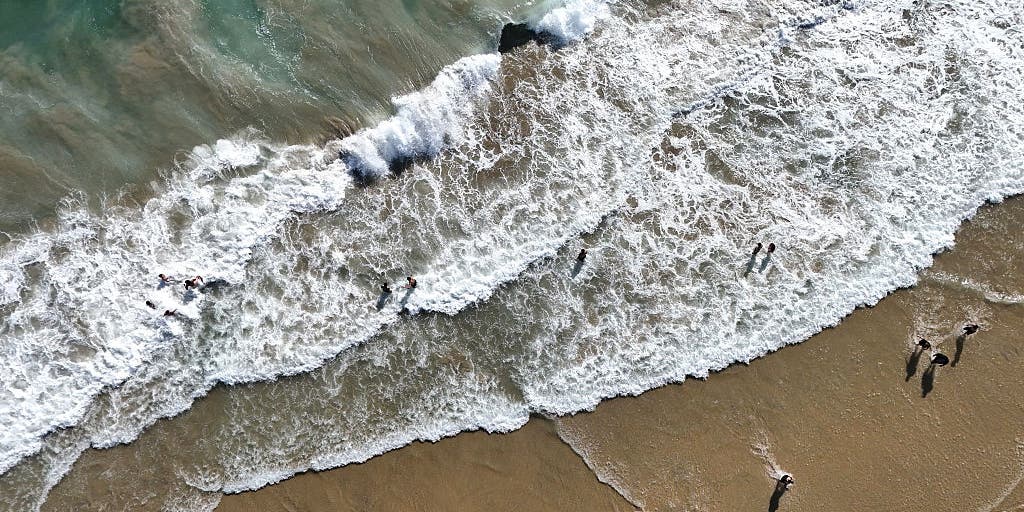


A strengthening El Niño and favorable atmospheric conditions continue to fuel an active Pacific hurricane season, with 15 named storms having formed so far.
THE TAKEAWAY
LOS ANGELES — Post-Tropical Cyclone Marie is hundreds of miles southwest of San Diego, but is still expected to produce several days of life-threatening surf after moisture associated with Marie brought rare September rains to the region over the weekend.
Los Angeles picked up its first measurable rain since April on Sunday. The 0.6 inches that fell also made Sunday the city’s wettest September day since 2015.
A strengthening El Niño and favorable atmospheric conditions continue to fuel an active Pacific hurricane season, with 15 named storms having formed so far.
The latest named storm, Tropical Storm Marie, is churning well southwest of Baja California, but its impacts were still felt across the Southwest and California, which saw rain across the San Bernardino mountains and High Desert.
Marie was downgraded from a Tropical Storm Tuesday morning.
While the storm is forecast to remain well offshore as it tracks north-west, Marie's swells are still forecast to bring life-threatening surf and rip currents along the Southern California coast for the next couple of days, the National Hurricane Center (NHC) said.
More than a dozen homes have been evacuated in Long Beach due to the seawall compromise and damage to the boardwalk, according to the Long Beach Fire Department.
"These evacuation orders are being issued out of an abundance of caution while the Building Department evaluates the structural integrity and condition of these homes," the fire department said in a Facebook post.
Lifeguards in Newport Beach, California, said swells swept a surfer over a jetty on Sunday. The surfer was not injured.
Officials advised beachgoers to heed High Surf Advisories.
For California surfers, the last time a hurricane impacted the West Coast was in 2014, when it produced picture-perfect, pumping surf.
With Marie's impacts set to return, don't expect conditions to rival what many still consider the benchmark for a hurricane-generated swell in California.
High Surf Advisories are in effect from Los Angeles south to San Diego, where some of the largest waves could exceed 10 feet. In addition, Coastal Flood Advisories have been issued as elevated surf increases the risk of minor coastal flooding and beach erosion.
HOW THE BIGGEST WAVES IN THE WORLD BREAK OFF THE COAST OF PORTUGAL
A pronounced dip in the jet stream over the northwestern U.S. will help pull some of Marie's tropical moisture into the Four Corners and Southern California, fueling an enhanced southwest monsoon pattern.
Farther east, deeper tropical moisture could increase the threat of flash flooding across southern Nevada, Utah and northern Arizona.
Moisture from Post-Tropical Cyclone Marie, combined with an upper-level trough, will help fuel thunderstorms across the Southwest, raising concerns for flash flooding in slot canyons such as Zion Canyon and the Grand Canyon.
ONE STILL MISSING FOLLOWING DEADLY FLOODING AT GRAND CANYON NATIONAL PARK AS MONSOON STORMS LINGER
The renewed threat comes just one week after deadly flash flooding in the Grand Canyon killed two people and prompted dozens of rescues.
Excessive runoff across Utah could trigger sudden, life-threatening flash flooding in dry washes, slick rock and poor-drainage areas, as well as recent burn scars.
Tropical Storm Karina dissipated in the Central Pacific late Sunday, after peaking at Category 4 intensity last week.
According to the FOX Forecast Center, post-tropical Karina is not expected to impact Hawaii. Hurricane Lowell, however, is forecast to take aim at the western Hawaiian Islands, threatening damaging winds, heavy rain, coastal flooding and dangerous surf.
WHAT IS AN ANNULAR STYLE OF HURRICANE?
Karina was a rare annular-type hurricane, that looks the part of a tire truck, or a donut, and features a massive, perfectly circular eye surrounded by a single, thick, uniform ring of intense thunderstorms.
According to the FOX Forecast Center, only about 4% of hurricanes become annular hurricanes, a rare structure that helps insulate them from hostile atmospheric conditions, allowing them to retain their intensity longer than most tropical cyclones.
The post Post-Tropical Cyclone Marie bringing dangerous surf to California coast and fueling Southwest monsoon threat appeared first on Fox Weather