


Trump suffers major Supreme Court defeat as justices uphold birthright citizenship
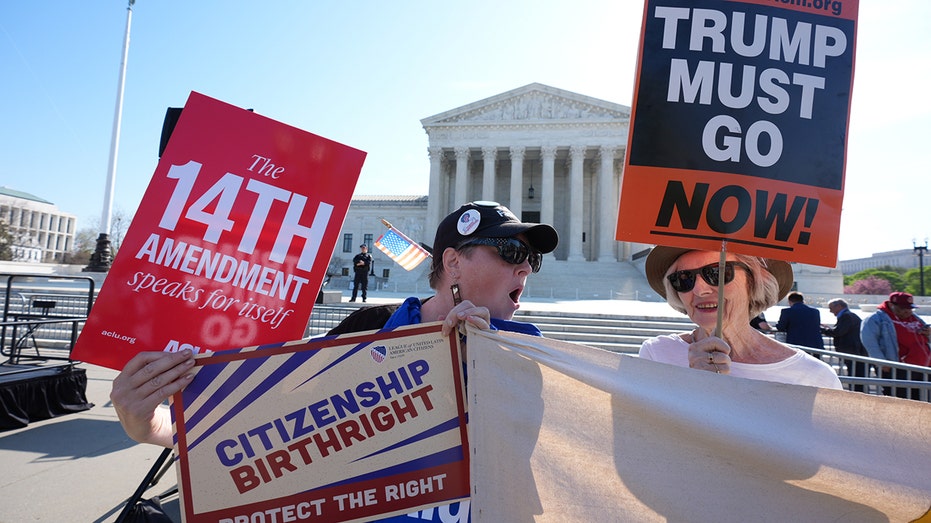

The Supreme Court rejected President Donald Trump's bid to end birthright citizenship, preserving the constitutional guarantee of automatic U.S. citizenship for most children born in the United States in a major setback for his immigration agenda.
The Supreme Court on Tuesday rejected President Donald Trump's bid to restrict birthright citizenship, preserving the long-standing constitutional interpretation that most children born in the United States are automatically U.S. citizens, including children born to parents who are unlawfully or temporarily present in the country.
The ruling is a major setback for Trump, who made curbing birthright citizenship a key part of his immigration agenda.
"Children born in the United States to parents unlawfully or temporarily present are 'subject to the jurisdiction' of the United States and are citizens at birth under the Fourteenth Amendment's Citizenship Clause," the court said.
"The Framers of the Fourteenth Amendment extended that promise to 'every free-born person in this land.' We keep that promise today."
The Supreme Court ruled 6-3 to affirm a district court ruling blocking Trump's executive order, with Chief Justice John Roberts and Justice Amy Coney Barrett joining the court's three liberal justices. Associate Justice Brett Kavanaugh concurred in judgment.
The court found that a person's citizenship status is not dependent on their parents', citing the 14th Amendment. Roberts wrote that the Court's 1898 ruling in Wong Kim Ark had settled the issue.
The majority said the Citizenship Clause was adopted to reverse the Supreme Court's Dred Scott ruling, which denied citizenship to Black Americans, and to ensure that citizenship is determined by birth on U.S. soil.
While Kavanaugh agreed that Trump's executive order could not take effect, he reached that conclusion on different legal grounds than the majority in a concurring opinion.
Kavanaugh argued that Trump's executive order violated current federal law; however, he said the Constitution would allow Congress to pass legislation restricting birthright citizenship for children born to parents who are in the country unlawfully or temporarily.
SUPREME COURT STRIKES DOWN LIMIT ON PARTY CAMPAIGN SPENDING IN COORDINATION WITH CANDIDATES
"Congress could—consistent with the Fourteenth Amendment — amend or otherwise enact new legislation establishing exceptions to birthright citizenship for children born to foreign citizens unlawfully or temporarily in the country. But Congress has not yet done so," Kavanaugh ruled.
Justice Clarence Thomas, joined by Justice Neil Gorsuch, authored a 91-page dissent, arguing that the majority misinterpreted the 14th Amendment. He wrote that the 14th Amendment does not guarantee birthright citizenship to children born to parents who are in the country unlawfully or temporarily. Thomas argued that the Court's 1898 ruling in Wong Kim Ark expanded birthright citizenship beyond what the Reconstruction Congress had ever "contemplated."
"Wong Kim Ark addressed only the citizenship of a child born to parents who were lawfully and permanently domiciled in the United States," Thomas wrote.
Justice Samuel Alito wrote a separate dissent, calling the Court's ruling a "serious mistake." He suggested the Court failed to consider the rise of "birth tourism," in which foreigners come to the United States solely to give birth, and argued that it could have serious national security implications.
"Suppose that a person's only connection to this country is that he was born here to a mother who was present just long enough to give birth and then quickly return to her native country," Alito wrote. "Suppose that country is a strategic adversary or enemy of the United States. Suppose the child never visited the United States while grown and was inculcated with hatred of this country."
TRUMP'S FIRING POWER FACES TWIN SUPREME COURT TESTS, BUT ONE AGENCY MAY GET SPECIAL TREATMENT
Alito pointed out that this hypothetical person can now enter and leave the United States without any restrictions.
"Even if he plots to harm this country, he cannot be deprived of his status as a citizen, at least under current precedent," Alito continued.
The Supreme Court's ruling stems from a lawsuit filed by the American Civil Liberties Union (ACLU) on behalf of families challenging President Donald Trump's executive order, "Protecting the Meaning and Value of American Citizenship." Trump said the order was intended to curb illegal immigration, arguing that granting automatic U.S. citizenship to anyone born in the country acts as a "magnet for illegal immigration."
The order sought to deny automatic U.S. citizenship to certain children born in the United States to parents who were in the country unlawfully or temporarily. The lawsuit, led by a Honduran woman identified only as "Barbara" to protect her identity, argued that the policy violated the 14th Amendment's Citizenship Clause and was therefore unconstitutional.
The ACLU and other immigrant rights groups argued that the Constitution guarantees birthright citizenship to nearly all children born on U.S. soil, regardless of their parents' immigration status, and that the president could not alter that constitutional guarantee through executive action. The Supreme Court ultimately agreed, striking down the order.
"The court’s decision reaffirms a fundamental American promise — if you are born here, you are a citizen," said ACLU National Legal Director Cecillia Wang, who argued the case before the Supreme Court. "A president cannot change the Constitution by executive fiat. Our brave clients and our legal team stand with millions of people around our country who spoke up for one of our most cherished rights. The Constitution’s guarantee of birthright citizenship stands strong."
The post Trump suffers major Supreme Court defeat as justices uphold birthright citizenship appeared first on FOX News Media