










Tropical development odds rise as brewing 'Super' El Niño drives Atlantic hurricane season to near record-low
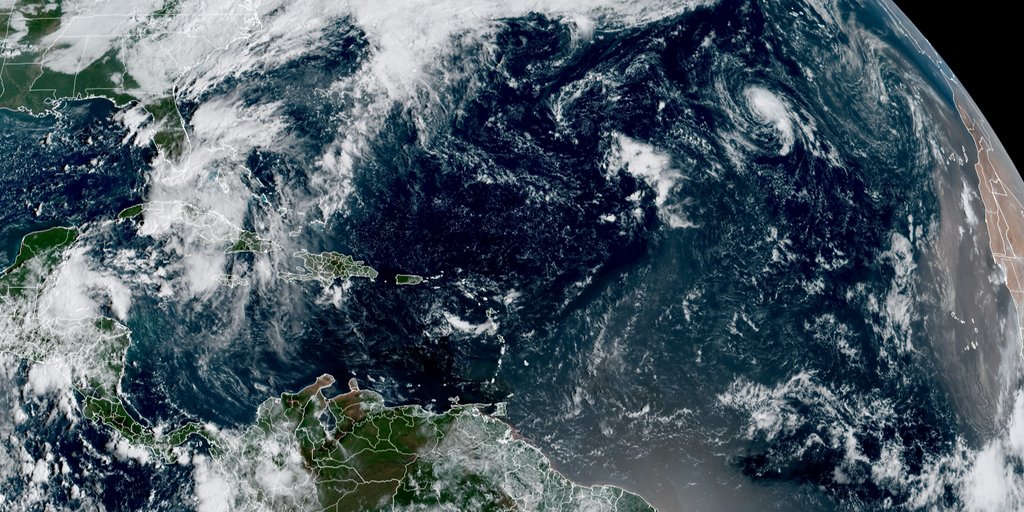

The National Hurricane Center (NHC) is monitoring an area to watch for tropical development just off the coast of West Africa amid the slowest start to an Atlantic hurricane season in the satellite era (since 1966) as hostile El Niño-driven winds have dominated much of the basin.
THE TAKEAWAY
The National Hurricane Center (NHC) is monitoring an area to watch for tropical development just off the coast of West Africa amid the slowest start to an Atlantic hurricane season in the satellite era (since 1966) as hostile El Niño-driven winds have dominated much of the basin.
NHC has designated this tropical wave — an area of disturbed weather with a burst of thunderstorms — as Invest 90L after it moved off the coast of Africa.
The hurricane center is giving 90L medium odds of developing over the next seven days.
WHAT IS AN INVEST DURING HURRICANE SEASON?
"The El Niño-driven prohibitive upper winds don't quite reach that corner of the Atlantic, although the atmospheric environment is still marginal," FOX Weather Hurricane Specialist Bryan Norcross said Tuesday.
If 90L does strengthen into a tropical storm, it would be named Gonzalo.
LATEST FROM FOX WEATHER HURRICANE SPECIALIST BRYAN NORCROSS
The NHC expects 90L to move northward and potentially bring gusty winds and rain to the Cabo Verde islands.
After a brief hiatus, Fay has returned as a tropical depression after its remnants redeveloped over the Atlantic on Wednesday.
Tropical Depression Fay was located about 885 miles southwest of the Azores with sustained winds of 35 mph, and is forecast to strengthen into a tropical storm by Thursday morning.
Fay approached, but failed to reach hurricane strength amid the Atlantic's quietest start to hurricane season in the satellite era, with just five named storms and no hurricanes.
The only years without recorded hurricanes are 1914 and 1907. However, as FOX Weather Hurricane Specialist Bryan Norcross notes, hurricanes could have formed in those years that went undetected because they remained far from land and ships at sea.
According to NOAA, El Niño is the main driving factor behind the dearth of Atlantic tropical activity. The strong winds produced by the climate pattern hinder tropical development; calm conditions are generally more conducive to hurricane formation.
However, experts at NOAA and FOX Weather still caution people to not let their guard down. Climatologically, about 40% of the season’s hurricane activity still remains.
The post Tropical development odds rise as brewing 'Super' El Niño drives Atlantic hurricane season to near record-low appeared first on Fox Weather