





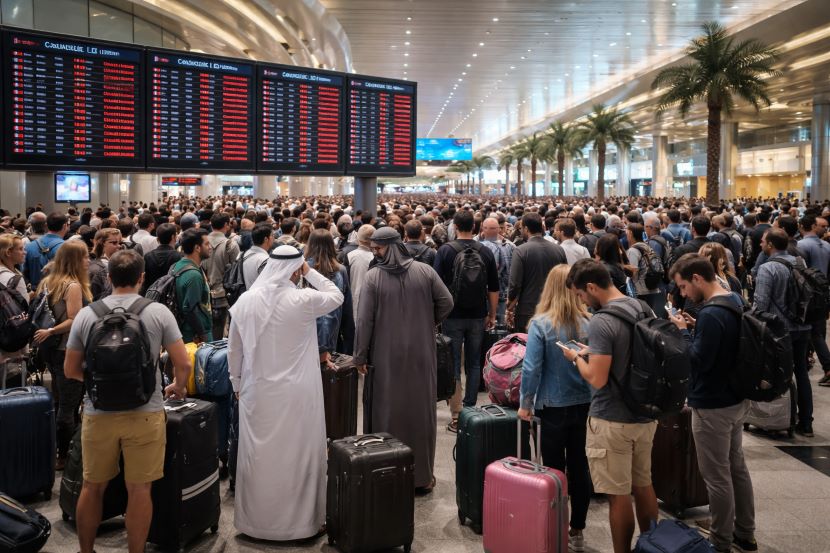
Thousands of Travellers Stranded In Middle East As UAE, Israel, Bahrain, Doha Delay 77 And Cancelled 1402 Flights, Impacting Gulf Air, Qatar Airways, Emirates And More In Dubai, Hamad And More
-
Travel
-
-
9 mins
-
Travel and Tour World
-
Soumava Chakrabarty
-


1,402 flights cancelled and 77 delayed across UAE, Israel, Bahrain and Qatar, stranding thousands of travelers at Dubai, Doha and other key Middle East hubs.
Travel across the Middle East is facing severe disruption as thousands of passengers find themselves stranded following a wave of flight cancellations and delays across major regional aviation hubs. Airports in the United Arab Emirates, Israel, Bahrain, and Qatar have reported significant operational interruptions, with a combined total of 1,402 flights cancelled and 77 delayed. Key global transit hubs such as Dubai International Airport, Hamad International Airport, Ben Gurion International Airport, Bahrain International Airport, and Abu Dhabi International Airport are among the most affected. These airports act as vital gateways connecting Europe, Asia, Africa, and North America, meaning the disruptions are reverberating across global travel routes. Major carriers including Qatar Airways, Emirates, Etihad Airways, and Gulf Air have been impacted, forcing travelers to navigate missed connections, extended layovers, and sudden itinerary changes.
Airport Wise Disruptions
Heavy Disruptions at Dubai International Airport Disrupt Global Travel Plans
Travelers passing through Dubai International Airport (DXB) are facing major disruptions today after 834 flights were cancelled and 38 delayed, significantly impacting both departures and transit connections. As one of the world’s busiest international hubs linking Europe, Asia, North America, and Australia, the cancellations have created a ripple effect across global travel networks. Thousands of passengers are dealing with missed onward connections, extended layovers, and last-minute rebooking challenges. Long-haul transit travelers appear to be among the hardest hit, particularly those connecting onward to major cities such as London, Mumbai, Bangkok, and New York. Airlines are advising passengers to check flight status before heading to the airport and to explore flexible rebooking options where available. With DXB serving as a primary gateway for both tourism and business travel, the operational disruption is likely to impact hotel bookings, tour schedules, and connecting itineraries in the short term.
Travel Plans Disrupted at Ben Gurion International Airport
Operations at Ben Gurion International Airport (TLV) have been significantly impacted, with 145 flight cancellations and one reported delay, disrupting both inbound and outbound travel. As Israel’s primary international gateway, the airport connects Tel Aviv with major cities across Europe, North America, and Asia, meaning the cancellations are affecting thousands of leisure and business travelers. Many passengers are facing last-minute itinerary changes, missed connections, and uncertainty over rebooking availability. The disruption is particularly challenging for transit travelers and those with tight travel schedules, including tour groups and corporate visitors. Airlines are urging passengers to check flight statuses before heading to the airport and to remain in contact for updated rebooking options. The cancellations may also impact hotel reservations and planned tours, creating a broader ripple effect across Israel’s tourism and hospitality sectors in the short term.
Flight Cancellations Disrupt Travel Through Bahrain International Airport
Travelers flying through Bahrain International Airport (BAH) are experiencing significant disruption after 142 flights were cancelled, though no delays have been reported. As a key Gulf hub connecting the Middle East with Europe, Asia, and parts of Africa, the cancellations are affecting both outbound passengers and transit travelers relying on seamless connections. Holidaymakers, business travelers, and expatriate workers are among those facing sudden itinerary changes, with many scrambling to secure alternative flights amid limited seat availability. The absence of delays suggests grounded services rather than staggered departures, leaving passengers dependent on airline rebooking processes. With Bahrain serving as an important regional gateway, the disruption is likely to impact short-term tourism flows and onward travel plans, prompting authorities and airlines to advise passengers to check flight status updates before heading to the airport.
Travel Disruptions Mount at Hamad International Airport
Passengers traveling through Hamad International Airport (DOH) are facing notable disruptions after 180 flights were cancelled and 11 delayed, impacting both departures and connecting journeys. As one of the Middle East’s leading global transit hubs linking Europe, Asia-Pacific, Africa, and the Americas, the cancellations are creating ripple effects across long-haul travel networks. Transit passengers connecting through Doha appear particularly affected, with missed onward flights and extended layovers disrupting carefully planned itineraries. Business travelers and holidaymakers alike are navigating rebooking challenges as airlines work to adjust schedules and accommodate stranded passengers. With Doha serving as a key gateway for international tourism and corporate travel, the operational setbacks could temporarily affect travel flows and hospitality bookings. Travelers are advised to monitor airline notifications closely and confirm flight status before heading to the airport.
Flight Disruptions Impact Travel at Abu Dhabi International Airport
Operations at Abu Dhabi International Airport (AUH) have been disrupted with 101 flight cancellations and 27 delays, affecting both departing passengers and international transit travelers. As a major gateway connecting the UAE with Europe, Asia, North America, and the Indian subcontinent, the disruptions are creating scheduling challenges for holidaymakers, business travelers, and connecting passengers. Delays are leading to extended waiting times at terminals, while cancellations are forcing many to seek alternative routes or later departures. With Abu Dhabi serving as an important hub for regional and long-haul travel, the impact is likely to be felt across tourism, corporate travel, and onward global connections. Airlines are advising passengers to check real-time flight updates and remain in contact for rebooking options as schedule adjustments continue.
Middle East Travel Chaos: Major Airport Disruptions Leave Thousands Stranded
Travelers across the Middle East are facing widespread flight disruptions as key international hubs report significant cancellations and delays. From Dubai to Tel Aviv, Doha to Abu Dhabi, and Bahrain, the ripple effect is being felt across Europe, Asia, North America, and beyond. With these airports serving as vital global transit corridors, the impact stretches far beyond the region—affecting holidaymakers, business travelers, and long-haul connecting passengers alike.
Below is a clear snapshot of the current disruption landscape:
| Airport | Cancelled Flights | Delayed Flights | Travel Impact |
|---|---|---|---|
| Dubai International Airport (DXB) | 834 | 38 | World’s busiest international transit hub heavily impacted; long-haul connections to Europe, Asia, North America disrupted. Transit passengers hardest hit. |
| Ben Gurion International Airport (TLV) | 145 | 1 | Israel’s main international gateway seeing major outbound cancellations, affecting tourism and business travel. |
| Bahrain International Airport (BAH) | 142 | 0 | Regional Gulf hub cancellations impacting connecting passengers and regional leisure routes. |
| Hamad International Airport (DOH) | 180 | 11 | Major global transit center disrupted; missed onward connections across intercontinental routes. |
| Abu Dhabi International Airport (AUH) | 101 | 27 | Mix of cancellations and delays causing extended airport wait times and rebooking challenges. |
A Ripple Effect Beyond the Region
With more than 1,400 combined cancellations across these five major airports, the disruption underscores how interconnected global aviation truly is. What begins as regional operational turbulence can quickly evolve into worldwide travel gridlock. For now, flexibility, real-time monitoring, and early rebooking remain the best tools for travelers navigating this fast-changing situation.
As airlines work to stabilize schedules, passengers across continents are watching closely—because when major Middle East hubs pause, global travel feels the impact.
Some Affected Airlines Due To This Cancellation
Etihad Airways Faces Operational Disruptions, Impacting Global Travelers
Passengers flying with Etihad Airways are experiencing notable travel disruptions after 44 flights were cancelled and 25 delayed, affecting both regional and long-haul routes. As the national carrier of the United Arab Emirates and a major connector between Europe, Asia, North America, and Australia, the cancellations are creating ripple effects for transit passengers and point-to-point travelers alike. Delays are leading to extended airport wait times, while cancellations are forcing many travelers to rebook amid tightening seat availability. Business travelers and holidaymakers with tight schedules are particularly impacted, especially those connecting through Abu Dhabi. The airline is advising passengers to check flight status updates regularly and stay in contact for rebooking and accommodation support as schedule adjustments continue.
Gulf Air Sees Limited Disruptions Amid Regional Travel Uncertainty
Passengers flying with Gulf Air are experiencing minimal disruption, with four flights cancelled and no reported delays. While the numbers remain relatively low compared to wider regional impacts, the cancellations may still affect travelers with tight itineraries or onward international connections. As Bahrain’s national carrier operating routes across the Middle East, Europe, and Asia, even a small number of cancellations can create rebooking challenges during periods of broader aviation strain. Transit passengers and short-haul travelers may need to adjust schedules, particularly if connecting through Bahrain. The airline is advising customers to verify flight status before heading to the airport and remain in contact for updated travel arrangements as regional air traffic conditions continue to evolve.
Qatar Airways Disruptions Affect Long-Haul and Transit Travelers
Passengers flying with Qatar Airways are facing notable travel disruption after 122 flights were cancelled and 10 delayed, impacting both regional services and long-haul international routes. As one of the world’s leading global carriers connecting Europe, Asia, Africa, North America, and Australia through Doha, the cancellations are creating ripple effects across international travel networks. Transit passengers connecting via Hamad International Airport are among the hardest hit, with missed onward flights, extended layovers, and last-minute itinerary changes. Holidaymakers, corporate travelers, and students traveling between continents may face limited rebooking availability as airlines adjust schedules. The carrier is advising passengers to monitor real-time flight updates and stay in contact for alternative arrangements, as ongoing operational challenges continue to affect travel plans worldwide.
Oman Air Records Minor Disruptions Amid Regional Flight Adjustments
Passengers flying with Oman Air are seeing limited operational impact, with four flights cancelled and no reported delays. While the disruption level remains relatively low, affected travelers may still face itinerary changes, particularly those with onward international connections through Muscat. As Oman’s national carrier operating routes across the Middle East, Europe, Asia, and parts of Africa, even a handful of cancellations can create rebooking pressure during broader regional aviation instability. Transit passengers and time-sensitive business travelers are advised to verify flight status before departure and remain in contact with the airline for updated arrangements. Overall, Oman Air’s operations appear comparatively stable, offering some reassurance to passengers navigating a challenging regional travel environment.
Emirates Maintains Stability Despite Limited Cancellations
Passengers flying with Emirates are experiencing minimal disruption, with six flights cancelled and no reported delays, offering a degree of stability amid broader regional aviation challenges. As one of the world’s largest long-haul carriers operating extensive routes between Europe, Asia, Africa, the Americas, and Australia via Dubai, even a small number of cancellations can affect connecting itineraries. However, the absence of delays suggests operations remain largely on schedule, helping reduce airport congestion and missed onward connections. Travelers are still advised to check flight status updates before heading to the airport, particularly those with tight transit windows. Overall, Emirates appears to be maintaining operational resilience, providing relative reassurance to passengers during a period of wider travel uncertainty.
Flydubai Reports Limited Cancellations as Regional Travel Faces Pressure
Passengers traveling with Flydubai are seeing minimal operational disruption, with four flights cancelled and no reported delays. While the numbers remain relatively low, affected travelers—particularly those on short-haul regional routes across the Middle East, South Asia, and Eastern Europe—may still face last-minute schedule adjustments. As a key feeder airline supporting connections through Dubai, even limited cancellations can impact onward international itineraries for transit passengers. However, the absence of delays indicates that most services are operating on schedule, helping ease congestion and reduce extended airport wait times. Travelers are encouraged to verify flight status before departure and stay in touch with the airline for rebooking options if affected, as regional aviation conditions continue to evolve.
Middle East Flight Disruptions Create Ripple Effect Across Global Travel
Air travel across the Middle East is experiencing significant disruption as major airports and leading airlines report a surge in cancellations and delays, affecting thousands of passengers worldwide. Key aviation hubs including Dubai International Airport, Hamad International Airport, Ben Gurion International Airport, Bahrain International Airport, and Abu Dhabi International Airport together recorded more than 1,400 flight cancellations and over 70 delays, disrupting global travel routes linking Europe, Asia, Africa, and North America. Dubai International Airport alone accounted for 834 cancellations and 38 delays, followed by 180 cancellations and 11 delays at Hamad International Airport, 145 cancellations and one delay at Ben Gurion International Airport, 142 cancellations at Bahrain International Airport, and 101 cancellations with 27 delays at Abu Dhabi International Airport, highlighting the scale of operational challenges across the region’s busiest transit hubs. Several major airlines were also impacted, including Qatar Airways with 122 cancellations and 10 delays and Etihad Airways with 44 cancellations and 25 delays, while Emirates, Flydubai, Oman Air, and Gulf Air reported relatively smaller disruptions. The widespread cancellations have created challenges for travelers including missed connections, longer airport wait times, and urgent rebooking needs, particularly for passengers connecting through Gulf hubs between Europe, Asia, and Australia. As airlines work to stabilize schedules, travelers are being urged to check real-time flight updates and remain flexible with travel plans, underscoring how disruptions at major Middle Eastern transit hubs can quickly ripple across the global aviation network.
What This Means for Travelers
- Missed international connections
- Longer layovers and airport congestion
- Limited seat availability on rebooked flights
- Disruptions to hotel bookings and tour schedules
- Increased pressure on airlines and travel insurance providers
Dubai and Doha, in particular, act as major East-West aviation bridges. When these hubs slow down, global travel chains react almost instantly. Even passengers not flying directly to the Middle East may feel secondary impacts due to aircraft rotations and crew scheduling adjustments worldwide.
What You Should Do Now
Check flight status before leaving for the airport
Stay in contact with your airline for rebooking options
Monitor official airport announcements
Review travel insurance policies for coverage
Conclusion
The surge in flight cancellations and delays across these key Middle Eastern aviation hubs highlights how quickly disruptions in one region can cascade across the global travel network. With over 1,400 cancelled flights and dozens of delays, passengers traveling through Dubai, Doha, Abu Dhabi, Tel Aviv, and Bahrain are experiencing missed connections, prolonged airport waits, and urgent rebooking challenges. For many travelers, especially those relying on Gulf hubs for long-haul transfers between Europe, Asia, and Australia, the disruption has created complex logistical hurdles. Airlines are working to stabilize schedules and accommodate affected passengers, but limited seat availability and ongoing operational adjustments may continue to affect travel plans in the short term. Experts recommend that passengers closely monitor airline notifications, verify flight status before heading to the airport, and remain flexible with travel arrangements. As the aviation system gradually restores normal operations, the incident serves as a reminder of the delicate interconnectedness of international air travel.
Source:- FlightAware and Different Airports
The post Thousands of Travellers Stranded In Middle East As UAE, Israel, Bahrain, Doha Delay 77 And Cancelled 1402 Flights, Impacting Gulf Air, Qatar Airways, Emirates And More In Dubai, Hamad And More appeared first on Travel and Tour World