





The Rolling Gallery: How China’s Qilu No. 1 is Redefining the Art of Slow Rail Travel
-
Travel, Food, Culture
-
-
3 mins
-
Travel and Tour World
-
Poulomi Sinha
-


Discover China’s Qilu No. 1, a revolutionary "moving museum" train blending Shandong’s Confucian heritage with immersive rail travel across Hebei.
The Qilu No. 1 tourism train has recently been unveiled, blurring the traditional boundaries between transit and destination in Eastern China. This initiative, which began on February 14 at Taishan Station in Tai’an, is described as a “moving museum” that connects the historic provinces of Shandong and Hebei. Rather than the clinical efficiency often associated with high-speed rail, there is a deliberate push for experiential, story-driven travel. The existing railway corridors have been repurposed to serve as an immersive showcase of regional heritage, effectively transforming a typical commute into a deep dive into the “Qilu” culture—the Shandong region’s ancient name.
From Carriages to Curated Galleries
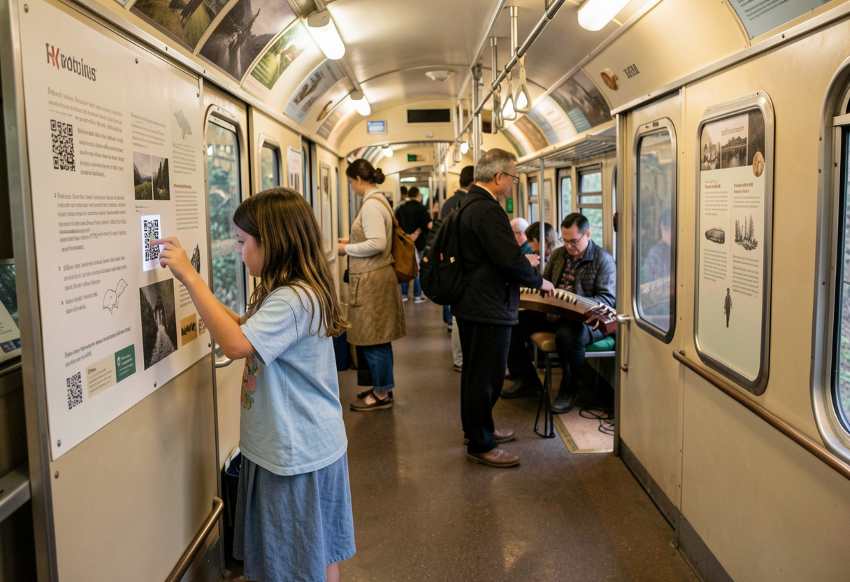
The interior of the train has been meticulously transformed, ensuring that passengers are greeted not by rows of utilitarian seating, but by a sequence of mini-galleries. The walls of the carriages are wrapped in high-resolution reproductions of significant cultural relics, iconic landmarks, and the rolling rural landscapes that define the two provinces. Within these mobile halls, local crafts and intangible heritage items are highlighted in specialized display cases.
The origins of key historical sites and regional traditions are explained through interpretive panels, which are strategically placed to encourage travellers to venture beyond the platforms during station stops. This design philosophy is intended to transform what was once passive transit time into a period of active cultural engagement. The aesthetic of the train is deeply rooted in the cultural reserves of Shandong—the birthplace of Confucius. Bespoke interiors have been outfitted with motifs inspired by stone carvings, Confucian temples, and coastal folk art, all set against a colour palette that echoes the region’s historical ceramics and textiles.
Integration of Heritage and Digital Innovation
In addition to the physical exhibits, the journey is enhanced by a suite of digital tools. Short documentary clips, interactive maps, and audio introductions are offered via digital displays throughout the train. QR codes placed beside artworks can be scanned by passengers to access extended narratives, interviews with local artisans, and suggested itineraries for when they disembark. This digital layer is designed to provide a comprehensive educational experience that caters to the modern, tech-savvy traveller while maintaining a focus on historical authenticity.
On selected departures, the cultural atmosphere is further elevated by the presence of folk musicians, cultural performers, and heritage bearers. Traditional crafts such as shadow puppetry and paper-cutting are demonstrated live, with programmes tailored to match the seasonal rhythms of the region. Whether it is a spring flower-viewing theme or a harvest celebration, the onboard content is rotated to ensure that repeat travellers are consistently provided with fresh perspectives on regional life.
Culinary Journeys and Economic Revitalization
The cultural theme is extended into the dining car, where catering has been adapted to reflect the geography of the route. Representative snacks and regional specialities from the various cities along the line are highlighted on the menu. These recipes are tied to local history, ensuring the dining experience functions as a culinary extension of the museum.
Beyond the aesthetic and educational benefits, the Qilu No. 1 is positioned as a strategic development tool. By linking major tourism gateways with smaller, often overlooked cities in Hebei, visitor flows are distributed more evenly across the region. It is expected that spending on lodging, dining, and local handicrafts will be stimulated in secondary and tertiary stops. Village cooperatives and small-scale guesthouse operators have been identified as primary beneficiaries of this increased foot traffic. To reduce planning friction, integrated travel products are being created where train tickets are packaged with entry to scenic areas and local performances.
A New Chapter for Chinese Tourism
The introduction of this service is viewed as part of a larger national trend towards boutique and themed tourism. As “slow travel” becomes more popular among domestic leisure travellers and families, projects like Qilu No. 1 provide an alternative to modern life’s hectic pace. According to industry observers, these themed services can help smooth out seasonal demand by scheduling special departures around flower seasons or winter festivals.
The collaboration between railway authorities and cultural institutions is expected to strengthen in the coming years. Collaborations with universities and major museums are being investigated to enable on-train lectures and rotating exhibitions. While the current focus is on refining the inaugural Shandong-Hebei route, regional planners are already considering future expansions to coastal landscapes or “Red Tourism” sites. For the time being, the Qilu No. 1 serves as a model for how infrastructure and heritage can work together to create a sustainable and enriching travel ecosystem.
The post The Rolling Gallery: How China’s Qilu No. 1 is Redefining the Art of Slow Rail Travel appeared first on Travel and Tour World