








Six rock bands who got better after replacing key members


Some bands fizzle out after having to make lineup changes, but these six bands reached new heights after replacing key members with fresh blood.
Hey, I heard you missed us, we're back!
That's right, my buddy Matt Reigle and I had so much fun doing our last article/video series discussing the biggest snubs in the Rock and Roll Hall of Fame, we decided to make another.
This time, we discussed six bands who got even better after replacing a previous, key member.
Obviously, "better" is a subjective term, but these six bands reached new commercial and artistic heights with the changes they made.
One caveat we decided to include is that these bands needed to already have a major label album under their belts. That means guys like Dave Mustaine (Metallica), Pete Best (Beatles) and Mark Stone (Van Halen) being replaced, among others, before the band's first record hit the shelves don't count.
Okay, enough with the preamble, let's dive in.
When you think of the band Genesis, I'm sure 98% of you picture them as this glossy pop unit with a penchant for writing catchy 80s radio-friendly tunes, but it wasn't always that way.
Before Phil Collins stepped in to take on vocal duties, a man by the name of Peter Gabriel handled those, and he was pretty damn good in his own right.
Genesis was a prog-rock group for much of Gabriel's run throughout the early to mid-'70s, but he chose to leave following the release of their 1974 album "The Lamb Lies Down on Broadway" (that title alone should tell you all you need to know about early Genesis and their musical stylings).
Collins, who was actually the band's drummer at the time, stepped up to pull double duty as both percussionist and lead vocalist.
ROCK LEGEND PHIL COLLINS ADMITS IT'S STILL 'SINKING IN' THAT HE'LL NEVER PERFORM AGAIN
While their first few albums with Collins on the mic weren't a big departure from their earlier catalog, it was 1980s Duke that finally saw the band become the hit machines we know them as today.
With classics like "Misunderstanding," "That's All," "Land of Confusion" and "Invisible Touch," among others, Genesis became one of the bigger pop rock acts of the 80s, and I don't think that happens without placing Collins in the lead singer spot.
This story has a mutually happy ending for the other party, too, as Gabriel went on to have a very successful solo career.
It's always a bonus when both parties get what they want.
This one might be a little unfair given that it was a death rather than a true replacement, but it's our list and we can do what we want, dammit!
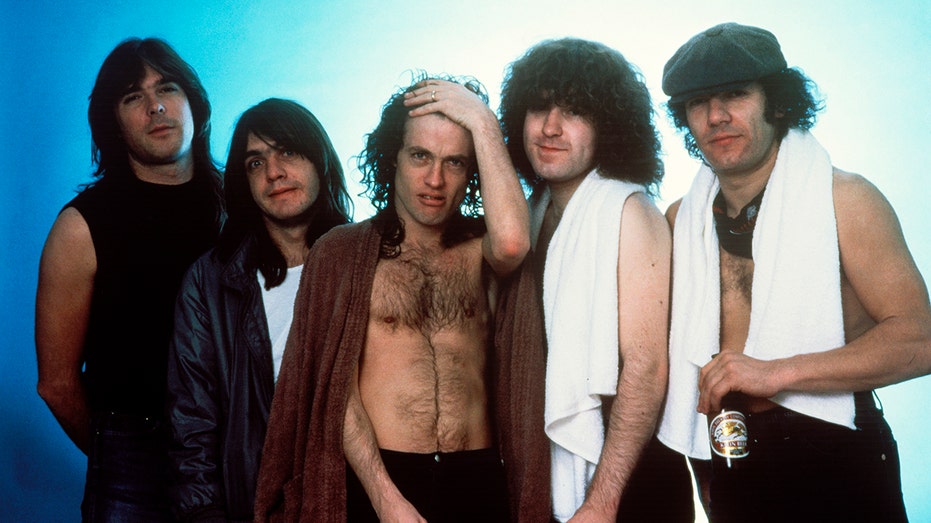
Anyway, throughout the 1970s, Australia's AC/DC had cultivated a loyal following as a "bar band who made it big" and had a string of classic albums to their name like "T.N.T." and "High Voltage," but by 1979, many thought the band had reached their commercial and artistic peak with the seminal "Highway to Hell."
Then tragedy struck, as lead singer Bon Scott choked on his own vomit after a night of binge drinking in early 1980.
Scott was the heart and soul of the band as well as the de facto leader, so the rest of the group was heartbroken but vowed to soldier on in their fallen brother's honor.
In walked Brian Johnson, and the rest, as they say, is history.
With Johnson in the fold, AC/DC recorded and released what is, to this day, one of the best selling rock albums of all time in "Back in Black," which has sold roughly 50 million copies at the time of writing this.
If they had just released "Back in Black" and nothing else, Johnson would have probably still made it on this list, but the band just kept going, and some of their biggest hits like "For Those About to Rock" and "Thunderstruck," along with the hits off of "Back in Black" were released during Johnson's tenure, cementing his legacy and contributions with the band.
Funny enough, as my colleague Matt pointed out, when Johnson had to take a break because of a vocal injury, AC/DC enlisted the services of Guns N' Roses frontman Axl Rose, who filled in more than admirably for Johnson.
Those AC/DC guys sure know how to pick lead singers.
From Phil Collins to Phil Collen, we've got them all on this list!
This one might ruffle some feathers of early 80s metal fans, but bear with me.
Early in their run as a band from Sheffield, England, Def Leppard was one of the flag-bearers of the New Wave of British Heavy Metal movement, with their twin-lead guitar attack of Steve Clark and Pete Willis helping define their sound.
With admittedly classic albums like "On Through the Night" and "High 'n Dry" under their belt, Def Leppard had built a fanbase that was accustomed to loud, in-your-face, ballsy hard rock.
Willis, though, liked to drink (apparently a lot more than the other members of the band, which is saying a lot), and couldn't be relied on during the recording sessions for their next album, so they showed him the door and brought in Phil Collen, changing the trajectory of the group entirely.
It could be argued that producer Mutt Lange's influence on the band had a big factor in the change of their sound, but he had already produced "High 'n Dry" before Collen joined the fold, and when the band put out "Pyromania" in 1983, it was clear this was a different Def Leppard.
With hits like "Photograph," "Too Late For Love" and "Foolin'," Def Leppard had established themselves as full-blown arena rock gods, and that was before they had ever unleashed their monster 1987 magnum opus "Hysteria" onto an unsuspecting public.
Collen's uncanny penchant for melodic hooks and his superb background vocals made him the perfect ingredient to make Def Leppard the supernova that they became in the 80s and early 90s, and their jump in popularity directly coinciding with his addition to the band makes him my clear cut number one.
Now that you've got my side of things, here are Matt's three choices for rock replacements:
Megadeth had already had some serious axe-slingers in its ranks before heading into the studio for the follow-up to their 1988 record "So Far, So Good… So What!"
Obviously, bandleader and frontman Dave Mustaine is a monster player, and he employed great guitarists like Chris Poland and Jeff Young on some of the early records, but Megadeth shifted into another gear when Marty Friedman joined them for 1990's "Rust in Peace," one of the greatest thrash metal albums ever.
Friedman wasn’t just a shred machine; he brought unique phrasing and leads inspired by Middle Eastern music that helped take songs like "Hangar 18" and "Holly Wars… The Punishment Due" to another level.
Friedman left Megadeth in 2000, but he continued to be a massive influence in the band's sound and every other guitarist who stepped in to fill his shoes after.
If this one comes in at No. 2 on my list, you know No. 1 will be a doozy.
For the band's first two albums, "Iron Maiden" and "Killers," the man behind the mic for the soon-to-be Rock and Roll Hall of Famers was the late great Paul Di’Anno.
But as great as he was, Maiden knew they needed something to push them over the edge and to lead the New Wave of British Heavy Metal charge.
That thing was Bruce Dickinson.Bruce’s soaring, operatic, Ian Gillan-influenced vocals were the secret sauce that took Maiden’s game to another level.
Oddly enough, he upped their game twice. After leaving the band in 1993, Bruce returned for 2000’s "Brave New World," and Maiden was suddenly back to playing larger venues and festivals.
A replacement so good I think people forget he’s a replacement.
When Rush dropped their self-titled debut album, John Rutsey was behind the kit, laying down drums alongside Alex Lifeson and Geddy Lee.
But in the next album, "Fly by Night," they brought in Neil Peart, and the rest is prog rock history.
ZERO BS. JUST DAKICH. TAKE THE DON'T @ ME PODCAST ON THE ROAD. DOWNLOAD NOW!
Peart is regarded as one of, if not the greatest, drummers of all time, and he immediately opened up another dimension of musical possibilities for the band.
But the late drum god was far from a one-trick pony; he also wrote the band’s lyrics, and as any Rush fan knows, the lyrics aren’t just saying how much you want to rock and roll.
No, they’re about dining on honeydew and drinking the milk paradise.
Neil Peart was one guy who raised his band’s game on multiple fronts, and that’s why I’m calling this the greatest bad member replacement of all time.
The post Six rock bands who got better after replacing key members appeared first on FOX News Media