





Scientists say you've been throwing away perfectly good meat because of one common mistake
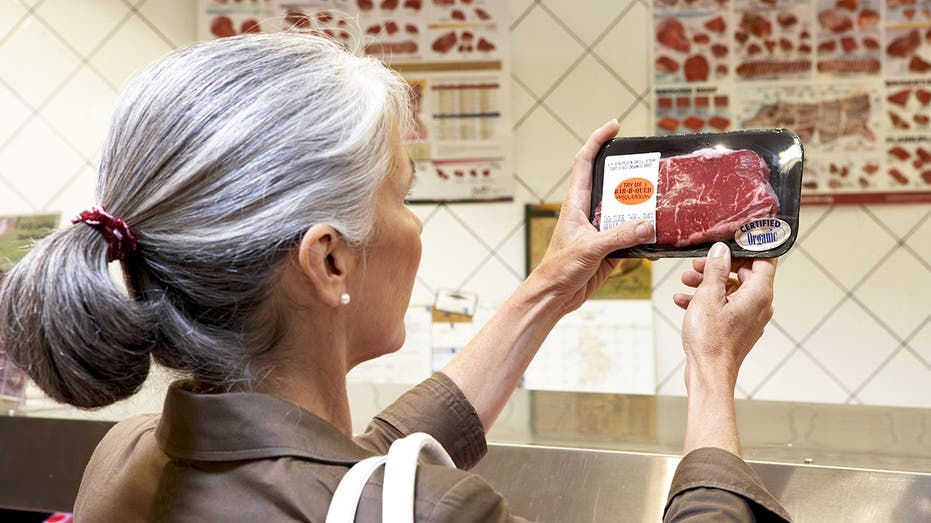

A group of scientists says sell-by dates on meat are overly conservative and are using predictive microbial modeling to extend shelf life and reduce food waste.
Scientists are rethinking the dates consumers see on food packaging — and their research could help reduce not only food waste but also economic losses and environmental impacts tied to discarded food.
"The average American wastes more than 1,000 pounds of food each year," according to Auburn University researchers.
Part of the reason is that sell-by dates are overly conservative, the researchers said in a news release announcing their work to predict spoilage more accurately.
VIRAL GROCERY SHOPPING METHOD PROMISES TO SLASH SPENDING: 'WAY EASIER, WAY CHEAPER'
The findings could help consumers make more informed decisions about food safety while reducing unnecessary waste throughout the supply chain.
"This research is far more significant than a discussion about meat discoloration or shelf life," Darin Detweiler, a food safety policy expert and professor at Northeastern University's College of Professional Studies, told Fox News Digital.
"It is an example of how data, microbiology and artificial intelligence may help transform food systems from managing failure after it occurs to predicting and preventing inefficiencies before they happen," he said. (Detweiler was not involved in the new research.)
The Auburn study focuses on meat sell-by dates, which are commonly used by retailers to indicate how long products should remain on store shelves.
Sell-by dates for meat are typically four days after packaging, the news release said.
They're "based on when the beef will start to lose its bright pink color, rather than when it becomes unsafe to eat."
A change in color doesn't necessarily mean meat is unsafe to eat, however.
"If a consumer sees that on day three their meat is brown, and it's around the 'sell by' date, they might think it's spoiled, but in fact it's just quality degradation," said Isabella Gafanha, an Auburn master's student who was involved in the research. "It's still fine to eat."
The Auburn researchers used a machine to track changes in microbial communities in packages of ground beef over the course of 14 days. The goal was to "associate those changes with key changes in the meat quality and indicators of spoilage."
Researchers monitored microbial activity in ground beef packages over a two-week period, using predictive modeling to identify patterns that could signal spoilage before it becomes visible to consumers.
The microscopic activity of the bacteria in the microbial community is complex.
Ultimately, though, the researchers were "able to determine that spoilage patterns could be predicted, demonstrating the concept can work," the release said.
Researchers plan to continue their work to create more accurate sell-by dates while reducing the pounds of meat unnecessarily discarded each year.
CLICK HERE FOR MORE LIFESTYLE STORIES
The economic implications of the research are "enormous," Detweiler said.
When meat is discarded, producers lose out on costs associated with animal feed, transportation, processing, packaging and more. Retailers also lose when they are forced to remove unsold products from their shelves.
"If predictive microbial modeling allows shelf life to be extended safely by even one or two days, the cumulative impact across the beef industry could represent hundreds of millions of dollars in recovered value annually," Detweiler said.
"From a leadership perspective, this represents a rare opportunity where profitability and sustainability may align rather than compete," he added.
The research could also benefit the environment in a major way, he said.
"Food waste is one of the largest hidden environmental burdens in the food system," Detweiler said.
CLICK HERE TO SIGN UP FOR OUR LIFESTYLE NEWSLETTER
"Every pound of beef discarded represents wasted water, land, feed, energy and transportation emissions. Beef production has one of the highest environmental footprints among food commodities."
The domino effect of the Auburn research has the potential to help people facing food insecurity, Detweiler said.
"While extending shelf life alone will not solve hunger, reducing avoidable waste contributes to a more efficient and responsible food system," Detweiler said.
Consumers may also benefit, he said, from reduced food costs if food producers and retailers are able to safely reduce waste-related losses.
To ensure food safety is prioritized and consumers are protected, companies must apply this research and technology beyond increasing profits, Detweiler said.
TEST YOURSELF WITH OUR LATEST LIFESTYLE QUIZ
"A longer shelf life must still be validated through rigorous food safety science and regulatory oversight," he said.
The researchers indicated that additional work is needed before predictive spoilage modeling could be broadly adopted by the meat industry, but they believe the early results demonstrate the technology's potential to improve food dating practices and reduce unnecessary waste.
The post Scientists say you've been throwing away perfectly good meat because of one common mistake appeared first on FOX News Media