
















Record sargassum levels impacting Florida beaches during Spring Break
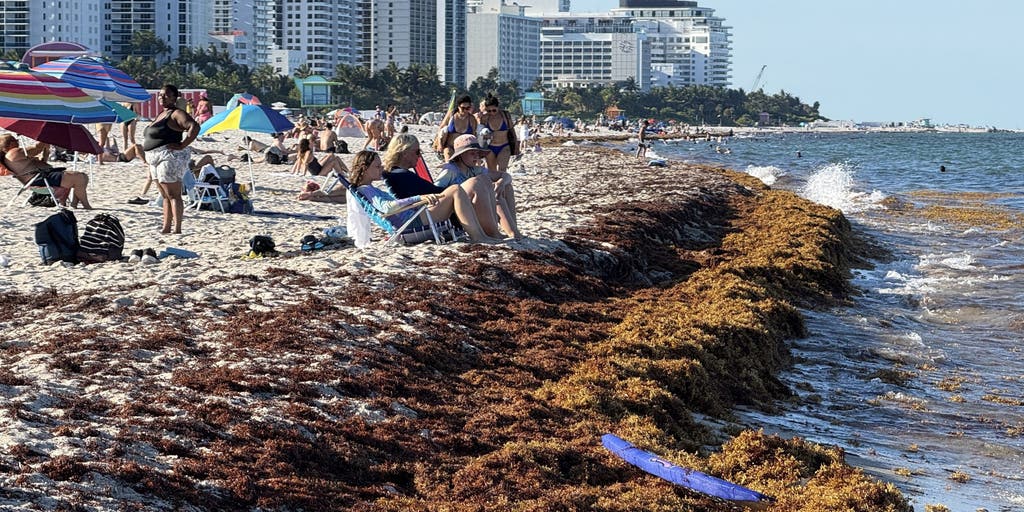


As millions of spring breakers flock to Florida in search of scenic beaches, warm weather and the trademark blue ocean waters – they are being met with an unpleasant surprise. An estimated 9.5 million tons of sargassum is beginning to make landfall in Florida.
If you thought sarcasm was annoying, just wait until you smell sargassum.
As millions of spring breakers flock to Florida in search of scenic beaches, warm weather and the trademark blue ocean waters – they are being met with an unpleasant surprise.
Sargassum is a naturally occurring brown seaweed that floats in large masses across the ocean, renowned for its trademark vacation-ruining odor that coats the shores of numerous popular U.S. beaches along the East Coast, and just in time for spring break, it's back.
An estimated 9.5 million tons of sargassum is beginning to make landfall in the Western Atlantic, Caribbean, Mexico, southern Texas and in South Florida, according to environmental engineer Tracy Fanara.
While the rotten-egg stench is more than enough to ruin a beach day, sargassum plays an important role in the health and biodiversity of open ocean ecosystems, according to NOAA.
In natural amounts, sargassum provides habitat, food, protection, and breeding grounds for hundreds of diverse marine species. It supports commercially important fish such as tuna and swordfish, which feed on the smaller organisms living within sargassum mats, while also helping reduce beach erosion.
When high winds and ocean currents bring piles of sargassum ashore, the harmful algal bloom can adversely impact coastal ecosystems, tourism and public health.
Massive amounts of sargassum can form brown tides' nearshore, adversely impacting plants and animals, including coral reefs.
According to NOAA, sargassum contains high levels of arsenic and other heavy metals, organic contaminants and marine debris that could be harmful to humans.
Once beached, sargassum produces hydrogen sulfide as it decomposes, releasing a potent rotten egg smell that can cause headaches and respiratory irritation, among other health impacts.
For some beaches, once the deterring algae makes landfall, the only solution to the stinky problem is cleaning it up.
The options for cleaning up sargassum are limited and costly. Municipalities that are plagued by the seaweed are often forced to use heavy machinery and specialized beach rakes to remove big piles from the shore.
In areas where machinery access is limited, on smaller or environmentally sensitive beaches, crews of workers manually gather the algae using hand tools and wheelbarrows.
HERE'S WHY PEOPLE IN THE SUNSHINE STATE NEED TO BE ON ALERT DURING ALLIGATOR MATING SEASON
Another tactic includes blocking off the beachfront by deploying containment booms or barriers just off the beach, which, according to the Environmental Protection Agency, "have been used with mixed results."
Historically, most sargassum was confined to the Sargasso Sea in the western North Atlantic, according to NOAA. In 2011, its range expanded, and a new population—fueled by shifting wind patterns—began thriving in the open ocean.
Since 2011, sargassum has been a recurring problem in the Caribbean Sea, in the Gulf of America and the tropical Atlantic, with inundation events causing significant economic, environmental and public health harms.
Over the past 15 years, as sargassum has become a common presence on some of Florida’s most popular beaches, various solutions have been attempted, including daily maintenance efforts.
On a daily basis along 17 miles of beaches in Miami-Dade County, county employees drive tractors with rear-mounted blades along the shoreline at the high tide mark to mix and blend the sargassum. This daily maintenance takes place along beaches from Government Cut to the Broward County line, and at Crandon Park beach.
In addition, at four state-approved "hot spot" locations that frequently experience heavy Sargassum buildup, a Miami-Dade County vendor removes Sargassum with specialized tractors that utilize barber rakes.
In areas hit the hardest by massive sargassum mats, the effort to keep beaches clean and suitable for tourists and beachgoers is an ongoing, labor-intensive challenge that demands constant attention.
Know before you go. For vacationers and beachgoers, it's important to know where sargassum will end up before you set up an umbrella and beach chairs. Every Tuesday, NOAA releases a Weekly Sargassum Inundation Risk outlook, identifying the areas at risk for major, day-ruining build-ups of the smelly algae.
The post Record sargassum levels impacting Florida beaches during Spring Break appeared first on Fox Weather