









Saint Martin’s Island Closes to Tourists from February 1 for Nine Months to Protect Coral Reefs and Secure Long-Term Sustainable Tourism Growth in Bangladesh
-
Travel, Health, Weather
-
-
3 mins
-
Travel and Tour World
-
Gishan Das
-


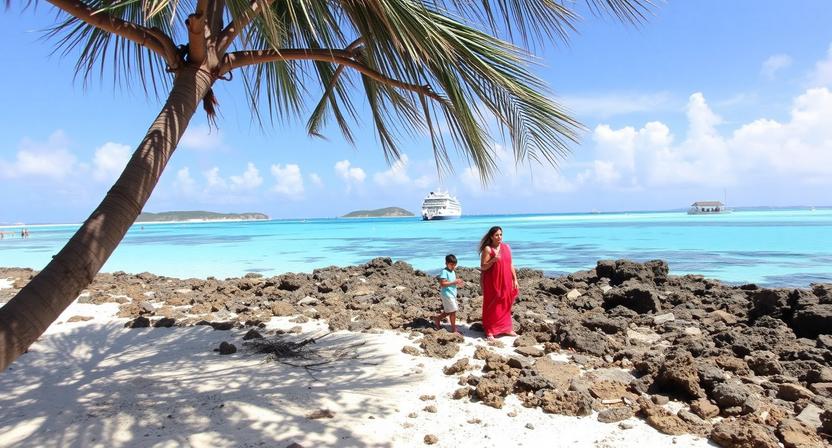
Saint Martin’s Island will close to tourists from February 1 for nine months to protect coral reefs and ensure long-term sustainable tourism growth.
Bangladesh’s only coral island St Martin’s Island will now close to the public for nine months starting February 1, 2023. In a first of its kind move, the government of Bangladesh is trying to manage tourism closely by implementing a protective measure for the islands soft corals, diverse wildlife, and a precious ecosystem that is being damaged by too many visitors and unsupervised, unlicensed tourism.
As the closure is enforced, tourists staying on the island are being evacuated to the mainland. As of today, no tourist boats will be allowed to travel to St Martin’s Island, and tourism will be suspended until management allows it to open for the next review period.
Shortened tourism season reflects rising environmental risks
Traditionally, Saint Martin’s Island welcomes visitors from 1 October to 31 March, but the current season was significantly reduced. Tourism was permitted for just three months, from October to January, while overnight stays were allowed for only two months. Daily visitor numbers were capped at 2,000, and entry without prior registration was strictly prohibited.
While these measures aimed to reduce ecological stress, they also sharply curtailed visitor volumes. The shortened season has intensified debate around how the island should be managed in the future, particularly as environmental risks become more visible and urgent.
Government decision prioritises biodiversity recovery
The Ministry of Environment, Forest and Climate Change confirmed that tourism activities for the season officially ended on Saturday, following its decision to impose a nine-month suspension. Authorities stated that the extended absence of tourists will give corals, sea turtles, birds, and marine species the space needed to recover their natural habitats.
Officials have emphasised that this is a long-term intervention intended to reverse environmental degradation rather than a temporary restriction. The decision reflects a broader policy direction that places ecosystem health at the centre of coastal tourism planning.
Strict environmental controls underline fragile ecosystem
In addition to the closure, a series of strict environmental rules were enforced. Beach lighting at night, loud music, and barbecue parties were banned, while access to protected forest areas was completely restricted. The collection and sale of certain local fruits were also prohibited to prevent ecosystem disruption.
To safeguard wildlife, authorities imposed zero-tolerance measures against harming sea turtles, birds, corals, king crabs, snails, and oysters. All motorised vehicles, including motorcycles, were barred from the beach. The use of single-use plastics, particularly polythene, was heavily restricted, with tourists advised to carry reusable water flasks.
Immediate economic impact felt by local tourism businesses
Despite environmental objectives, the closure has caused significant hardship for local tourism operators, many of whom depend almost entirely on seasonal visitors. Business owners invested heavily in accommodation, transport, and services in anticipation of a longer tourism window.
With activities halted after just three months, many entrepreneurs reported financial losses and expressed concern over future viability. Residents argue that repeated shortened seasons could discourage investment and weaken the island’s tourism supply chain if alternative support mechanisms are not introduced.
Future tourism model under active debate
Looking ahead, local residents and business groups have urged the government to consider reopening Saint Martin’s Island for at least five months per year, with a strictly regulated visitor cap. They believe a controlled access model could allow biodiversity protection while sustaining livelihoods.
Possible future measures include advanced booking systems, higher environmental fees, mandatory eco-guides, reduced daily visitor limits, and stronger enforcement of conservation rules. Such steps could transform Saint Martin’s into a benchmark for low-impact, high-value eco-tourism rather than mass tourism.
Long-term environmental recovery seen as foundation for tourism resilience
From a strategic perspective, authorities view the prolonged closure as an investment in the island’s future. Healthier coral reefs, restored marine life, and improved coastal conditions are expected to enhance the destination’s appeal once tourism resumes.
In the long term, successful ecological recovery could position Saint Martin’s Island as a premium sustainable tourism destination, attracting environmentally conscious travellers willing to support conservation through responsible travel choices. This shift could lead to higher-quality tourism, reduced ecological stress, and more stable revenue streams.
Saint Martin’s Island at a turning point for future tourism policy
Starting on February 1st, Saint Martin’s Island and more importantly, Bangladesh’s coastal tourism policy, will enter a new phase of development. Saint Martin’s will be developing a new phase of tourism, and Bangladesh will be developing a new phase of balancing tourism and preservation of biodiversity. Keeping the closure of Saint Martin’s Island to only 9 months will be pivotal to developing Saint Martin’s tourism to be more sustainable. More importantly, if managed correctly, the closure will create a tourism model that lasts indefinitely. One that supports local economic development and the preservation of biodiversity.
The post Saint Martin’s Island Closes to Tourists from February 1 for Nine Months to Protect Coral Reefs and Secure Long-Term Sustainable Tourism Growth in Bangladesh appeared first on Travel and Tour World