
















Madrid Pairs Up with Spain’s Tourism Sector and More as Sol Metro Station Closes, Disrupting Travel
-
Travel, Health
-
-
6 mins
-
Travel and Tour World
-
Pritam Nath
-

Madrid closes Sol Metro station on 16 October 2026 for urgent cleaning and safety work amid health concerns linked to a central housing protest
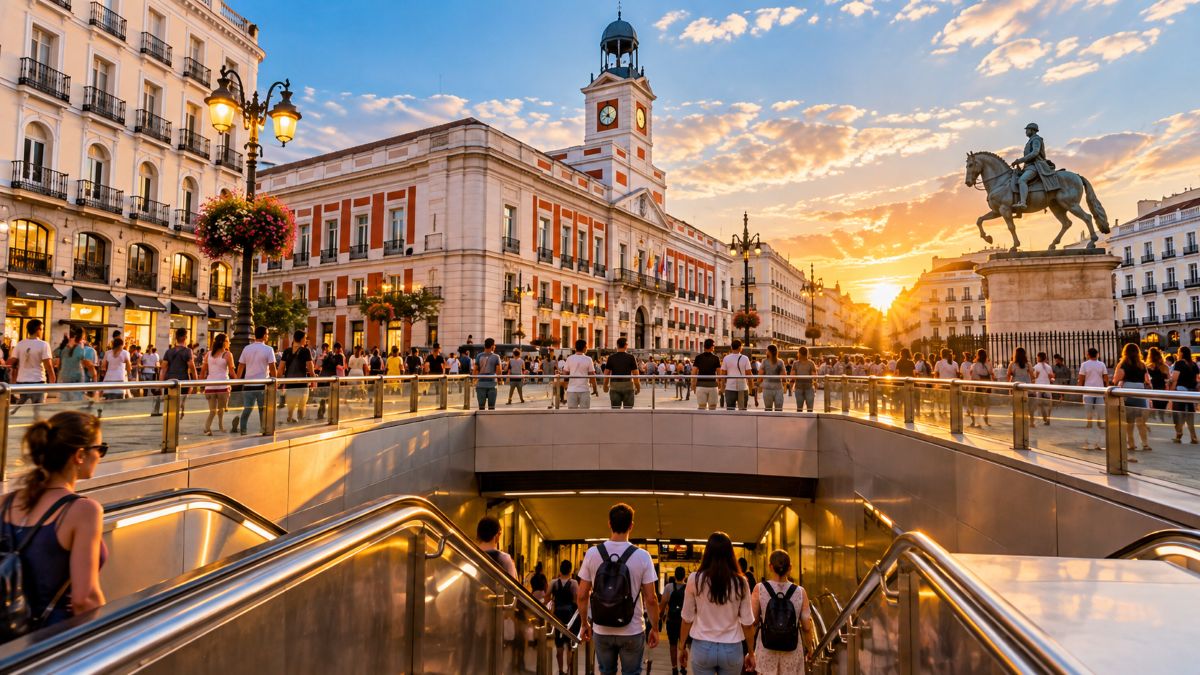
Madrid’s iconic Sol Metro station has been closed throughout Friday, 16 October 2026, for urgent cleaning and safety operations following concerns about sanitation conditions associated with a housing protest in Puerta del Sol. The closure affects one of the Spanish capital’s most prominent transport hubs, potentially complicating journeys for commuters, residents and international visitors exploring the city centre. Regional authorities have cited concerns about organic waste accumulating around ventilation access points, while a technical assessment has raised questions about potentially hazardous gases and the precautions required for cleaning personnel.
The closure has also exposed disagreements between Madrid’s regional government and trade union representatives over the circumstances surrounding the decision. While regional officials maintain that workplace safety concerns necessitated urgent intervention, representatives of the CCOO union have rejected claims that the Metro’s works council requested the station’s closure because of unsanitary conditions. The development comes as a housing encampment occupies the surrounding public space, creating wider concerns about access, commercial activity and the movement of emergency vehicles. For travellers, the immediate priority is to establish alternative routes and verify service information before crossing central Madrid.
Why Madrid’s Sol Metro Station Has Closed
Sol station, situated beneath the busy Puerta del Sol square, remains closed on 16 October while cleaning and safety work takes place. The regional government has presented the intervention as a preventive measure intended to address reported unsanitary conditions near ventilation shafts and access points.
According to the regional administration, accumulated urine, faeces and other organic waste around these areas prompted concerns about hygiene and air quality. Officials have argued that the situation requires professional cleaning and disinfection rather than routine maintenance.
The closure affects an important interchange in Madrid’s public transport network. Consequently, passengers travelling through the city centre may need to adjust their journeys, particularly if they normally use Sol as a transfer point.
Housing Protest Brings Sanitation Concerns Into Focus
The station closure is connected to a housing protest and encampment in Puerta del Sol, a central Madrid location frequently visited by residents and tourists. The demonstration has brought housing affordability and the use of public space into focus, while regional officials have raised concerns about its impact on the surrounding urban environment.
The Community of Madrid has reported an accumulation of organic waste around ventilation infrastructure and demanded that the encampment be dismantled. Regional officials have also described difficulties affecting nearby streets and businesses.
However, claims about the protest’s wider effects should be distinguished from independently established findings. The available account includes statements from political representatives and technical observations, alongside a categorical denial from union representatives concerning the alleged request to close the station.
Technical Report Raises Questions About Hazardous Gases
The regional government has referred to a technical assessment issued by Laboratorios Himalaya on Wednesday, 14 October. According to the administration, the document examines potential hazards associated with urine accumulating in enclosed or poorly ventilated spaces.
The reported mechanism involves bacterial decomposition of urea, a compound found in urine. Under suitable conditions, this process can produce ammonia and other compounds, potentially contributing to unpleasant odours and poor air quality. The precise risks depend on factors including concentration, ventilation, exposure duration and environmental conditions.
The regional government has characterised the gases described in the assessment as highly toxic and potentially harmful to the respiratory system. However, the supplied report does not establish the precise concentrations measured inside the station or demonstrate that passengers were exposed to a particular hazardous dose.
That distinction matters when assessing the seriousness of the situation. A potential hazard warrants investigation and appropriate precautions, but conclusions about actual exposure require reliable measurements and clear technical evidence.
Cleaning Operations and Worker Safety
The regional administration has emphasised that cleaning and disinfection must be conducted without endangering maintenance personnel. The technical assessment reportedly includes recommendations for workers undertaking the operation, reflecting the need to evaluate potential exposure before entering affected spaces.
Professional cleaning in enclosed transport infrastructure may require suitable protective equipment, ventilation controls and an assessment of atmospheric conditions. Where hazardous gases are suspected, trained personnel must follow established occupational safety procedures rather than rely on odour alone to determine whether an area is safe.
The decision to close the station temporarily provides an opportunity to carry out necessary work while restricting public access. Nevertheless, the duration of the closure and the conditions required for reopening depend on the findings of the responsible authorities and the completion of safety checks.
Passengers should rely on official transport updates for confirmation that the station has reopened and normal access has resumed.
What the Closure Means for Travellers
Sol is a significant destination for visitors exploring central Madrid, with Puerta del Sol providing access to shopping streets, historic attractions, restaurants and pedestrian routes. A temporary closure can affect sightseeing schedules even when the wider transport network continues operating.
Visitors should check the latest Metro service notices before travelling and consider alternative stations or surface transport where appropriate. Walking may be practical for some journeys within the historic centre, although visitors with luggage, reduced mobility or limited time may need a different arrangement.
| Travel consideration | Potential impact | Recommended action |
|---|---|---|
| Metro interchange | Transfers through Sol may be unavailable | Check the current network map and service notices |
| Sightseeing | Access to central attractions may require route changes | Allow additional time for journeys |
| Shopping and dining | Movement around Puerta del Sol may be affected by the encampment | Confirm access and opening arrangements directly |
| Airport connections | Journeys involving central Madrid may take longer | Check the complete route before departure |
| Reopening | Timing depends on cleaning and safety checks | Confirm service restoration through official channels |
The closure does not, by itself, establish that Madrid’s entire Metro network is unsafe or that all central attractions are inaccessible. The practical effect depends on the services affected, the availability of alternative routes and any additional restrictions imposed around the square.
Political Disagreement Over the Decision
The closure has prompted competing accounts from the regional government and trade union representatives. Isabel Díaz Ayuso, president of the Community of Madrid, has defended the intervention on workplace safety grounds, saying that occupational risk prevention concerns and union requests were behind the decision.
CCOO representatives, however, have categorically rejected the claim that Metro de Madrid’s works council requested the closure of any station because of unsanitary conditions. Their statement creates a clear disagreement over the role of labour representatives in the decision-making process.
The regional government has also linked the wider disruption to the housing encampment and criticised the national government’s handling of the situation. These remarks represent political allegations rather than independently verified findings about responsibility for the station’s closure.
Establishing the precise sequence of events would require further documentation, including the relevant safety assessment, operational decisions and statements from the parties involved.
Implications for Madrid Tourism and Urban Management
The incident illustrates how public demonstrations, sanitation requirements and transport operations can intersect in heavily used city centres. Madrid depends on accessible public transport to connect visitors with cultural attractions, accommodation, shopping districts and hospitality businesses.
A short-term station closure does not necessarily produce a substantial decline in tourism, but unexpected disruption can inconvenience visitors and affect confidence in journey planning. Clear communication about closures, alternative routes and reopening times can help reduce uncertainty.
For city authorities, the immediate priorities include maintaining public hygiene, protecting workers, preserving access for emergency services and ensuring that transport infrastructure can operate safely. These responsibilities must be balanced with the management of public demonstrations and the rights of people participating in them.
The longer-term significance will depend on how quickly normal services resume, whether the reported sanitation concerns are resolved and how effectively authorities communicate verified information.
Frequently Asked Questions
1. Why is Madrid’s Sol Metro station closed?
Sol station is closed on 16 October 2026 for urgent cleaning and safety work following reported sanitation concerns linked to organic waste around ventilation access points near the housing encampment.
2. When did the closure begin?
The station was reported closed throughout Friday, 16 October 2026. The exact reopening time has not been established in the supplied report.
3. Which Metro lines are affected?
The closure affects services using Sol as a station or interchange. Passengers should consult the latest official Metro de Madrid information to identify the specific lines and alternative connections affected.
4. Are toxic gases confirmed inside the station?
The regional government has cited a technical assessment warning of potentially hazardous gases. The supplied account does not provide measured concentrations sufficient to establish the actual exposure level inside the station.
5. Is the entire Madrid Metro network closed?
No. The reported closure concerns Sol station. Travellers should check current service information for any additional restrictions or disruptions elsewhere on the network.
6. What caused the sanitation concerns?
Regional officials have attributed the concerns to the accumulation of urine, faeces and other organic waste around ventilation shafts and access points associated with the area occupied by the housing protest.
7. Can tourists still visit Puerta del Sol?
The station closure does not automatically mean the entire square is inaccessible. Visitors should check local access arrangements and any restrictions affecting pedestrian movement.
8. Did the Metro workers’ committee request the closure?
The regional government has cited workplace safety concerns and union requests, while CCOO representatives have explicitly denied that Metro de Madrid’s works council requested a closure for this reason.
9. How should visitors plan journeys during the disruption?
Travellers should check official transport updates, consider alternative stations or surface transport, and allow extra time when visiting central Madrid.
10. When will Sol station reopen?
The supplied report does not confirm a reopening time. Restoration of service will depend on the completion of cleaning operations and the relevant safety checks.
The post Madrid Pairs Up with Spain’s Tourism Sector and More as Sol Metro Station Closes, Disrupting Travel appeared first on Travel and Tour World














































































