



Roblox shares AI child-safety tools parents should know
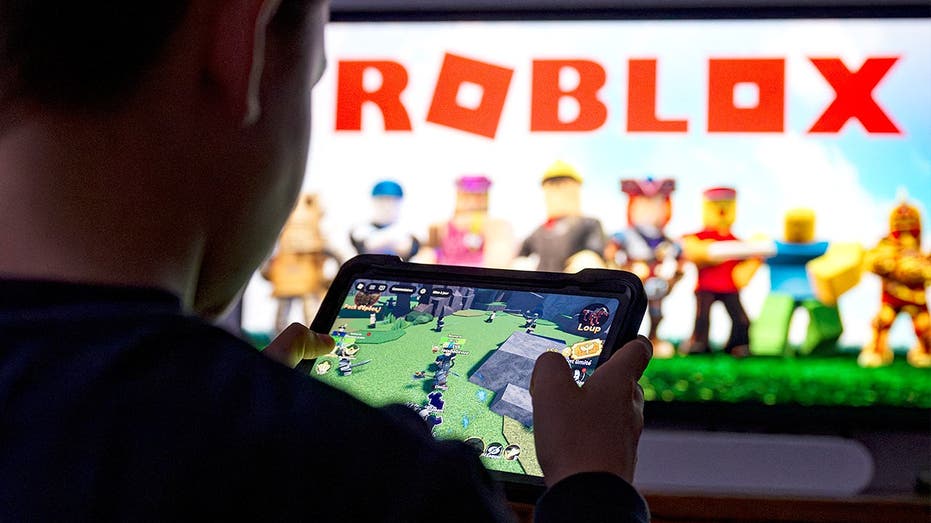

Roblox is sharing AI safety models that detect online grooming, personal information requests and voice chat violations with other platforms.
If your child plays Roblox, chances are plenty of their friends do too. Roblox reported an average of 123 million daily active users during the second quarter of 2026. Nearly three-quarters of its age-checked users are under 18. With that kind of reach, one of the biggest risks a child can face may begin with a conversation that seems completely harmless. Someone asks what games they like. Later, that person wants to know where else they chat. Eventually, they suggest moving the conversation to another app. That progression should sound familiar to parents who have followed online grooming cases.
Earlier this year, we covered a disturbing Roblox child-safety case involving two girls, ages 12 and 14. Investigators said a Nebraska man initially contacted them through Roblox before conversations moved to Snapchat. Authorities described the case as online grooming. Now Roblox is opening up some of the artificial intelligence it uses to detect behavior that can lead to dangerous situations.
On Aug. 19, Roblox announced that it is contributing updated versions of three safety models to the Robust Open Online Safety Tools, or ROOST, Model Community. The company is also releasing a new evaluation dataset so other platforms can test their own safety systems. For parents, the technical details matter less than what these tools are trying to catch. They focus on attempts to get personal information, signs of possible child endangerment and inappropriate behavior in voice chat. Here's how these new AI safety tools work, what they could mean for your child and what you can do right now to help keep your kids safer online.
New! Free live CyberGuy class: Protect Your Money From Today’s Biggest Threats
Join us Saturday, August 29, at 10 AM ET for a free CyberGuy LIVE class covering five simple steps to help defend yourself against AI scams, fraud, identity theft and financial hacks. Kurt "CyberGuy" Knutsson will explain how to set up bank alerts, strengthen your account logins, protect your phone number, freeze your credit and help secure your retirement savings against unauthorized transfers. No technical experience is needed. You’ll also receive our financial protection checklist, and every registrant will get a link to the class recording afterward.
Reserve your free spot today at CyberGuyLive.com.
Roblox already uses versions of these AI systems on its own platform. Now, other companies can study them and potentially adapt them for their own services. Roblox joined ROOST as a founding member in 2025 alongside Google, OpenAI, Discord and others. ROOST focuses on making open-source online safety technology available to organizations that may lack the resources to build sophisticated systems themselves.
Think about how many places children communicate online today. A conversation can begin inside a game. Then it may jump to a messaging app or another social platform with different protections. No single company controls that entire journey.
Sharing safety technology could give more services access to tools designed around similar warning signs. However, another company still has to adopt the technology and adapt it to its platform. So I see this as an encouraging development, but parents should not view it as a reason to lower their guard.
One of the most interesting updates for families involves Roblox's PII Classifier. PII stands for personally identifiable information. That can include a phone number, email address, social media username or other information that could help someone identify or contact a child.
The classifier also looks for attempts to direct players to other platforms. That is important because someone with bad intentions may try to move a conversation away from the platform where it began.
Older filters often searched for obvious words or patterns. Roblox's Version 2.0 looks at the surrounding conversation instead. For example, someone could intentionally misspell the name of another app. They might split contact information across several messages. Others may use coded language they hope a filter will miss. The updated AI evaluates those messages together.
Roblox says Version 2.0 expanded language support from 17 to 189 languages. The company also reports that its F1 score, a common way to measure a classifier's accuracy, improved from 63.41 to 90.52. For a parent, the takeaway is much simpler. The system is trying to understand where a conversation is heading, rather than judging each message by itself.
This is one part of the announcement that jumped out at me. Asking for another username or suggesting a move to a different app can sound innocent. Kids switch between platforms all the time. However, moving a conversation can also reduce the protections around it.
That is what made the Nebraska case we previously covered so unsettling. Authorities said the initial connection happened on Roblox before the communication continued on Snapchat.
Parents should make this a specific conversation at home. If someone your child only knows online starts asking for another username, phone number or private way to communicate, your child should know to tell you.
Roblox Sentinel tackles an even harder problem. Potential grooming can develop gradually. Someone may build trust before the conversation becomes obviously inappropriate. That means early messages can look ordinary when viewed separately.
Sentinel analyzes patterns across conversations. Roblox says the system looks for early signals of potential child endangerment so suspicious interactions can be reviewed before they escalate. Human reviewers can then prioritize conversations that may require action.
Roblox says that during the 12 months ending Aug. 7, 2026, nearly 70% of the child-endangerment cases it detected came through Sentinel's early detection.
Roblox is also releasing Sentinel Version 2. The changes are mainly aimed at the developers and safety teams who would use the technology. The new version gives them more ways to score suspicious behavior and determine which setup works best for their platform.
Roblox says Version 2 can also provide more information about why something received a particular score. That could help teams understand what the system is detecting instead of receiving only a warning with little context.
The company says the upgrade also makes the system much faster to test and tune. For parents, though, the bigger point is that Roblox wants other platforms to take this technology and use it for their own safety systems.
Text messages are only one part of the picture. Kids can also communicate through voice chat, which creates a different moderation challenge. Roblox's voice safety classifier analyzes speech for policy violations in real time. When the system detects a violation, Roblox can display a warning explaining which policy may have been broken.
Repeated violations can lead to a temporary voice-chat suspension of up to five minutes. More serious violations can carry stronger consequences. Roblox says its voice safety classifier has been downloaded more than 72,000 times since the company first made it open source in 2024. Version 3 now covers 30 languages and eight violation categories. Roblox reports 61% recall across those languages when operating at a strict 1% false-positive rate. That number is also a reminder that AI moderation can miss things. Even a sophisticated safety model cannot catch every dangerous conversation.
There is another side of this story worth knowing. Independent researchers recently examined Roblox chat moderation and found examples of unsafe messages that made it through the platform's existing safeguards. Their study analyzed more than 2 million chat messages and identified examples involving grooming, sexualization of minors, bullying, violence and sensitive information sharing that escaped moderation.
That research shows why parents should be careful about assuming automated moderation provides a complete safety net. Bad actors learn how filters work. Then they change their language or behavior to try to get around them. That makes Roblox's latest move especially relevant, because the company is improving these safety models and sharing them with other platforms so the technology can keep adapting too.
This may ultimately become the bigger story. Most parents will never download an AI classifier or visit a GitHub repository. Yet the technology being released today could eventually influence apps their children use. Smaller platforms may not have the engineering teams or money needed to build advanced child-safety systems from scratch.
Open-source tools can give those companies a starting point. Researchers can also test the models and look for weaknesses. Developers can adapt them to different services. Meanwhile, feedback from other organizations could help improve the original tools. ROOST says its Model Community is designed to connect developers and safety practitioners around open safety AI models. That collaborative approach has a lot of potential.
This isn’t Roblox's first major AI safety push. Earlier this year, CyberGuy reported on a Roblox system that analyzes combinations of text, avatars and 3D environments in real time. Roblox told us the technology was helping shut down about 5,000 violating game servers each day. The idea was to catch harmful combinations that older moderation systems could miss when they examined individual pieces separately. You can read our full report onhow Roblox is changing online safety with AI.
Roblox has also been expanding age-based protections for younger users. Those controls place different limits on chat, games and other features depending on a user's age. All of these moves point toward the same goal: catching risk earlier and limiting who younger users can interact with. The challenge is making those systems work consistently at Roblox's enormous scale.
CHRIS HANSEN URGES PARENTS TO TEACH CHILDREN ABOUT ONLINE PREDATORS BEFORE ALLOWING INTERNET ACCESS
These AI tools work behind the scenes. Parents can add another layer of protection by setting some clear expectations at home.
Tell your child to come to you when someone they only know online wants to continue chatting somewhere else. That could mean another gaming service, a social platform or a private messaging app. There may be an innocent explanation. Still, it is worth knowing when someone is trying to move the conversation.
Children should be careful about sharing information that can identify or locate them. That includes their phone number, school name and home address. Social media usernames can also give strangers another way to contact them. Remind your child that a person they meet inside a game is still an online stranger until your family knows otherwise.
Roblox has expanded its age-based account protections and parental controls. Roblox Kids accounts cover ages 5 through 8, while Roblox Select covers ages 9 through 15. Chat availability and parental controls vary by age group. We previously broke down Roblox's age-based accounts for kids and teens and what parents should know about those changes. Take a few minutes to review the settings with your child rather than assuming the defaults match what you want.
Parents naturally focus on text because it leaves something visible to review. Voice conversations deserve attention too. Ask your child who they talk with while gaming. Make sure they understand that they can leave any conversation that feels uncomfortable.
Roblox allows users to report people and inappropriate behavior from within an experience. Users can also block another account. Parents can access communication controls through linked parental settings. Show your child where those controls are before there is a problem. That way, they do not have to figure it out while they are upset or scared.
Your reaction matters when your child tells you something went wrong online. Try to make the first conversation about what happened rather than immediately focusing on taking the game away. A child who thinks speaking up will automatically cost them their phone or Roblox access may be more reluctant to tell you about the next uncomfortable interaction.
What catches my attention here is what these AI systems are actually being trained to recognize. They are looking for someone trying to get a child's personal information or shift a conversation somewhere else. Another system examines conversations for early signs of potential child endangerment. Voice moderation adds protection when kids are talking instead of typing. Those are situations parents need to understand. I also like the idea of companies sharing safety technology instead of making every platform build these tools from scratch. If technology developed on Roblox helps another gaming service or social platform detect dangerous behavior sooner, that is a positive step. Still, I would never tell a parent to assume AI has their child's back. Roblox itself acknowledges that no safety system is perfect, and independent researchers have found examples of harmful chat getting through moderation. So use the technology as another layer. Then keep talking with your kids about who they meet online and where those conversations are going. The most important warning may be something an algorithm never sees: your child telling you that somebody online is making them uncomfortable.
If an AI system detected possible grooming in your child's online conversation, how quickly would you expect the platform to alert you, and how much should it tell you about what happened? Let us know by writing to us at Cyberguy.com.
Sign up for my FREE CyberGuy Report
Copyright 2026 CyberGuy.com. All rights reserved.
The post Roblox shares AI child-safety tools parents should know appeared first on FOX News Media