

Revitalizing Western Greece: ITI Strategy to Boost Sustainable Tourism and Local Development in Aktio-Vonitsa and Amfilochia
-
Travel, Food, Culture, Weather
-
-
4 mins
-
Travel and Tour World
-
Poulomi Sinha
-

The ITI Strategy in Western Greece aims to boost sustainable tourism, local products, and cultural heritage in Aktio-Vonitsa and Amfilochia.
The Western Greece Region is forging a new path towards long-term development with the Integrated Territorial Investment (ITI) Strategy for the Municipalities of Aktio-Vonitsa and Amfilochia. This initiative was created with the intention of promoting a balanced and inclusive social, economic, and environmental growth model. It seeks to highlight the region’s abundant natural and cultural assets while encouraging sustainable tourism. The strategy aims not only to increase tourism but also to preserve the area’s local identity, support local businesses, and enhance cultural and natural heritage.
This comprehensive approach aims to create a more resilient and self-sustaining local economy, thereby increasing the region’s attractiveness to both tourists and investors. By leveraging the natural beauty and heritage of Aktio-Vonitsa and Amfilochia, the strategy envisions a future in which tourism development and sustainability are complementary.
Strengthening Tourism Through Natural and Cultural Resources
One of the central aspects of the ITI Strategy is to promote the region’s vast natural resources and enhance the local tourism product. Aktio-Vonitsa and Amfilochia, although not yet widely known as major tourist destinations, offer significant untapped potential due to their natural landscapes, including beaches, forests, and archaeological sites.
Efforts to strengthen tourism in these municipalities will involve the careful development of the region’s natural beauty, ensuring that visitors can experience its wonders without compromising sustainability. This includes projects aimed at improving access to key natural attractions, including trails, viewpoints, and archaeological sites. Vegetation clearing and fire prevention measures will be introduced to safeguard the natural environment, while the installation of informative signs and seating areas will improve the visitor experience. Additionally, lighting improvements will ensure these sites remain accessible even after dark, extending visiting hours and enhancing security.
Promoting Local Products: Connecting Agri-Food and Tourism
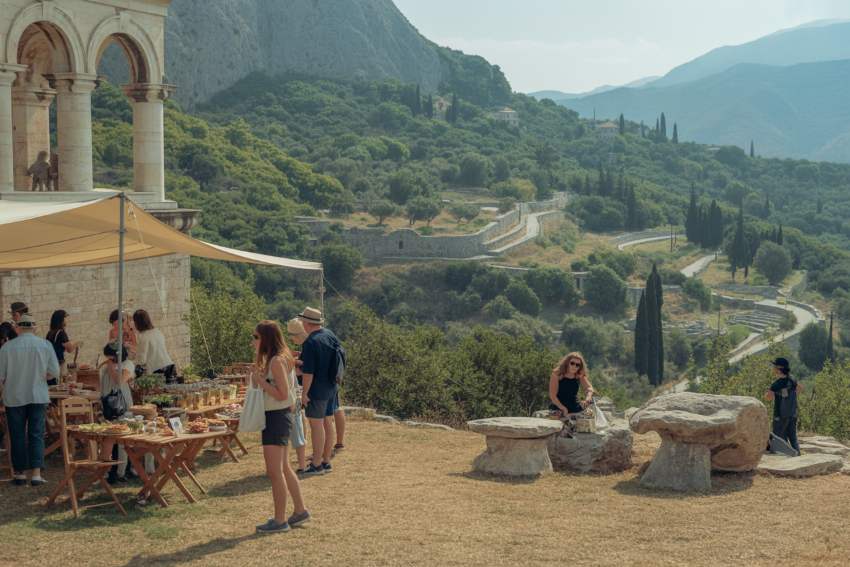
A critical component of the ITI Strategy involves the integration of local agri-food products into the tourism experience. This strategy acknowledges the importance of local food culture as both an economic driver and a tool for deepening the visitor experience. By connecting local food producers with the tourism and hospitality sectors, the region can enhance its culinary appeal and promote its unique agricultural products to a wider audience.
Plans include the creation of a comprehensive registry of agri-food products from the region, helping to preserve and promote these items. Moreover, the initiative aims to establish a unified “Local Products of the ITI Area” label, which will provide a standardized mark of quality for local food items. This label will serve as a guarantee of the authenticity and sustainability of these products, making them more attractive to consumers both within Greece and abroad.
To ensure the success of this initiative, the strategy also includes educational programmes and training for local businesses. These programmes will focus on quality standards and certification processes, enabling local enterprises to obtain the “Local Products” label and meet the needs of the growing sustainable tourism market. Through these efforts, the region hopes to create a strong connection between visitors and the food they consume, providing an immersive, authentic experience that reflects the local culture.
Cultural Heritage: A Pillar of Regional Identity
The ITI Strategy places a strong emphasis on the promotion, protection, and utilization of the cultural heritage in Aktio-Vonitsa and Amfilochia. The region is rich in history, with several archaeological sites and cultural landmarks that have not yet been fully exploited for tourism. This presents an opportunity to showcase these assets and integrate them into the overall tourism offer.
Restoration and modernization of key cultural infrastructure, such as libraries, multipurpose centres, and conference facilities, will form the backbone of these efforts. The strategy includes plans to develop and modernize these facilities to meet the needs of both local residents and tourists, helping to foster a vibrant cultural scene. By upgrading these infrastructures, the region aims to create spaces for cultural exchange and community engagement, while also providing venues for events that will attract both local and international visitors.
Additionally, the strategy focuses on improving access to archaeological sites, ensuring that visitors can explore these important landmarks safely and comfortably. This includes clearing vegetation, improving trail systems, and providing informative signage to enhance the visitor experience. With these measures, the region aims to preserve its cultural heritage while making it more accessible to the public.
Complementary Investments and Sustainable Solutions
The ITI Strategy goes beyond just tourism and cultural heritage; it also encompasses complementary investments to ensure the overall sustainability of the region. These investments include infrastructure improvements such as connections to public utility networks and even property acquisitions where necessary to support development projects.
A noteworthy aspect of the strategy is its alignment with the principles of the New European Bauhaus initiative, which emphasizes sustainability, aesthetics, and participation. The strategy aims to implement projects that are not only environmentally sustainable but also visually appealing and socially inclusive. This reflects the growing recognition of the importance of creating places that are both functional and beautiful, ensuring that development is compatible with the region’s unique identity.
The integration of these sustainable solutions into the region’s development plans will help address climate challenges while providing high-quality infrastructure for future generations. This forward-thinking approach aims to make Aktio-Vonitsa and Amfilochia more attractive to eco-conscious travelers and investors who value sustainability.
A Vision for the Future
Overall, the Integrated Territorial Investment Strategy for the Municipalities of Aktio-Vonitsa and Amfilochia is a bold step towards long-term development in Western Greece. The strategy’s focus on tourism, local products, and cultural heritage aims to create a cohesive development framework that strengthens the region’s identity while also supporting long-term growth.
The region is establishing itself as a future hub for responsible and high-quality tourism by carefully promoting its natural and cultural resources, as well as committing to sustainability. This comprehensive approach promises to improve Aktio-Vonitsa and Amfilochia’s economic prospects while also protecting their natural and cultural heritage for future generations.
The integration of local food products into the tourism experience, the restoration of cultural sites, and the implementation of sustainable infrastructure will all have a significant impact on the region’s future. As these projects progress, the region will likely become a more appealing destination for travellers looking for authentic, sustainable, and immersive experiences in one of Greece’s most beautiful but underexplored regions.
The post Revitalizing Western Greece: ITI Strategy to Boost Sustainable Tourism and Local Development in Aktio-Vonitsa and Amfilochia appeared first on Travel and Tour World