






Passengers Left Stranded And Waiting At King Fahd International Airport, Dammam As Qatar Airways, Oman Air, Saudia, Emirates, Susi Arabia Cancel 32 Flights And Delay 43 In Doha, Muscat, Dubai, Jeddah, Causing Unexpected Travel Delays Across Qatar, Oman, S
-
Travel, Weather
-
-
4 mins
-
Travel and Tour World
-
Debaanuj Majumdar
-


32 flights cancelled and 43 delayed at King Fahd International Airport, Dammam, disrupting Qatar Airways, Oman Air, Saudia and Emirates travel across Gulf routes.
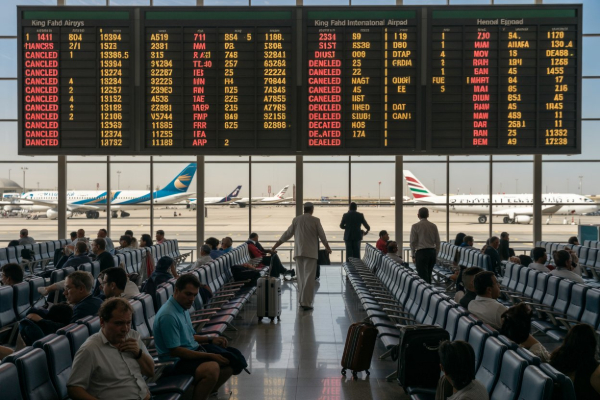
Air travel across the Middle East faced significant disruption after dozens of flights were cancelled and delayed at King Fahd International Airport in Dammam, leaving many passengers stranded inside terminals and forcing airlines to rearrange schedules across the region.
According to live aviation data from FlightAware, flight activity at the airport recorded 32 cancellations and 43 delays, affecting departures and arrivals connecting major Gulf aviation hubs including Doha, Muscat, Dubai, and Jeddah.
The disruption impacted several major airlines operating in the Gulf region, including Qatar Airways, Oman Air, Saudia, Emirates, and Susi Air, creating ripple effects across international travel routes linking Saudi Arabia, Qatar, Oman, and the United Arab Emirates.
Flight Disruptions at King Fahd International Airport
Real-time airport tracking systems show that multiple flights scheduled to arrive or depart from Dammam were either delayed or cancelled.
Flight Status Snapshot
| Flight Status | Number of Flights |
|---|---|
| Cancelled | 32 |
| Delayed | 43 |
| Operating Normally | Several domestic and international flights |
The disruptions created a backlog of flights at the airport and forced airlines to reschedule aircraft rotations and crew operations.
Airlines Impacted by the Disruption
Several major airlines that operate extensive international networks through the Gulf region were affected by the cancellations.
Major Airlines Affected
| Airline | Hub City | Country |
|---|---|---|
| Qatar Airways | Doha | Qatar |
| Oman Air | Muscat | Oman |
| Saudia | Jeddah / Riyadh | Saudi Arabia |
| Emirates | Dubai | United Arab Emirates |
| Susi Air | Pangandaran | Indonesia |
These airlines collectively operate hundreds of regional and international flights every day, linking Asia, Europe, Africa and the Middle East.
Because of the hub-and-spoke structure used by many Gulf airlines, disruptions at one airport can quickly spread across multiple routes.
Routes Most Affected
Many disrupted flights were part of major Middle East aviation corridors connecting Saudi Arabia with neighboring Gulf states.
Key Routes Impacted
| Origin | Destination | Airline |
|---|---|---|
| Doha | Dammam | Qatar Airways |
| Muscat | Dammam | Oman Air |
| Dubai | Dammam | Emirates |
| Jeddah | Dammam | Saudia |
These short-haul routes play an important role in connecting passengers to long-haul flights heading to Europe, Asia and Africa.
When these flights are delayed or cancelled, passengers often miss onward connections.
Passengers Stranded in Terminals
Travelers inside King Fahd International Airport experienced long waiting times and confusion as departure boards displayed a growing number of delays and cancellations.
Passengers reported several challenges including:
- Missed international connections
- Long queues at airline counters
- Last-minute flight rebookings
- Extended waiting times inside terminals
For passengers traveling onward to Asia or Europe, missed connections meant additional overnight stays and unexpected travel costs.
Importance of King Fahd International Airport
King Fahd International Airport is one of the largest airports in the world by land area and serves as a major aviation hub for eastern Saudi Arabia.
Key facts about the airport include:
- Located in the Eastern Province near the Persian Gulf
- Primary airport serving Dammam and nearby cities
- Important hub for domestic and international travel
- Strategic gateway linking Saudi Arabia to Gulf states and Asia
Because of its location and traffic volume, operational disruptions at this airport can quickly affect the wider regional aviation network.
Examples of Flights Operating Through Dammam
Live airport tracking systems show multiple flights operating between Dammam and other Middle East destinations during the disruption period.
Sample Flights Operating at DMM
| Flight | Route |
|---|---|
| Saudia SVA1116 | Jeddah – Dammam |
| Saudia SVA1138 | Riyadh – Dammam |
| Pakistan International Airlines PIA245 | Islamabad – Dammam |
| EgyptAir MSR681 | Cairo – Dammam |
These flights illustrate how Dammam connects major cities across the Middle East, South Asia and North Africa.
Why Flight Disruptions Spread Quickly
Airlines in the Gulf operate highly interconnected networks using hub airports such as:
- Doha
- Dubai
- Jeddah
- Muscat
- Riyadh
When disruptions occur at one airport, aircraft and crew scheduling can quickly fall out of sync.
Airlines must then take several operational steps:
- Reassign aircraft
- Adjust flight schedules
- Rebook passengers
- Reschedule crew members
This process can cause additional delays across multiple airports.
Regional Aviation Network Under Pressure
The Middle East is one of the fastest-growing aviation markets in the world.
Major carriers such as Emirates and Qatar Airways operate long-haul flights connecting Europe, Asia, Australia and Africa through Gulf hubs.
Because these airlines depend on tightly coordinated schedules, disruptions at airports like Dammam can affect flights thousands of kilometers away.
Airlines therefore rely on real-time monitoring systems to quickly adapt to changing operational conditions.
Advice for Travelers
Passengers flying through Gulf airports are encouraged to closely monitor flight status updates.
Important Travel Tips
- Check flight status before leaving for the airport
- Enable airline notifications on mobile devices
- Allow additional time for airport procedures
- Contact airline staff for rebooking assistance if necessary
Travelers connecting through multiple Gulf airports should also verify the status of onward flights before departure.
Outlook for Middle East Air Travel
Despite the temporary disruptions in Dammam, the Middle East aviation sector continues to expand rapidly.
Major airlines in the region are increasing capacity and opening new international routes.
However, aviation analysts say that unexpected disruptions—whether operational, weather-related or logistical—can still create temporary challenges for passengers.
Airlines are expected to gradually restore normal schedules as aircraft rotations stabilize and delayed flights depart.
For now, passengers traveling through King Fahd International Airport are advised to remain flexible and check real-time flight updates as airlines work to clear the backlog of affected flights.
The post Passengers Left Stranded And Waiting At King Fahd International Airport, Dammam As Qatar Airways, Oman Air, Saudia, Emirates, Susi Arabia Cancel 32 Flights And Delay 43 In Doha, Muscat, Dubai, Jeddah, Causing Unexpected Travel Delays Across Qatar, Oman, S appeared first on Travel and Tour World