
















Greece, Albania and North Macedonia Boosting Cultural Tourism Growth with Prespa UNESCO Plans and Heritage Restoration
-
Travel, Culture, Religion
-
-
6 mins
-
Travel and Tour World
-
Gishan Das
-


Greece, Albania and North Macedonia strengthen cultural tourism through Prespa UNESCO plans, Byzantine heritage restoration and regional cooperation.
In recent times, Greece, Albania and North Macedonia have started working together culturally through heritage protection programs, the proposal for World Heritage recognition from UNESCO for the Prespa area and greater involvement in historic monuments restoration and cultural tourism. The discussions between the Greek Minister of Culture Lina Mendoni and Albanian Minister of Tourism, Culture and Sports Blendi Gonxja and Minister of Culture, Tourism, Sports and Youth Sedat Sulejmani from North Macedonia centered on safeguarding their common cultural heritage.
The discussions have also brought up the restoration of the Byzantine Church of St George in Kourbinovo dating back to the 12th century along with efforts for professional development, cultural exchange and retrieval of cultural property that was transferred without legal authorization.
Greece, Albania and North Macedonia Strengthen Regional Cultural Partnerships
The latest ministerial discussions demonstrate a shared commitment to expanding cultural cooperation across the Western Balkans. The three countries agreed on the importance of protecting historical monuments, promoting common cultural traditions and developing closer relationships between their cultural institutions. Lina Mendoni, representing Greece, held bilateral discussions with Blendi Gonxja of Albania and Sedat Sulejmani of North Macedonia.
The meetings addressed practical opportunities involving heritage conservation, cultural education, professional exchanges and contemporary artistic creation. Rather than focusing exclusively on individual monuments, the discussions considered how cultural collaboration could contribute to stronger relationships between neighbouring countries. For the regional tourism industry, closer cooperation may provide opportunities to promote historical sites and develop experiences connecting several destinations within a single journey.
Prespa UNESCO World Heritage Initiative Creates Opportunities for Cross-Border Tourism
One of the most significant developments concerns the proposed joint UNESCO World Heritage nomination for the Prespa region. Located where Greece, Albania and North Macedonia meet, the Prespa basin combines exceptional natural landscapes with historic settlements, religious monuments and ecological importance. The three countries have expressed an interest in pursuing a coordinated approach to recognising and protecting this shared heritage.
The initiative follows discussions held during the Prespa meeting, where cooperation on a potential joint nomination received support. Importantly, the area is not yet newly inscribed through this proposed multinational initiative. Greece previously placed the Prespa Lakes and their Byzantine and post-Byzantine monuments on UNESCO’s Tentative List in 2014. A successful joint nomination would require further documentation, assessment and completion of UNESCO’s established procedures.
Prespa Lakes Could Become a Major Destination for Cultural and Nature Tourism
The Prespa Lakes region offers considerable potential for visitors interested in combining cultural heritage, biodiversity and nature-based tourism. Its landscapes feature freshwater lakes, mountain ecosystems, traditional villages and historic religious sites. The wider transboundary region is particularly important because its natural and cultural features extend beyond national borders.
According to UNESCO, the Greek section of Prespa National Park covers approximately 327 square kilometres and forms part of the broader protected landscape shared by the three neighbouring countries. The region also contains important Byzantine monuments and habitats supporting rare wildlife. A coordinated tourism approach could encourage visitors to explore several communities while learning about the area’s common historical and environmental significance. However, any future increase in visitor numbers would need to respect conservation requirements and the ecological sensitivity of the lakes.
Historic Kourbinovo Church Restoration Highlights Successful Heritage Cooperation
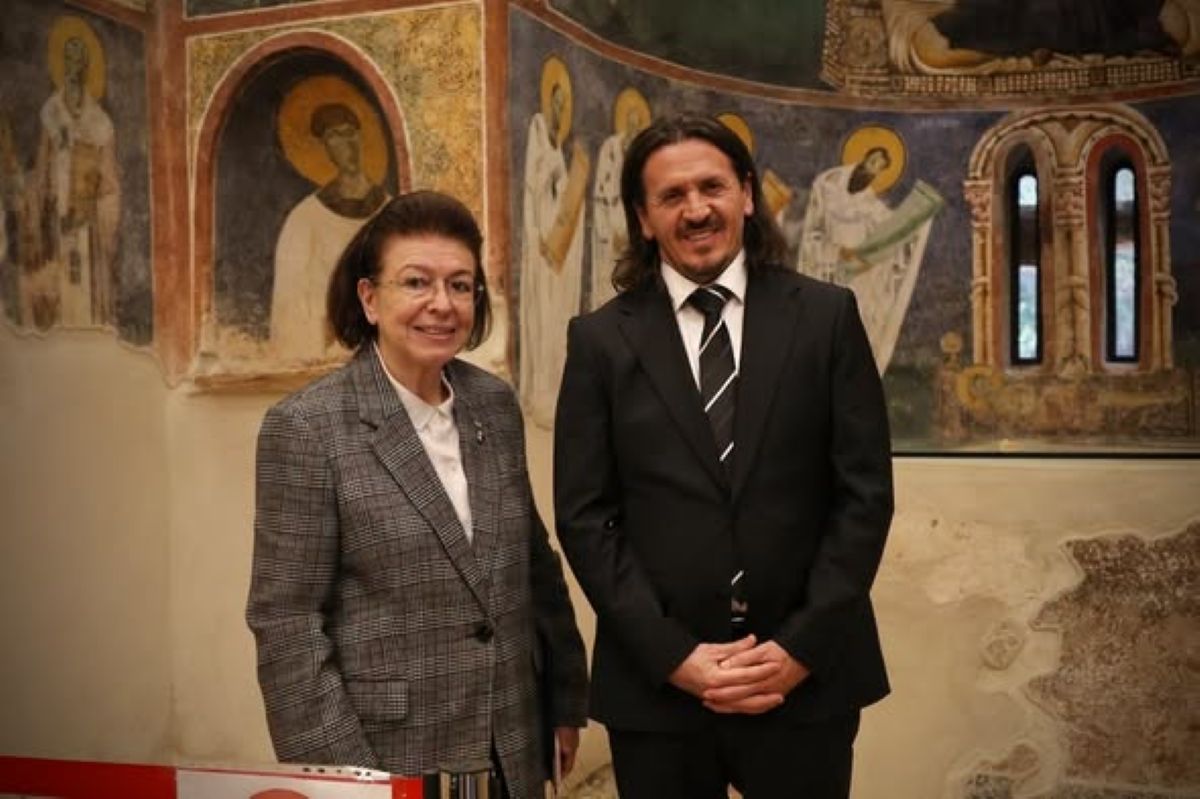
The restoration of the Church of St George in Kourbinovo, North Macedonia, emerged as an important example of practical cultural collaboration. Following the ministerial discussions, Lina Mendoni and Sedat Sulejmani visited the Byzantine monument to mark the completion and handover of conservation work on its historic wall paintings. The restoration was undertaken by the European Centre for Byzantine and Post-Byzantine Monuments, with financial support from the Greek Ministry of Culture. The project focused on preserving the church’s exceptional artistic heritage and protecting its surviving decorative features.
Its completion demonstrates how neighbouring countries can cooperate on technically demanding conservation projects. For cultural tourism, restoring historic monuments helps preserve the authenticity and educational value of attractions while supporting their long-term survival. The project also provides a practical model for possible future cooperation involving other important Balkan heritage sites.
Twelfth-Century Byzantine Masterpiece Reveals the Balkans’ Shared Artistic History
The Church of St George in Kourbinovo dates to 1191, according to its surviving historical inscription. Situated near the Prespa Lakes in North Macedonia, the church is recognised for its outstanding examples of Byzantine wall painting. Its murals reflect important artistic traditions that developed across the region during the medieval period. The surviving paintings are particularly valuable for understanding religious expression, artistic techniques and cultural connections within the Byzantine world.
Conservation work has aimed to safeguard these delicate historic surfaces from further deterioration. The monument’s significance extends beyond its immediate surroundings because it forms part of a wider network of medieval religious heritage throughout the Balkans. For travellers interested in Byzantine history and sacred architecture, Kourbinovo represents an important cultural landmark, although access arrangements should be checked before visiting.
Greece and Albania Explore Stronger Protection for Cultural Treasures
The bilateral meeting between Greece and Albania placed particular emphasis on protecting cultural assets and strengthening cooperation against their unlawful movement across borders. Lina Mendoni and Blendi Gonxja discussed the possibility of concluding an agreement concerning illicit trafficking and the return of cultural property to its country of origin. Such an agreement could strengthen institutional cooperation involving archaeological objects, historic artefacts and other protected cultural materials.
The discussions also considered how both countries could improve coordination on heritage-related matters. Protecting cultural objects is important for maintaining the integrity of museum collections and archaeological sites. For heritage tourism, effective conservation and lawful ownership help ensure that cultural attractions retain their historical context. The proposed agreement remains a prospective initiative rather than a completed arrangement announced through these discussions.
Greece-Albania Restoration Agreement Could Support More Historic Conservation Projects
Another priority involved the possible reactivation of the 2021 cooperation memorandum between Greece and Albania. The memorandum addresses collaboration in the restoration and conservation of historic monuments. Reviving its practical implementation could create opportunities for joint conservation work, technical assistance and the exchange of specialist expertise. Both countries possess extensive cultural resources, including archaeological remains, religious monuments and historically significant buildings.
Protecting these assets requires professional knowledge, appropriate conservation techniques and long-term institutional support. Closer cooperation could help cultural authorities identify shared priorities and develop restoration initiatives where expertise or resources can be combined. For local destinations, well-maintained heritage sites can support responsible visitor experiences and educational tourism. However, the discussions did not establish new project budgets, construction schedules or specific monuments selected for additional restoration.
Cultural Education and Contemporary Creativity Gain Greater Importance
Beyond heritage restoration, the ministerial contacts highlighted opportunities involving professional cultural education and contemporary artistic creation. Training programmes could help conservation specialists, museum professionals and heritage managers exchange knowledge and improve technical skills. Such collaboration is particularly relevant where historic buildings and artistic collections require specialised preservation methods.
The countries also expressed interest in expanding cooperation involving contemporary culture. Possible areas include artistic exchanges, shared cultural programming and cooperation between cultural institutions. These activities could broaden the relationship beyond the conservation of existing monuments. For visitors, cultural programmes can make destinations more engaging by presenting both their historical traditions and modern creative identities. However, the meetings did not confirm a specific programme of exhibitions, festivals or training sessions. These remain areas identified for further cooperation.
Cross-Border Heritage Initiatives Could Support Local Tourism Economies
Closer cooperation between Greece, Albania and North Macedonia could have implications for smaller destinations throughout the Prespa region and neighbouring areas. Cultural attractions often support local economic activity through accommodation, guided tours, restaurants, transport and visitor services. Restored historic monuments may also encourage travellers to discover communities beyond established urban tourism centres. A coordinated regional approach could make it easier to promote cultural experiences that connect several countries.
For example, visitors interested in Byzantine history could explore monuments across the Prespa basin while also experiencing local landscapes and traditions. Nevertheless, tourism development would require appropriate transport connections, visitor facilities and conservation safeguards. No new visitor forecasts, employment projections or tourism investment figures were announced during the meetings. The potential economic benefits therefore remain opportunities dependent on future implementation.
Shared Cultural Heritage Could Strengthen Sustainable Tourism Across the Western Balkans
The cooperation has wider relevance for sustainable tourism development because many important cultural and natural attractions are located within environmentally sensitive areas. The Prespa Lakes illustrate the need to balance heritage promotion with the protection of biodiversity and local communities. UNESCO identifies the region as an area containing significant cultural remains alongside internationally important ecosystems.
Coordinated management could help the neighbouring countries exchange conservation knowledge and develop more consistent approaches to heritage protection. Responsible tourism initiatives might also encourage longer stays and greater visitor engagement with local traditions.
However, increasing tourism activity without suitable planning could place additional pressure on historic monuments and natural habitats. Long-term success will therefore depend on integrating cultural preservation, environmental protection and visitor management rather than treating tourism growth as the sole objective.
Greece, Albania and North Macedonia Look Towards a Shared Cultural Tourism Future
Recent negotiations have shown how cultural cooperation is increasingly becoming a key factor in the development of Greek, Albanian and North Macedonian diplomacy. There are many ways in which the UNESCO nomination at Prespa, the completion of the wall painting restoration in the Kourbinovo church, and the revival of bilateral heritage preservation agreements can further strengthen cultural ties between these states.
Cultural cooperation in professional education and modern culture could be a way for extending these contacts beyond heritage preservation. From the perspective of tourism in the Western Balkans, these contacts provide many possibilities for promotion of historic landmarks and responsible cross-border tourism.
However, some proposals still have to be formalized, elaborated on and implemented. For this reason, coordination of institutions on all three levels should continue with the primary focus on heritage preservation. If all these goals are achieved successfully, shared cultural heritage will become a valuable resource for tourism in the region.
The post Greece, Albania and North Macedonia Boosting Cultural Tourism Growth with Prespa UNESCO Plans and Heritage Restoration appeared first on Travel and Tour World














































































