
















Dumaguete and Others Drive Asia’s New Sports Tourism Revolution Beyond Crowded Beach Destinations
-
Travel, Food, Immigration
-
-
12 mins
-
Travel and Tour World
-
Shreya Saha
-


Discover how decentralised active tourism and municipal hubs empower secondary economies across rural Asia.
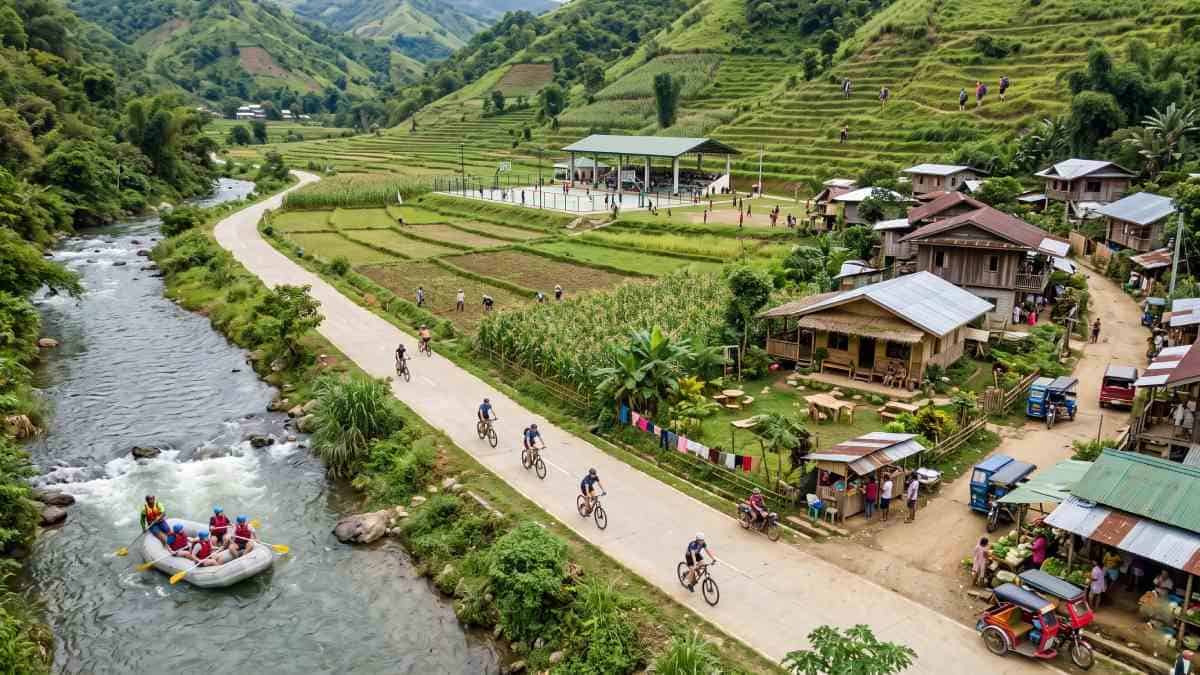
Throughout Asia, the conventional trend of leisure activities in congested coastal enclaves is currently going through an evolutionary structural change. The use of decentralized active tourism as a means of revitalization of agrarian belts and third-tier cities has been advocated by planning bodies and provincial planners. The use of city-based sports facilities, river running tracks, and multipurpose recreational facilities has enabled rural core regions to generate continuous income from fleeting day tourists. The approach to provincial infrastructure development is defined in terms of community initiatives. When physical recreation is combined with agricultural tradition, rural economies become diverse, urban congestion becomes reduced, and a sustainable economic model is created where it is shown that economic success for the region can be achieved through city-based leisure facilities.
The Spatial Economics of Decentralised Active Tourism
For decades, capital investments were concentrated within a small handful of primary metropolitan gateways and coastal enclaves by Asian tourism master plans. International visitors and domestic holidaymakers were channelled almost exclusively through mega-hubs such as Bangkok, Manila, Jakarta, and Ho Chi Minh City prior to being directed toward congested beach corridors such as Phuket, Bali, and Boracay. Severe economic distortions and environmental strains were generated by this hyper-concentration. Ecological degradation, rapid inflation in real estate and municipal utility rates, and heightened vulnerability to external macroeconomic and climatic shocks were suffered by flagship destinations.
An acute spatial imbalance—by which inland agrarian provinces are starved of capital whilst urban ecosystems are overburdened—has been documented by international tourism bodies, indicating that the vast majority of international travellers are congregated across a minute fraction of the global landmass. In response, geographical dispersion is being actively pursued by public policy across Southeast Asia. Product diversification and regional dispersion have been identified as paramount strategic goals in official policy surveys published by UN Tourism, with secondary infrastructure and site development outside primary urban centres being actively prioritised. These findings have been echoed by the Organisation for Economic Co-operation and Development (OECD), with emphasis placed in its regional development reviews upon the necessity of destination decentralisation and local administrative devolution for long-term territorial resilience.
Parallel to these institutional shifts, an evolution in post-pandemic consumer behaviour has been observed. Throughout Southeast Asia and East Asia, short-haul, nature-based micro-adventures situated within a overland transit corridor from dense urban conurbations are being sought by domestic consumers and international adventurers. A preference for secondary and tertiary destinations has been expressed by modern leisure travellers in industry surveys, driven by a pursuit of outdoor fitness, authentic local encounters, unpolluted natural environments, and lower aggregate price points.
Within this changing landscape, the role of economic anchors is performed by municipal active leisure facilities—such as inland boating parks, trail running networks, mountain biking corridors, and multi-sport complexes. Unlike passive sightseeing, which often yields rapid day-tripping with minimal local economic capture, longer dwell times, specialised equipment, logistical coordination, and physical recovery services are required by outdoor sports and recreational activities. When integrated with surrounding agricultural landscapes, transit provinces are transformed into overnight sports tourism destinations by these facilities.
The Public-Private-Community Partnership Architecture
Distinct financing and operational challenges are presented by the development of capital-intensive sports and outdoor infrastructure within secondary and tertiary municipalities. The balance-sheet depth required to construct modern active leisure facilities independently is frequently lacked by Local Government Units (LGUs). Conversely, difficulties are routinely encountered by conventional Public-Private Partnerships (PPPs) in secondary rural settings due to misaligned incentives; operating profits are routinely extracted back to corporate headquarters by commercial concessionaires, leaving host municipalities with capital debt, maintenance liabilities, and minimal community employment generation.
To resolve these market failures, the Public-Private-Community Partnership (PPCP) framework was formulated by regional governments. The traditional tripartite infrastructure agreement is expanded by the PPCP model through the structural integration of local agricultural cooperatives, village councils, and micro-entrepreneurs as permanent operational stakeholders. Under this framework, catalytic, non-repayable capital grants are supplied by national tourism infrastructure agencies; public land equity and administrative permitting are contributed by municipal LGUs; technical engineering, equipment procurement, and digital marketing are delivered by private corporate partners; and frontline operations, hospitality networks, and auxiliary services are managed by local community associations.
The reciprocal institutional accountability of the system is established by the structural division of responsibilities within a PPCP. Compliance with national safety and environmental building codes by municipal leisure facilities is ensured by national agencies. Permanent statutory title over the underlying land and water resources is retained by municipal governments, preventing speculative land enclosures and ensuring public access for local residents. Simultaneously, long-term concession rights to operate equipment rentals, boat operations, food stalls, and guiding services are secured by community cooperatives, whereby sustainable community ownership is established and capital leakage is mitigated.
The Tumauini Paradigm: Institutional Co-Investment at Camp Samal
An example of this collaborative framework in action has been identified in the Cagayan Valley region of northern Luzon, Philippines. Within the municipality of Tumauini, Isabela—an agrarian territory historically dependent on intensive corn and rice production—economic diversification was pursued by the municipal government through outdoor recreation. By direct coordination with the Tourism Infrastructure and Enterprise Zone Authority (TIEZA), an attached corporate body of the Department of Tourism (DOT) established under Republic Act No. 9593, national infrastructure development funding was secured.
It was confirmed in official procurement documents that a capital contract was tendered and awarded by TIEZA for the comprehensive rehabilitation of the boating area at the Camp Samal Tourist Area in Barangay Arcon, Tumauini. A modernised municipal water sports tourism facility and leisure training centre was inaugurated under the executive leadership of TIEZA Chief Operating Officer Dr Mark T. Lapid and Tumauini Municipal Mayor Venus Bautista.
The renovated boating park is linked with the adjacent Tumauini Watershed Natural Park by the municipal master plan, bridging active water recreation with regional watershed conservation and agro-tourism trails. The integration of municipal administration and community labour was formalized under Tumauini’s local capacity development plan, wherein formal staff were allocated to manage Camp Samal whilst agrarian households were systematically trained in homestay management, water safety protocols, and regional culinary hospitality. Through the maintenance of public municipal ownership alongside the devolution of frontline commercial operations to local residents, an underutilised municipal asset was transformed into a regional destination for outdoor recreation and rural SME growth.
Comparative Regional Analysis: Active Heartland Hubs Across Asia
Territorial regeneration across diverse Asian jurisdictions is being driven by the strategic convergence of municipal sporting infrastructure, active leisure, and rural economic corridors. Although operational models vary based on national decentralisation policies, public physical assets are utilised by each region to catalyze private investment and support rural employment.
| Destination | Core Administrative Framework | Primary Active Leisure Assets | Connecting Agro-Corridor & Landscape | Direct Livelihood Beneficiaries |
|---|---|---|---|---|
| Tumauini, Isabela (Philippines) | TIEZA Co-Investment & LGU Devolution Master Plan | Camp Samal Boating Park, Training Center, & sports facility | Tumauini Watershed Natural Park, river valleys, and corn farming belts | Local municipal hospitality staff, boat operators, watershed guides, and homestay hosts |
| Dumaguete, Negros Oriental (Philippines) | City Sports Development Office & NIR Regional Alignment | Pantawan People’s Park, beachfront volleyball courts, and coliseum | Mount Talinis volcanic trails, highland agro-farms, and coastal marine reserves | Motorised tricycle driver associations, street food vendors, market stallholders, and mountain guides |
| Buriram Province (Thailand) | SAT National “Sport City” Accreditation & TAT Buriram Master Plan | Chang Arena, Chang International Circuit, and municipal running parks | Extinct volcanic landscape circuits, mulberry silk trails, and organic rice farms | Community artisan groups, local guesthouse owners, food truck operators, and event marshals |
| Magelang, Central Java (Indonesia) | DPMPTSP Asset Utilization (KSP) & Pemprov Jateng Sport Tourism Policy | Kawasan Sanden Sports Center, outbound camps, and aquatic facilities | Elo and Progo river systems, Menoreh hill trails, and Borobudur agricultural villages | Desa Wisata homestay owners, village cycling guides, river rafting crews, and rural SMEs |
| Bảo Lộc, Lâm Đồng (Vietnam) | Resolution 05-NQ/TU of Lâm Đồng Provincial Party Committee | Nam Phuong Lake recreational parks, Sa Pung Mountain trekking trails | High-altitude tea estates, coffee plantations, and sericulture mulberry farms | Highland ethnic minority guides, tea farm hospitality providers, and eco-lodge operators |
| Gopeng & Ipoh, Perak (Malaysia) | Majlis Daerah Kampar (MDK) & Tourism Perak “Visit Perak” Strategy | Sungai Kampar whitewater rapids, Gua Kandu caving and via ferrata systems | Limestone karst formations, heritage tin-mining corridors, and fruit orchards | Indigenous Orang Asli river instructors, rural chalet hosts, and local transport operators |
Dumaguete and Negros Oriental: Linking Coastal Recreation with Highland Ridges
In the Central Visayas region of the Philippines, an established urban-rural sports tourism model is offered by Dumaguete City in Negros Oriental. Having been officially recognized as the Emerging Sports Tourism Destination in the Philippines, municipal facilities—most notably the waterfront Pantawan People’s Park and the Gov. Mariano Perdices Memorial Coliseum—have been leveraged by Dumaguete to host national triathlons, the Sandurot Half Marathon, beach volleyball leagues, and international dragon boat challenges.
Municipal athletic facilities have been aligned with regional active corridors by the City Government of Dumaguete, through its City Sports Development Office and executive coordination with the Provincial Government of Negros Oriental under Governor Manuel “Chaco” Sagarbarria. Planned routes are provided along which visiting athletes and outdoor enthusiasts are directed from the urban shoreline to the volcanic highlands of Mount Talinis and the twin crater lakes of Balinsasayao. Visitor expenditure is directly distributed across the informal transport and retail sectors by this deliberate spatial linkage, whereby steady revenue is generated for motorised tricycle cooperatives, fresh produce market stallholders, and small food vendors along the municipal promenade.
Buriram: The High-Capacity Sports City Model
In the lower northeastern region of Isan, Thailand, an example of transforming a historically underdeveloped agricultural territory into an international sports hub is provided by Buriram Province. Having been officially accredited as a pilot “Sport City” by the Ministry of Tourism and Sports through the Sports Authority of Thailand (SAT), private investments—including Chang Arena and the Chang International Circuit—were integrated with extensive public recreational parks and trail corridors.
It has been demonstrated by econometric analyses that statistically significant increases in annual tourism revenues and visitor numbers were achieved by the province in comparison to neighbouring northeastern provinces following its sports infrastructure pivot.
However, structural challenges in the early phases of this strategy were revealed by critical academic research from institutions such as Chulalongkorn University and official data from the Thai People Map and Analytics Platform (TPMAP), by which it was shown that peripheral rural poverty often failed to be eliminated by capital-intensive sports venues in the absence of deliberate grassroots linkages. In response, destination marketing was restructured by the Tourism Authority of Thailand (TAT) Buriram Office and local administrative bodies to incorporate community craft initiatives, volcanic agro-tourism routes, and municipal trail races, through which sports-related spending is dispersed across surrounding farming sub-districts.
Magelang: Integrating Active Sports with Agrarian Heritage
In Central Java, Indonesia, sports tourism has been systematically combined with agricultural preservation along the Progo and Elo river basins by the municipality and regency of Magelang. A core component of this strategy is formed by the Kawasan Sanden Sports Center (Pusat Olahraga dan Pariwisata Sanden) in Magelang City, which was structured under an asset utilisation partnership (Kerjasama Pemanfaatan Aset) across municipal land. Public swimming complexes, water parks, jogging tracks, outbound camping grounds, recreational fishing piers, and dedicated whitewater rafting staging points are incorporated into the municipal master plan.
These sports facilities are actively promoted by the Provincial Government of Central Java (Pemprov Jateng) to stimulate micro-enterprises and tourist dispersion away from congested metropolitan hubs. Thousands of athletes are drawn by signature sporting events, such as the Borobudur Marathon and regional trail runs, by whom the extensive Desa Wisata (Tourism Village) network surrounding Borobudur is populated. This demand is absorbed by community-operated homestays and rural cycling cooperatives, whereby direct household revenues are generated for agricultural communities through locally sourced catering, handicraft sales, and river guide services.
Bảo Lộc: Relieving Highland Congestion Through Agro-Adventure
In the Central Highlands of Vietnam, targeted policies were enacted by Lâm Đồng provincial authorities to address hyper-tourism in the provincial capital of Đà Lạt. Under Resolution No. 05-NQ/TU of the Lâm Đồng Provincial Party Committee, the municipal administration of Bảo Lộc was designated as the southern growth pole and secondary eco-tourism gateway of the province. The diversification of high-quality active leisure, including mountain trekking, lake watersports, paragliding, and wellness retreats, is prioritised by the provincial planning directive.
Key municipal landscape features are leveraged by Bảo Lộc’s active tourism framework: Nam Phuong Lake I and II are being developed for eco-leisure and waterborne recreation, whilst Sa Pung Mountain is utilised as an active trekking and “cloud-hunting” paragliding destination. These physical leisure assets are systematically interwoven with the region’s extensive agro-industrial assets—specifically its historic tea, coffee, and silk production belts. By domestic travellers from Ho Chi Minh City being encouraged to explore Bảo Lộc’s active trails and farm tours, vital overnight accommodation revenues are captured by the municipality while environmental strains on Đà Lạt’s historical core are eased.
Gopeng and Ipoh: Post-Mining Karst and River Corridors
An instructive example of post-industrial rural regeneration through community-led active recreation is provided by the Kampar district of Perak, Malaysia—historically renowned for its late-nineteenth-century tin-mining boom. Centred around the municipality of Gopeng, the rapids of the Kampar River (Sungai Kampar) and the limestone karst formations of Gua Kandu were converted into an eco-adventure network by the state tourism agency (Tourism Perak) and the Kampar District Council (Majlis Daerah Kampar).
Under institutional programmes advancing Visit Perak Year, Gopeng was successfully established as an international whitewater rafting destination, with competitive sporting events being hosted, including the International Rafting Federation (IRF) World Cup series. Private adventure companies are actively integrated with rural village populations and indigenous Orang Asli communities under the commercial operational model. Formal certification is received by local residents as swiftwater rescue specialists, whitewater raft guides, and via ferrata instructors, allowing the economic yields of outdoor recreation to be retained within the river valley villages.
Macroeconomic Ripple Effects: Upstream Linkages and Asset Longevity
The macroeconomic rationale for directing public capital grants toward municipal active leisure infrastructure is rooted in the high tourism multiplier characteristic of regional active recreation. It has been confirmed by multi-agency empirical studies published by the World Bank and UN Tourism that one of the highest employment and output multipliers of any economic sector is generated by tourism, whereby substantial indirect and induced employment is created across upstream agricultural supply chains, domestic logistics, retail trade, and construction. Secondary employment across food production, transit services, and municipal maintenance is generated for every direct operational job created in a municipal sports facility or river park.
In secondary heartland municipalities, enclave coastal tourism is significantly outperformed by the capital retention ratio of active tourism. In conventional sun-and-sea resorts, substantial proportions of visitor spending are leaked out of the host destination through foreign-owned resort chains, imported luxury food items, and international booking aggregators. In contrast, domestic supply inputs—such as municipal watercourses, local geographic terrain, native guides, and regional culinary traditions—are fundamentally relied upon by municipal active leisure hubs.
The economic ripple effect is initiated by visitor expenditure on recreational activity fees, equipment hire, and regional transit. High caloric volumes are consumed by active tourists, by which patronage is directly boosted at local roadside eateries, municipal market stalls, and farm-to-table diners supplied by immediate agrarian smallholders. In Dumaguete, independent tricycle transport cooperatives and open-air street markets are directly patronised by sports event participants, allowing liquidity to be distributed directly into household bank accounts. In Tumauini and Magelang, fresh local produce, high-grade corn, artisanal coffee, and woven handicrafts are purchased directly from village producers by active holidaymakers.
Furthermore, an upskilling pipeline is provided by municipal active leisure for rural youth and agricultural workers facing cyclical un- or under-employment. Seasonally dependent farm workers are transitioned into certified eco-adventure guides, safety marshals, boat technicians, and homestay managers. Rural household earnings across fluctuating harvest cycles are stabilised by this seasonal labour balancing, whereby rural-to-urban economic migration is mitigated and community social fabric is preserved.
Long-standing issues surrounding municipal asset longevity are also resolved through community stewardship of public recreational infrastructure. When public parks and adventure corridors are co-managed by local residents whose daily livelihoods depend upon clean rivers, pristine mountain trails, and functional facilities, the enforcement of environmental protection is increased by the community. Watershed conservation, river waste clearance, and trail maintenance are integrated into routine commercial operations, safeguarding the ecological integrity of agrarian landscapes against deforestation and industrial pollution.
Strategic Outlook and Policy Recommendations: Building the Inland Economy
To scale the successes observed across Isabela, Negros Oriental, Buriram, Magelang, Lâm Đồng, and Perak, the approach to municipal active tourism infrastructure must be formalised by Asian policymakers and private investors. Cohesive multi-tier governance, flexible financing instruments, and inclusive community frameworks are required for the development of sustainable micro-adventure hubs.
Multi-Level Governance Realignment for National Tourism Agencies
A transition must be made by national tourism boards and public works departments from centralised, gateway-centric promotional campaigns toward targeted regional infrastructure financing. Dedicated funding windows—modelled on the Philippine TIEZA grant structure—should be established by ministries of tourism so that non-repayable capital allocations are disbursed specifically to municipal LGUs for secondary sporting, outdoor, and waterborne leisure assets.
Furthermore, national competency frameworks for outdoor recreation must be standardized by national agencies. Formal licensing, wilderness first aid certifications, and water rescue protocols for rural community operators should be established. The competitiveness of secondary regions is enhanced by standardising safety standards, whereby international travellers are reassured while higher professional wages can be commanded by local guides.
Municipal Land-Use Zoning and Public Asset Governance
Active sports tourism must be integrated by Local Government Units into their statutory Comprehensive Land Use Plans (CLUPs) and local development agendas. Statutory green corridors should be established by municipal councils, ensuring that public access to riverbanks, mountain paths, and lakesides is secured before real estate values are inflated by land speculation.
Municipal Sports Tourism and Leisure Boards composed of public officials, regional university representatives, environmental officers, and community business associations should be established by LGUs. Operating space and commercial retail stalls for local micro-vendors must be explicitly guaranteed within municipal park concession agreements, whereby corporate monopolisation is prevented and local economic capture is maintained.
Private Sector and Impact Investment Opportunities
Significant long-term growth opportunities are presented by Asia’s secondary and tertiary agro-corridors for commercial hospitality groups, outdoor recreation brands, and institutional impact investors. Commercial opportunities are concentrated across three primary sectors:
- The development of boutique glamping hubs, modular eco-lodges, and active lifestyle wellness centres adjacent to municipal sports corridors, catering to demand from urban micro-adventurers seeking comfortable accommodations within nature.
- The supplying, leasing, and maintenance of recreational gear—including commercial whitewater rafts, performance mountain bikes, kayaks, and safety harnesses—through revenue-sharing agreements with local community cooperatives.
- The establishment of digitised route aggregators, equipment booking systems, and regional micro-transit networks connecting secondary railway stations and bus hubs directly to rural recreational trailheads.
Conclusion
Decentralized active tourism has been shown through the realignment of regional tourism in developing Asia to be an essential component of sustainable economic revitalization. Through the provincial development process of relying on sports facilities, agriculture corridors, and partnerships within municipalities, expenditures by tourists stay within the secondary heartlands while grassroots enterprises are empowered. This is ensured by collaborative arrangements among public institutions, commercial firms, and village cooperatives that ensure the viability of the recreational resources in terms of business, environment, and society. It has been conclusively shown through innovative destinations such as Isabela and Perak that outdoor recreation is no longer seen as a peripheral pastime but has become the main economic driver for turning underdeveloped inland regions into growth centers.
The post Dumaguete and Others Drive Asia’s New Sports Tourism Revolution Beyond Crowded Beach Destinations appeared first on Travel and Tour World




































































