
















Dominican Republic Brings AI Into the Spotlight as Latin American Congress Explores Future of Faith Tourism
-
Travel, Culture, Religion
-
-
8 mins
-
Travel and Tour World
-
Subhankar Chakraborty
-


Dominican Republic religious tourism gains focus as a 2026 congress explores AI, heritage and responsible travel.
The Dominican Republic has brought artificial intelligence into a conversation about faith, travel and human dignity. At the fourth Latin American and Caribbean Congress of Tourism Pastoral Care, tourism officials and Church representatives explored how digital innovation could improve journeys without weakening personal hospitality.
Held from 12 to 16 October 2026, the Dominican edition attracted around 40 participants from nine countries. The event also placed heritage protection, fair treatment of workers and community wellbeing under scrutiny. For Dominican Republic religious tourism, the message was clear: modern technology may create opportunities, but people must remain at the centre of tourism development.
A Landmark Congress Gives Dominican Faith Tourism a New Platform
The Ministry of Tourism, known as MITUR, organised the congress with the Dominican Episcopal Conference. It marked the first time the country had welcomed this regional gathering. The Dominican Presidency confirmed the event in an official statement on 21 October 2026. Its theme, Towards an Ordinary and Integrated Pastoral Ministry for Tourism, signalled an ambition beyond promoting pilgrimages. Delegates considered how the Church could support visitors, workers and communities throughout the year. This gave the Latin American tourism congress a clear practical purpose. Rather than treating religion as another attraction, speakers examined tourism as a shared human and cultural experience.
Delegates From Nine Countries Bring an International Perspective
Vatican News reported that 40 participants came from Argentina, Chile, Colombia, Costa Rica, El Salvador, Mexico, Panama, Spain and the Dominican Republic. Spain’s involvement extended the discussion beyond the congress’s immediate Latin American and Caribbean focus. The mix gave delegates opportunities to compare pastoral concerns across markedly different destinations. Some places receive pilgrims; others host beach holidays, cruises or city breaks.
Yet workers and residents face common questions about inclusion, respect and commercial pressure. Official reports do not provide individual delegation sizes, so the figure should not be presented as 40 foreign visitors alone. It describes participants including Dominican representatives.
Artificial Intelligence Becomes the Congress’s Unexpected Talking Point
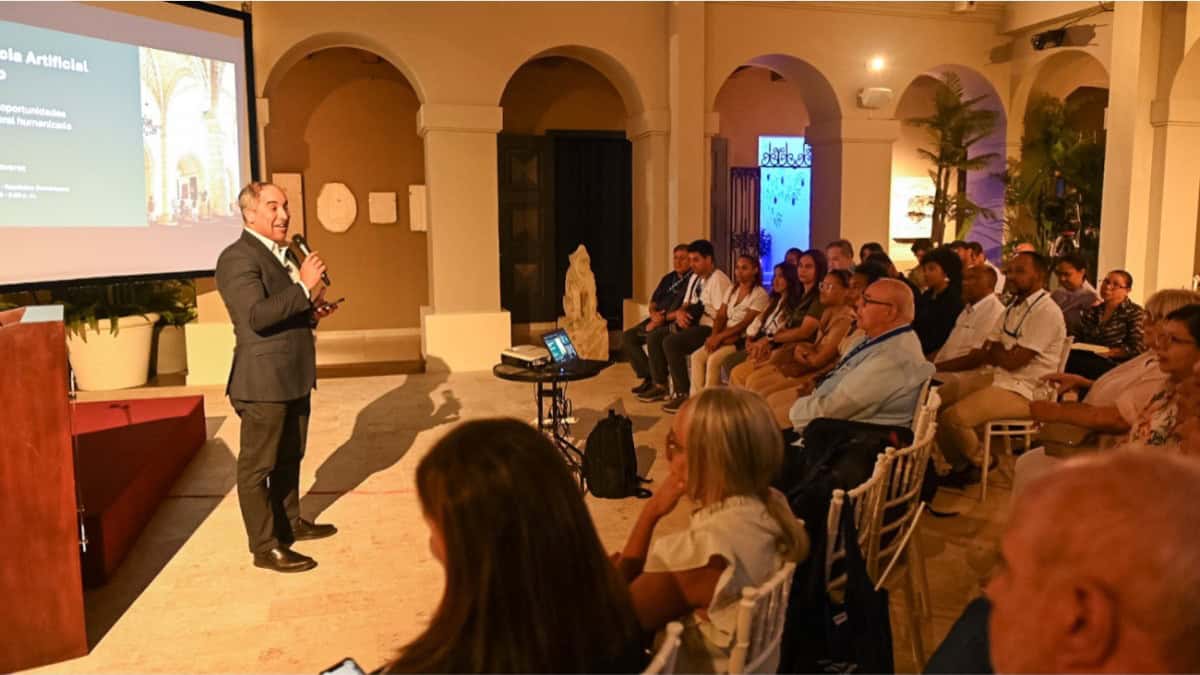
The most striking development was a presentation on AI in tourism by José Armando Tavares, a former rector and founder of the Technological Institute of the Americas. He examined the ethical challenges and opportunities of digital change for tourism pastoral care. The subject brought automation into an event primarily devoted to spirituality and social responsibility.
Tavares did not present technology as an automatic solution. Instead, he argued that innovation must enhance the visitor experience while preserving personal attention. His contribution gave the congress a contemporary edge. It also raised a wider question: who benefits when travel services become increasingly digital?
Smart Tourism Tools Must Strengthen Rather Than Replace Hospitality
Artificial intelligence can help tourism organisations respond to enquiries, translate information and organise visitor services. Such applications illustrate the broader possibilities of digital travel, although the congress did not announce a specific AI system. Tavares’s central concern was the relationship between efficiency and human contact.
A convenient online response cannot always replace someone who listens, explains or offers reassurance. This matters particularly at religious sites, where visitors may be seeking reflection rather than a quick transaction. The wider lesson is that digital systems should support service staff and visitors. Technology alone cannot deliver the warmth on which meaningful hospitality depends.
Digital Inclusion Emerges as a Test of Responsible Innovation
The presentation also highlighted travellers who struggle to access new digital tools. Older visitors, people with disabilities and those facing connectivity barriers may need different forms of assistance. These examples show why accessibility cannot become an afterthought. Tavares called for ethical and human-centred innovation that does not exclude people from tourism services. The argument carries special weight for pilgrimage experiences, which often bring together people with widely varied needs.
A useful digital service should be understandable and accessible. Where that is impossible, personal alternatives matter. The congress therefore connected technology with human dignity, not simply lower costs or faster transactions.
A Travelling Format Takes the Debate Beyond Conference Rooms
Rather than remaining in one hotel or auditorium, the congress moved through five ecclesiastical jurisdictions. Its route covered Puerto Plata, La Vega, Nuestra Señora de la Altagracia in Higüey, Stella Maris in Santo Domingo Este and the Archdiocese of Santo Domingo. Participants attended conferences, religious celebrations and visits associated with local religious heritage.
This format mattered because delegates could encounter places and communities directly linked to their discussions. A debate about cultural preservation gains depth when held near sites that carry spiritual meaning. The itinerary also demonstrated that Dominican Republic religious tourism reaches well beyond one familiar resort or city.
Puerto Plata and La Vega Bring Local Heritage Into Focus
Puerto Plata and La Vega formed part of the congress’s wider journey through Dominican ecclesiastical communities. These stops connected a regional conversation with local traditions and the practical realities of welcoming visitors. Their significance was not measured through visitor spending or new hotel reservations. Instead, the locations offered settings for listening, exchanging experiences and considering pastoral initiatives.
The Ministry of Tourism said the travelling programme helped participants identify challenges and share approaches. Such meaningful exchanges can inform future work, but they should not be mistaken for completed projects. The confirmed achievement was direct engagement across several parts of the country.
Higüey and Santo Domingo Expand the Spiritual Conversation
The programme also included the Diocese of Nuestra Señora de la Altagracia in Higüey, the Diocese of Stella Maris and the Archdiocese of Santo Domingo. Together, these visits showed how a national conversation can move between major religious centres and different urban communities.
Participants encountered local expressions of faith through shared meetings, liturgies and heritage-related activities. The journey linked the congress’s main themes with lived experience. It also underlined the need for coordination between Church jurisdictions. Regional cooperation is valuable, but lasting support for visitors and workers often depends on institutions close to the places where tourism occurs every day.
Faith-Based Tourism Means More Than Visiting Historic Churches
Faith-based tourism includes pilgrimages, religious festivals and journeys to places of spiritual importance. Tourism pastoral care addresses a broader responsibility: offering spiritual and human support to visitors, industry employees and host communities. The distinction matters. A well-preserved sanctuary may draw visitors, but a pastoral approach also asks how those visitors are welcomed and how local people are treated.
CELAM’s 2026 guide places hospitality, respect for culture and care for creation within this mission. It presents tourism as an opportunity for encounter and human development. That approach gives Dominican Republic religious tourism a social dimension beyond sightseeing for the entire community.
MITUR Sees Religious Heritage as a Shared Community Asset
Kirsis de los Santos Decena, head of MITUR’s Religious Tourism Department, emphasised the value of faith, history and culture. She also described local tourism stakeholders as active members of their communities, not merely participants in an economic activity. This shifts attention towards the people who maintain traditions, receive travellers and protect significant places throughout the country.
The ministry’s position suggests that development works best when communities have a genuine role. It does not mean every community benefit has already been measured. Instead, the congress provided a platform for recognising local participation as essential to responsible destination planning and heritage preservation.
Tourism Workers’ Rights Receive a Forceful Warning
Bishop Santiago Rodríguez Rodríguez of San Pedro de Macorís called attention to the risks of treating tourism income as more important than human dignity. CELAM’s account of his presentation raised labour exploitation, trafficking, sexual abuse and protection of children. He argued that Church representatives should remain close to people affected by these problems. His proposals included pastoral visits to hotels, cruise ships and other workplaces.
These were recommendations, not new government rules. Nevertheless, they expanded the congress’s agenda beyond tourist experiences. Protecting the people who clean rooms, provide transport and serve guests became a central everyday test of responsible tourism.
Environmental Protection Moves Into the Faith Tourism Debate
The discussions also examined the pressure tourism can place on environments. Bishop Rodríguez warned that high visitor numbers can damage ecosystems, strain resources and threaten cultural heritage. Sustainable religious tourism therefore requires more than promoting attractive routes. It also means caring for the places that make those journeys meaningful. Churches, historic streets and surrounding communities cannot be treated as unlimited resources.
The argument is especially relevant when new visitor experiences attract attention to quieter locations. Sound planning must consider conservation, local infrastructure and residents’ needs. The congress presented environmental stewardship as an ethical responsibility rather than an optional marketing claim.
Community Justice Becomes a Measure of Tourism Success
Bishop Jesús Castro Marte, from the Diocese of Nuestra Señora de la Altagracia, described tourism as a deeply human activity. Vatican News reported his view that an appealing destination is insufficient unless development is also fair. His comments placed host communities alongside visitors in the discussion about tourism’s future.
An increase in arrivals may support businesses, but numbers alone cannot show whether residents directly benefit. Fairness depends on how opportunities, responsibilities and pressures are shared. This perspective adds a useful test for public tourism policies. Economic development and community welfare should reinforce one another instead of moving in different directions.
Vatican Leadership Calls for Support Throughout the Year
Archbishop Rino Fisichella, Pro-Prefect of the Dicastery for Evangelisation, urged the Church to make tourism pastoral care part of its regular mission. According to CELAM, he questioned an approach limited to festivals, holidays or occasional gatherings. He encouraged stronger links among parishes, sanctuaries, communities and cultural institutions.
The goal was sustained attention to travellers and tourism workers, not just special events. This position gave the congress’s theme practical meaning. If care is integrated into everyday structures, local teams can respond more consistently. That requires coordination and people willing to maintain programmes after delegates have returned home to their usual responsibilities.
CELAM Pushes for Stronger Connections Across Borders
Father Francisco Hernández Rojas, a coordinator within CELAM’s Centre for Pastoral Action Programmes and Networks, emphasised the need to work together. He advocated links between tourism pastoral teams and other areas of Church life, including education, social action and religious instruction.
This matters because the challenges raised at the congress cannot be solved by one department alone. Worker protection, visitor assistance and cultural conservation involve different skills and institutions. Better networks could help share training and practical experiences across countries. However, official reports reviewed do not establish a new binding regional agreement. The emphasis remained on cooperation and continuing action.
Earlier Congresses Reveal a Continuing Regional Commitment
The Dominican meeting was the fourth chapter in a longer series. CELAM’s 2026 institutional guide records an initial congress in Panama in 2008, followed by Brazil in 2019 and Chile in 2024. The Dominican Republic hosted the 2026 edition. This history shows that pastoral tourism is not a newly invented idea responding to artificial intelligence.
Rather, the conversation has evolved as destinations, travel habits and social challenges have changed. The guide also explains how national coordinators maintained regional cooperation between meetings. In that context, AI became an important new issue within a long established commitment to hospitality and human development.
Senderos de la Fe Offers a Direction for Future Development
The congress also connected with Senderos de la Fe, or Paths of Faith, a religious tourism initiative being developed by MITUR alongside Catholic institutions. The government presents it as a way to highlight the country’s spiritual, historical and cultural assets. Such an approach could encourage visitors to consider destinations beyond conventional coastal holidays.
Yet the official congress announcement does not confirm a completed national pilgrimage network or specify an opening date for every route. It is important to preserve that distinction. For Dominican Republic religious tourism, the initiative signals strategic interest, while the practical results will require further independent evidence.
Heritage Investments Show Wider Government Interest in Cultural Travel
Separate projects announced during 2026 provide useful context. In March, MITUR reported improvements at religious sanctuaries in Bayaguana and Boyá, alongside a municipal plaza project, with combined investment of approximately RD$118 million. In February, the government introduced the proposed 450-kilometre Ruta del Encuentro, connecting heritage locations between the north coast and Santo Domingo.
These developments demonstrate wider government interest in historical and cultural travel. They were not funded or launched by the October congress itself. Keeping them separate prevents an exaggerated account of the event. Together, however, they explain why religious heritage occupies space in the country’s developing tourism strategy.
An October Follow-Up Sets the Stage for the Next Steps
The Ministry of Tourism announced another gathering, the fourth Religious Tourism Meeting, for 24 October 2026 during the Caribbean Tourism Exchange. As of 22 October, that event remains scheduled rather than completed. Its connection with Senderos de la Fe offers a near-term opportunity for discussion between tourism and religious organisations.
The congress itself has not produced a published estimate of extra tourists, revenue or jobs. Its significance lies instead in the issues it brought together: AI in tourism, cultural heritage, human dignity and community responsibility. The lasting test will be whether institutions turn those discussions into meaningful action over time.
The post Dominican Republic Brings AI Into the Spotlight as Latin American Congress Explores Future of Faith Tourism appeared first on Travel and Tour World




































































