










Tokyo Island Tourism Faces Major Disruption as Typhoon Dujuan Cancels Izu Islands Ferries
-
Travel, Culture, Weather
-
-
7 mins
-
Travel and Tour World
-
Angana Dutta
-

Typhoon Dujuan is disrupting Tokyo’s island tourism network as rough seas force ferry cancellations across parts of the Izu Islands. With Hachijojima flights also affected, travellers heading to Japan’s remote island destinations face changing transport schedules as severe weather moves towards eastern Japan.
Tokyo island tourism has been disrupted due to Tropical Storm Dujuan causing the cancellation of ferry services between Tokyo and the Izu islands. On September 19, 2026, Tokai Kisen reported that it had cancelled multiple ferry services to and from the islands of Oshima, Toshima and Mikurajima, due to the severe weather conditions of Typhoon No. 25. Storms in this region create problems for the transportation of people to and from the remote islands and adds to the problems travellers face during the peak season. All Nippon Air (ANA) has also confirmed the canciliation of flights to Hachijojima on September 20. Remote islands around Tokyo require air and sea transportation to and from the Tokyo metropolitan area for tourism and other transportation.
Quick Summary
- Typhoon Dujuan disrupts Izu Islands travel, forcing multiple ferry cancellations from Tokyo.
- Hachijojima flights are affected, adding aviation disruption to the island transport problems.
- Travellers should check official updates as rough seas and severe weather continue to affect services.
Typhoon Dujuan Begins Disrupting Tokyo’s Island Transport Network
The effects of the storm were already visible on 19 September. Tokai Kisen’s operational information showed several high-speed jetfoil and passenger-ship services cancelled because of poor sea conditions associated with Typhoon No. 25.
Services from Tokyo to Oshima scheduled for 07:50, 08:15 and 13:45 were among those cancelled. A 13:50 service from Atami to Oshima was also listed as cancelled.
Toshima faced even broader disruption. Services from Tokyo and Shimoda were cancelled, along with return connections towards Tokyo and Shimoda. A large passenger ship that had departed Tokyo on the previous evening was also unable to serve Toshima because of the weather.
Mikurajima was affected too. Tokai Kisen listed the previous evening’s Tokyo departure and a daytime Tokyo-bound service as cancelled because of poor sea conditions linked to the typhoon.
| Location/service | Situation reported on 19 September | Official reason |
|---|---|---|
| Tokyo–Oshima jetfoil services | Multiple cancellations | Poor sea conditions caused by Typhoon No. 25 |
| Tokyo–Toshima services | Multiple cancellations | Typhoon-related sea conditions |
| Shimoda–Toshima | Cancelled | Poor sea conditions |
| Mikurajima connections | Cancellations reported | Typhoon-related sea conditions |
| Hachijojima ANA flights, 20 Sept | All flights cancelled | Typhoon impact |
| Haneda/Narita ANA flights | Potential disruption periods identified | Typhoon conditions |
Sources: Tokai Kisen and ANA operational notices.
Why the Izu Islands Matter to Tokyo Tourism
The disruption is particularly important because the Izu Islands are not a distant tourism region separate from Tokyo. Administratively, they are part of Tokyo and form an important nature-based alternative to the capital’s dense urban tourism experience.
The official GO TOKYO tourism service promotes the Izu and Ogasawara islands for volcanic landscapes, beaches, coral reefs, marine life and distinctive island culture. Popular experiences include hiking, swimming, surfing and exploring volcanic terrain.
The island chain includes Oshima, Toshima, Niijima, Shikinejima, Kozushima, Miyakejima, Mikurajima, Hachijojima and Aogashima, alongside the more distant Ogasawara islands.
Access, however, makes the tourism economy especially sensitive to severe weather.
Seven of the Izu Islands can normally be reached in roughly two to three hours by high-speed jetfoil, six to ten hours by conventional passenger ship, or around an hour by aircraft depending on the island and route. GO TOKYO specifically advises travellers that journey times can vary according to weather conditions.
More Than 370,000 Tourists Visited the Izu Islands in 2025
Official statistics show why interruptions to these transport links matter.
The Tokyo Metropolitan Government Tourism Data Catalog recorded approximately 372,000 tourists visiting the Izu Islands in 2025. That remained 18.9% below the 2019 pre-pandemic level.
August was the busiest month of 2025, recording 58,880 visitors. The wider Tokyo Metropolitan Government dataset covering the Izu and Ogasawara islands contained 401,754 tourism records across 11 municipalities for 2025.
Those figures highlight a structural feature of island tourism. Visitors cannot simply drive to these destinations when one transport mode is disrupted.
Air Travel Is Now Being Affected Too
The disruption is no longer confined to ferries.
ANA’s latest domestic operational information says all flights arriving at or departing from Hachijojima Airport on 20 September have been cancelled. Hachijojima also remains among the airports identified as potentially affected throughout 21 September.
ANA has additionally identified Tokyo Narita and Tokyo Haneda as airports potentially affected by the storm. Narita is listed for the afternoon of 20 September, while Haneda is listed for the afternoon of 20 September and morning of 21 September.
The airline is permitting eligible passengers using airports covered by its typhoon arrangements to change reservations or seek refunds without handling fees even when individual flights have not yet been delayed or cancelled.
That creates a broader Japan typhoon travel disruption story spanning sea and air transport rather than ferry services alone.
Oshima Shows Why Ferry Disruption Matters
Oshima is the largest of the Izu Islands and one of the easiest for visitors to reach from metropolitan Tokyo.
Official tourism information places the island about 120 kilometres from Tokyo. Under normal conditions, travellers can reach Oshima from Takeshiba Pier by high-speed ferry in as little as one hour and 45 minutes, while flights from Chofu take about 25 minutes.
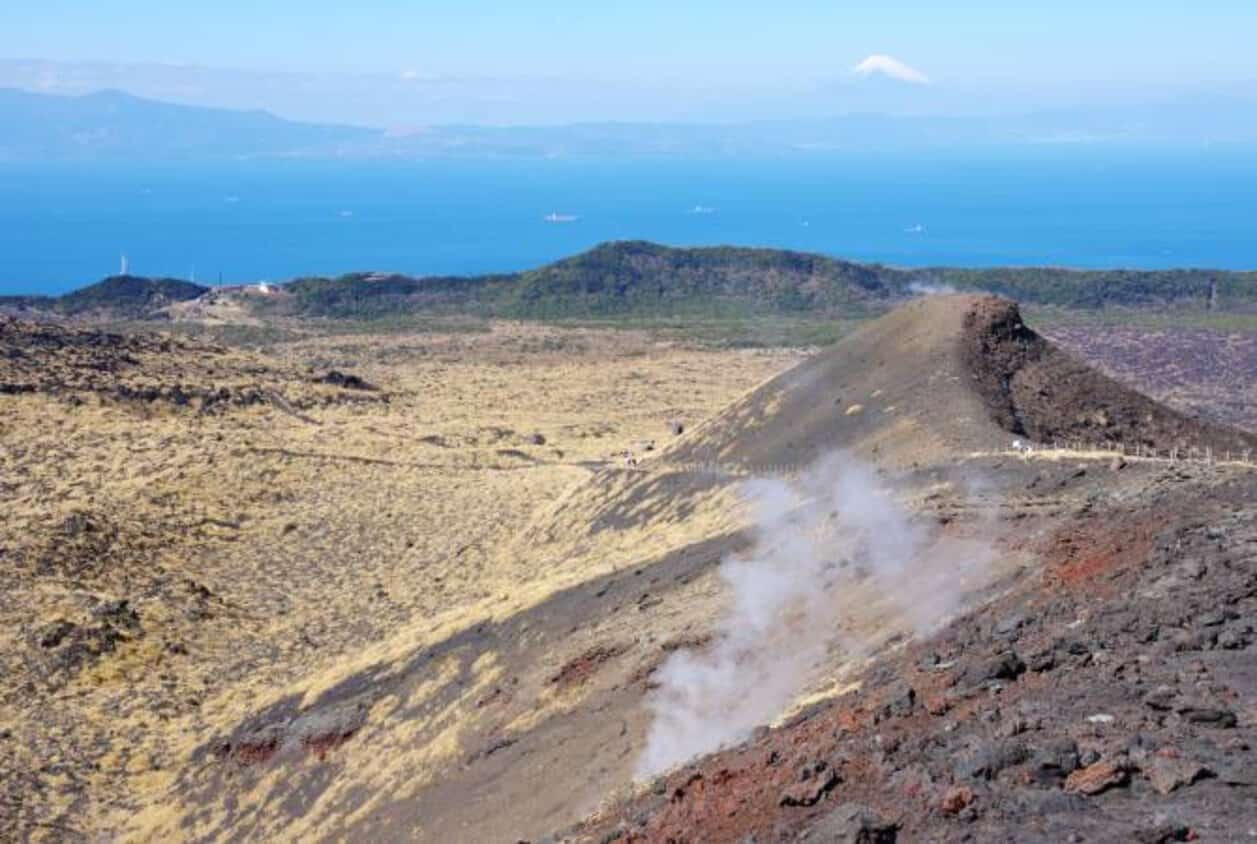
The island is known for Mount Mihara, volcanic landscapes, hiking, diving, hot springs and its famous camellias.
Niijima provides another example. Located around 160 kilometres south of central Tokyo, it is promoted for surfing, beaches, hot springs, trekking and art. A normal high-speed ferry journey from Takeshiba takes roughly two and a half to three and a half hours.
When sea conditions force cancellations, therefore, the effect can reach accommodation providers, restaurants, activity operators and other businesses whose customers depend on scheduled transport.
Tourism Businesses Face an Immediate Connectivity Problem
The economic effect of a weather disruption cannot yet be quantified, and there is no official estimate of tourism revenue lost because of Dujuan. Any figure claiming a financial loss at this stage would therefore be premature.
What can be established is the islands’ dependence on transport connectivity. GO TOKYO notes that accommodation and restaurants can be limited on the islands and advises travellers to book ahead and check availability before visiting.
That makes schedule changes particularly relevant for small tourism businesses. A cancelled ferry can alter hotel arrivals, activity bookings and restaurant demand while simultaneously affecting visitors trying to leave an island.
Tokyo Has Been Building Greater Visibility for Its Island Tourism
The Izu Islands form part of Tokyo’s broader effort to show visitors a different side of the destination.
Rather than skyscrapers and shopping districts, official tourism promotion presents the islands through nature, volcanic geology, marine activities and local culture. Oshima offers Mount Mihara and its volcanic landscapes, while Toshima is promoted for dolphin swimming, hiking and stargazing.
This makes reliable access central to the visitor experience.
The Tokyo Metropolitan Government also continues to monitor tourism demand through dedicated surveys covering tourist numbers, accommodation and modes of transport. The latest dataset was updated on 3 September 2026.
What Travellers Should Do Before Heading to the Islands
Visitors should avoid assuming that a scheduled ferry or flight will operate simply because they hold a confirmed reservation.
Travellers should:
- Check the operator’s latest departure status before travelling to a port or airport.
- Check ANA directly when travelling through Hachijojima.
- Follow Japan Meteorological Agency warnings for wind, rain and waves.
- Contact accommodation providers when delayed arrival could affect a booking.
- Avoid relying on an alternative ferry without confirming that it is operating.
- Allow additional flexibility for onward journeys through Tokyo.
The Japan Meteorological Agency maintains dedicated typhoon, rainfall, flood, landslide and marine-warning information. Its services include forecasts for storm position, strength and movement as well as coastal wave information.
Future Outlook Depends on Official Weather and Transport Updates
The immediate outlook remains dependent on the storm’s movement and local sea and wind conditions.
ANA has identified potential disruption at Haneda, Narita and Hachijojima, while Tokai Kisen is updating individual sailings according to operating conditions. Travellers should therefore use live operator information rather than assume that today’s cancellation automatically determines tomorrow’s service.
Japan’s weather agency has also strengthened how it communicates continuing hazards after tropical cyclones transition into other weather systems. From August 2026, JMA’s typhoon information service links users to continuing weather warnings when vigilance remains necessary after a typhoon becomes a low-pressure system.
Frequently Asked Questions
Are ferries to the Izu Islands cancelled because of Typhoon Dujuan?
Yes, multiple services were officially listed as cancelled on 19 September because of poor sea conditions associated with Typhoon No. 25. The affected services included connections involving Oshima, Toshima and Mikurajima. Travellers should check their specific sailing because operating decisions vary by route and departure time.
Are flights to Hachijojima cancelled?
ANA says all of its flights arriving at or departing from Hachijojima on 20 September 2026 are cancelled. The airport is also listed among locations that could be affected throughout 21 September.
Can travellers change ANA tickets because of the typhoon?
For flights covered by ANA’s special typhoon ticket arrangements, passengers may change reservations or request refunds without handling fees regardless of the actual flight status. Travellers should confirm that their airport and travel period qualify before changing plans.
Conclusion
The effect of typhoon Dujuan on Tokyo’s remote islands demonstrates how quickly tourism can be affected by extreme weather conditions. Already this week, ferry services from Toshima and Mikurajima have been canceled, and services to Oshima have been reduced. Hachijojima’s air services by ANA for the 20th of September have been canceled, and further disruptions are expected. For islands that are primarily accessed by air and sea, the loss of these services directly affects supporting businesses and the local community. The loss of transport services also affects tourism businesses that support visitors. Potential visitors to the Izu Islands should be prepared for their plans to change and continuously monitor the transportation services and weather conditions.
The post Tokyo Island Tourism Faces Major Disruption as Typhoon Dujuan Cancels Izu Islands Ferries appeared first on Travel and Tour World