










Singapore Transforms Tourism Landscape With Record Infrastructure Additions Across Aviation, Rail and Urban Growth
-
Travel, Weather
-
-
7 mins
-
Travel and Tour World
-
Subhankar Chakraborty
-

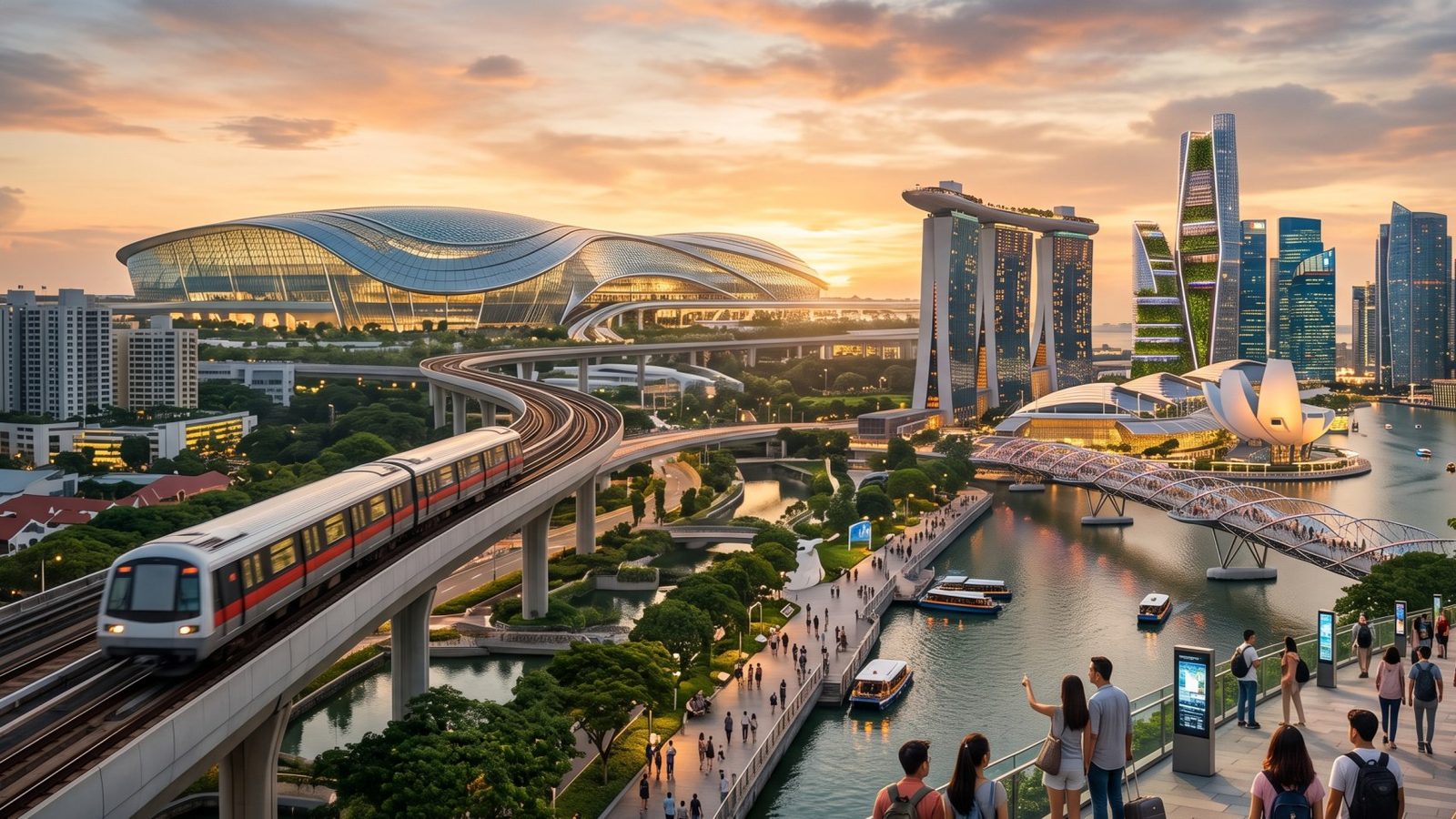
Singapore tourism infrastructure expands with aviation, rail and urban projects transforming future travel growth.
Singapore is entering a new era of transformation as Singapore tourism infrastructure expands across aviation, rail connectivity, maritime facilities and urban development. The city-state is investing in major projects designed to strengthen global connectivity, improve visitor experiences and prepare for future travel demand.
From the Changi Airport Terminal 5 expansion to the Singapore MRT network expansion, these developments represent a long-term strategy to support economic growth and tourism competitiveness. With government agencies planning future-ready infrastructure, Singapore is building a stronger foundation for international visitors, businesses and residents while shaping the future of tourism in Singapore.
Singapore Tourism Infrastructure Expansion Creates a Future-Ready Global Travel Hub
Singapore’s infrastructure transformation is not a single project but a coordinated national strategy involving aviation, transport, maritime development and urban planning. The government is creating systems that can support future demand while improving efficiency and resilience.
The country’s approach is based on a simple principle: infrastructure must be developed before capacity limitations affect growth. This strategy has guided major investments by agencies including the Land Transport Authority (LTA), Changi Airport Group (CAG), the Maritime and Port Authority of Singapore (MPA) and the Urban Redevelopment Authority (URA).
The expansion of Singapore tourism infrastructure reflects the country’s position as a global aviation gateway, regional business centre and international tourism destination.
According to Singapore’s Land Transport Authority, future transport projects are designed to improve connectivity, support new developments and create a more resilient public transport network. The agency’s long-term rail strategy includes new MRT lines and extensions that connect emerging economic and residential districts.
At the same time, aviation infrastructure is receiving major attention through the Changi Airport Terminal 5 expansion, which will increase airport capacity and strengthen Singapore’s role as an international air hub. The Ministry of Transport has confirmed that Terminal 5 development is progressing towards completion in the mid-2030s.
Changi Airport Terminal 5 Expansion Builds Singapore’s Next Aviation Gateway
The Changi Airport Terminal 5 expansion is one of Singapore’s most important infrastructure additions and a major investment in the country’s tourism future.
The project is designed to support long-term aviation growth and ensure that Singapore maintains its position as one of the world’s leading air connectivity hubs.
Changi Airport Terminal 5 will become part of the wider Changi East development. The terminal is planned as an integrated facility with advanced passenger systems, transport connections and flexible operating capabilities.
According to official information from Changi Airport Group, Terminal 5 is being developed as a future-ready terminal that will enhance traveller experience and support future aviation needs.
The Ministry of Transport has stated that Terminal 5 construction is on track for completion in the mid-2030s. The project includes major infrastructure works covering tunnels, airfield systems and supporting facilities.
The terminal is expected to initially handle around 50 million passengers annually. This additional capacity will allow Singapore to accommodate increasing international travel demand while supporting airlines, tourism businesses and global events.
The project also includes improved ground connectivity. Future transport links will integrate rail, bus, taxi and other transport services within a dedicated ground transportation centre.
This approach creates a seamless arrival experience for visitors. International travellers will be able to move more efficiently between the airport, city centre and other parts of Singapore.
The future of tourism in Singapore will depend heavily on efficient airport connectivity. By expanding Changi Airport before demand reaches existing limits, Singapore is preparing for decades of tourism growth.
Singapore MRT Network Expansion Connects Future Tourism and Economic Districts
The Singapore MRT network expansion represents another major pillar of the country’s infrastructure transformation.
Singapore has consistently invested in rail connectivity because efficient public transport is essential for a compact urban environment. The government’s approach focuses on creating faster connections, reducing congestion and supporting future developments.
The Land Transport Authority states that new rail projects are designed to serve existing communities while preparing for future residential, commercial and tourism growth.
The expansion programme includes major projects such as the Cross Island Line and Jurong Region Line.
These projects will reshape how visitors and residents move across Singapore.
The Cross Island Line (CRL) is planned as Singapore’s eighth MRT line. According to LTA, it will become the country’s longest fully underground MRT line, stretching more than 50 kilometres and serving eastern, western and north-eastern corridors.
The line will connect important locations including:
- Changi region
- Jurong Lake District
- Punggol Digital District
- Existing residential communities
The CRL will also create more travel options by connecting with multiple MRT interchanges.
For tourism, this expansion creates a stronger visitor mobility network. Tourists will have easier access to attractions, business districts and emerging lifestyle destinations.
The connection between MRT expansion and airport development is particularly important. Future rail links will strengthen access between Changi Airport Terminal 5 and other parts of Singapore.
The Land Transport Authority announced plans for future rail connections serving Terminal 5, including extensions involving the Thomson-East Coast Line and Cross Island Line.
This integration demonstrates Singapore’s approach of linking aviation infrastructure with urban mobility.
Cross Island Line Supports Singapore’s Next Phase of Urban Growth
The Cross Island Line is not only a transport project. It is part of Singapore’s wider urban development strategy.
The government is using transport infrastructure to support new economic centres and future communities.
According to LTA, the first phase of the Cross Island Line will serve areas including Loyang, Tampines, Pasir Ris, Defu, Hougang, Serangoon North and Ang Mo Kio. More than 100,000 households are expected to benefit from the first phase.
The line will also improve access to recreational locations and future development areas.
For tourism, better connectivity can influence how visitors explore Singapore. Efficient transport allows travellers to access more districts beyond traditional city-centre attractions.
This supports a broader tourism model where visitors experience different neighbourhoods, cultural areas and lifestyle destinations.
The project also supports Singapore’s economic planning by connecting major business and innovation districts.
As tourism increasingly overlaps with business travel, events and conferences, stronger transport infrastructure becomes an important competitive advantage.
Tuas Mega Port Strengthens Maritime Connectivity and Future Growth
Singapore’s infrastructure expansion extends beyond aviation and rail. Maritime development remains a crucial part of the country’s future strategy.
The Tuas Mega Port is being developed as a next-generation maritime hub designed to strengthen Singapore’s position as a global shipping centre.
The Maritime and Port Authority of Singapore describes Tuas Port as part of the country’s future port strategy, focusing on automation, digitalisation and sustainability.
The port will incorporate advanced technologies, including automated systems and digital solutions that improve operational efficiency.
The development also supports sustainability goals. MPA highlights initiatives aimed at reducing emissions and moving towards a more environmentally sustainable maritime sector.
Although Tuas Port is mainly a trade infrastructure project, it indirectly supports tourism by strengthening Singapore’s maritime gateway role.
Singapore is already a major cruise destination in Asia. Strong maritime infrastructure helps support cruise operations, regional connectivity and international visitor movement.
Greater Southern Waterfront Creates New Urban Tourism Opportunities
Singapore’s urban landscape is also undergoing significant transformation through projects such as the Greater Southern Waterfront.
The redevelopment aims to transform former industrial and port areas into a new waterfront district with residential, commercial and recreational spaces.
The Urban Redevelopment Authority has identified the project as part of Singapore’s long-term land-use planning strategy.
The development reflects Singapore’s unique challenge: limited land availability.
As maritime operations gradually shift towards Tuas, valuable waterfront areas can be redeveloped for new purposes.
Future possibilities include:
- Waterfront attractions
- Public spaces
- Business districts
- Lifestyle developments
For tourism, this creates opportunities for new visitor experiences.
Singapore’s tourism landscape has traditionally focused on established attractions. Future urban redevelopment could introduce additional waterfront destinations and lifestyle districts.
This supports the broader future of tourism in Singapore by creating more diverse experiences for international visitors.
Smart Infrastructure and Sustainability Shape Singapore’s Long-Term Tourism Strategy
Technology and sustainability are becoming central elements of Singapore’s infrastructure planning.
The Smart Nation initiative supports the use of digital technology across public services, transport and urban management.
For tourism, digital infrastructure improves visitor convenience through:
- Digital services
- Smart mobility solutions
- Connected public systems
- Faster access to information
Singapore is also investing in climate-resilient infrastructure.
As a low-lying island nation, Singapore must prepare infrastructure for environmental challenges. Sustainable planning is therefore integrated into transport, urban development and coastal protection strategies.
These investments strengthen Singapore’s ability to remain a reliable destination.
A future tourism economy requires more than attractions. It requires efficient transport, resilient infrastructure and technology-driven services.
Infrastructure Investments Strengthen the Future of Tourism in Singapore
Singapore’s infrastructure expansion demonstrates a long-term approach to tourism development.
The country is not only increasing physical capacity but also improving the overall visitor journey.
Airport expansion improves international access. MRT development improves movement within the city. Urban redevelopment creates new destinations. Digital systems improve convenience.
Together, these projects create a connected tourism ecosystem.
The Singapore tourism infrastructure strategy shows how transport, aviation and urban planning work together to support economic growth.
For tourism businesses, these developments create opportunities through increased accessibility and improved visitor experiences.
Hotels, attractions, retailers and event organisers benefit from stronger connectivity because visitors can move more easily across the country.
The result is a more integrated destination capable of welcoming future generations of travellers.
Conclusion
Singapore’s infrastructure transformation is reshaping the country’s travel future through aviation, rail, maritime and urban development projects. The expansion of Singapore tourism infrastructure highlights a strategic effort to improve connectivity, increase capacity and support long-term growth.
The Changi Airport Terminal 5 expansion will strengthen global aviation links, while the Singapore MRT network expansion will create smoother movement across emerging districts. Supported by government agencies and future-focused planning, these developments are expected to strengthen the future of tourism in Singapore by creating a more connected, sustainable and visitor-friendly destination.
The post Singapore Transforms Tourism Landscape With Record Infrastructure Additions Across Aviation, Rail and Urban Growth appeared first on Travel and Tour World