
















Delta Airlines Aligns With United and American as US Carriers Sacrifice Fuller Flights to Protect Airfares
-
Travel
-
-
8 mins
-
Travel and Tour World
-
Ankita Neogi Khan
-

Rising jet fuel costs push US airlines to protect fares over fuller flights, reshaping airfare trends and travel budgets.
US airlines are increasingly willing to leave seats empty rather than discount airfares, as soaring jet fuel prices force carriers to prioritise profitability over passenger volumes. The strategy follows a sharp increase in ticket prices, with the US Bureau of Labor Statistics reporting a 22.4% annual rise in airline fares in September 2026, against 3.7% overall consumer inflation. Meanwhile, Gulf Coast jet fuel prices reached $4.63 per gallon on 20 October, intensifying pressure on airline margins. Delta Air Lines, United Airlines, American Airlines, Southwest Airlines and Alaska Air Group are pursuing stronger passenger yields, even when planes fly less full. However, expanding flight capacity in 2027 could test whether travellers will continue accepting higher fares.
Why Airlines Are Protecting Fares Instead of Filling Seats
For travellers planning holidays, business trips or family visits, the latest airline pricing strategy signals a challenging period. Cheaper last-minute tickets may become harder to find when carriers believe maintaining higher fares offers better financial returns than selling every remaining seat.
Traditionally, airlines have balanced ticket prices against passenger occupancy. A flight with more occupied seats can spread fixed operating costs across more travellers, improving the economics of each departure. However, airlines must also consider how much each passenger pays and whether that revenue covers the additional cost of operating the service.
That calculation has become more difficult as fuel prices have surged. Airlines cannot always offset higher operating expenses through passenger growth alone, particularly when competition limits their ability to raise fares. Consequently, several major US carriers are concentrating on revenue per passenger rather than simply maximising occupancy.
The approach is visible in recent financial results. Across Delta, United, American, Southwest and Alaska, passenger revenue increased by nearly $8.8 billion, or 18%, in the third quarter compared with a year earlier. Yet passenger traffic grew by less than 1%, highlighting how much of the improvement came from higher yields and changes in passenger mix.
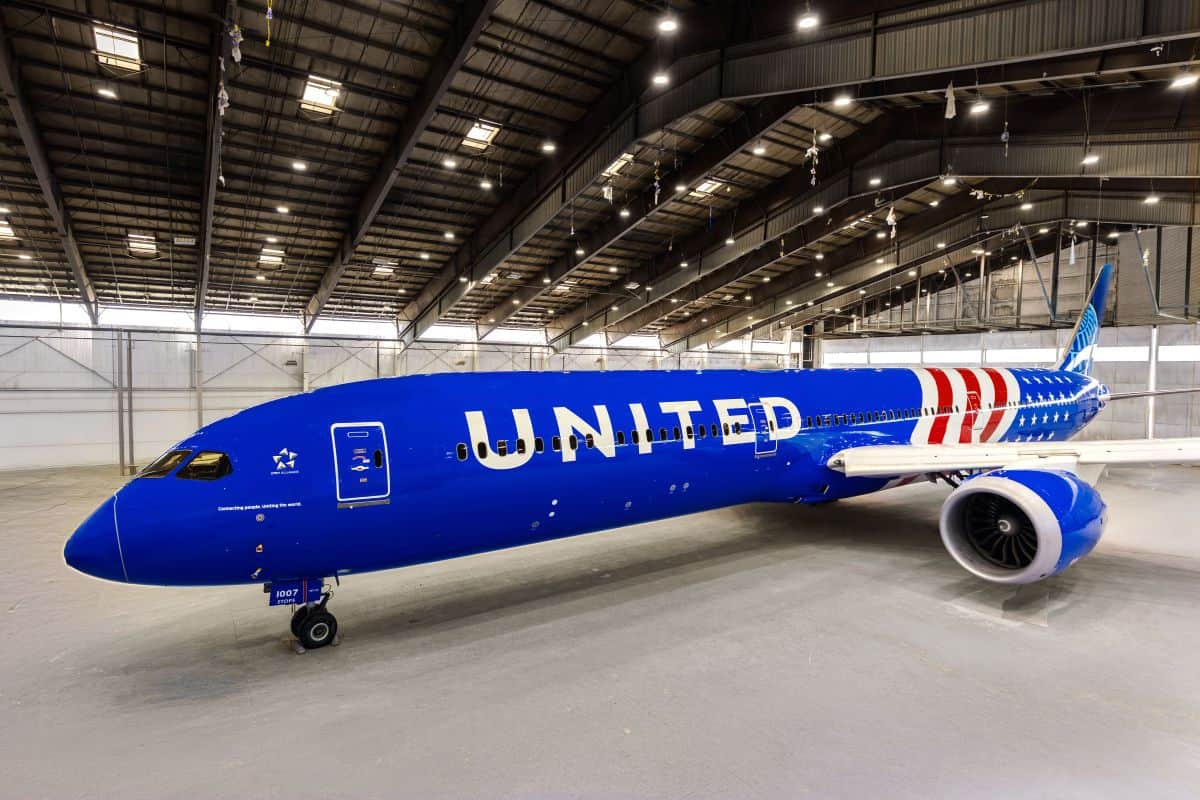
United Airlines illustrated the trade-off through its leisure travel business. Its leisure load factor declined by 1.3 percentage points in the third quarter, but the airline’s commercial chief, Andrew Nocella, described the result as an acceptable response to higher ticket prices.
American Airlines has also reported lower occupancy alongside stronger passenger yields. Its chief financial officer, Devon May, told Reuters on 22 October that the carrier was deliberately weighing revenue quality against passenger volume. These decisions suggest that an empty seat does not automatically justify a fare reduction when discounting could weaken the average revenue earned across a flight.
Jet Fuel Prices Put Airline Margins Under Pressure
Fuel is one of the most significant variable expenses facing airlines. When prices rise sharply, carriers must either absorb the additional cost, increase revenue, reduce other expenses or adjust their schedules.
The pressure has intensified since the US-Israeli war on Iran began in February 2026, according to Reuters. Gulf Coast spot prices for kerosene-type jet fuel climbed from $2.43 per gallon before the conflict to $4.63 on 20 October. That represents an increase of approximately 91%.
The following figures illustrate the scale of the challenge.
| Indicator | Reported figure | Travel industry significance |
|---|---|---|
| Gulf Coast jet fuel, before the conflict | $2.43 per gallon | Earlier fuel-cost benchmark |
| Gulf Coast jet fuel, 20 October 2026 | $4.63 per gallon | Approximately 91% above the earlier benchmark |
| US airline fares, September 2026 | 22.4% annual increase | A substantial increase in air travel costs |
| Overall US consumer inflation, September 2026 | 3.7% annually | Airline fares rose considerably faster |
| Passenger revenue across five major US airline groups | Nearly $8.8 billion higher year on year | Stronger revenue despite limited traffic growth |
| Passenger revenue growth across those carriers | 18% annually | Higher yields and passenger mix supported revenue |
| Passenger traffic growth across those carriers | Less than 1% annually | Revenue growth substantially outpaced traffic |
Higher fares have helped carriers generate more revenue, but they have not fully neutralised rising costs. Delta and Southwest have lowered their 2026 earnings forecasts, while American expects a full-year loss despite stronger passenger revenue. United has also faced pressure to recover additional fuel expenses through higher revenue.
This distinction matters for travellers because higher ticket prices do not necessarily mean airlines are earning higher profits. A carrier can collect substantially more from passengers and still struggle if fuel, labour, maintenance and other operating costs rise faster.
The immediate outlook therefore depends on both fuel prices and the strength of travel demand. If fuel remains expensive, airlines may continue defending fares and adjusting capacity. If fuel prices ease, however, carriers could gain more flexibility to compete on price.
What the 2027 Capacity Increase Means for Airfares
The next major test will come when airlines expand their schedules. Industry data cited by Airlines for America indicate that six major US airlines plan to increase domestic capacity by 3% in the fourth quarter of 2026. The projected increase rises to 3.8% in the first quarter of 2027, compared with just 0.2% growth in the third quarter of 2026.
Capacity measures the number of seats airlines make available, rather than the number of passengers who actually travel. More seats can ease pressure on fares when airlines compete to attract customers. Nevertheless, additional flights will not automatically produce cheaper tickets if carriers restrain expansion or maintain strict pricing discipline.
| Period | Planned domestic capacity growth | Potential implication for travellers |
|---|---|---|
| Third quarter 2026 | 0.2% | Limited additional seat availability |
| Fourth quarter 2026 | 3.0% | More scheduled seats, although seasonal demand may absorb capacity |
| First quarter 2027 | 3.8% | Greater potential for competition if airlines operate their published schedules |
Year-on-year comparisons based on airline schedules cited by Airlines for America using Cirium data. These are capacity plans, not guarantees of completed flights or lower fares.
Airlines face a difficult balancing act. Restricting capacity can support ticket prices, but operating fewer flights may increase costs per available seat. Expanding too aggressively could create surplus seats and force carriers to introduce discounts.
American Airlines intends to slow its growth considerably in 2027 while reviewing whether additional flights can cover their operating costs. Southwest has also said it will not pursue expansion at the expense of profitability. United executives have cautioned that published capacity plans may change.
For holidaymakers, this means route-specific competition will matter more than headline capacity figures. A popular route with several competing airlines may offer better deals than a route served by only one or two carriers. Travellers should therefore compare alternative airports, departure times and connecting itineraries rather than assuming that industry-wide growth will reduce every fare.
Why Empty Seats Can Make Financial Sense
Airline pricing depends on more than the number of passengers aboard a plane. Carriers use revenue management systems to adjust fares according to booking patterns, expected demand, remaining inventory and the time before departure.
An airline may sell some seats at lower prices early in the booking cycle, then charge higher fares as cheaper inventory disappears. If bookings weaken, the airline can release discounts. However, it may decide against doing so when it expects customers to pay more closer to departure.
The decision becomes particularly important when operating expenses rise. A discounted ticket generates revenue, but it may not deliver enough additional profit to justify weakening the average fare across the flight. Airlines must also consider whether lower prices would attract genuinely additional passengers or simply allow existing customers to pay less.
Passenger yield measures the revenue earned for each passenger mile flown. Load factor, meanwhile, measures the proportion of available seat capacity occupied by passengers. Neither metric alone provides a complete picture of profitability.
A carrier can report a lower load factor while earning more revenue if passengers pay higher fares. Conversely, a nearly full aircraft can still perform poorly financially if ticket prices are too low to cover its costs.
The recent results from major US airlines illustrate this tension. Passenger revenue increased sharply while traffic barely grew, suggesting that higher yields and premium-cabin demand helped drive performance. However, the figures also reveal the limits of fare increases when fuel costs continue climbing.
How Higher Fares Could Affect Holiday Travel
The financial strategy has direct implications for domestic tourism, city breaks and long-distance leisure travel. Air transport costs influence how travellers allocate budgets between flights, accommodation, restaurants and activities. When fares rise faster than general inflation, some households may shorten trips, choose closer destinations or travel outside peak periods.
The US Bureau of Labor Statistics reported that airline fares rose 22.4% between September 2025 and September 2026. Overall consumer prices increased 3.7% over the same period, underlining the disproportionate pressure on air travel budgets.
The increase does not mean every route or ticket became 22.4% more expensive. The Consumer Price Index measures changes across a defined sample of fares and travel arrangements. Individual prices vary by route, booking date, season, airline and ticket conditions.
For tourism businesses, sustained increases could influence demand patterns. Hotels and attractions that depend on domestic visitors may face greater pressure if travellers spend more on transport. Destinations with convenient rail connections or multiple competing airports could become more attractive to price-sensitive customers.
International visitors could also reconsider their itineraries if domestic connections within the US become more expensive. However, the effects will vary according to exchange rates, international airfares, accommodation costs and the availability of alternative transport.
The closure of Spirit Airlines has also reduced one source of low-cost competition in the US market, according to Reuters. Its departure, alongside limited capacity growth, has added to concerns about affordability and passenger volumes.
Practical Ways to Manage Your Flight Budget
Travellers cannot control fuel prices or airline revenue strategies, but they can make booking decisions that reduce exposure to expensive fares. The most effective approach is to compare the total cost of a journey rather than focusing exclusively on the advertised ticket price.
| Booking strategy | What travellers should consider | Why it helps |
|---|---|---|
| Compare nearby airports | Include airport transfers and ground transport costs | An apparently cheaper airport may increase the total journey cost |
| Check alternative dates | Compare nearby departure and return dates | Demand can vary considerably by travel day |
| Book when plans are firm | Monitor prices and avoid leaving essential travel until the last minute | Popular flights may become more expensive as lower-priced inventory disappears |
| Compare connecting flights | Check total journey time, baggage rules and missed-connection risks | A connection may cost less, but convenience and risk also matter |
| Review baggage charges | Include checked baggage, seat selection and other mandatory costs | The lowest advertised fare may not represent the cheapest complete trip |
| Compare competing airlines | Check schedules, cancellation terms and the full fare | Competition can produce different prices on the same route |
| Consider off-peak travel | Explore less popular travel dates and times | Lower demand may improve the chance of finding a competitive fare |
Travellers should also check the fare rules before purchasing non-refundable tickets. A cheaper itinerary may become more expensive if plans change and the airline charges substantial fees.
For holiday travel, flexibility can be particularly valuable. Comparing several dates and airports may reveal savings that are unavailable on the preferred departure day. However, passengers should avoid assuming that waiting until the final days before departure will produce a bargain.
There is no universal booking window that guarantees the lowest fare. Airline pricing changes continuously, and a route with strong demand may behave differently from one with excess capacity. Checking prices across several dates provides a more reliable basis for decisions than relying on a single rule of thumb.
The Official Data Behind Rising Travel Costs
Government data provide useful context for distinguishing broad price trends from individual booking experiences. The US Bureau of Labor Statistics tracks airline fares through its Consumer Price Index, while the Energy Information Administration publishes spot-price data for kerosene-type jet fuel.
The two measures serve different purposes. The airfare index tracks changes in consumer prices for scheduled domestic and international commercial airline trips. The fuel series measures wholesale spot prices in a specific US market, rather than the exact price every airline pays under its fuel purchasing arrangements.
These datasets are particularly useful for travel managers, tourism operators and aviation analysts monitoring the relationship between energy markets and passenger spending. Nevertheless, neither dataset predicts the price of a particular flight, which depends on airline-specific and route-specific conditions.
The Fare Outlook Remains Uncertain
US airlines are entering 2027 with competing priorities. They want to preserve the pricing gains achieved in 2026, but higher fares risk weakening demand if household travel budgets come under further pressure. At the same time, planned capacity increases could intensify competition and make current pricing strategies harder to sustain.
The central question is how long passengers will continue absorbing higher prices. Strong demand would give airlines more room to protect fares, while a sustained slowdown could force them to reconsider schedules and discounts. Fuel prices will remain another crucial variable.
For travellers, a fuller flight is not necessarily a sign of cheaper fares ahead, just as an aircraft with empty seats does not guarantee a last-minute bargain. The more useful indicators will be route-level competition, available capacity, fuel costs and booking trends. Until those factors shift decisively, travellers should plan carefully, compare complete itineraries and budget for continued price uncertainty.
The post Delta Airlines Aligns With United and American as US Carriers Sacrifice Fuller Flights to Protect Airfares appeared first on Travel and Tour World














































































