








'Murder hornet' lookalike could wreak havoc on pollinators if they continue to spread
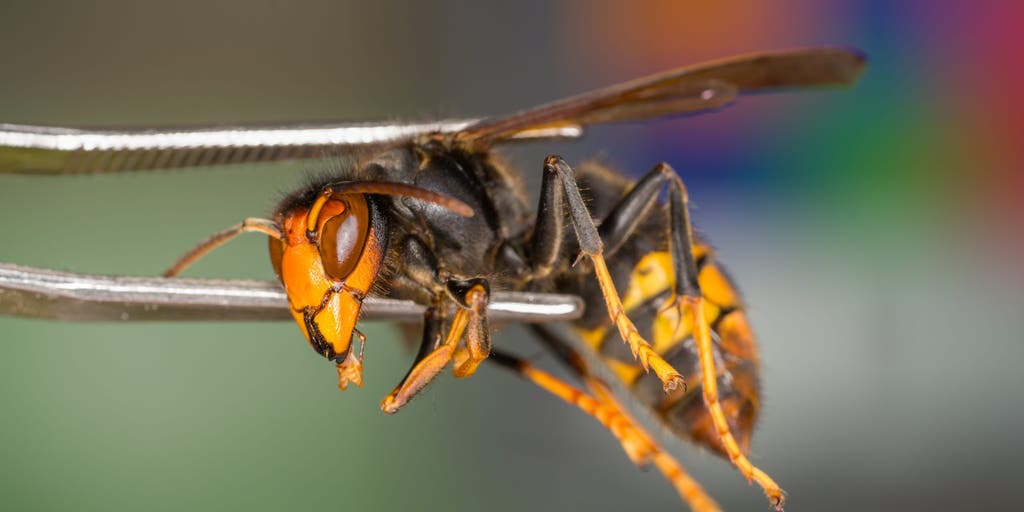


An invasive hornet with striking similarities to the "murder hornet" has several southern states on alert, as experts warn its spread could devastate honeybees and other essential pollinators.
An invasive hornet with striking similarities to the "murder hornet" has several southern states on alert, as experts warn its spread could devastate honeybees and other essential pollinators as the threatening insect develops a deadly reputation of its own.
The yellow-legged hornet has drawn comparisons to the northern giant hornet—better known as the "murder hornet"—because of its appetite for native insects and its natural ability to significantly harm biodiversity and agricultural pollination.
Since its arrival on U.S. soil several years ago, there have been reports of yellow-legged hornet colonies in Georgia and South Carolina – with numerous states in the South taking measures to slow the spread of the threatening insect.
SARGASSUM SEAWEED BLOOMS PLAGUING ATLANTIC BEACHES TRACED BACK TO WEST AFRICA
Yellow-legged hornets emerge in early spring and steadily build their numbers through summer into the fall— prompting officials to warn that now is the time to stay alert.
The threat, experts say, is very real – with one study suggesting the invasive hornet can kill 50 honey bees a day – with the ability to decimate entire hives.
WATCH: COUPLE SAVES SEA TURTLE ENTANGLED IN FISHING NET IN MALDIVES
"If allowed in the United States, these invasive pests could threaten populations of honey bees – some of which are already endangered – and other native pollinators," the South Carolina Forestry Commission said.
A North American detection of a yellow-legged hornet colony was first discovered in Savannah, Georgia, in 2023 – though the dangerous insect had developed a reputation around the world long before then.
WATCH: EEL MIGRATION PUTS ON A WILD, WIGGLY SHOW ON AUSTRALIA BEACH
Native to Asia, the yellow-legged hornet, also known as the Asian hornet, has spread across the world through cargo, taking a devastating toll on honey bees in Europe beginning in the 2010s, before arriving on U.S. soil.
The dangerous insect is known to leave piles of headless bees at hive entrances.
Honey bees are essential to U.S. agriculture, pollinating key crops such as almonds, cherries and blueberries, among many other fruits, and contributing over $20 billion annually.
Already struggling pollinator populations would be under serious threat in the event the yellow-legged hornet becomes established in the U.S. – that's exactly why several states in the South are mapping the threat and urging the public to keep their eyes out.
In Georgia, the Department of Agriculture is proactively working to get the word out about the invasive species they've been grappling with for three years as queens emerge from overwintering.
THIS POTENTIALLY DEADLY, FLESH-EATING PARASITE IS GETTING CLOSER TO THE US
Since 2023, a plant protection team from the Georgia Department of Agriculture has been actively tracking, trapping and working to eradicate the invasive yellow-legged hornet from the state.
"As in previous years, we are asking for the public’s continued help. Early reporting of embryo and primary nests is critical—it allows us to stop queens before they spread and reduces potential damage to our state’s honeybee population," Georgia Agriculture Commissioner Tyler J Harper said.
Into spring, early detection and reporting of these nests—the first stages of nest development—are critical, as eliminating them now stops queens from producing workers, reducing the risk of larger secondary nests later in the year and making long-term control efforts more effective.
LARGE INCREASE IN TICK BITES REPORTED AT HOSPITALS ACROSS THE US AS SPRING WARMTH KICKS IN
According to Harper, this is especially important for residents of coastal Georgia, particularly in Bryan, Bulloch, Chatham, Effingham, Liberty and Screven counties.
After its arrival in Georgia, the hornet quickly spread across state lines into South Carolina.
The invasive species was first detected in South Carolina shortly after its initial report in Georgia, with sightings of yellow-legged hornets across the border in spring 2024.
This rapid and concerning spread prompted Clemson University to establish the Hornet Herald, an informational newsletter that tracks recent spread trends and ongoing mitigation efforts.
Since its spread, Clemson University’s Department of Plant Industry and Cooperative Extension has taken the lead in South Carolina, mapping and tracking the invasive hornets while also providing guidance—including informational materials and videos—on how and where to set traps to capture them.
SPRING STING: PORTUGUESE MAN O' WAR RETURNS TO GULF COAST BEACHES
According to the Hornet Herald, in 2026, 4,279 traps have been set across Beaufort, Charleston, Chester, Colleton, Dorchester, Jasper, Hampton, Lancaster and York counties.
In the Low Country, 102 embryo nests have been removed, while one embryo nest has been removed in the Upcountry.
Additionally, 12 queens have been caught in traps in the Upcountry district, and more than 3,500 queens have been captured in traps placed throughout the Low Country district.
Though there have been no confirmed sightings of the invasive hornet in Alabama, the Department of Agriculture and Industries (DAI) is not letting its guard down.
Officials have begun setting traps around the Port of Mobile and at other locations statewide as a proactive measure to prevent the spread of the species and protect Alabama’s ecosystems, with over 40 traps strategically around the state for weekly monitoring.
In North Carolina, agriculture officials are surveying for yellow-legged hornets, while beekeepers and residents are encouraged to set, report and monitor home traps to strengthen surveillance for new populations.
With no way to defend themselves from the killer hornets capable of destroying entire colonies within hours, honey bees are vulnerable – and states across the U.S. are already fighting back to protect our ecosystems and agriculture.
If you find a yellow-legged hornet, do not try to destroy it or its nest yourself, as they are highly aggressive and dangerous.
Instead, safely take a photograph, note the exact location and immediately report it to your state department of agriculture or local authorities on the USDA website.
The post 'Murder hornet' lookalike could wreak havoc on pollinators if they continue to spread appeared first on Fox Weather