
















Tajikistan Puts Silk Road Heritage at the Heart of a Sustainable Tourism Push
-
Travel, Culture, Weather, Religion
-
-
7 mins
-
Travel and Tour World
-
Sneha Sarkar
-


Tajikistan’s tourism forum puts Silk Road heritage and regional travel in focus as UNESCO deadlines test the country’s conservation plans.
The Tajik cultural background revolves around the Silk Road, and the country has been leveraging its past through sustainable tourism while hosting delegates in Dushanbe. The event integrates the topics of culture, preservation, and regional tourism into one. Moreover, the event poses a question about the ability of the growing number of tourists to benefit locals and preserve cultural and historical landmarks. Seven cities and districts host activities in order to showcase more than just the capital of the country. The deadlines for UNESCO, such as the ancient Khuttal, provide an Asian context for the debate.
Why has Tajikistan brought tourism and heritage together?
The International Forum on Sustainable Tourism and Cultural Heritage is organised by the International University of Tourism and Entrepreneurship of Tajikistan, working with government bodies and development partners. Its programme combines conferences, exhibitions, workshops, cultural events and regional visits. The forum opened in Dushanbe during Mehrgon, an autumn harvest celebration, and is scheduled to continue for six days. Its themes include heritage protection, regional development, agriculture, tourism investment, digital tools and education. This broad agenda gives Tajikistan a chance to present the country’s attractions. It also creates space to ask how tourism plans can work for residents, businesses and heritage sites.
Why does Mehrgon give the gathering a distinct Asian story?
Mehrgon brings agriculture, local traditions and community life into the tourism programme. The celebration is also known as the Ceremony of Mehregan. In 2024, UNESCO inscribed it on its Representative List of the Intangible Cultural Heritage of Humanity as a shared tradition of Tajikistan and Iran. This gives the festival a regional story that reaches beyond one country. The forum programme connects Mehrgon with local produce, crafts and cultural activities. That creates a chance to show how living traditions can welcome visitors while remaining meaningful to the people who keep them. Recognition alone, however, does not prove that tourism income reaches those communities.
How does the programme extend beyond Dushanbe?
The official programme lists activities in Dushanbe, Tursunzoda, Hisor, Nurek, Khujand, Danghara and Darvoz. Events include a symposium on agriculture and gastronomic tourism in Tursunzoda and Hisor, an expedition to Darvoz, a Khatlon festival and exhibition, and a heritage event in Khujand. Tajik, Russian and English are the forum’s working languages. These regional visits help introduce guests to places beyond the capital. They also raise a useful question: will visitors spend time and money in those communities, or mainly pass through as part of a scheduled visit? The programme confirms the locations and planned activities, but not their economic results.
What makes Ancient Khuttal important to Asian visitors?
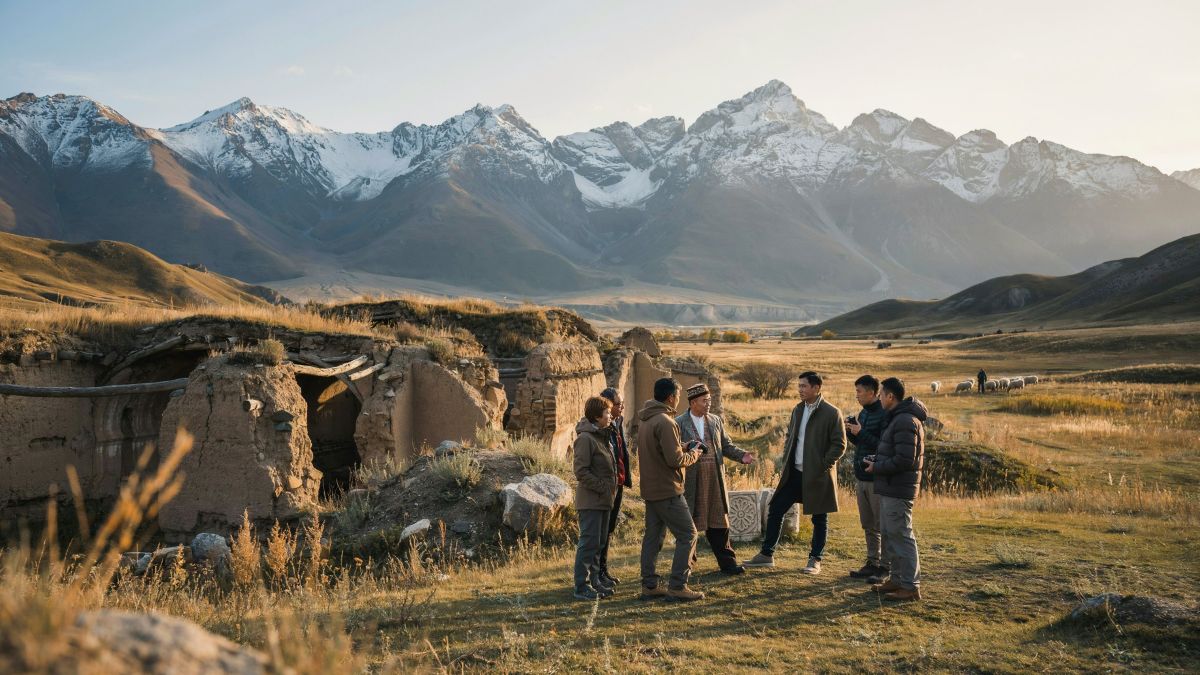
Ancient Khuttal offers a striking way to explain Tajikistan’s place in Asia’s history. UNESCO inscribed its cultural heritage sites in 2025. The property includes eleven parts linked to a medieval kingdom that flourished between the seventh and sixteenth centuries. The kingdom sat at a crossroads of Silk Road trade connecting China, India and the West. Its remains include religious sites, settlements and infrastructure. They also show historic water management. These details can help visitors understand the region as a place where people, goods and ideas met. The challenge is to make those links clear without reducing complex history to a simple tourism slogan.
Why is December an important month for heritage protection?
The forum’s sustainability theme meets a clear conservation test at Ancient Khuttal. UNESCO has asked Tajikistan to prepare tourism and interpretation plans, improve monitoring, support local custodians and address damage from natural forces. It also identified river erosion near the Tohir Caravanserai as a concern. UNESCO requested a report on progress by 1 December 2026. That date gives the article a strong follow-up point. It can ask what work has been funded, which plans are ready and how local people are involved. The deadline is still ahead as the forum takes place, so it should be framed as an upcoming obligation, not a missed target.
Why does Silk Road heritage depend on more than one country?
The Zarafshan–Karakum Corridor shows why Central Asian heritage needs regional cooperation. The 866-kilometre route crosses Tajikistan, Turkmenistan and Uzbekistan. It links mountain areas, river valleys and desert routes, carrying trade and cultural exchange over many centuries. UNESCO has called for continued coordination, management plans and community involvement. It also requested a joint progress report by 1 December 2026. This gives the forum a wider regional context. Protecting a shared corridor requires countries to work together on conservation and visitor management. A destination may promote its own sites, but the heritage route itself crosses borders.
Why is Uzbekistan central to Tajikistan’s visitor market?
Official figures show that nearby countries matter greatly to Tajikistan’s tourism picture. In the first three months of 2026, the country recorded 439,400 foreign arrivals. Of these, 371,300 were classified as tourists under the reported methodology. Uzbekistan accounted for 247,100 arrivals, or 56.2 per cent of the total. Russia supplied 104,700 visitors, while Kyrgyzstan accounted for 40,000. These figures point to a strong regional base for travel. They do not show how many people visited heritage sites, booked tours or stayed overnight. The article can use them to examine whether the forum might help turn nearby travel into longer, locally rooted tourism experiences.
What do the arrival figures tell us—and what do they not?
The first-quarter data provide useful context, but they need careful wording. “Foreign arrivals” and “tourists” are not identical measures in the Statistics Agency’s release. The agency counted 439,400 foreign arrivals for different purposes, then classified 371,300 as tourists. Neither figure explains how much visitors spent, how long they stayed or which parts of the country they explored. This matters because tourism growth is often presented through headline arrival totals. A fuller assessment would look at nights stayed, regional spending, local jobs and visits to cultural sites. The forum’s success cannot be measured by attendance alone. Its longer-term value will depend on what changes after the delegates leave.
Will regional visits create lasting local income?
Tajikistan’s programme takes guests to several regions, but a planned visit is only the first step. The next question is whether residents and small businesses can benefit from the activity. Local guides, guesthouses, transport providers, craft workers and farmers may all contribute to a visitor experience. The forum could provide a chance to connect them with tour operators and investors. To test whether that happens, a follow-up story could ask who supplied services, where delegates stayed and whether local businesses gained new contracts. These are reporting questions, not confirmed outcomes. The programme lists regional events, but it does not publish figures on local spending or jobs created.
How could agriculture and culture work together?
The planned symposium on sustainable agriculture and gastronomic tourism links local production with travel. The forum also highlights Mehrgon, which celebrates harvest traditions and is associated with crafts and community life. This gives Tajikistan a way to present regional identity through more than monuments and mountain views. Visitors may learn about local products, traditional skills and the people behind them. For businesses, the opportunity is to build experiences that connect farms, markets, workshops and cultural sites. But a festival display does not by itself create steady income. The stronger story would examine whether local producers can keep supplying tourism businesses after the event and receive fair payment for their work.
Why should mountain tourism include water and climate?
Tajikistan’s mountains are among its most distinctive natural attractions. They are also part of a wider water system that supports people and economies across Central Asia. In May 2026, scientists measured winter snow accumulation on a Pamir glacier. The work helps improve understanding of glacier change and future water availability. A separate regional forum in Dushanbe discussed glacier monitoring, early warning and climate risks. These issues matter to tourism because mountain destinations depend on reliable water, transport and emergency planning. The October forum did not cause these scientific efforts. They do, however, give reporters a relevant way to explore how tourism planning can account for environmental change.
What can Central Asia learn from Southeast Asian tourism?
A September meeting of the Central Asia Regional Economic Cooperation Tourism Working Group brought tourism experts and member countries together in Tashkent. Its discussions covered cross-border projects, investment, digital services, sustainability and skills. A presentation at the meeting also examined lessons from Greater Mekong Subregion tourism cooperation in Southeast Asia. It discussed practical matters such as cross-border routes, events in secondary cities and digital access for small tourism businesses. This comparison offers a useful Asian angle for the Tajikistan article. It shifts attention from destination promotion to the systems needed to make regional trips work. Any claim that Tajikistan has adopted Mekong policies would need separate confirmation.
Can tourism education turn interest into better services?
The host university’s role connects the forum to a longer-term question: who will deliver tourism services as the sector grows? A university notice describes an Islamic Development Bank-supported project called the Smart Tourism and Business Education Development Project. Its planned implementation period runs from July 2026 to June 2031. This is a project timetable, not evidence that training outcomes have already been achieved. Still, it creates a clear line of inquiry. What skills will the project support? Will students learn guiding, languages, digital services and heritage interpretation? Strong training could help tourism businesses provide better experiences, but results will take time to measure.
How could connectivity help visitors reach more places?
Tourism depends on more than attractions. Visitors also need transport, clear information and dependable services. In July 2026, the World Bank approved a US$100 million grant for broad economic reforms in Tajikistan, including work on digital services, aviation and energy. The Bank said reforms could improve internet access and air transport connectivity and help attract more airlines. These are expected benefits, not confirmed results. The grant is not a dedicated tourism fund. Its relevance lies in the wider systems that tourism uses. The article could ask whether better connections will make regional destinations easier to reach and help visitors find reliable information before and during a trip.
What will show whether the forum made a difference?
The forum’s programme describes conferences, exhibitions, regional visits, sports activities and workshops. These events can build contacts and raise awareness. Yet the strongest evidence of impact will come later. Useful signs would include funded conservation work, clear management plans, new regional itineraries, local business contracts and training programmes that reach students and workers. UNESCO’s December reporting deadlines provide one near-term measure for heritage protection. Regional cooperation plans offer another route to follow tourism development. Readers should distinguish between goals and completed work. At the time of the forum, the programme is still under way. Its final outcomes and any new commitments need to be confirmed after the event.
Tajikistan’s opportunity lies in turning heritage into care
Sustainable tourism development in Tajikistan will draw upon the Silk Road heritage through a series of initiatives to be carried out during the international October conference. However, this event should not only help boost tourism. Nearby markets will provide most of the tourists, whereas the Ancient Khuttal will help connect the history of the region to the ancient trading ways leading all the way to China and India. In addition, the December deadlines imposed by UNESCO make conservation a highly relevant issue. Thus, the major point here is whether tourism can provide benefits for locals while preserving heritage and nature.
The post Tajikistan Puts Silk Road Heritage at the Heart of a Sustainable Tourism Push appeared first on Travel and Tour World














































































