









Etihad A380 Makes Dramatic Abu Dhabi Return After 6.5 Years in France, Restoring Superjumbo Travel
-
Travel
-
-
9 mins
-
Travel and Tour World
-
Ankita Neogi Khan
-


Etihad Airways returns its final long-stored A380 to Abu Dhabi after 6.5 years, restoring capacity for premium travellers.
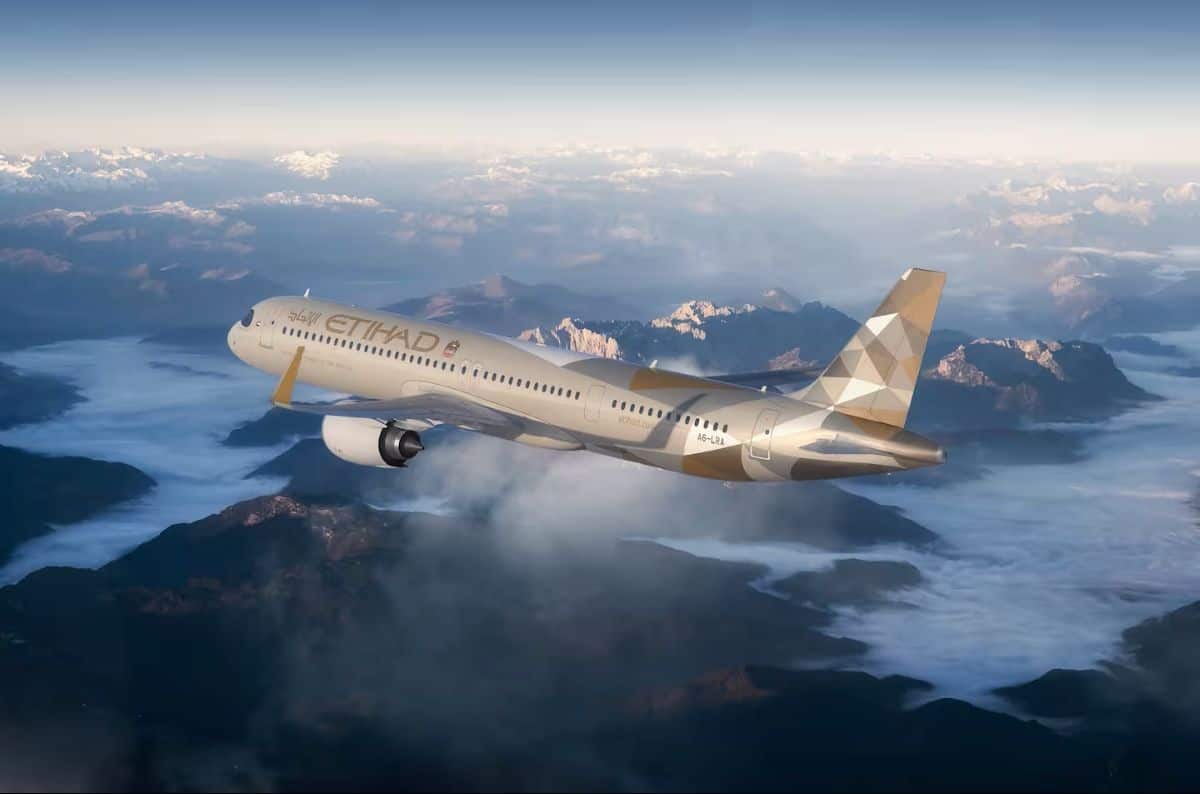
Etihad Airways has brought its final long-stored Airbus A380 back towards Abu Dhabi after about six and a half years away from active operations. Aircraft A6-APB departed Tarbes–Lourdes–Pyrénées Airport in France on September 17, 2026, marking the end of one of the longest storage periods in Etihad’s surviving superjumbo fleet.
The aircraft entered storage in March 2020 as the pandemic dismantled global long-haul demand. Etihad later moved it to Tarbes in December 2020, where it remained until its return journey. Its reactivation completes the return of Etihad’s nine surviving A380s, following the withdrawal and eventual scrapping of A6-APA in 2025. The development also strengthens Abu Dhabi’s position as the operational centre of Etihad’s distinctive double-decker network.
A Six-Year Wait Finally Ends
A6-APB’s journey back to Abu Dhabi marks a significant moment in Etihad’s post-pandemic fleet strategy. The aircraft originally joined long-term storage after the airline grounded its A380 fleet during the unprecedented collapse in international aviation.
The aircraft initially remained at Abu Dhabi International Airport before transferring to Tarbes–Lourdes–Pyrénées Airport on December 3, 2020. Tarbes became a familiar resting place for dormant widebody aircraft during the pandemic because of its available parking capacity and established aviation infrastructure.
After years on the ground, A6-APB finally departed Tarbes on September 17. Flight-tracking data indicated an approximate 9:36am local departure, following an earlier scheduled departure time of around 9am.
The aircraft then crossed southern France before continuing over the Mediterranean region. Its route extended towards Egypt and Saudi Arabia before reaching the United Arab Emirates.
For Etihad, the movement carries significance beyond a single aircraft relocation. It demonstrates that an airframe once considered part of the pandemic-era surplus can still return to commercial relevance.
Nine Superjumbos Return to Service
Etihad originally operated 10 Airbus A380 aircraft, making the type a major component of its premium long-haul proposition before the pandemic.
The prolonged aviation downturn changed that equation. The airline grounded its entire A380 operation as passenger demand collapsed, leaving the future of the superjumbo uncertain.
Etihad subsequently reversed that strategy as international demand recovered. The airline began restoring aircraft gradually, using high-demand markets to justify the substantial capacity offered by the double-decker.
A6-APB now becomes the ninth surviving A380 to return. The only aircraft from the original fleet not to re-enter passenger operations was A6-APA.
A6-APA moved to Tarbes in November 2020 and eventually faced dismantling in July 2025. That leaves A6-APB as the final survivor of the stored group to make the journey back towards Abu Dhabi.
| Etihad A380 Fleet Milestone | Detail |
|---|---|
| Original A380 fleet | 10 aircraft |
| Aircraft returning | 9 aircraft |
| Aircraft not returning | A6-APA |
| Final stored aircraft returning | A6-APB |
| Initial storage | March 2020 |
| Transfer to Tarbes | December 3, 2020 |
| Return from Tarbes | September 17, 2026 |
| Approximate storage period | 6.5 years |
| Main hub | Abu Dhabi |
| Aircraft type | Airbus A380-861 |
The restoration also reflects a wider aviation pattern. Airlines have increasingly brought capacity back where demand can support large aircraft, even as newer twin-engine aircraft dominate many long-haul strategies.
Abu Dhabi Gains Another High-Capacity Aircraft
For travellers, the return matters because an A380 can concentrate substantial passenger capacity into a single flight. That makes the aircraft particularly useful on routes where demand remains strong throughout the year.
The Airbus A380 remains the largest passenger aircraft in regular commercial service. Airbus says the aircraft can accommodate more than 500 passengers and has a maximum range of about 14,800 kilometres.
Airbus also confirms that 251 A380s were delivered to 14 customers before production ended. The manufacturer continues supporting aircraft already operating worldwide, even though it no longer builds new examples.
Etihad’s decision to retain its A380 fleet therefore carries a different significance from ordering a new aircraft. The airline is extending the commercial life of an existing asset while using its scale and distinctive cabin product.
That strategy can be especially useful on dense international routes. It also gives travellers another opportunity to experience a type that has become increasingly scarce in global aviation.
The Cabin Remains the Main Attraction
The appeal of Etihad’s superjumbo extends well beyond its size. The aircraft combines Economy, Business, First and The Residence within one double-deck cabin.
The airline’s current A380 product includes a private three-room Residence designed for up to two guests. The accommodation includes a living area, separate bedroom and private bathroom with a shower.
Etihad also operates First Apartments and Business Studios on its A380 aircraft. Economy passengers receive the airline’s Smart Seat product, while additional-legroom options are available on selected aircraft.
The premium cabin architecture gives the A380 a particularly strong role in Etihad’s luxury proposition. Few aircraft can offer such a pronounced distinction between standard economy seating and a private multi-room suite.
| Cabin | Key Feature | Traveller Relevance |
|---|---|---|
| The Residence | Private living room, bedroom and shower | Ultra-luxury experience for up to two guests |
| First Apartment | Private suite and lie-flat accommodation | Enhanced privacy on long-haul flights |
| Business Studio | Lie-flat seating and privacy | Premium long-haul travel |
| Economy | Smart Seats and extra-legroom options | High-capacity long-haul travel |
Etihad’s official A380 information confirms that The Residence includes a private bedroom, separate living area and ensuite shower. The airline also lists Economy, Business and First as part of the aircraft’s four-cabin experience.
A380 Capacity Meets Premium Demand
The A380’s economics have always depended heavily on route density. Filling a very large aircraft consistently requires strong passenger flows, attractive schedules and sufficient connecting traffic.
That makes Etihad’s Abu Dhabi hub central to the strategy. The airline can combine local demand with passengers connecting between Europe, Asia, the Middle East and other international markets.
The aircraft’s return therefore does not simply add seats. It increases the number of premium and economy passengers Etihad can potentially move through its hub on suitable high-demand services.
Etihad has already demonstrated this approach through its A380 network expansion. The airline has progressively restored the type on major international routes while adding destinations to its superjumbo network.
In June 2026, Etihad introduced its A380 on the Abu Dhabi–Tokyo route. The service expanded premium capacity and brought The Residence product to Japan for the first time.
Paris has also become an important A380 market. Etihad announced two daily A380 services to Paris during summer 2026, alongside a Boeing 787-9 operation.
What It Means for Travellers
The return of another A380 can improve capacity on selected routes, but travellers should not assume every Etihad flight will operate with the superjumbo.
Aircraft assignments can change because of operational requirements, maintenance, seasonal demand and scheduling decisions. Passengers seeking the A380 experience should therefore check the aircraft type when booking and again before departure.
Etihad currently lists A380 services between Abu Dhabi and destinations including London, Tokyo, Toronto, Paris and Singapore. Its published network remains subject to schedule changes.
For premium travellers, the aircraft offers a particularly distinctive proposition. Business passengers can access lie-flat seating, while First passengers receive private suites and access to Etihad’s premium ground experience.
The Residence remains the most unusual element. Etihad describes it as a three-room suite for up to two guests, comprising a living room, bedroom and ensuite shower.
That product gives the A380 a role beyond pure capacity. It also acts as a flagship experience that can differentiate Etihad from airlines operating more conventional widebody aircraft.
Abu Dhabi Strengthens Its Hub Appeal
A6-APB’s return also reinforces Abu Dhabi’s role as Etihad’s central long-haul gateway. The airline’s A380 strategy depends on feeding passengers through the capital and connecting them with destinations across multiple regions.
The hub benefits from Abu Dhabi’s geographic position between Europe, Asia and Africa. That location enables Etihad to combine local traffic with connecting passengers travelling through the UAE.
Zayed International Airport has also become an increasingly important part of that proposition. The airport describes itself as the Middle East’s fastest-growing mega-airport and has developed extensive passenger facilities around Etihad’s expanding network.
The airport’s role is particularly relevant for connecting passengers. A large aircraft such as the A380 can move substantial volumes through the hub while maintaining multiple premium cabin options.
This creates a direct relationship between fleet deployment and destination development. More capacity can support connectivity, while stronger connectivity can improve the commercial case for deploying larger aircraft.
Abu Dhabi’s Safety Ranking Needs Context
The phrase “world’s safest city” requires careful dating in travel coverage. Abu Dhabi was named the world’s safest city for the 10th consecutive year in January 2026, according to the Numbeo ranking cited by Abu Dhabi authorities.
However, the picture changed in Numbeo’s mid-year 2026 update. That ranking placed Ajman first, while Abu Dhabi ranked second among the cities covered.
The distinction matters for accurate travel journalism. Abu Dhabi can therefore be described as having held the top position in the early-2026 annual ranking, rather than being presented without qualification as the current year-round leader.
The safety reputation nevertheless contributes to Abu Dhabi’s broader destination positioning. It complements the city’s aviation infrastructure, hotel development, cultural attractions and growing international connectivity.
The Pandemic Created a Different Fleet
The A380 story is inseparable from the aviation shock of 2020. Airlines worldwide grounded large aircraft as border restrictions and collapsing demand made high-capacity operations difficult to sustain.
Etihad responded by temporarily grounding its superjumbo fleet. The subsequent recovery forced airlines to reconsider which aircraft types could remain commercially useful.
Etihad’s decision contrasts with permanent retirement programmes elsewhere. Instead of abandoning the A380 altogether, the airline progressively restored surviving aircraft as demand strengthened.
The approach also reflects the changing economics of long-haul aviation. New-generation twin-engine aircraft such as the Boeing 787 and Airbus A350 generally offer greater flexibility and lower operating requirements on thinner routes.
Yet the A380 retains an advantage where demand is concentrated. Its enormous cabin allows airlines to move many passengers through slot-constrained airports without adding another departure.
| Development | Pandemic Period | Current Direction |
|---|---|---|
| Etihad A380 fleet | Grounded | Surviving aircraft restored |
| A6-APB | Stored | Returning to Abu Dhabi |
| A6-APA | Stored at Tarbes | Dismantled in 2025 |
| A380 production | Ended | Existing aircraft remain active |
| Etihad long-haul strategy | Demand collapsed | Capacity rebuilding |
| Premium proposition | Disrupted | The Residence retained |
Airbus confirms that the final A380 deliveries occurred in 2021. The manufacturer expects the aircraft to remain in service well into the next decade, supported by ongoing aftermarket services.
Why the Superjumbo Still Matters
The return of A6-APB highlights an unusual reversal in commercial aviation. An aircraft type once viewed as increasingly difficult to operate has regained relevance on selected high-volume routes.
Etihad is not rebuilding its entire fleet around the A380. Instead, it is using the aircraft selectively where capacity and premium demand justify its deployment.
That distinction is important for travellers. The A380 is becoming a specialised product rather than an everyday aircraft across global networks.
For aviation enthusiasts, its return also preserves access to one of commercial aviation’s most recognisable passenger experiences. For Etihad, it provides a high-capacity platform that combines premium cabins with substantial economy seating.
The aircraft’s four-engine design and enormous scale make it fundamentally different from the newer twin-engine aircraft dominating fleet planning. Yet that difference can become an advantage when a route can fill the available seats.
What Passengers Should Check Before Booking
Travellers specifically seeking Etihad’s A380 should focus on the scheduled aircraft type, not simply the route number. The same city pair can sometimes receive different aircraft depending on the operating schedule.
Passengers should also check the cabin configuration before purchasing premium tickets. Aircraft interiors can change, while seat maps can provide a clearer indication of the available product.
For travellers connecting through Abu Dhabi, the wider airport experience also matters. Zayed International Airport provides the primary gateway for Etihad’s hub operations and offers extensive retail, dining and passenger facilities.
The airline’s A380 network also creates opportunities for travellers seeking a particular aircraft experience. However, schedules can change, so travellers should verify their flight close to departure.
Etihad’s official A380 information remains the most useful reference for current destinations, cabin products and aircraft features.
A Long-Delayed Fleet Chapter Closes
A6-APB’s return brings an unusual chapter in Etihad’s fleet history towards its end. The aircraft spent approximately six and a half years away from passenger operations after entering storage during the most disruptive period in modern commercial aviation.
Its return also completes the restoration of the airline’s surviving A380 fleet. Nine aircraft from the original 10-aircraft group have now returned, while A6-APA remains the exception after its 2025 dismantling.
For Abu Dhabi, the development adds another high-capacity aircraft to a hub increasingly focused on international connectivity. For travellers, it preserves access to Etihad’s distinctive double-decker experience, including its celebrated premium cabins.
The A380 may no longer represent the future of aircraft production, but Etihad’s latest move demonstrates its continuing value on selected routes. A6-APB’s journey from long-term storage back towards Abu Dhabi is therefore more than an aircraft repositioning. It is a visible sign that the superjumbo still has a place in the modern long-haul travel market.
The post Etihad A380 Makes Dramatic Abu Dhabi Return After 6.5 Years in France, Restoring Superjumbo Travel appeared first on Travel and Tour World