
















Philippines Redefines Other Asian Country’s Hospitality as Sovereign Diplomacy Drives Cultural Soft Power and Summit Security
-
Travel, Health, Culture, Weather
-
-
10 mins
-
Travel and Tour World
-
Shreya Saha
-


Explore how Sovereign Hospitality elevates Asian tourism frontlines via protocol, eco-textiles, and drills.
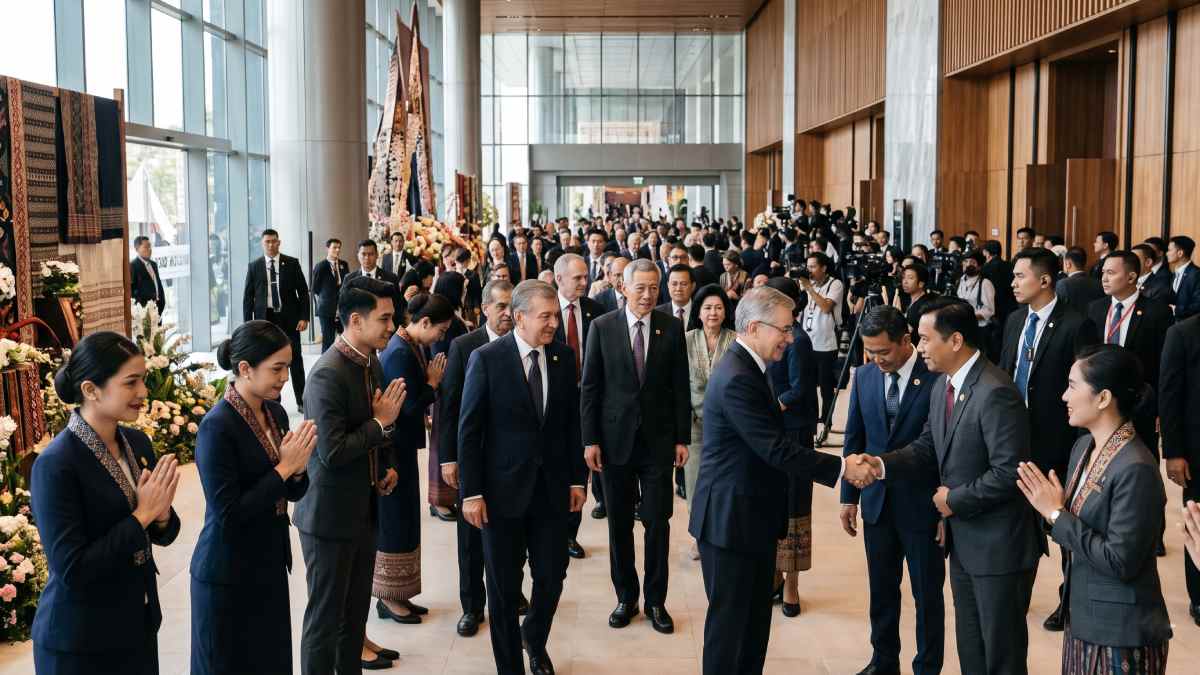
Through the entire Asian continent, destinations hosting international summits have methodically transformed their hospitality systems into a powerful tool of diplomacy practiced by sovereign states. Normal business activities have been substituted by government-endorsed diplomacy protocol, eco-friendly traditional textile manufacturing, university-accredited talent pool, and crisis-ready security systems. In light of increasing geopolitical challenges, airport VIP lanes, summit concourses, and hotel frontlines have been recognized by respective governments as strategic diplomatic borders. This means that hospitality staffs are now considered accredited cultural diplomats. This is because national prestige and soft power are shown directly to visiting statesmen and delegates through sovereign diplomacy practices.
Sovereign Hospitality: The Structural Evolution of Asian Statecraft
A structural transformation has been experienced across the operational landscape of international tourism in Asia. For decades, international destination management was governed by a commercial logic centred on standardised corporate customer service, Western corporate dress codes, and generic concierge scripts. Although high-volume leisure travel was adequately accommodated by such a posture, it has been demonstrated to be insufficient for the geopolitical realities of multilateral governance, regional summit hosting, and heightened international scrutiny.
Direct interfaces are formed between public-facing transport hubs, convention centres, designated host hotels, and international statecraft across the Indo-Pacific. A workforce capable of navigating complex political sensitivities is necessitated by the return of mega-events, including Association of Southeast Asian Nations (ASEAN) leader summits, Asia-Pacific Economic Cooperation (APEC) gatherings, and Shanghai Cooperation Organisation (SCO) conferences. Immediate diplomatic repercussions can be triggered by minor protocol failures, including the misaddressing of a head of government, erroneous seating arrangements, or insensitive non-verbal gestures.
Consequently, Sovereign Hospitality has been established as an institutional discipline by Asian governments. State diplomatic protocol, indigenous artisan preservation, university pipelines, and crisis stress-testing are systematically merged into frontline tourism operations. Rather than being treated as a commercial sub-sector, frontline service encounters are handled as strategic sovereign borders and living canvases for cultural diplomacy.
| Core Dimension | Traditional Commercial Hospitality | Sovereign Hospitality Framework |
| Primary Objective | Commercial revenue, brand loyalty, and transactional guest satisfaction scores are prioritised. | Sovereign dignity is projected, soft power is advanced, and bilateral and multilateral relations are safeguarded. |
| Operational Mandate | Standard guest assistance, itinerary booking, and commercial concierge support are provided. | Strict diplomatic precedence compliance, state titular etiquette, and multilateral protocol execution are enforced. |
| Frontline Attire | Mass-manufactured polyester suits and Western corporate business attire are worn. | Certified indigenous handloom eco-textiles supporting domestic artisan micro-economies are commissioned. |
| Talent Sourcing | Generic entry-level vocational hires with basic customer service certification are engaged. | Selective university pipelines fusing foreign service, international relations, and tourism management are cultivated. |
| Quality Control | Passive post-stay guest feedback forms, online reviews, and mystery shopper audits are utilized. | Multi-tier live stress evaluations, panel interviews, positioning drills, and crisis simulations are administered. |
| Crisis Management | Commercial refund policies, service vouchers, and reactive manager intervention are relied upon. | Multi-agency escalation, high-security rapid service recovery, and emergency resilience drills are executed. |
Geopolitics at the Front Desk: Diplomatic Protocol and Sovereign Service Standards
The multilateral conventions of bilateral diplomacy and official state decorum are systematically imparted to frontline personnel—encompassing airport VIP terminal escorts, hotel concierges, transportation coordinators, and venue ushers.
The Philippine Protocol Mandate: Expanding the FBSE for the 49th ASEAN Summit
A regional benchmark has been established by the Department of Tourism (DOT) of the Philippines through the elevation of its foundational training framework, the Filipino Brand of Service Excellence (FBSE), into an intensive diplomatic protocol curriculum. Under the direct leadership of DOT Assistant Secretary Ma. Christina G. Aquino, the curriculum was engineered so that frontline personnel could be prepared for the social events, airport operations, and bilateral hospitality requirements of the 49th ASEAN Summit and Related Meetings. Rigorous academic and vocational standards were synthesized by Assistant Secretary Aquino from her prior leadership roles across the Lyceum of the Philippines University, the Tourism Industry Board Foundation, and the Asia Pacific Council on Hotel, Restaurant, and Institutional Education.
Generic customer service modules were bypassed in favour of instruction by distinguished diplomats and operational veterans. Modules addressing international order of precedence, state-level seating arrangements, diplomatic forms of address, and cross-cultural non-verbal nuances were directed by former Ambassador Laura Quiambao-Del Rosario. Instruction in executive deportment and professional grooming was conducted by Director Ian U. Cacho. Concurrently, logistical and event management modules were delivered by Prof. Robert Frederick P. Hayden Jr., Yael T. Fernandez, accredited FBSE trainer Ramon F. Mariñas, Chief Operating Officer Orlando Ballesteros, and enterprise hospitality specialist Mel Jayson B. Sanchez.
Specialized frontline personnel have been certified across seven intensive cohorts and deployed as liaison officers, venue information specialists, and diplomatic ushers across Ninoy Aquino International Airport Terminal 3, accredited summit hotels, and central convention complexes. This specialized cadre forms the elite tier of a national workforce development policy through which more than one hundred thousand workers have been instructed nationwide, ensuring the full integration of tourism frontlines into national development and public diplomacy goals.
Multilateral Decorum Across Southeast Asia: Lao PDR and Indonesia
Comparable institutional realignments have been operationalised across Southeast Asia. In Lao PDR, specialized frontline protocol directives were established in Vientiane by the Ministry of Information, Culture and Tourism (MICT) to support high-level multilateral summits, including the 44th and 45th ASEAN Summits. Because administrative friction and language barriers often complicate bilateral summit interactions, multi-language escalation protocols and cultural storytelling modules were introduced by the MICT. Dignified, protocol-compliant, and protective hospitality encounters are maintained through instruction in ministerial greetings, bilateral flag etiquette, and cultural interpretations.
In Indonesia, the Indonesian Hospitality Protocol Standard was formalised by the Ministry of Tourism and Creative Economy (Kemenparekraf) alongside PT Aviasi Pariwisata Indonesia (InJourney). Cultural hospitality traditions—codified within the “Garuda Indonesia Experience”—are combined with strict multilateral security requirements. Standardised procedures for receiving VVIP and VIP state delegations across state-managed heritage properties, such as Borobudur and Prambanan, have been institutionalised, encompassing bilateral greeting rituals, dietary observance protocols, and high-level escorting procedures.
Heritage-to-Wear: Sustainable Eco-Textiles as Living Cultural Brand Ambassadors
Frontline apparel is treated as an immediate visual and tactile projection of living culture, environmental sustainability, and sovereign pride, displacing generic polyester-based corporate attire with certified eco-textiles and indigenous handloom garments.
The Ilocos Binakol Uniform Initiative in the Philippines
An operational template for state-sponsored living heritage has been established in the Philippines through the integration of indigenous craftsmanship into summit uniforms. Bespoke uniforms featuring Binakol—a geometric handwoven textile originating from indigenous communities in the Ilocos Region of Northern Luzon—are worn by diplomatic ushers at the 49th ASEAN Summit. Historical optical patterns that create an illusion of motion, originally woven to ward off malevolent spirits, are prominently displayed.
Through the integration of Binakol panels into structured modern diplomatic uniforms, visiting foreign delegates are provided with immediate exposure to Philippine artisanal heritage, while sovereign procurement capital is channelled directly into rural weaving cooperatives. Ancestral handloom traditions are shielded from obsolescence, high-value employment is generated for women-led weaving collectives, and reliance on synthetic, petroleum-derived textiles is minimized.
South Asian Handloom Diplomacy: India and Bhutan
In India, sovereign hospitality intersects with statutory frameworks governing handloom preservation. Certified handloom textiles sourced through the Khadi and Village Industries Commission (KVIC) and master weaving clusters in Varanasi are worn by state-sponsored concierges, airport VIP liaisons, and delegation escorts during flagship assemblies in New Delhi and Varanasi. Civilisational identity and sustainable production traditions are demonstrated through Khadi cottons and Banarasi silk accents, while public expenditure is redirected into local weaver cooperative societies.
In the Kingdom of Bhutan, the wearing of traditional handwoven garments is mandated under the formal code of etiquette, Driglam Namzha. Tourism liaison officers, airport protocol personnel, and state-certified guides across Paro and Thimphu are legally required to wear the traditional Gho paired with a handwoven kera belt, or the ankle-length Kira accompanied by the wonju blouse, toego jacket, and ceremonial rachu.
Indigenous, eco-friendly vegetable dyes derived from madder, indigo, and walnut shells are strictly enforced by the Department of Tourism, while chemical pigments are phased out. The hospitality workforce is thus positioned as a direct visual extension of the Gross National Happiness philosophy and environmental stewardship, sustained and funded through the national Sustainable Development Fee (SDF) framework.
Japanese Precision: Upcycled Silks and Kyoto State Craftsmanship
In Japan, sovereign hospitality textiles are articulated through circular luxury and historical preservation. Eco-dyed kimono silk accents and upcycled antique textiles are integrated into the formal presentation of luxury MICE concierges and State Guest House (Kyoto Geihinkan) liaisons in Kyoto and Tokyo. Handwoven tsuzure-ori tapestries, kyo-sashimono architectural woodwork, and raden mother-of-pearl ornamentation are highlighted within the state facility.
Through initiatives coordinated with the Kyoto Convention & Visitors Bureau and the Kyoto Artisans Concierge, frontline hospitality personnel are trained directly within operational artisan workshops. Bespoke uniforms incorporating upcycled Nishijin silk scraps are worn by concierges and event ushers, presenting international delegations with an aesthetic model of zero-waste craftsmanship that maintains historical weaving lineages.
Cross-Disciplinary Academic Pipelines: Foreign Service Meets Tourism Management
Geopolitical risk, foreign service education, and hospitality management are bridged through cross-disciplinary university talent pipelines established by Asian governments.
The Philippine University and Cultural Center Network
In the Philippines, recruitment pipelines were established by the Department of Tourism through higher education institutions offering degrees in international relations, diplomacy, and tourism management, alongside the Cultural Center of the Philippines (CCP) ushering group and operators accredited by the Philippine Tour Operators Association (PHILTOA). Academic theory was converted into operational readiness by engaging candidates already grounded in geopolitical history.
FBSE diplomatic standards have been embedded into degree curricula at institutions such as the Lyceum of the Philippines University, allowing undergraduate cohorts to transition directly into accredited government summit personnel and long-term careers within state protocol and international event management.
Vietnam’s Diplomatic Academy Model
In Vietnam, an institutional pipeline has been operationalised by the Ministry of Foreign Affairs (MOFA) via the Diplomatic Academy of Vietnam (DAV) in Hanoi. Practical training in state etiquette, multilateral seating choreography, flag arrangement regulations, and diplomatic speechcraft is administered to undergraduate students through the Diplomatic Protocol Club (DPC).
During major multilateral assemblies hosted in Hanoi and Da Nang—such as APEC and ASEAN ministerial dialogues—cross-trained students are deployed as bilingual liaison officers and MICE venue managers, ensuring that all frontline interactions with foreign dignitaries reflect professional foreign-service standards.
Uzbekistan’s Silk Road Vanguard in Central Asia
In Central Asia, an academic model has been founded through the “Silk Road” International University of Tourism and Cultural Heritage in Samarkand, established under presidential decree alongside the Ministry of Foreign Affairs. A new generation of tourism professionals is trained to articulate Central Asian cultural heritage to foreign heads of state and multilateral delegations.
Diplomatic history, state protocol, foreign language fluency, and heritage interpretation are unified within the Bachelor of Arts in International Relations and Cultural Heritage Management. When major international gatherings—such as the Shanghai Cooperation Organisation Summit or the UN Tourism General Assembly—are hosted in Samarkand, students are deployed as accredited heritage-diplomacy guides and protocol attachés.
High-Security MICE Stress Testing and Rapid Service Recovery
Passive classroom lectures are replaced with operational stress tests, crisis simulations, and standardized rapid service recovery protocols to prepare personnel for high-security environments.
Multi-Tiered Readiness Evaluations in the Philippines
Comprehensive practical readiness evaluations must be completed by frontline personnel prior to operational deployment for the 49th ASEAN Summit. Candidates are subjected to real-time stress testing, panel interviews, venue site inspections, and tactical positioning drills.
Realistic operational disruptions—including sudden motorcade delays, unannounced bilateral arrivals, translation equipment failures, lost credentials, and precedence conflicts—are introduced during simulations. Candidates are evaluated on emotional composure, problem-solving latency, professional grooming under physical fatigue, and non-verbal de-escalation skills before final summit accreditation is awarded.
Singapore’s Aviation and Convention Precision
In Singapore, simulation-based crisis management is executed through coordination between the Singapore Tourism Board (STB) and Changi Airport Group (CAG). Rigorous scenario simulations, including Exercise Bobcat and terminal readiness workshops, are completed by airport protocol personnel.
Rapid coordination between civil aviation security, health screening personnel, state protocol officers, and hotel concierges during mass disruptions, transit diversions, or cyber-infrastructure outages is tested. Under the ASEAN Tourism Sectoral Plan, regional training-of-trainers programs and crisis exercises are coordinated by Singapore to harmonise resilience standards across Southeast Asian member states.
Island Hub Resilience: Maldives and Sri Lanka
Specialized emergency response frameworks are required by the dispersed island geography of the Maldives and Sri Lanka. Compulsory emergency preparedness and first-aid response certifications are administered to frontline resort liaisons, airport boat captains, and island staff under joint initiatives led by the Maldivian Red Crescent (MRC), the Ministry of Tourism and Environment, and the Ministry of Health, supported by the Asian Development Bank.
Frontline personnel are prepared to manage extreme weather disruptions, medical evacuations, water and sanitation infrastructural failures, and remote transit bottlenecks without compromising service excellence or guest safety, ensuring the protection of the destination’s reputation for resilient luxury.
Economic Multipliers, Policy Implications, and National Security Synergy
Measurable economic, diplomatic, and human security dividends are generated through the nationwide institutionalisation of sovereign hospitality.
The Microeconomic Multiplier of Sovereign Artisan Procurement
Public procurement budgets are channelled directly into rural artisan economies when imported synthetic uniforms are replaced with handwoven eco-textiles. In Northern Luzon, seasonal craftwork has been transitioned into sustainable micro-enterprises through state commissions for handloomed Binakol fabrics.
Similarly, thousands of household looms across Uttar Pradesh are sustained through Indian mandates for Khadi and Banarasi silk accents on official delegations. United Nations Sustainable Development Goals concerning decent work, sustainable production, and gender empowerment are simultaneously advanced, as traditional weaving cooperatives are predominantly operated by women.
Soft Power Elevation and Destination Differentiation
Because contemporary airport terminals and convention venues are architecturally homogenous, sovereign hospitality serves as a vital cultural differentiator. Sophisticated governance, administrative authority, and cultural pride are projected when visiting delegations are received by liaisons who wear indigenous weaves, execute bilateral protocol flawlessly, and articulate national history with academic precision. Lasting diplomatic goodwill is generated, positively influencing multilateral negotiations and soft-power standing.
National Security Synergy and Border Resilience
A resilient human security infrastructure is formed when frontline tourism workers are cross-trained in diplomatic protocol and crisis simulation. Operational friction, protocol misunderstandings, and security vulnerabilities are detected early by personnel stationed at VIP terminals and host hotels before escalating into international incidents. Situational awareness is synchronized between tourism personnel, civil aviation authorities, national police, and foreign affairs protocol directorates without the imposition of an overt military posture.
Strategic Future Outlook: Institutionalising Cultural Diplomacy to 2030
A transition is being observed as sovereign hospitality evolves from a temporary event-hosting measure into a permanent, accredited civil-diplomatic discipline. Multilateral standardisation frameworks are being explored by regional bodies, including ASEAN and Central Asian forums, to align protocol competencies across member states.
Advanced digital technologies are expected to be paired with living heritage in future iterations of the framework. Precedence mapping during multi-leader arrivals will be facilitated by artificial intelligence scheduling systems, while the provenance and fair-wage compliance of every thread of handwoven textile will be authenticated via blockchain tracing. Furthermore, permanent talent pipelines will be anchored through formal joint-degree programs in International Diplomacy and Sustainable Tourism Administration.
The reality that national sovereignty is articulated not merely through formal treaties and military strength, but through the dignity, resilience, and cultural integrity projected at physical national frontlines, is demonstrated by the integration of foreign service protocol, indigenous textiles, academic pipelines, and rigorous crisis simulations.
Conclusion
Sovereign Hospitality provides an enduring governance philosophy in Asia. The process involves incorporation of foreign service protocol, indigenous handloom eco-textiles that are duly certified, strict university recruitment process, and crisis management scenarios within frontline tourism. The frontline workers protect the reputation of the nation, foster an artisan micro economy, and exert soft power authority.
The post Philippines Redefines Other Asian Country’s Hospitality as Sovereign Diplomacy Drives Cultural Soft Power and Summit Security appeared first on Travel and Tour World




































































