










James Webb and Hubble Space Telescopes discover tiny new worlds deep in our solar system
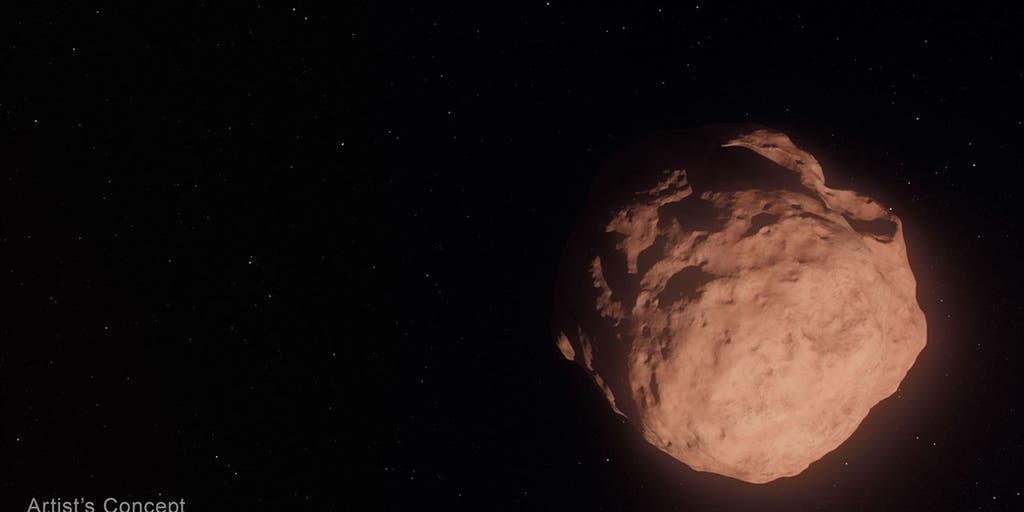


For the first time, scientists combined the power of NASA’s Hubble and James Webb Space Telescopes in search of far-flung bodies deep in our solar system.
THE TAKEAWAY
For the first time, scientists combined the power of NASA’s Hubble and James Webb Space Telescopes in search of far-flung bodies deep in our solar system.
While observing deep in our solar system, experts discovered Trans-Neptunian Objects (TNOs), small, faint, icy bodies orbiting the sun beyond Neptune, according to NASA.
Generally, TNOs are 100 million times fainter than objects visible to the unaided eye. They can be solar system space debris, celestial bodies and minor planets.
NASA'S HUBBLE SPACE TELESCOPE REVEALS GIANT ATMOSPHERIC WAVE AROUND SATURN'S SOUTH POLE
Through further observations and data, scientists analyzed the color, composition and size of 27 newly discovered tiny TNOs.
This discovery offers a glimpse into the early stages of planet-building, when a disk of dust and pebbles orbiting the sun coalesced into city-sized "planetesimals," the solid building blocks that clump together to form planets. These are the essential building blocks for a planet.
During further observations, Hubble observed the TNOs in visible light, while Webb observed them in infrared light.
THE BEST CELESTIAL EVENTS IN 2026 YOU WON'T WANT TO MISS
Through this, experts were able to measure the objects' colors, which serve as a fingerprint of surface composition, as well as their size and orbital path.
As a result, research teams identified two different types of TNOs.
"The first, dynamically cold TNOs, are on their original, relatively circular orbits around the sun in the plane of the solar system," NASA said. "The second type, dynamically hot TNOs, formed between the current locations of Uranus and Neptune, but were pushed outward where they are today when the outer gas giants migrated early in the solar system’s history."
They reside in elliptical orbits, moving in and out of the plane of our solar system.
SEPTEMBER SKYWATCHING GUIDE: HARVEST MOON, BRIGHT VENUS, FALL EQUINOX AND MORE AHEAD
Before these observations, astronomers thought that small TNOs from both hot and cold populations would have experienced many collisions, altering their surfaces compared to larger TNOs.
Instead, these collisions suggest that the TNOs are not changing their surfaces, but are trying to retain their primordial, pre-collision state.
SEE IT: NASA SATELLITE REVEALS HUMMINGBIRD-SHAPED SECRET BENEATH ANTARCTICA'S ICE
"So it's really fascinating to see that the smallest objects are somehow 'remembering' and preserving the history of how they were made," Northern Arizona University PhD candidate Anastasia Morgan, who led the study of color and composition, said.
Further research also found that some of these small interstellar bodies match planet-formation models.
The Webb telescope found 27 stunningly dim TNOs, including one so faint it's like standing on Earth and seeing a small swarm of fireflies on the moon.
NASA CAPTURES STUNNING NEW VIEW OF TARANTULA NEBULA REVEALING DETAILS ABOUT HOW STARS ARE FORMING
Through further analysis, data collection and observations, we can find more of these celestial bodies and better understand their role deep in our solar system.
The post James Webb and Hubble Space Telescopes discover tiny new worlds deep in our solar system appeared first on Fox Weather