










Kazakhstan Transforms Rail Travel as Astana Builds Central Asia’s First Aluminium Train Factory in 2026
-
Travel
-
-
10 mins
-
Travel and Tour World
-
Rituparna Dutta Choudhury
-


Astana Kazakhstan launches Central Asia’s first aluminium railcar factory shaping future travel connectivity.
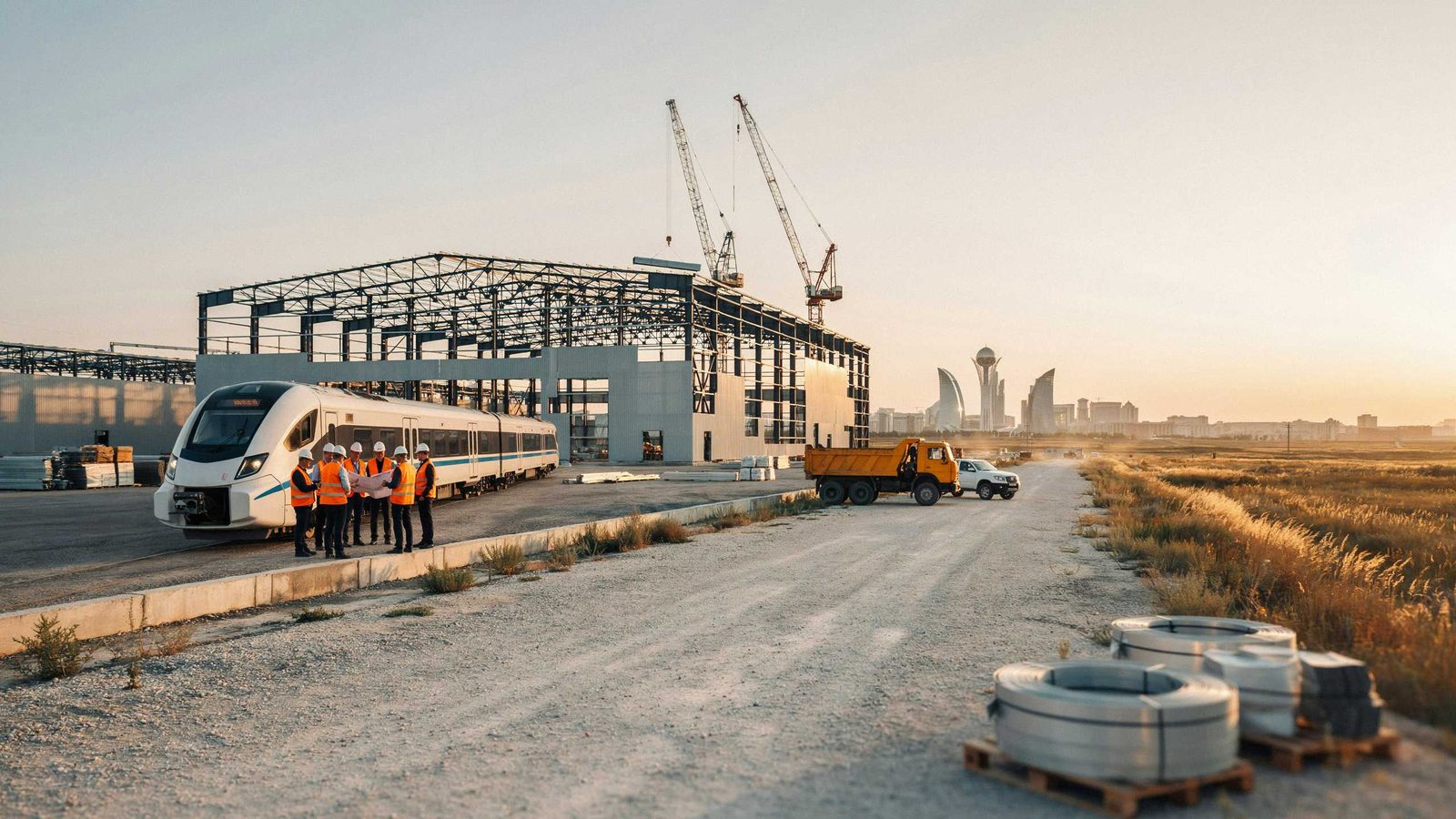
In 2026, the Astana region of Kazakhstan begins its expansion. Stadler builds Central Asia’s first large-scale production facility of aluminum railcar bodies, expected to cost 14 billion KZT. This project is the first of its kind in Central Asia to simultaneously create jobs and build an integrated supply chain for the production of mobility and railcar systems in Kazakhstan.
The production of railcars at this facility will support the production of rail networks in Kazakhstan, with many positive impacts predicted for the production supply chain. Although Astana will not have a new production plant, the region will benefit from the expected enhanced mobility and connectivity of Central Asia for many future years.
Astana will have the first available welding and painting workshop for aluminum railcar bodies construction in Central Asia.
Some of the anticipated benefits of the more integrated systems are already apparent to Kazakhstan.
Kazakhstan supports and appreciates the more integrated systems.
The Hidden Story Behind Astana’s Aluminium Railcar Factory
The headline figure is powerful: more than 14 billion KZT, approximately CHF 25 million, invested into the expansion of Stadler Kazakhstan’s Astana production site.
However, the real story is not only about investment value. It is about industrial capability.
Aluminium railcar production requires specialised engineering knowledge, advanced welding techniques, precision manufacturing and highly trained personnel. Aluminium is widely used in modern railway vehicles because it can reduce vehicle weight while maintaining structural strength, improving energy efficiency and supporting lower operating costs.
For Kazakhstan, establishing this capability locally represents a significant industrial milestone.
The Astana facility already carries out several important railway manufacturing operations, including:
- Steel car body welding and painting
- Electrical equipment production
- Underfloor equipment manufacturing
- Bogie production
- Pneumatic and electrical system installation
- Complete railcar assembly and commissioning
The aluminium expansion will add another advanced layer to these capabilities.
This means Kazakhstan’s role in the railway value chain is expanding from basic manufacturing activities towards more complex engineering processes.
What Others Are Missing About Kazakhstan’s Railway Strategy
The biggest overlooked element is localisation.
Many infrastructure announcements focus on construction timelines, investment figures or immediate employment numbers. However, the deeper impact comes from developing domestic expertise.
Stadler Kazakhstan has already been training local specialists in railway technologies. Employees have received training in Switzerland and Poland in areas including railway bogies, electrical cabinets and underfloor equipment production.
The new aluminium workshops will require additional expertise in aluminium welding and advanced painting technologies, creating opportunities for Kazakhstan’s technical workforce.
The company currently employs more than 650 people, with approximately 100 additional positions expected following the expansion.
This workforce development could become one of the most important outcomes of the project.
A modern railway industry depends not only on factories but also on engineers, technicians, designers and maintenance specialists. By developing these skills locally, Kazakhstan strengthens its ability to participate in future rail projects.
Astana’s New Role in Central Asian Mobility
Kazakhstan occupies a unique geographical position between Europe and Asia. Its territory connects major trade routes and transport corridors linking China, Central Asia, Russia and Europe.
Railways remain central to this connectivity.
The development of advanced rolling stock production in Astana could support future regional transport ambitions by creating stronger domestic manufacturing capacity.
The investment also aligns with Kazakhstan’s broader objective of increasing industrial localisation and reducing dependence on imported railway technologies.
The country’s railway sector has increasingly focused on modernisation, improved passenger services and stronger domestic production capabilities.
The Stadler expansion adds another dimension: Kazakhstan is not only upgrading railway infrastructure but also strengthening its role as a manufacturing hub.
From Railway Assembly to Advanced Manufacturing
The difference between assembly and advanced manufacturing is significant.
An assembly operation brings together components produced elsewhere. Advanced manufacturing develops specialised production knowledge, technology and supply chains within the country.
The aluminium railcar body facility represents this second stage.
Kazakhstan Railway Manufacturing Evolution
| Development Stage | Traditional Model | New Astana Direction |
|---|---|---|
| Production Focus | Assembly of railway components | Advanced rail vehicle manufacturing |
| Materials | Mainly conventional steel structures | Aluminium railcar body technology |
| Skills Required | Assembly expertise | Specialised welding and engineering |
| Supply Chain Role | Regional consumer | Potential international supplier |
| Economic Impact | Limited industrial value | Higher-value manufacturing capability |
The shift could help Kazakhstan participate more actively in international railway projects.
The facility is also expected to support export-related opportunities by expanding the range of products manufactured for Kazakhstan and overseas markets.
Why Aluminium Technology Matters for Future Rail Travel
The railway industry worldwide is increasingly focused on efficiency, sustainability and passenger experience.
Modern aluminium rail vehicles can contribute to:
- Reduced vehicle weight
- Improved energy efficiency
- Lower operational costs
- Enhanced passenger comfort through modern design possibilities
For travel and tourism markets, better rail technology can influence destination accessibility.
Reliable, efficient rail networks are essential for encouraging domestic tourism, regional travel and international visitor movement.
Kazakhstan has vast landscapes, growing urban centres and emerging tourism destinations. Improved rail connectivity could support easier movement between cities and regions.
Although the Stadler expansion is primarily an industrial project, its long-term implications extend into mobility and tourism development.
A Strategic Partnership Between Kazakhstan and Switzerland
The Astana expansion builds on a wider partnership between Kazakhstan and Switzerland in railway manufacturing.
During the fifth meeting of the Kazakhstan-Switzerland Business Council in November 2025, an agreement was signed concerning further development of Stadler’s railway manufacturing operations in Kazakhstan.
Under the agreement, Stadler Group’s total investment in Kazakhstan between 2023 and 2031 is expected to reach at least 29.5 billion KZT, approximately CHF 53 million.
This long-term commitment demonstrates that the Astana facility is not viewed as a short-term manufacturing project.
Instead, it represents a strategic investment in Kazakhstan’s industrial future.
Beyond Factories: Why Kazakhstan’s Rail Manufacturing Expansion Matters for Future Travel
The expansion of Stadler Kazakhstan’s Astana facility is not only an industrial milestone. It could also influence how people move across Kazakhstan and the wider Central Asian region in the coming years.
What others are missing is that railway manufacturing decisions often shape tourism networks long before passengers notice the change.
A country that produces advanced trains locally gains greater control over fleet development, maintenance capability and future transport planning. For Kazakhstan, a nation covering more than 2.7 million square kilometres, efficient rail mobility remains a critical link between major cities, cultural destinations and emerging tourism regions.
The new aluminium railcar body production capability could support Kazakhstan’s ambition to strengthen domestic railway services while improving its position within international transport corridors. Stadler confirmed that the Astana expansion aims to increase localisation, expand manufacturing capacity for Kazakhstan and export projects, create jobs and integrate the country into its global supply chain.
The impact extends beyond manufacturing.
Better railway capacity can influence:
- Domestic tourism growth
- Regional business travel
- Cross-border mobility
- Passenger comfort expectations
- Long-distance travel experiences
For a country promoting destinations such as Almaty, Astana, Turkistan, the Caspian region and natural landscapes across Central Asia, transport quality plays a major role in visitor decisions.
Kazakhstan’s Railway Network Could Become a Tourism Growth Engine
Tourism growth depends heavily on accessibility.
Air connectivity often receives the most attention, but rail remains one of the most important transport systems for large countries. Kazakhstan’s geography makes rail especially valuable because many destinations are separated by hundreds or thousands of kilometres.
Modern passenger trains can transform how travellers experience a destination.
A visitor travelling between Astana and Almaty, for example, is not only choosing a transport option. They are selecting an experience involving:
- Travel duration
- Comfort levels
- Reliability
- Onboard services
- Connections with regional destinations
The development of advanced rail production in Astana creates the possibility of stronger alignment between Kazakhstan’s transport strategy and tourism ambitions.
The country is increasingly positioned as a crossroads between Europe and Asia. Improved railway manufacturing capacity could support future mobility solutions designed around regional tourism routes, business corridors and international passenger demand.
The Global Railway Race and Kazakhstan’s Strategic Position
Rail manufacturing is becoming increasingly competitive worldwide.
Countries are investing in domestic production because trains are no longer viewed only as transport equipment. They are considered strategic infrastructure assets connected to economic resilience, technology development and sustainable mobility.
Kazakhstan’s move into aluminium railcar production places it within a broader global trend.
Rail Manufacturing Landscape Comparison
| Country/Region | Manufacturing Strength | Strategic Focus |
|---|---|---|
| Switzerland | Advanced rail engineering and premium rolling stock | Global rail technology exports |
| Germany | High-speed and industrial rail solutions | European mobility networks |
| China | Large-scale railway manufacturing | Domestic and international infrastructure |
| Poland/Hungary | European production hubs | Export-oriented rail manufacturing |
| Kazakhstan | Growing localisation and regional production | Central Asian mobility gateway |
Kazakhstan’s opportunity lies in geography.
The country sits between major economic regions and has direct relevance for Eurasian transport development.
The Astana facility does not immediately transform Kazakhstan into a global railway producer, but it represents a step towards deeper participation in international supply chains.
The “Made in Kazakhstan” Railway Shift
The most important change may be the transition from dependence to capability.
Before advanced localisation programmes, many countries relied heavily on imported railway technologies, components and expertise.
Kazakhstan’s Stadler partnership is developing local knowledge through:
- Specialist training programmes
- European technology transfer
- Domestic production processes
- Engineering workforce development
Stadler Kazakhstan has already trained employees in Switzerland and Poland in railway manufacturing areas including bogie assembly, electrical cabinets and underfloor equipment.
The upcoming aluminium welding and painting workshops will require another generation of technical expertise.
This creates a longer-term industrial advantage.
Factories can be built quickly. Skilled railway professionals take years to develop.
How 100 New Jobs Could Create a Larger Economic Ripple Effect
The announcement highlights approximately 100 additional jobs from the new workshops, building on a workforce of more than 650 employees already operating at Stadler Kazakhstan’s Astana site.
While the direct employment number is important, the wider economic effect could be larger.
Advanced manufacturing projects typically create demand across supporting industries, including:
- Engineering services
- Industrial suppliers
- Technical education
- Maintenance services
- Logistics providers
- Local business networks
The result is a manufacturing ecosystem rather than a single workplace.
For Astana, this supports the city’s development as more than a political capital. It strengthens its role as an industrial, technology and innovation centre.
Why Aluminium Rail Technology Could Change Passenger Expectations
Aluminium has become increasingly important in modern railway design because manufacturers seek lighter and more efficient vehicles.
A lighter rail vehicle can provide potential advantages, including:
- Reduced energy consumption
- Improved operational efficiency
- Greater design flexibility
- Enhanced passenger comfort opportunities
For travellers, these technical improvements translate into practical experiences.
Passengers do not see welding technology or production systems. They experience:
- Smoother journeys
- Modern interiors
- Better reliability
- Improved accessibility
This connection between industrial investment and passenger experience is the hidden tourism story behind the Astana expansion.
Kazakhstan Versus Regional Competitors: The Manufacturing Opportunity
Central Asia has significant transport potential, but countries in the region are competing to attract investment, improve connectivity and develop logistics capabilities.
Central Asian Rail Development Perspective
| Factor | Kazakhstan | Regional Situation |
|---|---|---|
| Geographic Position | Eurasian crossroads | Strong regional advantage |
| Railway Network | One of the largest in Central Asia | Varies across neighbouring markets |
| Manufacturing Capability | Growing through Stadler localisation | Developing at different speeds |
| International Supply Links | Connected with European technology partners | Investment-driven growth |
| Tourism Mobility Potential | Large domestic distances and diverse destinations | Increasing regional travel demand |
Kazakhstan’s advantage is scale.
Its railway system already plays an important role in national connectivity, and expanding manufacturing capability strengthens its long-term transport strategy.
A New Era for Central Asian Travel Connectivity
The story of the Astana aluminium railcar facility is ultimately about connectivity.
The investment may begin inside a factory, but its consequences could reach cities, tourism destinations and passenger routes.
The railway industry is changing rapidly as countries seek cleaner, smarter and more efficient mobility solutions.
Kazakhstan’s decision to expand local production reflects a wider ambition: becoming not only a country crossed by international transport routes but also a country that helps build the vehicles moving along them.
The project also follows a wider Stadler investment commitment in Kazakhstan. The company has stated that total investment between 2023 and 2031 will reach at least 29.5 billion KZT, around CHF 53 million.
Editorial Perspective: Why This Railway Move Matters for Travel Analysts
Though Astana’s aluminum railcar factory could be seen as manufacturing, it should be seen as the construction of transport infrastructure.
A good transport system is a great way to increase transport efficiency.
Astana’s manufacturing plant addresses some of the demands of current transport trends.
Increasing transport needs at a regional level
More sustainable transport
Increasing transport by rail
More business competition to provide convenient transport
Kazakhstan’s rail investment fulfills a need for long-term transport mobility. All of these needs will be fulfilled in the future.
In the present, competition for transport planning and rail mobility will be based on the integration of new rail transport. The rest of the world is waiting to see what happens.
It is expected that the transportation network of Central Asia will include more connections by land transport than just air transport. This will include the new Astana production facilities of Stadler Kazakhstan.
Rail transport in Kazakhstan is an excellent alternative for transport mobility for both business and transport and tourism transport planners, as it is an innovative transport system.
The post Kazakhstan Transforms Rail Travel as Astana Builds Central Asia’s First Aluminium Train Factory in 2026 appeared first on Travel and Tour World