





La Niña nearly dead, brewing El Niño to arrive during peak hurricane season
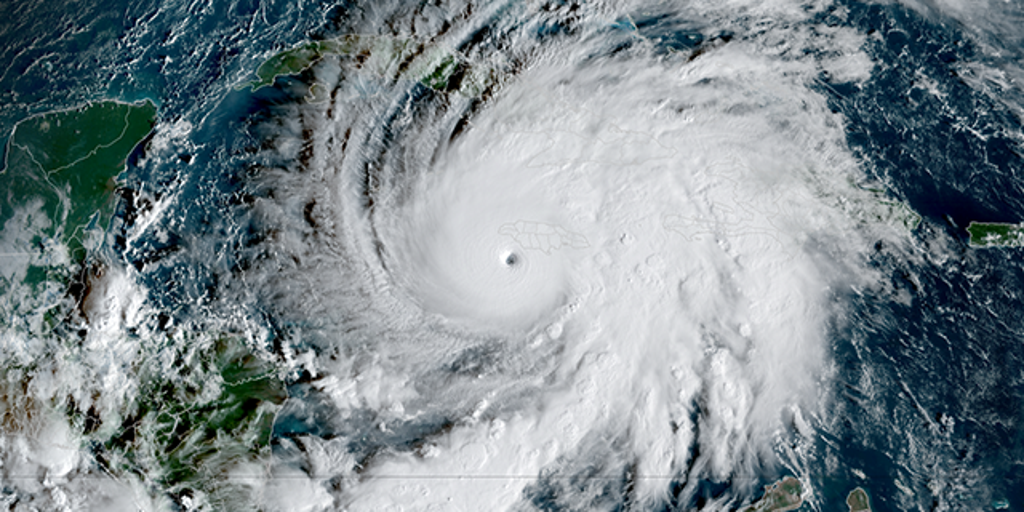


The latest climate forecast from the National Oceanic and Atmospheric Administration (NOAA) shows that an El Niño climate pattern is on track to arrive midway through hurricane season — a pattern that has historically suppressed hurricane and other tropical development in the Atlantic Ocean.
MIAMI – The latest climate forecast from the National Oceanic and Atmospheric Administration (NOAA) shows that an El Niño climate pattern is on track to arrive midway through hurricane season — a pattern that has historically suppressed hurricane and other tropical development in the Atlantic Ocean.
WHAT ARE EL NINO AND LA NINA CLIMATE PATTERNS?
El Niño is one of three climatological phases of the El Niño-Southern Oscillation (ENSO) that describe natural changes in Pacific Ocean temperatures and atmospheric circulation that can greatly influence global weather.
El Niño describes warmer conditions, while La Niña describes colder conditions, and ENSO neutral refers to a state where temperatures are close to average.
Throughout the winter, conditions remained in a La Niña state, as the eastern U.S. saw rounds of Arctic air plunge temperatures, fueling an active stretch of winter storms that brought the most snow that many places in the Northeast have seen in recent years.
LA NIÑA AND QUASI-BIENNIAL OSCILLATION SUGGEST COLD START TO DECEMBER
According to NOAA, the ENSO has begun the transition toward a neutral state, with signals that El Niño will arrive this summer — timing that's on track with last year's long-range forecasts.
There is a 50–60 percent chance El Niño conditions develop right as the heart of hurricane season gets underway, according to the latest guidance.
Typically, winds associated with El Niño often interfere with tropical development in the Atlantic.
NOAA: LA NIÑA EXPECTED FOR BEGINNING OF WINTER, NEUTRAL CONDITIONS LIKELY IN 2026
"The warmer waters and enhanced rising air across the Pacific create "hostile" upper-level winds that blow across the Caribbean and the Main Development Region (MDR)," the FOX Forecast Center said Thursday.
"These strong westerly winds can tilt or disrupt a developing storm's structure, preventing intensification and promoting a more stable atmosphere."
These trends are supported by historical data.
LOOKING BACK AT THE 2025 HURRICANE SEASON
During La Niña years, the Atlantic tends to be hyperactive, generating on average around 14 storms and seven hurricanes.
Conversely, during El Niño years, those averages typically drop to roughly 10 storms and five hurricanes.
The FOX Forecast Center noted that extremely warm water temperatures in the Atlantic could offset El Niño's suppressive effects on tropical development.
BRYAN NORCROSS: REFLECTING ON HURRICANE SEASON 2025
This shift towards El Niño follows the weak La Niña pattern that dominated the 2025 season, which yielded no U.S. landfalling hurricanes but three major (Category 3+) hurricanes — including Category 5 Melissa, which devastated Jamaica.
FOX Weather Hurricane Specialist Bryan Norcross noted at the end of the 2025 season that while seasonal forecasts can be accurate in broad strokes, the day-to-day weather pattern is the determining factor in the formation and steering of any tropical system.
The post La Niña nearly dead, brewing El Niño to arrive during peak hurricane season appeared first on Fox Weather