










Could a deadly tick-borne allergy be stopped? Scientists uncover potential new treatment

Scientists believe they have made a groundbreaking discovery, paving the way for a potentially new treatment for a deadly tick-borne condition.
THE TAKEAWAY
Scientists believe they have made a groundbreaking discovery, paving the way for a potentially new treatment for a deadly tick-borne condition.
In a recent study published in the Journal of Clinical Investigation, experts identified specially designed antibodies that could act like a shield against the deadly tick-borne condition alpha-gal syndrome (AGS).
AGS is a serious, potentially life-threatening allergy to alpha-gal that can develop after a tick bite.
FEDERAL OFFICIALS UNVEIL NEW PLAN IN THE FIGHT AGAINST LYME DISEASE AND TICK-BORNE ILLNESS
As a result, people with AGS can have an allergic reaction after eating red meat or being exposed to products containing alpha-gal.
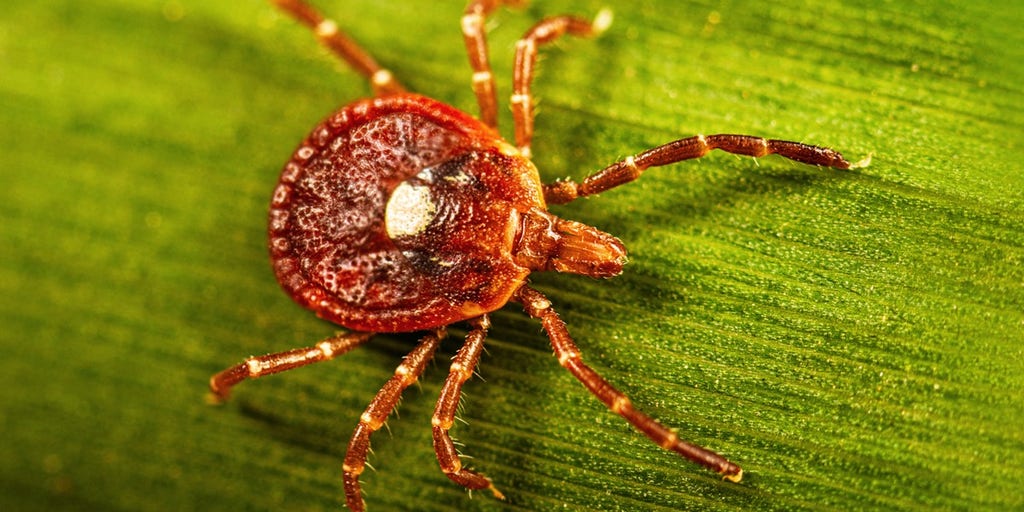
In the U.S., the lone star tick is most commonly associated with AGS.
"When a tick bites, it can transfer alpha-gal from its saliva into a person's blood," the Centers for Disease Control and Prevention (CDC) said. "The body's natural defenses, or immune system, can identify alpha-gal as a threat and trigger an allergic reaction."
Using malaria parasites, experts searched for antibodies that might recognize alpha-gal in them.
HOW TO STAY SAFE DURING TICK SEASON
They also collected immune cells from people exposed to malaria and isolated 42 human antibodies that might recognize alpha-gal.
Despite the optimistic results, most of the antibodies did not work well against the allergens triggered by AGS, but 13 of the 42 selected antibodies bound to the tested alpha-gal allergens, according to the study.
The antibodies were tested in a blood-based experiment on isolated immune cells and were not given to patients with AGS.
Further data showed that two antibodies, AG028 and AG050, could bind IgE (Immunoglobulin E), which helps fight parasites, but can still trigger allergic reactions.
LARGE INCREASE IN TICK BITES REPORTED AT HOSPITALS ACROSS THE US AS SPRING WARMTH KICKS IN
They found that these two antibodies could block IgE from binding to key allergens in patients.
Notably, the antibody AG028 shows the most promise, as it reduced basophil activation (a rare type of white blood cell) by as much as 86% in one patient's serum.
Although it did not prevent the allergic reaction, the findings suggest that antibodies may eventually be developed to target the allergens associated with AGS.
The treatment remains experimental, but the results provide an early indication that it could help address the tick-borne illness.
The post Could a deadly tick-borne allergy be stopped? Scientists uncover potential new treatment appeared first on Fox Weather