




Danish State Railways Embarks on Major Transformation with Fully Automated S-Bane Trains to Revolutionize Commuter Experience – You Need to Know
-
Travel, Immigration
-
-
2 mins
-
Travel and Tour World
-
Pappu
-

The Danish State Railways (DSB) has secured a landmark deal with Siemens Mobility and Stadler, forming a partnership to deliver 226 state-of-the-art,
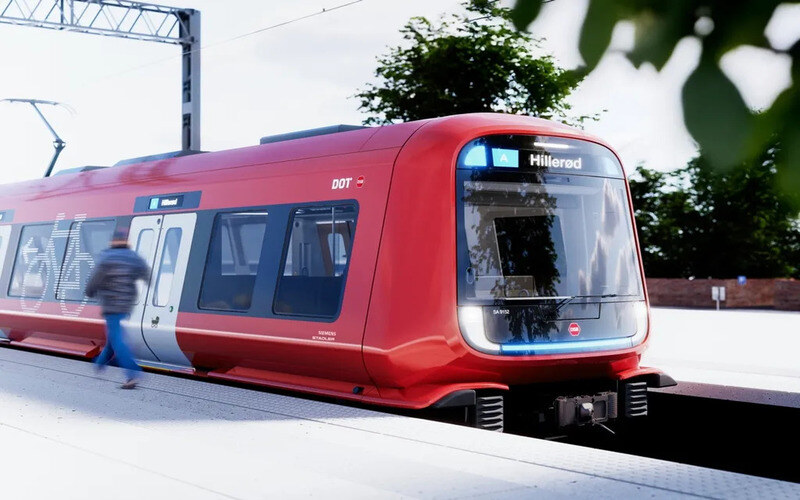
The Danish State Railways (DSB) has secured a landmark deal with Siemens Mobility and Stadler, forming a partnership to deliver 226 state-of-the-art, fully automated 4-car trainsets for the Copenhagen S-Bane network. The deal, valued at approximately three billion euros, includes an option to expand the fleet by an additional 100 trains, marking the creation of the world’s largest open railway system with Automated Train Operation (ATO). With this ambitious project, DSB aims to significantly enhance service frequency and capacity, while introducing innovative design and cutting-edge technology to improve passenger experience.
The consortium’s responsibilities are clearly defined, with Siemens Mobility leading the effort, focusing on the electrical systems, propulsion and braking technology, train control systems, and on-board power supply. Siemens will also oversee the implementation of Railigent X, a digital platform designed to manage maintenance and ensure the trains’ reliability for up to 30 years. Stadler, known for its engineering prowess, will be tasked with the design and manufacturing of the train bodies, interior fittings, and the final assembly of the trains.
These 56-meter-long trains will be a significant departure from traditional suburban trains, introducing a modern and spacious design aimed at enhancing comfort and accessibility for passengers. The new trains will feature 120 seats, 36 folding seats, and space for up to 300 standing passengers, providing ample capacity for the high-demand Copenhagen S-Bane network. The vehicles will be fully accessible, including step-free entry via sliding steps, multi-purpose areas to accommodate bicycles, prams, and wheelchairs, and wide aisles to facilitate smooth passenger flow during rush hours.
In addition to physical design improvements, these automated trains will be equipped with a range of technologies aimed at ensuring passenger comfort. These include air conditioning, integrated spaces for commuters to work with dedicated tables, modern passenger information systems, and exterior displays showing route information. The trains will also provide a quiet and smooth ride, contributing to a more pleasant journey experience, especially during peak hours when travel demand is high.
One of the most significant technical advances will be the introduction of Siemens’ Air-free Brake System, which offers a remarkable 50% reduction in CO₂ emissions through a design that eliminates traditional pneumatic systems. This innovative solution not only cuts down on energy consumption but also contributes to a substantial weight reduction in the trains, resulting in improved operational performance and a smaller environmental footprint.
The transformation doesn’t stop with the trains themselves; DSB is also investing in the entire 170-kilometer S-Bane network, which will be upgraded to the highest Grade of Automation (GoA4). This involves the installation of CBTC (Communications-Based Train Control) technology, specifically the Trainguard MT system, enabling fully driverless operations. The migration to GoA4 will take place in five phases, with full automation anticipated by 2033. This transition promises to boost network capacity, improve punctuality, and enhance overall service reliability while maintaining the high safety standards that Copenhagen’s commuters rely on.
To ensure long-term sustainability and smooth operations, Siemens Mobility and DSB have also signed a comprehensive 30-year service agreement, with the option for two additional five-year extensions. This agreement covers everything from spare parts and maintenance support to cybersecurity services. Siemens will oversee maintenance while DSB employees carry out the on-the-ground work, aided by a suite of digital tools designed to optimize maintenance planning and improve fleet reliability.
The fully automated S-Bane trains are expected to offer a 35% increase in service frequency, particularly during peak hours, when trains will run as frequently as every 1.5 minutes in central Copenhagen. This will result in a dramatic increase in passenger capacity, enabling around ten million additional journeys per year. The expanded service will be crucial in meeting the growing demand for public transportation in Copenhagen, where passenger numbers are expected to continue rising in the coming years.
The first of the new automated trains are expected to be ready for service in 2032, with the full fleet to be delivered by 2040. This ambitious project is set to reshape the future of Copenhagen’s public transport network, making it one of the most advanced and efficient in Europe. With improved frequency, reliability, and comfort, DSB is poised to offer a world-class travel experience for its passengers, setting a new standard for automated urban rail systems.
The post Danish State Railways Embarks on Major Transformation with Fully Automated S-Bane Trains to Revolutionize Commuter Experience – You Need to Know appeared first on Travel and Tour World