







Cleanup efforts underway as large amount of sargassum spotted on Miami Beach
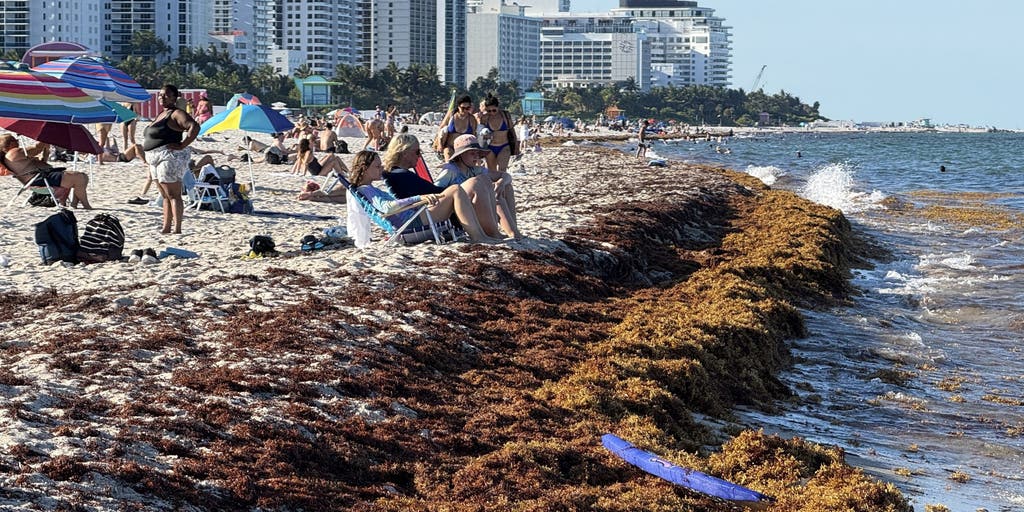

A large amount of seaweed known as sargassum has washed up along the shores of Miami Beach. The City of Miami Beach, in coordination with Miami-Dade County Parks, is now using beach-friendly equipment to blend the sargassum across the city’s 7.5-mile stretch of beach each day.
MIAMI, Flo. - A large amount of seaweed known as sargassum has washed up along the shores of Miami Beach.
FLORIDA FRENZY: SARGASSUM, DEAD DOLPHINS AND COCAINE SHARKS MAKE HEADLINES DURING SPRING BREAK
Officials said the sargassum bloom has persisted for months and could become record-breaking this year.
The City of Miami Beach, in coordination with Miami-Dade County Parks, is using beach-friendly equipment to blend the sargassum across the city’s 7.5-mile stretch of beach each day.
Beach operations crews drive tractors equipped with rear-mounted blades along the shoreline during high tide to mix and disperse the seaweed. Crews also use barber rakes in areas where larger amounts accumulate.
Once the seaweed is removed and allowed to dry, it is transported to a landfill.
HERE'S WHY PEOPLE IN THE SUNSHINE STATE NEED TO BE ON ALERT DURING ALLIGATOR MATING SEASON
According to the City of Miami, before crews begin the process, the county’s sea turtle conservation program surveys the area for nests and hatchlings to ensure no sea turtles are harmed during this process.
Sargassum is a naturally occurring brown seaweed that floats in large masses across the ocean and commonly impacts Florida coastlines.
WHAT YOU NEED TO KNOW AS FLORIDA'S SEA TURTLE NESTING SEASON KICKS OFF
Many beaches in South Florida, including Fort Lauderdale Beach, are currently experiencing heavy accumulations of sargassum.
According to NOAA, sargassum releases hydrogen sulfide gas as it decomposes on beaches, producing a smell similar to rotten eggs.
Sargassum can contain high levels of arsenic, heavy metals, organic contaminants and marine debris that may be harmful to humans.
SARGASSUM SEAWEED BLOOMS PLAGUING ATLANTIC BEACHES TRACED BACK TO WEST AFRICA
The Florida Department of Health said hydrogen sulfide can irritate the eyes, nose and throat and may be especially problematic for people with asthma and other respiratory conditions.
In order to protect residents and visitors, officials in Miami are continuing cleanup efforts as sargassum season is expected to continue throughout the summer months.
City crews said they will continue to remove excess seaweed as the blooms continue to wash ashore.
The post Cleanup efforts underway as large amount of sargassum spotted on Miami Beach appeared first on Fox Weather