





China, Malaysia, Indonesia: How Severe Weather is Impacting Flights and Stranding Thousands in Key Asian Hubs, Here is The Latest Update
-
Travel, Immigration, Weather
-
-
4 mins
-
Travel and Tour World
-
Swagata Dey
-


Severe weather disrupts flights in China, Malaysia, and Indonesia, causing 54 cancellations and 551 delays. AirAsia and other carriers scramble to manage the chaos.
Severe weather sweeping across China, Malaysia, and Indonesia has caused significant disruptions to air travel, stranding thousands of passengers and leaving airlines scrambling to manage a series of flight cancellations and delays. Between February 27 and 28, 2026, the region was hit by fast-moving storm systems, including heavy rain, thunderstorms, and unstable winds, which affected major aviation corridors across East and Southeast Asia.
The weather chaos led to 54 flight cancellations and 551 delays, impacting key routes served by AirAsia, Batik Air, Chengdu Airlines, and China Eastern. As the storm systems rolled through the region, passengers found themselves stranded, with some facing multiple rebookings and long delays at Kuala Lumpur International Airport, Jakarta Soekarno-Hatta, and Chengdu Shuangliu Airport.
Storm Systems Hit Major Aviation Hubs Across Asia
Meteorologists reported that persistent low clouds, tropical downpours, and localized thunderstorms contributed to the disruption. In China, Beijing, Shanghai, and Chengdu were hit hardest, where reduced visibility and crosswinds forced air traffic controllers to delay or divert flights. These weather conditions quickly spread across Southeast Asia, affecting Malaysia and Indonesia, particularly on evening and overnight rotations when congestion is at its peak.
Airlines operating short- and medium-haul services, which are the backbone of intra-Asian connectivity, were most vulnerable to these cascading disruptions. A single delayed flight in the morning can ripple through the system, causing delays on later rotations. The situation was worsened as busy airports in Malaysia and Indonesia faced operational slowdowns, with limited options for rebooking or rerouting.
Key Airports and Routes Bear the Brunt of the Disruption
The Kuala Lumpur International Airport (KLIA) in Malaysia emerged as one of the critical pressure points, with a high volume of delays affecting popular routes to China and Indonesia. Flights between Kuala Lumpur and Beijing, Shanghai, and Chengdu were repeatedly delayed as incoming aircraft faced disruptions, further causing cascading delays.
In China, the primary hubs of Beijing, Shanghai Pudong, and Chengdu were particularly affected. Routes connecting Yantai to Chengdu and other western and central cities saw frequent delays, with aircraft grounded or slowed by en-route flow restrictions. In Indonesia, Jakarta Soekarno-Hatta and Denpasar on Bali faced intermittent slowdowns as storm bands passed through. Although conditions at Bali had improved after earlier extreme weather, late-evening departures on domestic routes continued to experience delays.
The Impact on Low-Cost Carriers
The low-cost carrier model, particularly for airlines like AirAsia and Batik Air, faced significant challenges in managing these disruptions. AirAsia, operating a dense network from Kuala Lumpur across Indonesia and southern China, reported significant delays on high-frequency routes to Jakarta, Bali, and secondary Chinese cities. Due to the airline’s reliance on quick turnarounds, the delays from earlier flights cascaded through the rest of the schedule, leaving both aircraft and crews exposed to ongoing disruptions.
Similarly, Batik Air, which operates a mixture of domestic and regional services, struggled with rebooking passengers and adjusting aircraft schedules. As a result, several flights were canceled due to the inability to reposition crews and aircraft on time.
How the Weather Chaos Affected Passengers
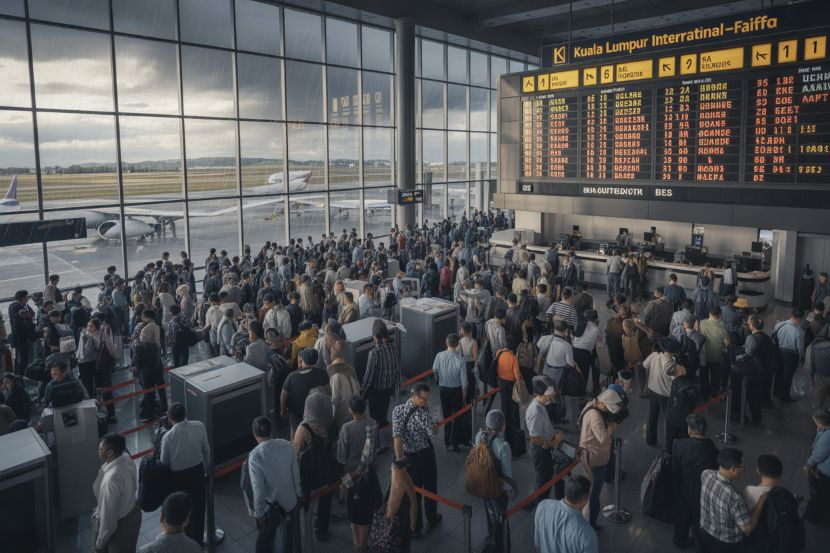
For passengers caught in the disruption, the impact was significant. At airports like Kuala Lumpur, Jakarta, and Chengdu, departure boards were dominated by amber and red status updates, indicating delayed or canceled flights. Long lines formed at check-in counters, where travelers scrambled to find rebooking options, meals, and accommodation for overnight stays.
Business travelers, families on holiday, and migrant workers returning to job sites were particularly affected. Tight connections and full flights compounded the frustration, leading to missed connections and increased waiting times. Some travelers were forced to switch to ground or rail connections on domestic routes in China and Indonesia, while others opted to stay overnight at the airport in hopes of securing a confirmed seat the next morning.
What Travelers Should Do This Weekend
With weather systems forecast to remain unsettled in the coming days, travelers are being urged to plan for potential delays. Airlines like AirAsia and Batik Air have recommended that passengers traveling on affected routes consider voluntary rebooking on earlier or later flights, depending on available capacity, to reduce pressure on the tight post-holiday schedules.
Airports and airlines in Malaysia, China, and Indonesia are advising travelers to arrive earlier than usual to allow for longer security checks and check-in queues. Additionally, passengers are encouraged to monitor flight statuses closely via airline apps or contact centers for any last-minute changes.
For those on tight connections, particularly those with separate tickets or low-cost and full-service carriers, experts recommend consolidating bookings with a single carrier if possible. This can help ensure that rebooking responsibility remains with the same airline, making it easier to manage any disruptions.
Conclusion
The severe weather that swept across China, Malaysia, and Indonesia serves as a stark reminder of how quickly weather conditions can disrupt air travel in Asia. With 54 cancellations and 551 delays affecting key routes, passengers and airlines alike have faced the complexities of dealing with unpredictable storms. As AirAsia, Batik Air, Chengdu Airlines, and China Eastern continue to adjust their schedules, travelers are advised to be flexible and prepared for potential changes to their itineraries.
In the coming days, weather conditions may continue to impact air travel, but with careful planning and awareness, passengers can mitigate the effects of these disruptions. The ongoing weather chaos highlights the importance of staying informed and being proactive when navigating flight delays and cancellations.
Key Points:
- 54 flights were canceled and 551 delayed due to severe weather in China, Malaysia, and Indonesia.
- Kuala Lumpur International Airport, Jakarta Soekarno-Hatta, and Chengdu were key pressure points for delays.
- AirAsia, Batik Air, Chengdu Airlines, and China Eastern were most affected.
- Passengers are advised to arrive early and monitor flight statuses closely.
- Travelers with tight connections should consider consolidating bookings to avoid missed flights.
The post China, Malaysia, Indonesia: How Severe Weather is Impacting Flights and Stranding Thousands in Key Asian Hubs, Here is The Latest Update appeared first on Travel and Tour World