
















Mauritius Links Up With Seychelles And More To Boost Travel As Africa’s Economic Freedom Rankings Reveal Major Gaps
-
Travel, Health, Currency, Weather
-
-
6 mins
-
Travel and Tour World
-
Pritam Nath
-


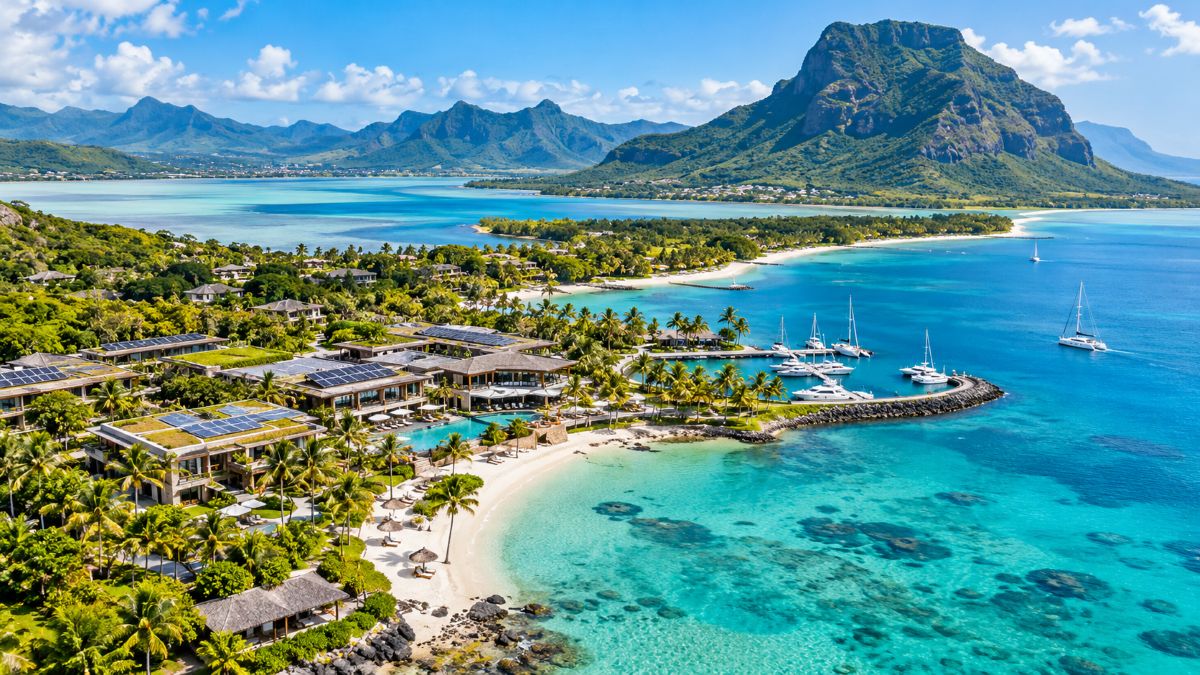
Mauritius leads Africa in economic freedom in 2026, ahead of Seychelles and Cabo Verde, highlighting investment prospects and tourism opportunities
Mauritius has retained its position as Africa’s most economically free country in the Fraser Institute’s Economic Freedom of the World 2026 report, ranking ninth globally with a score of 7.97. Seychelles and Cabo Verde follow among the continent’s strongest performers, highlighting differences in economic institutions, commercial regulation and international trade opportunities. Published on 6 October 2026, the report assesses 165 countries and territories, offering an international comparison of the conditions affecting businesses, workers and consumers.
The findings have implications for tourism, travel investment and wider economic development across Africa. Although economic freedom is not a direct measure of tourism performance, predictable regulation, reliable financial systems and international commercial access can influence investor confidence and the expansion of hospitality, transport and other visitor-facing industries. The ranking also highlights substantial differences between African economies, with Mauritius occupying a leading position while Zimbabwe, Sudan and Libya appear at the bottom of the continental list.
How Economic Freedom Is Measured In The 2026 Report
The Fraser Institute evaluates economic freedom through 46 indicators grouped into five principal categories. These cover the size of government, legal systems and property rights, sound money, freedom to trade internationally, and regulation. The assessment considers taxation, state ownership, judicial independence, monetary stability, trade barriers, banking arrangements and labour market rules.
Each indicator receives a score on a scale from zero to ten, with higher scores representing greater economic freedom. The indicators are combined into category averages, and the five category scores contribute equally to the overall result. This methodology allows countries with different economic structures to be compared through a common framework, although the results do not capture every dimension of development, public welfare or institutional performance.
Mauritius Strengthens Its Position In African Travel And Investment
Mauritius ranks ninth worldwide, with an overall score of 7.97. Its strongest reported results are in sound money, at 9.06, and freedom to trade internationally, at 8.76. These results place the island nation ahead of every other African economy assessed in the report.
For the tourism industry, the broader economic environment matters because hotels, restaurants, airlines, tour operators and transport providers depend on investment, access to financial services and the ability to trade across borders. Mauritius has an established international visitor economy, and its position in the ranking offers additional context for understanding its wider business environment. However, the report does not establish that economic freedom alone determines visitor arrivals, hotel occupancy or tourism revenue.
Seychelles And Cabo Verde Follow The Continental Leader
Seychelles ranks second in Africa and 35th globally, while Cabo Verde occupies third place on the continent and 42nd worldwide. Both island destinations have significant interests in international tourism, making their business environments relevant to discussions about hospitality investment, transport connectivity and visitor services.
The Gambia ranks fourth in Africa and 68th globally, followed by Botswana in 70th place and Rwanda in 76th. Uganda ranks seventh on the continent, with Kenya eighth. South Africa occupies ninth place in Africa and 87th worldwide, while Morocco completes the continental top ten in 91st position.
These results demonstrate that relatively strong economic freedom is not confined to island economies. Countries across eastern, southern and western Africa also feature prominently, although their economic structures, tourism products and investment requirements differ considerably.
Africa’s Top Ten Economies In The 2026 Ranking
| African Rank | Country | Global Rank |
|---|---|---|
| 1 | Mauritius | 9 |
| 2 | Seychelles | 35 |
| 3 | Cabo Verde | 42 |
| 4 | The Gambia | 68 |
| 5 | Botswana | 70 |
| 6 | Rwanda | 76 |
| 7 | Uganda | 78 |
| 8 | Kenya | 85 |
| 9 | South Africa | 87 |
| 10 | Morocco | 91 |
What The Rankings Mean For Tourism Investment
Economic freedom can influence the conditions under which tourism businesses operate. Investors typically assess taxation, access to credit, contract enforcement, currency stability, import requirements and the predictability of government decisions before committing capital to hotels, resorts, airports and visitor infrastructure.
Countries with reliable institutions and transparent regulations may find it easier to attract long-term investment, although these advantages must be considered alongside other factors. Tourism businesses also require adequate transport infrastructure, skilled workers, dependable electricity, effective destination marketing and environmental protection.
For Mauritius, Seychelles and Cabo Verde, the rankings provide a useful starting point for examining investment conditions in established island tourism markets. Other African destinations can draw lessons from the importance of predictable regulation and international trade access, while adapting policies to their own economic circumstances.
Lower-Ranked Countries Face Different Economic Challenges
The report places Benin 99th globally, Senegal 100th and Namibia 101st. Nigeria ranks 103rd, Tanzania 104th and Mozambique 105th. Farther down the continental list, Cameroon ranks 139th, Angola 150th and the Democratic Republic of the Congo 156th.
Egypt ranks 157th globally, followed by Malawi at 158th and Algeria at 159th. Libya occupies 162nd place, Sudan 163rd and Zimbabwe 164th, placing these three countries at the bottom of the African ranking.
These results indicate differences across the institutional and regulatory factors assessed by the index. They should not, however, be interpreted as a complete assessment of national economic potential or tourism appeal. Countries with lower scores may still possess significant cultural attractions, natural resources and opportunities for development, while investment decisions require a more detailed examination of local conditions.
Global Leaders Provide A Wider Economic Context
Hong Kong leads the worldwide ranking with a score of 8.53. Switzerland follows, ahead of Singapore, New Zealand and the United States. Their positions provide an international reference point for the African results.
The Fraser Institute report also identifies a relationship between higher economic freedom and indicators of prosperity, political and civil liberties, and life expectancy. Its explanation emphasises the potential benefits of allowing individuals and businesses greater scope to establish enterprises, work, save and exchange goods and services.
Such associations do not necessarily prove that economic freedom alone causes better outcomes. Education, healthcare, political stability, infrastructure, public administration and historical circumstances can also influence national prosperity. For tourism policymakers, the ranking is therefore best understood as one source of evidence rather than a comprehensive measure of destination competitiveness.
Economic Policy Remains Important For Africa’s Tourism Future
Africa’s tourism prospects depend on more than natural attractions and cultural heritage. Countries also need efficient border procedures, reliable transport networks, appropriate investment frameworks and effective public institutions. Improvements in these areas can help destinations attract visitors and encourage businesses to invest in accommodation, experiences and supporting services.
Mauritius’s leading position highlights the importance of examining the relationship between economic institutions and commercial opportunity. Seychelles and Cabo Verde also demonstrate how smaller economies can achieve comparatively strong positions within an international assessment.
Nevertheless, each destination must address its own constraints. Policymakers need to balance private investment with consumer protection, labour standards, environmental sustainability and access to essential public services. The 2026 ranking offers a comparative framework for that discussion, but the long-term benefits will depend on how governments translate economic policy into practical improvements for residents, businesses and visitors.
Frequently Asked Questions
1. Which African country ranks highest for economic freedom in 2026?
Mauritius leads Africa, ranking ninth globally with an overall score of 7.97 in the Fraser Institute’s 2026 report.
2. Which African countries rank second and third?
Seychelles ranks second in Africa and 35th worldwide, followed by Cabo Verde in third place in Africa and 42nd globally.
3. Which organisation publishes the Economic Freedom of the World report?
The Fraser Institute, a Canadian public policy research organisation, publishes the annual Economic Freedom of the World report.
4. How many countries and territories does the 2026 report assess?
The report covers 165 countries and territories.
5. What factors determine a country’s economic freedom score?
The assessment considers government size, legal systems and property rights, sound money, international trade freedom and regulation, using 46 indicators.
6. How does economic freedom relate to tourism?
Economic freedom can influence investment conditions, business operations and international trade, potentially affecting tourism development. It does not independently determine visitor numbers or tourism revenue.
7. Which African country ranks fourth in economic freedom?
The Gambia ranks fourth in Africa and 68th globally in the 2026 assessment.
8. Where do Kenya and South Africa rank?
Kenya ranks eighth in Africa and 85th worldwide, while South Africa ranks ninth in Africa and 87th globally.
9. Which African countries occupy the lowest positions?
Zimbabwe ranks 164th globally, Sudan 163rd and Libya 162nd, placing them at the bottom of the African ranking.
10. Does a high economic freedom ranking guarantee economic prosperity?
No. The ranking measures selected economic institutions and policies. Prosperity also depends on factors such as education, infrastructure, healthcare, political stability and the effectiveness of public institutions.
The post Mauritius Links Up With Seychelles And More To Boost Travel As Africa’s Economic Freedom Rankings Reveal Major Gaps appeared first on Travel and Tour World




































































