
















South Korea Launches Public Design Festival 2026 at 230 Venues Nationwide, Showcasing Creative Experiences in Seoul, Jeju and Beyond
-
Travel, Culture
-
-
13 mins
-
Travel and Tour World
-
Samadrita Mukherjee
-

South Korea's Public Design Festival 2026 opens at 230 locations from 23 October, featuring art, exhibitions, tours and workshops.
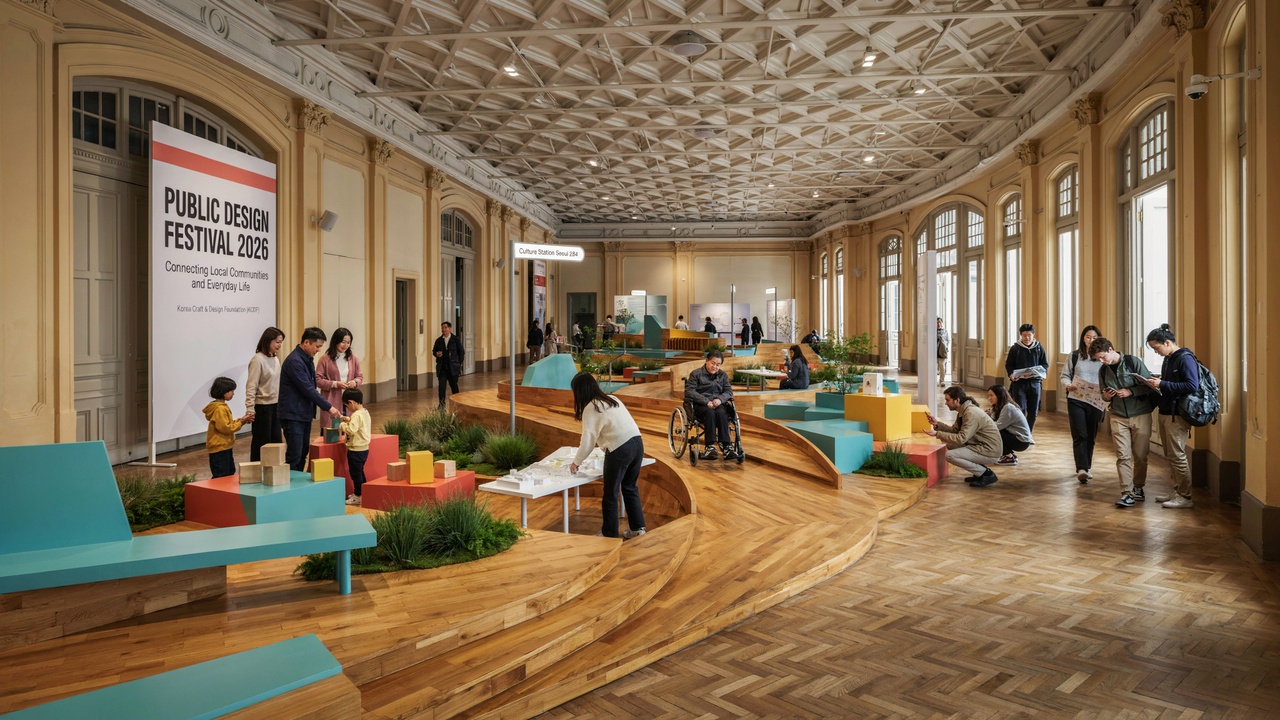
South Korea is preparing to transform public spaces into centres of creativity, community participation and cultural exploration as Public Design Festival 2026 opens on 23 October and runs until 1 November. Organised by the Ministry of Culture, Sports and Tourism and the Korea Craft & Design Foundation (KCDF), the ten-day nationwide event will bring exhibitions, workshops, guided tours, lectures and interactive programmes to a record 230 participating locations. With Culture Station Seoul 284 serving as a principal venue, the festival offers international visitors opportunities to discover South Korean cities through innovative architecture, accessible public spaces and community-led design projects.
Now entering its fifth edition, the event carries the theme “Public Design Connecting Local Communities and Everyday Life”, highlighting how design can improve ordinary spaces, make neighbourhoods safer and create more inclusive public environments.
Unlike conventional exhibitions centred on galleries and museums, the festival extends into libraries, community facilities, streets and previously underused urban areas. Its nationwide programme enables residents and visitors to examine how design can influence the way people move, interact and experience everyday surroundings.
The 2026 edition marks the event’s largest geographical reach, expanding from 101 participating locations in its inaugural year to 230 across the country.
South Korea Public Design Festival 2026 Expands to a Record 230 Locations
South Korea’s Ministry of Culture, Sports and Tourism confirmed on 22 October that Public Design Festival 2026 will operate from Friday, 23 October, to Sunday, 1 November.
The government is working with the Korea Craft & Design Foundation to deliver exhibitions, educational activities and public participation programmes.
The festival is designed to demonstrate how creative planning can improve everyday experiences rather than simply produce visually attractive buildings or objects.
Participating locations include public institutions, cultural spaces, libraries and neighbourhood projects.
A central objective is to encourage visitors to recognise the role of design in making public spaces more accessible, welcoming and useful.
The nationwide format distinguishes the festival from cultural events concentrated in a single city.
Key Details of Public Design Festival 2026
| Category | Event information |
|---|---|
| Event | Public Design Festival 2026 |
| Country | South Korea |
| Opening date | 23 October 2026 |
| Closing date | 1 November 2026 |
| Duration | 10 days |
| Edition | Fifth |
| Main venue | Culture Station Seoul 284 |
| Participating locations | 230 nationwide |
| Locations hosting organised programmes | 61 |
| Announced programmes | 46 |
| Theme | Public Design Connecting Local Communities and Everyday Life |
| Organiser | Ministry of Culture, Sports and Tourism |
| Co-organiser | Korea Craft & Design Foundation |
| Main activities | Exhibitions, workshops, lectures, tours and markets |
| International design forum | 29 October 2026 |
| Public Design Awards ceremony | 23 October 2026 |
| Closing date for special exhibition | 1 November 2026 |
The scale of the event creates opportunities for travellers interested in architecture, cultural tourism and contemporary Korean society.
Visitors should note that not every participating location will host a scheduled workshop or exhibition. Programme availability and operating hours vary.
Seoul’s Historic Culture Station 284 Becomes the Festival’s Main Attraction
Culture Station Seoul 284 will serve as a principal venue for the festival, bringing contemporary design activities into one of the capital’s distinctive historic buildings.
Located at the former Seoul Station, the cultural complex provides an architectural setting for exhibitions and public events.
Its historic identity gives visitors an opportunity to observe the relationship between heritage preservation and modern cultural use.
The building originally functioned as an important railway station before being restored and adapted into a cultural venue.
During the festival, it will host the opening ceremony, public design award presentations, the special exhibition Design of Care and an academic conference.
For international visitors already exploring central Seoul, the location offers an additional cultural stop connected to the country’s changing approach to urban design.
The event also illustrates how existing infrastructure can acquire new functions without losing its historical significance.
Rather than treating architectural heritage and contemporary design as separate subjects, the festival brings them together within an established cultural landmark.
Festival Growth Reflects South Korea’s Expanding Interest in Public Design
The growth in participating locations demonstrates the increasing geographical reach of the annual event.
The festival began in 2022 with 101 participating locations. The number has since expanded through successive editions.
Official KCDF records identify 185 participating locations in 2024 and 206 in 2025.
For 2026, the figure has reached 230, representing a new high.
Expansion of Public Design Festival Locations
| Festival year | Participating locations | Status |
|---|---|---|
| 2022 | 101 | Historical inaugural edition |
| 2024 | 185 | Historical |
| 2025 | 206 | Historical |
| 2026 | 230 | Announced current edition |
The number of locations has more than doubled compared with the festival’s first year.
This expansion indicates that participation is no longer limited to a small number of prominent cultural institutions.
Community organisations, local authorities and regional facilities are becoming part of a wider national network.
For cultural tourism, the growing network means that visitors can discover design projects in different settings rather than relying exclusively on exhibitions in Seoul.
However, the number of participating locations should not be confused with visitor attendance. No confirmed total attendance figure for the 2026 festival is available before the event begins.
Public Design Brings Safer Streets, Accessible Facilities and Better Community Spaces
A central theme of the festival is the wider meaning of public design.
The concept extends beyond the appearance of benches, buildings, transport facilities and streets.
It includes the way spaces function, how people navigate them and whether they are accessible to individuals with different needs.
One important aspect is universal design, which seeks to make environments usable by people regardless of age, disability or other personal characteristics.
Another concerns safety-oriented design, including approaches intended to discourage crime and improve the experience of residents.
Public design can also involve neighbourhood participation, helping communities identify problems and work towards practical improvements.
These ideas are relevant to visitors because accessibility, pedestrian movement, signage and the quality of public facilities influence the overall experience of a destination.
The festival will demonstrate how these principles operate through real projects rather than relying solely on theoretical presentations.
Seoul, Uijeongbu and Cheongju Showcase Innovative Community Design Projects
Among the 230 participating locations are several examples of buildings and public spaces serving new community purposes.
The One-Person Household Community Center in Gangnam-gu, Seoul, demonstrates an approach to services for people living alone.
Uijeongbu Art Library, located in Gyeonggi Province, represents a different model of public cultural infrastructure, combining library functions with art-related experiences.
In Cheongju, North Chungcheong Province, Osong Seonha Maru makes use of space beneath railway tracks.
This project illustrates how land that might otherwise remain underused can become part of a community environment.
Selected Public Design Festival Locations
| Location | City or region | Main significance |
|---|---|---|
| Culture Station Seoul 284 | Seoul | Main festival venue and exhibitions |
| One-Person Household Community Center | Gangnam-gu, Seoul | Community facilities for single-person households |
| Uijeongbu Art Library | Uijeongbu, Gyeonggi Province | Public library and cultural design |
| Osong Seonha Maru | Cheongju, North Chungcheong Province | Reuse of space beneath railway infrastructure |
| Onyang Folk Museum | Asan, South Chungcheong Province | Children’s resource-circulation market |
| JCC Art Center | Seoul | International public design forum |
These locations offer different perspectives on how public facilities can meet changing community needs.
They also highlight the importance of regional participation in South Korea’s cultural programming.
Cheongju and Seogwipo Introduce Guided Public Design Experiences
Among the festival’s most accessible activities are guided programmes encouraging participants to explore design projects across different neighbourhoods.
The Cheongju Public Design Tour will introduce visitors to five participating locations in the city.
In Seogwipo, on Jeju Island, A Downtown Stroll Through Art will connect three participating locations through an urban exploration programme.
These activities shift attention from individual exhibitions to the wider character of the surrounding city.
Instead of viewing public design as an isolated object, visitors can consider how different spaces function together.
Guided exploration may be particularly interesting for travellers who enjoy architecture, urban history and neighbourhood culture.
Selected Visitor Activities
| Programme | Location | Main activity |
|---|---|---|
| Cheongju Public Design Tour | Cheongju | Visits to five participating locations |
| A Downtown Stroll Through Art | Seogwipo, Jeju | Visits to three participating locations |
| Sprout Market | Asan | Children’s resource-circulation market |
| Mobile stamp programme | Nationwide | Digital collection at participating locations |
| Public Design Lab | Eight universities nationwide | Testing ideas addressing everyday problems |
| International Public Design Forum | Seoul | Discussions on digital technology and design |
The organisers have announced 46 programmes across 61 participating locations.
Activities will include practical experiences, lectures and markets.
Some programmes may require advance registration, making it important to check the official timetable before travelling.
International Experts Gather in Seoul for Digital and Public Design Forum
A major professional event will take place on 29 October at JCC Art Center in Seoul.
The Public Design Forum will explore the theme “Digital and Public Design: New Ways of Experiencing.”
Twelve experts from South Korea and abroad are scheduled to participate.
The forum will examine how digital technologies influence people’s interaction with public spaces and design systems.
The programme is relevant to architects, urban planners, designers, researchers, government officials and others interested in the relationship between technology and everyday environments.
Official event information schedules the forum from 14:00 to 17:30 local time.
The published arrangements also identify a field visit programme and a shuttle service connected with the event. Participants should consult the organiser’s registration instructions for the relevant arrangements.
International professionals attending the event should confirm registration availability and language arrangements rather than assume that all sessions will offer interpretation.
Eight Universities Join Nationwide Public Design Lab Programme
The Public Design Lab introduces an educational dimension to the festival.
Eight universities across South Korea will participate in a programme focused on testing practical solutions to everyday problems.
The initiative encourages students and other participants to explore design beyond the classroom.
Rather than treating design as an exclusively artistic exercise, the programme focuses on situations encountered by communities.
This approach connects higher education with public spaces and everyday services.
Testing ideas in real environments can also help participants understand the challenges involved in moving from a design proposal to a practical application.
For international visitors interested in design education, the programme provides an example of how South Korean institutions are connecting academic work with community needs.
The announced information does not establish that every university activity will be open to walk-in visitors. Attendance arrangements should be checked individually.
Children’s Sprout Market Highlights Sustainability and Resource Circulation
A family-oriented programme will take place at Onyang Folk Museum in Asan, South Chungcheong Province, on 24 October.
Known as Sprout Market, the activity will involve children in a resource-circulation market.
The programme introduces ideas connected with reuse and responsible resource management.
By involving children directly, the event offers a practical approach to discussing sustainability.
The museum setting also provides a connection between cultural learning and contemporary environmental concerns.
Families visiting the Asan area during the festival may find the activity relevant to younger travellers.
However, participation conditions and any required registration should be confirmed with the organiser.
The announcement does not establish a universal admission price or guarantee that all activities are available without booking.
South Korea Introduces Mobile Stamp Collection Across Festival Locations
The festival will also include a mobile stamp-collection programme encouraging participants to visit designated locations.
Visitors can collect digital stamps on their phones as they explore participating public design hubs.
The programme adds an interactive element to the nationwide event.
It also provides an incentive to discover more than one location, linking separate cultural and community spaces through a shared activity.
The organisers have not established in the supplied announcement that completing a particular number of stamps guarantees a prize.
Participants should therefore check the official programme conditions for any rewards, eligibility restrictions or technical requirements.
For international visitors, mobile participation may provide a convenient way to organise visits, provided the required service is accessible on their devices.
Presidential Award Recognises Seoul’s Community Safety Design Project
The opening ceremony on 23 October will include the presentation of the 2026 Korea Public Design Awards.
Seventeen winning works will receive recognition, while three local government officials will be honoured for contributions to public design.
The Presidential Award will be presented to the Hangangno-dong Living Safety Design Project in Yongsan-gu, Seoul.
The project was developed through Yongyong Lab, a resident-participation living lab that brought community members, the district office and police together.
Participants worked on solutions to neighbourhood problems involving noise, illegal rubbish disposal and parking.
The project illustrates a form of public design that focuses on everyday concerns rather than purely visual improvements.
Its recognition also highlights cooperation between residents and public institutions.
The award-winning project provides a practical example of how design processes can help communities identify and address shared problems.
Design of Care Exhibition Brings Award-Winning Projects to Culture Station Seoul 284
Visitors to the festival’s main venue will have an opportunity to explore the Design of Care special exhibition.
The exhibition will feature winning works from the project category of the 2026 Korea Public Design Awards.
It will run through 1 November, coinciding with the festival’s closing date.
The exhibition presents public design through the perspective of care, accessibility and community wellbeing.
It also gives visitors the opportunity to consider how design decisions influence everyday experiences.
A related academic conference will take place at Culture Station Seoul 284 on 24 October.
The conference will present the results of award-winning research projects and bring together relevant professional and academic organisations.
According to the official event programme, the conference is scheduled from 10:30 to 16:00.
These activities offer two different ways to engage with the subject, combining public-facing exhibitions with professional discussions.
Why This Matters
Public Design Festival 2026 broadens South Korea’s cultural tourism offering by encouraging people to experience cities through everyday places, rather than only conventional visitor attractions.
Its expansion to 230 locations reflects increasing participation by public institutions, local communities and regional organisations.
The event also highlights South Korea’s interest in improving accessibility, urban safety and the reuse of existing infrastructure.
For international visitors, the programme creates opportunities to discover neighbourhoods and cultural facilities that may receive less attention in standard sightseeing itineraries.
For local communities, it provides a platform to present projects addressing practical needs.
The festival’s professional discussions and university activities also connect public participation with research, planning and emerging technologies.
However, the event’s long-term social or economic impact cannot be measured solely by the number of participating locations. Such conclusions would require subsequent evaluation.
What Travellers Should Know
International visitors planning to attend Public Design Festival 2026 should consider the geographical spread of its programme.
The ten-day event takes place nationwide, meaning activities are not concentrated at one exhibition centre.
Culture Station Seoul 284 provides a central starting point for visitors in Seoul, while regional programmes offer additional experiences elsewhere.
Before Booking
- Confirm the festival dates of 23 October to 1 November 2026.
- Select the participating locations most relevant to the itinerary.
- Check individual opening hours and programme schedules.
- Confirm whether guided tours, forums and workshops require advance registration.
- Review public transport arrangements for regional locations.
- Verify accessibility information for individual venues.
- Check any admission charges or participation conditions.
- Confirm current immigration and visa requirements for entry into South Korea.
The official festival programme and Korea Craft & Design Foundation notices provide event details and registration guidance.
Not all activities necessarily follow the same operating schedule, and some may have limited capacity.
Important Dates for Festival Visitors
| Date | Event | Location |
|---|---|---|
| 23 October 2026 | Opening ceremony and Korea Public Design Awards | Culture Station Seoul 284 |
| 24 October 2026 | Sprout Market | Onyang Folk Museum, Asan |
| 24 October 2026 | Public Design Awards academic conference | Culture Station Seoul 284 |
| 29 October 2026 | International Public Design Forum | JCC Art Center, Seoul |
| 23 October–1 November 2026 | Nationwide exhibitions and participation programmes | 230 locations |
| Until 1 November 2026 | Design of Care exhibition | Culture Station Seoul 284 |
| 1 November 2026 | Festival closes | Nationwide |
Frequently Asked Questions
When will Public Design Festival 2026 take place?
The festival runs from 23 October to 1 November 2026, covering ten days of exhibitions, educational programmes and community activities.
Where will the festival be held?
The programme will take place at Culture Station Seoul 284 and 230 participating locations across South Korea, including venues in Seoul, Cheongju, Uijeongbu, Asan and Jeju.
Can international tourists attend Public Design Festival 2026?
The event is designed for public participation, including international visitors. Individual workshops, forums and guided activities may have registration or capacity requirements.
How many programmes are scheduled?
The organisers have announced 46 programmes hosted across 61 participating locations, alongside the wider network of 230 festival hubs.
Is advance registration required for every activity?
The organisers have not announced a single registration rule covering every activity. Visitors should consult individual programme instructions before attending.
South Korea’s Nationwide Design Festival Opens a New Window Into Local Culture
Public Design Festival 2026 will bring together residents, designers, researchers, public institutions and visitors across South Korea for ten days of cultural and community activities.
Its record participation demonstrates the event’s increasing reach, while its focus on everyday spaces gives the programme a distinctive identity within the country’s cultural calendar.
From Seoul’s historic railway architecture to transformed spaces beneath railway tracks in Cheongju, the festival presents design as something people encounter throughout their daily lives.
For international travellers, the event offers an alternative way to explore South Korea, combining familiar destinations with lesser-known community projects and urban environments.
The festival begins on 23 October, with its principal exhibitions, public programmes and professional events continuing until 1 November 2026.
The post South Korea Launches Public Design Festival 2026 at 230 Venues Nationwide, Showcasing Creative Experiences in Seoul, Jeju and Beyond appeared first on Travel and Tour World




































































