










Northwest wildfire season surpasses 1 million acres burned as major fires continue to spread
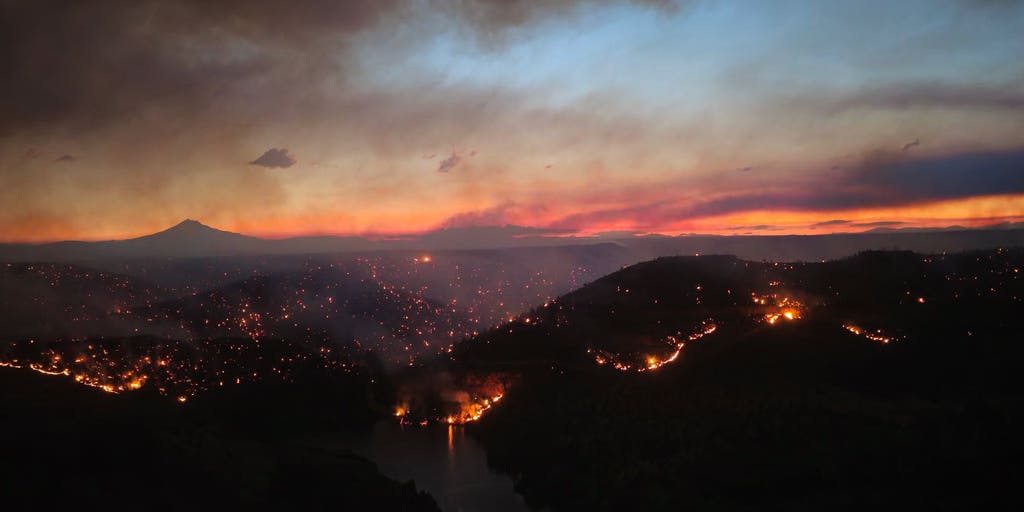

The Pacific Northwest is enduring a record-breaking wildfire season, with more than one million acres burned before August's climatological peak. Many of the region's largest wildfires remain active, with some spreading across state lines.
NORTHWEST – Unprecedented wildfires continue to rage across the Northwest during a record-breaking fire season, fueled by prolonged heat, dry conditions and persistent fire weather, scorching the region and sending thick smoke across much of the U.S., degrading air quality in numerous states.
The Pacific Northwest is in the midst of a record-breaking wildfire season, with more than one million acres already burned before the region's climatological peak of fire season in August. Many of the largest and most destructive wildfires are still actively burning and even spreading across state lines.
Many of the Pacific Northwest's largest wildfires share a common origin: lightning.
A series of dry thunderstorms swept across the Pacific Northwest in mid-July, producing thousands of lightning strikes that ignited dozens of wildfires that thousands of firefighters spread across the region continue to battle.
Dangerous fire weather ranging from hot temperatures, dry vegetation, low humidity and gusty winds allowed the lightning-sparked fires to spread rapidly across the region.
THE TOP 10 WORST STATES FOR BATTLING MOSQUITOS THANKS TO HEAT AND HUMIDITY
According to the National Interagency Fire Center, the Northwest is currently battling more than 45 active large fires that have collectively burned over 1.6 million acres. The majority of them (31) are in Oregon alone.
To combat this massive outbreak, thousands of firefighters and support personnel have been deployed to the region, severely straining national resources.
The flames aren't the only threat. Thick wildfire smoke is spreading far beyond the burn, degrading air quality across large portions of the U.S.
Parts of Oregon, Washington, Idaho and Montana continue to endure hazardous air quality, while smoke has reached as far east as North Dakota.
In some areas, air quality remains firmly in the "Very Unhealthy" category as massive wildfires continue to churn out dense plumes of smoke.
The surge in wildfire activity prompted the NIFC to raise the nation to Preparedness Level 5 — the highest level on the five-tier scale —on July 18.
The designation remains in effect until wildfire activity and the demand for crews, aircraft and equipment decline nationwide.
WILDFIRE SMOKE FROM THE NORTHWEST SWEEPS ACROSS THE US TO MID-ATLANTIC AND SOUTHEAST
The wildfire threat is far from over. Fire Weather Watches have been issued for portions of interior Washington, northern Idaho and western Montana on Saturday as a dry cold front sweeps through the region.
DEW POINT VS. HUMIDITY: WHICH ONE IS A BETTER MEASURE OF HOW MUGGY THE AIR FEELS?
Relative humidity as low as 15% to 25%, combined with wind gusts of 45 to 50 mph, could allow new and existing wildfires to grow and spread rapidly.
The nation's largest wildfire has exploded to more than 300,000 acres, spreading from southwestern Oregon into Idaho less than a week after it ignited on July 23.
As of Wednesday, the Big Grass Fire had scorched 301,000 acres and was 15% contained as extreme fire behavior, fueled by gusty afternoon winds, continued to drive rapid fire growth, according to the Bureau of Land Management.
While the fire is racing across miles of dry grasslands and sagebrush, fuel that allows flames to spread with remarkable speed, it continues to threaten rural communities, ranches and critical infrastructure on both sides of the Oregon-Idaho border.
DROUGHT EMERGENCY AT LARGEST NATIVE AMERICAN RESERVATION IN THE US COULD CREATE RIPPLE EFFECT
Multiple communities across Owyhee County, Idaho, remain under mandatory evacuation orders as the nation's largest wildfire threatens more than 350 homes and continues to spread under dangerous fire weather conditions.
Officials said an aggressive full-suppression strategy is underway to protect threatened communities, critical infrastructure and other valuable resources as hundreds of firefighters continue battling the blaze.
Firefighters from across the Pacific Northwest have joined forces in a multi-agency response led by the Bureau of Land Management, with Oregon and Idaho agencies working together to protect communities threatened by the Big Grass Fire.
WHY DRY THUNDERSTORMS POSE WILDFIRE, DUST STORM RISKS
After spreading into Idaho, Governor Brad Little signed a disaster emergency declaration Tuesday to support ongoing wildfire suppression efforts, authorizing Natural Guard resources to combat the growing blaze.
"Idaho's brave firefighters are working around the clock to protect lives, homes and communities under extremely challenging conditions. My declaration taps into additional state resources and enables us to deploy the Idaho National Guard to support firefighting efforts and protect Idahoans," Governor Little said.
The post Northwest wildfire season surpasses 1 million acres burned as major fires continue to spread appeared first on Fox Weather