



America's Founding Fathers plotted revolution over drinks at these historic taverns

Revolutionary-era taverns where the Founding Fathers gathered still operate today, offering visitors a chance to walk in the footsteps of history.
Some of the ideas that fueled the American Revolution were discussed over drinks.
An important part of colonial life, taverns gave people a place to gather, exchange news and debate politics. Many became meeting places for the Founding Fathers and other revolutionaries as tensions with Britain grew.
Some of these taverns — like the Green Dragon Tavern in Boston — have been lost to time.
GEORGE WASHINGTON'S 1757 BEER RECIPE BROUGHT BACK TO LIFE AHEAD OF AMERICA'S 250TH BIRTHDAY
However, there are still a handful of important Revolutionary-era taverns that operate today as museums, taverns or both.
Below are a few taverns where you can walk — and perhaps grab a drink — while following in the footsteps of the Founding Fathers.
Located in the Financial District, Fraunces Tavern was built in 1719 — a rare remnant of the 18th century in New York City.
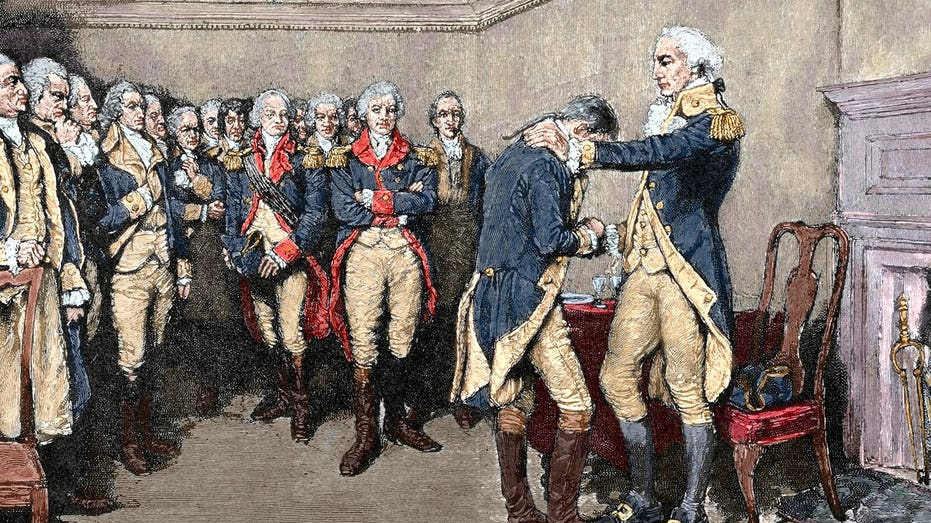
The tavern is best known as the site of George Washington's famous farewell to his officers in 1783, and it operates as a restaurant, bar and museum today.
"Fraunces Tavern is a historic landmark and the oldest and most historic bar in the city," the tavern's website states.
HOW TAVERNS, ALE AND HEARTY MEALS FUELED AMERICA'S FIGHT FOR INDEPENDENCE AMID CONTINENTAL CONGRESS
"Listed on the National Register of Historic Places, the tavern is a New York City landmark that once served as a watering hole for many of the Founding Fathers of the United States of America."
The tavern serves dishes such as New England clam chowder, fish and chips, steak and burgers, as well as cocktails, beer, wine and whiskey.
The Raleigh Tavern, founded in 1717, became one of Virginia's most important gathering places in the years leading up to the American Revolution.
CLICK HERE TO SIGN UP FOR OUR LIFESTYLE NEWSLETTER
When Virginia's royal governor dissolved the House of Burgesses in 1774, colonial lawmakers gathered at the tavern instead.
George Washington, Thomas Jefferson, Patrick Henry and George Mason were among the colonial leaders associated with the tavern, which Colonial Williamsburg's website describes as a once "one-stop shop" for travelers passing through the city.
"It provided guests with lodging, food, drink, entertainment and a stable for their horses," the site states. "Those staying overnight at the Raleigh Tavern slept in one of its dozens of beds, or on the floor, usually alongside other lodgers."
CLICK HERE FOR MORE LIFESTYLE STORIES
The reconstructed Raleigh Tavern is open to visitors as part of Colonial Williamsburg, where guests can explore the building today.
"The stage for much of Virginia's revolutionary drama, some of the most fateful conversations of the American Revolution happened in the Raleigh Tavern's Apollo Room," the site says.
Buckman Tavern served as a hub of community life in colonial Massachusetts, according to the Lexington History Museums website.
"Built in 1710, Buckman Tavern was a gathering place for both locals and travelers, and the site of many important town meetings," the website notes.
In the early morning hours of April 19, 1775, Capt. John Parker and his militia assembled at the tavern before confronting British Redcoats on Lexington Green, according to the site. The confrontation marked the opening of the Battles of Lexington and Concord.
TEST YOURSELF WITH OUR LATEST LIFESTYLE QUIZ
The tavern continued operating after the American Revolution before later being repurposed several times and eventually becoming a museum.
Today, guests can visit Buckman Tavern to learn about Lexington residents before, during and after the American Revolution, as well as view 18th-century artifacts.
The post America's Founding Fathers plotted revolution over drinks at these historic taverns appeared first on FOX News Media