
















Egypt Advances Suez Canal on Rails to Link Red Sea and Mediterranean, Opening New Opportunities for Tourism and Regional Connectivity
-
Travel, Religion
-
-
13 mins
-
Travel and Tour World
-
Samadrita Mukherjee
-

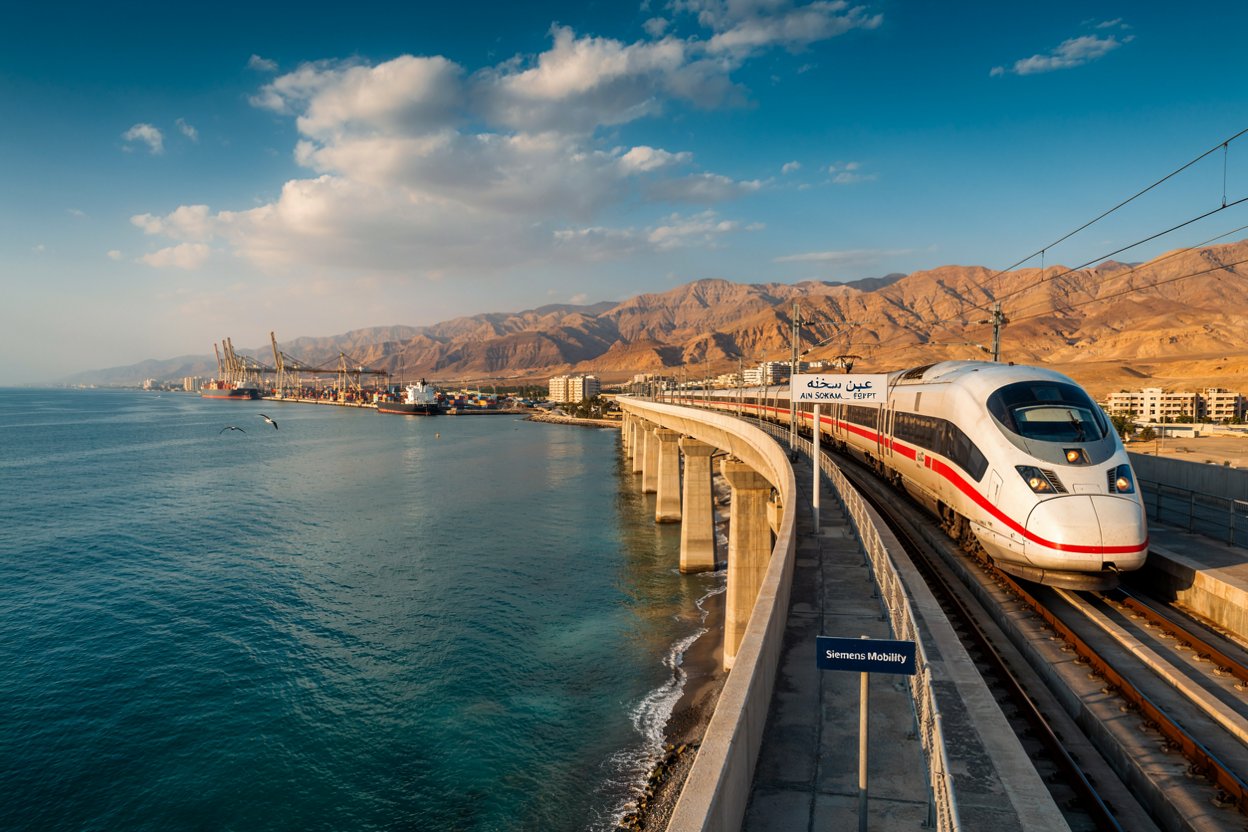
Egypt advances its 2,000km electric railway, linking Red Sea ports, Mediterranean cities and tourism destinations amid shipping disruption.
Egypt is accelerating development of its nationwide high-speed electric railway network, designed to connect Red Sea ports with Mediterranean gateways while improving passenger transport and providing an overland alternative for freight affected by regional shipping disruptions. Highlighted in an October 2026 report, the approximately 2,000-kilometre project includes a 660-kilometre first line connecting Ain Sokhna, Alexandria, New Alamein and Marsa Matrouh. Known as the Suez Canal on Rails, the programme combines freight infrastructure with passenger services intended to support tourism, regional connectivity and economic development. Construction remains under way, and a complete commercial passenger timetable has not been confirmed.
Why Is Egypt Developing an Overland Alternative to the Suez Canal?
Egypt’s railway investment has gained renewed importance as instability around the Red Sea affects international maritime routes.
The Suez Canal traditionally provides one of the world’s most important maritime connections between Asia, Europe and other international markets.
However, regional security concerns have prompted shipping companies to reconsider routes through the Red Sea.
Some vessels have travelled around Africa’s Cape of Good Hope instead, adding distance and operating costs to international journeys.
The disruption has also affected Egypt’s canal revenues, demonstrating the financial importance of maintaining reliable transport connections.
The proposed railway provides another way to move selected cargo between the Red Sea and Mediterranean.
Rather than requiring every shipment to remain aboard a vessel passing through the canal, freight could potentially be unloaded at a Red Sea port, transferred by train and reloaded at a Mediterranean port.
Such arrangements are commonly described as land bridges.
They can give logistics companies alternatives when conventional maritime routes become less attractive.
However, the Suez Canal itself is not completely blocked or closed.
The Suez Canal Authority confirmed in September 2026 that navigation was continuing and some international shipping services were returning.
Egypt’s rail investment should therefore be understood as a complementary transport corridor rather than a replacement for all canal traffic.
What Is Egypt’s Suez Canal on Rails Project?
The Suez Canal on Rails is the name associated with the first major corridor within Egypt’s planned high-speed electric railway network.
The wider network will extend approximately 2,000 kilometres across the country.
According to Siemens Mobility, the project comprises three principal lines linking 60 cities and integrating high-speed passenger trains, regional services and freight operations.
The first railway will connect Ain Sokhna on the Red Sea with Alexandria and Marsa Matrouh on the Mediterranean coast.
The second is planned to connect the Cairo region with Abu Simbel in southern Egypt.
The third will connect the Luxor and Qena region with Red Sea destinations, including Hurghada.
Key Facts About Egypt’s New Railway Network
| Project feature | Officially announced information |
|---|---|
| Country | Egypt |
| Network length | Approximately 2,000 km |
| Principal lines | Three |
| Cities connected | 60 planned |
| First-line length | Approximately 660 km |
| First-line route | Ain Sokhna–Alexandria–New Alamein–Marsa Matrouh |
| Second-line length | Approximately 1,100 km |
| Third line | Luxor/Qena region towards Hurghada and Safaga |
| Passenger train design speed | Up to approximately 230–250 km/h, depending on specification |
| Freight locomotives | 41 planned |
| High-speed trainsets | 41 planned |
| Regional trainsets | 94 planned |
| Main technology supplier | Siemens Mobility |
| Consortium partners | Orascom Construction and The Arab Contractors |
| Project status | Under construction and preparation for testing |
Source: Siemens Mobility and Egypt’s National Authority for Tunnels. Figures describe planned specifications, not achieved operating results.
The railway represents a major expansion of the country’s transport infrastructure.
Unlike a freight-only land bridge, the proposed network will also carry passengers.
This dual-purpose design is important because Egypt intends to improve both international logistics and domestic mobility through the same infrastructure programme.
How Will the 660-Kilometre Red Sea–Mediterranean Railway Operate?
The first line is the central component of Egypt’s land-bridge strategy.
It begins at Ain Sokhna, an important port and coastal destination on the Red Sea.
From there, the railway will run through the New Administrative Capital region and connect with major destinations further west.
The route includes links towards Alexandria, New Alamein and Marsa Matrouh.
According to Egypt’s National Authority for Tunnels, the first line will include 21 stations.
The authority describes eight as regional stations and 13 as high-speed stations.
The corridor has been designed for passenger and freight operations using different types of rolling stock.
High-speed passenger services are designed to operate at up to 250 kilometres per hour, while regional trains have a stated operating speed of 160 kilometres per hour.
Freight services are designed for approximately 120 kilometres per hour.
The authority estimates that the first line could eventually accommodate one million passengers daily and four million tonnes of freight annually.
These are design-capacity figures, not current passenger volumes.
The first line is also expected to improve connections with airports and existing transport systems.
For travellers, the long-term significance lies in the possibility of making journeys between the Red Sea, Cairo region and Mediterranean coast more convenient.
What Is the Current Construction Status in October 2026?
Egypt has been progressing with construction of the railway, including track infrastructure, stations and connections to maritime ports.
The project has not yet entered full commercial operation across the completed network.
On 30 August 2026, Egypt’s State Information Service reported that Transport Minister Kamel El-Wazir inspected the first line ahead of trial operations.
The inspection covered infrastructure between Ain Sokhna and the Central Capital station.
Officials also examined a roughly six-kilometre connection linking Ain Sokhna station with Ain Sokhna Port.
That connection is important because the wider freight strategy depends on moving containers and other cargo efficiently between ports and railway terminals.
The government described the inspection as part of preparations for operational testing.
This does not mean commercial passenger services were already operating along the entire route.
Confirmed Development Milestones
| Date | Development | Status |
|---|---|---|
| September 2021 | Initial high-speed railway programme announced | Historical announcement |
| May 2022 | Siemens consortium finalised major network contract | Contract signed |
| 2022 onwards | Construction and infrastructure development | Implementation phase |
| 30 August 2026 | Transport minister inspected first line | Official construction review |
| August 2026 | Preparations for trial operations reported | Testing preparations |
| October 2026 | Railway highlighted as alternative freight corridor | Development continuing |
| Full commercial operation | Complete network opening | Date not verified |
The project therefore represents infrastructure under development rather than a fully available transport service.
Passengers should avoid treating proposed routes or operating speeds as confirmed public train schedules.
How Could the Railway Strengthen Egypt’s International Trade Network?
The railway’s commercial importance lies in its ability to connect maritime gateways with industrial centres and inland logistics facilities.
Under the planned system, freight arriving at Ain Sokhna could move by rail towards Mediterranean ports, including Alexandria.
This could create an alternative routing option for suitable cargo, particularly when shipping companies face delays or uncertainty along conventional sea routes.
However, transferring containers between ships, trains and terminals involves additional handling.
The rail option would therefore not necessarily be cheaper or faster for every shipment.
Its competitiveness would depend on port efficiency, rail capacity, terminal equipment, pricing and the availability of onward shipping connections.
An October 2026 Africanews report cited an investment figure of approximately $8.7 billion for the railway programme and described potential annual freight capacity of 13 million tonnes.
The 13-million-tonne figure also appears in Egyptian government reporting as a projected capacity for the wider high-speed electric railway network, rather than verified current freight throughput.
Meanwhile, the National Authority for Tunnels identifies four million tonnes annually as the planned freight capacity of the first line.
These figures should not be treated as contradictory measurements of the same operating railway.
They refer to different scopes and remain projected capacities.
What the Freight Figures Mean
| Freight indicator | Figure | Interpretation |
|---|---|---|
| First-line annual capacity | 4 million tonnes | Planned capacity of Ain Sokhna–Matrouh corridor |
| Wider network annual capacity | 13 million tonnes | Government projection for the full network |
| First-line completion | Not confirmed | Commercial capacity not yet demonstrated |
| Actual annual freight carried | Not established | Cannot be equated with projected capacity |
The distinction matters because Egypt’s proposed rail link complements the Suez Canal rather than replicating its enormous maritime carrying capacity.
Freight trains can move selected cargo across the country, but they cannot automatically replace the volume handled by large container ships and other vessels.
The railway’s principal commercial value may instead emerge from providing additional logistical choices.
How Could Egypt’s High-Speed Railway Transform Tourism Between the Red Sea and Mediterranean?
Although international freight has attracted considerable attention, tourism is another important objective of the investment.
Egypt’s National Authority for Tunnels explicitly identifies tourism connectivity as one of the railway network’s intended benefits.
The authority states that the system will help visitors combine Red Sea beach destinations with archaeological, historical and religious attractions within a single itinerary.
This creates possibilities for holiday programmes involving several regions.
The first line is particularly relevant to Ain Sokhna, Alexandria, New Alamein and Marsa Matrouh.
Ain Sokhna is known for its Red Sea coastline and its proximity to the Cairo metropolitan region.
Alexandria offers Mediterranean waterfront attractions alongside historical and cultural sites.
New Alamein and Marsa Matrouh are associated with Egypt’s expanding Mediterranean leisure market.
Improved rail connections could make it easier for travellers to visit more than one of these destinations during a holiday.
For example, a future itinerary might combine time on the Red Sea coast with cultural sightseeing around Cairo and a Mediterranean beach stay.
However, such journeys depend on the eventual commercial timetable, fares and station accessibility.
No verified ticket prices or complete opening dates were available for the planned high-speed passenger services as of 15 October 2026.
Which Egyptian Tourism Destinations Could Benefit From the New Rail Network?
The railway programme covers different parts of the country, meaning its potential tourism benefits extend well beyond the first Red Sea–Mediterranean corridor.
Ain Sokhna: Gateway to the Red Sea
Ain Sokhna is the planned eastern terminus of the first railway line.
Known for its coastal resorts and Red Sea views, the destination could benefit from improved connections to Cairo and Mediterranean cities.
A future passenger service may make it easier for visitors to combine seaside relaxation with cultural and urban attractions.
Alexandria: Egypt’s Mediterranean Heritage Destination
Alexandria is one of the country’s most important historic port cities.
Its coastal setting, cultural landmarks and established hospitality sector make it relevant to both domestic and international tourism.
Improved railway access could support shorter leisure trips and multi-city travel programmes.
Marsa Matrouh: A Growing Mediterranean Holiday Market
Marsa Matrouh is known for its Mediterranean coastline and beaches.
As the western end of the planned first railway corridor, it could benefit from improved access to other parts of northern Egypt.
Better transport links may eventually support greater movement between coastal destinations.
Luxor: Ancient Heritage Meets Modern Rail Connectivity
Luxor is internationally recognised for its archaeological attractions, including Karnak Temple and the Valley of the Kings.
Planned railway connections could strengthen its links with Red Sea resorts and other Egyptian destinations.
Such services could create additional opportunities for cultural tourism itineraries.
Hurghada: Connecting Red Sea Resorts With Upper Egypt
Hurghada is an established destination for beach holidays, diving and water-based tourism.
The proposed third railway corridor would strengthen connections between the Red Sea coast and Upper Egypt.
For travellers, this could eventually provide another option for combining resort holidays with historical sightseeing.
The proposed links could support combinations of cultural tourism, coastal holidays and longer multi-destination itineraries.
However, tourism demand resulting from the network has not yet been established through completed operations.
Why Is the Luxor–Hurghada Connection Important for International Visitors?
The proposed connection between Luxor and the Red Sea is particularly relevant to Egypt’s tourism geography.
Luxor is internationally recognised for its ancient Egyptian archaeological attractions, including Karnak Temple and the Valley of the Kings.
Hurghada, by contrast, is a major coastal destination associated with beaches, diving and resort holidays.
Many visitors currently combine these experiences through road transfers or other arrangements.
A future electrified rail service could provide another transport option between the two tourism regions.
Siemens Mobility’s original network announcement identified a third corridor linking the Luxor area with Hurghada while also supporting freight movements involving Safaga.
Egypt’s National Authority for Tunnels subsequently described a Qena–Safaga–Hurghada section of approximately 175 kilometres.
These descriptions concern the wider planned southern railway network and should not be mistaken for a completed passenger service.
The tourism opportunity is clear, but actual journey times and commercial schedules will need confirmation before operators can design dependable rail-based holiday packages.
What Role Are Siemens Mobility and Egyptian Companies Playing?
Egypt’s high-speed railway is being developed through a consortium involving Siemens Mobility, Orascom Construction and The Arab Contractors.
Siemens Mobility’s contract includes railway systems, rolling stock and a long-term maintenance arrangement.
The announced supply comprises 41 Velaro high-speed trains, 94 Desiro regional trainsets and 41 Vectron freight locomotives.
The company also describes the project as an integrated system incorporating signalling, electrification and digital railway technology.
The original 2022 announcement stated that the completed network would rank among the world’s largest high-speed railway systems.
It also projected substantial employment opportunities during construction.
Those employment figures were forecasts associated with the development programme, not a verified count of jobs already created.
The network is designed to offer an electric alternative to some road transport journeys, with Siemens projecting environmental benefits compared with conventional travel modes.
Actual emissions savings will depend on passenger use, freight utilisation and the electricity mix supplying operations.
Why This Matters
Egypt’s Suez Canal on Rails programme has importance beyond its railway infrastructure.
The project could strengthen the country’s position as a transport gateway between Africa, Asia and Europe while supporting domestic economic development.
For international shipping companies, the planned land bridge offers a potential alternative for selected freight movements during periods of maritime uncertainty.
For travellers, the passenger railway could create more convenient connections between Red Sea resorts, Mediterranean destinations, Cairo and Upper Egypt.
Tourism businesses may eventually be able to design holidays that combine beach experiences with Egypt’s historical attractions using improved rail connections.
There are also potential benefits for domestic mobility and regional economic activity.
However, none of these outcomes should be presented as fully realised.
The network remains under development, and its eventual effects will depend on construction completion, operational reliability, commercial fares and passenger demand.
The railway also does not eliminate the importance of the Suez Canal.
It offers another component in Egypt’s wider transport and logistics system.
What Travellers Should Know
Travellers planning holidays in Egypt should understand that the high-speed railway network is still being developed.
The proposed passenger routes are not yet equivalent to a fully operating national high-speed rail service.
Before Booking
- Check operational status: Do not assume that every planned route is accepting passengers.
- Verify ticket availability: No complete commercial timetable has been confirmed for the wider network.
- Confirm station locations: Major destinations may have stations outside established tourist areas.
- Plan onward transport: Hotel transfers and local journeys may still be necessary.
- Review existing alternatives: Travellers can continue using currently available road, air and conventional rail services.
- Monitor official announcements: Egypt’s National Authority for Tunnels and Ministry of Transport are key sources for operational updates.
International visitors should also continue checking visa and entry requirements separately. The railway development does not change Egypt’s immigration policies.
What Does the Project Mean for African Trade Integration?
Egypt’s transport strategy also has potential significance for regional trade integration.
The African Continental Free Trade Area aims to reduce barriers between participating African economies and encourage greater movement of goods and services.
Egypt’s proposed railway could support this objective by improving access between ports, industrial centres and inland transport networks.
The wider 2,000-kilometre system includes planned links towards southern Egypt, creating opportunities for future connections with neighbouring countries.
However, a domestic railway network does not automatically establish an international freight corridor.
Cross-border transport would require additional infrastructure, customs arrangements, operational coordination and relevant agreements.
The Africanews report highlighted Egypt’s ambition to use infrastructure investment to support wider continental integration.
That ambition remains a strategic objective rather than evidence that the new system is already moving goods between East Africa, North Africa and Europe.
Frequently Asked Questions
1. Is Egypt building a railway to replace the Suez Canal?
Egypt is developing an electrified railway network that includes an overland freight corridor between the Red Sea and Mediterranean. It is intended to complement maritime transport and provide additional routing options, not completely replace the canal.
2. Is the Suez Canal currently closed?
No. The Suez Canal Authority confirmed in September 2026 that navigation was continuing. Regional security disruptions have caused some shipping companies to avoid the route, but the canal itself is not subject to a blanket closure.
3. How long is Egypt’s Suez Canal on Rails project?
The first corridor is approximately 660 kilometres long. The wider three-line high-speed electric railway network is planned to extend around 2,000 kilometres.
4. Will tourists be able to travel between the Red Sea and Mediterranean by high-speed train?
That is one of the project’s planned benefits. The first line will link Ain Sokhna with Alexandria, New Alamein and Marsa Matrouh. Commercial passenger operations and ticket availability must be confirmed before travel.
5. When will Egypt’s new high-speed railway open?
Construction and preparations for trial operations were continuing in 2026. A verified date for full commercial operation across the entire network has not been established.
Closing Update: Egypt’s Railway Investment Could Reshape Trade and Tourism Connectivity
Egypt’s development of a high-speed electric railway linking the Red Sea, Mediterranean coast and southern regions represents one of the country’s most ambitious transport investments.
The Suez Canal on Rails concept has gained additional importance as regional security disruptions demonstrate the vulnerability of international shipping networks.
Yet the railway’s potential extends beyond freight.
By connecting ports, cities, resort areas and historical destinations, the project could also support a more integrated Egyptian tourism economy.
Its first 660-kilometre corridor is designed to provide a land connection between the Red Sea and Mediterranean, while the wider network will extend towards Upper Egypt.
For now, construction progress and planned capacity should be distinguished from completed operations.
The next developments to watch are trial results, confirmed commercial opening dates, passenger schedules and the availability of freight services.
If implemented as planned, the network could provide Egypt with greater transport flexibility while creating additional opportunities for international visitors and businesses.
The post Egypt Advances Suez Canal on Rails to Link Red Sea and Mediterranean, Opening New Opportunities for Tourism and Regional Connectivity appeared first on Travel and Tour World














































































