
















Japan Aligns With UAE, USA, and More for Easier eVISA Tourism Travel Access
-
Travel, Entertainment
-
-
4 mins
-
Travel and Tour World
-
Sriti Das
-


Explore Japan eVISA eligibility, application fees, tourist benefits and travel requirements for eligible international visitors
Japan’s electronic visa system offers international tourists who qualify a more convenient way to obtain a visa prior to entering Japan. For those living in places such as India, UAE, UK, USA and Canada they can choose their preferred application method depending on their nationality and citizenship. There are various advantages to the Japan eVISA such as making it possible to visit Japan for leisure purposes without needing a visa sticker once the eVISA is issued. However, eligibility, application fee and processing requirements must be researched before beginning the travel planning process.
Japan eVISA Eligibility Covers Travellers Living in Multiple Countries
Japan’s Ministry of Foreign Affairs lists nine countries and regions where eligible foreign residents can apply directly through the official JAPAN eVISA website. These include Australia, Brazil, Cambodia, Canada, Saudi Arabia, South Africa, Taiwan, the United Kingdom and the United States. Applicants must require a Japanese short-stay visa and meet the system’s other conditions before applying for tourism travel.
Japan also provides an agency-assisted eVISA route for eligible residents of India, Indonesia, Mongolia, Singapore, the United Arab Emirates, Hong Kong, Macau and South Korea, with an exception concerning Jeju. Separate conditions apply to Chinese, Filipino and Vietnamese applicants. This distinction matters because an electronic visa does not always mean travellers can submit their applications independently online.
India Travellers Can Receive Electronic Visas Through Approved Application Centres
Indian residents have been eligible for Japan’s electronic visa arrangement since 1 April 2024. Eligible Indian citizens and foreign nationals living in India can apply for single-entry tourism visas through Japan Visa Application Centres operated by VFS Global. Applicants must submit the required paperwork and passport through the designated centre, rather than applying directly through the public eVISA website.
The main benefit comes after approval. Instead of receiving a conventional visa sticker inside the passport, successful applicants receive an electronic visa. This supports digital verification during international travel. However, applicants must still follow documentation rules and allow sufficient processing time. The Japanese Embassy advises visitors to plan their journeys well ahead of departure.
Japan eVISA Allows Tourism Visits of Up to Ninety Days
Japan’s electronic visa normally supports single-entry tourism visits lasting up to 90 days. This gives eligible holidaymakers flexibility to explore several destinations during one trip. Visitors can combine busy cities, cultural attractions, mountain scenery and traditional neighbourhoods. However, the actual permitted duration depends on the visa issued, and travellers must not assume every applicant receives the maximum stay.
Important exceptions apply. Chinese nationals residing in China may receive electronic visas permitting stays of 15 or 30 days. Eligible Filipino and Vietnamese nationals applying through the designated package-tour arrangements receive 15-day visas. Japan’s electronic tourism visa also excludes employment, business visits, studies and other purposes requiring different visa arrangements.
Japan eVISA Fees Make Advance Holiday Budgeting Essential
Japan revised its general visa fee schedule on 1 July 2026. For applications accepted under the revised standard schedule, the single-entry visa fee is approximately ¥15,000. Actual charges may vary according to nationality, location and exemptions. Travellers applying through approved agencies may also pay handling charges. The official overseas mission’s published fee always takes precedence over general estimates.
Indian nationals receive a different fee under Japan’s published local schedule. The Embassy of Japan in India lists ₹500 for a single-entry visa for Indian nationals, plus the applicable VFS service fee. Other nationals applying in India face different charges. Tourists should distinguish visa expenses from flight tickets, hotel bookings, travel insurance and sightseeing costs.
Japan eVISA Applications Require Careful Planning Before Flight Bookings
Japan’s standard visa examination period is five working days when officials receive a complete application requiring no additional checks. Nevertheless, applications can take considerably longer during busy periods or when further verification becomes necessary. Japanese authorities may request supporting documents or an interview. A standard processing period therefore does not represent a guaranteed approval date for holidaymakers.
Applicants in India can submit applications up to three months before their intended travel date, according to the Japanese Embassy. Travellers should prepare their passport, application documents and relevant itinerary evidence according to the requirements of their local Japanese mission. Avoid relying on non-refundable flights or accommodation until the visa position becomes clear.
Japan Electronic Visa Holders Must Display Their Approval Online
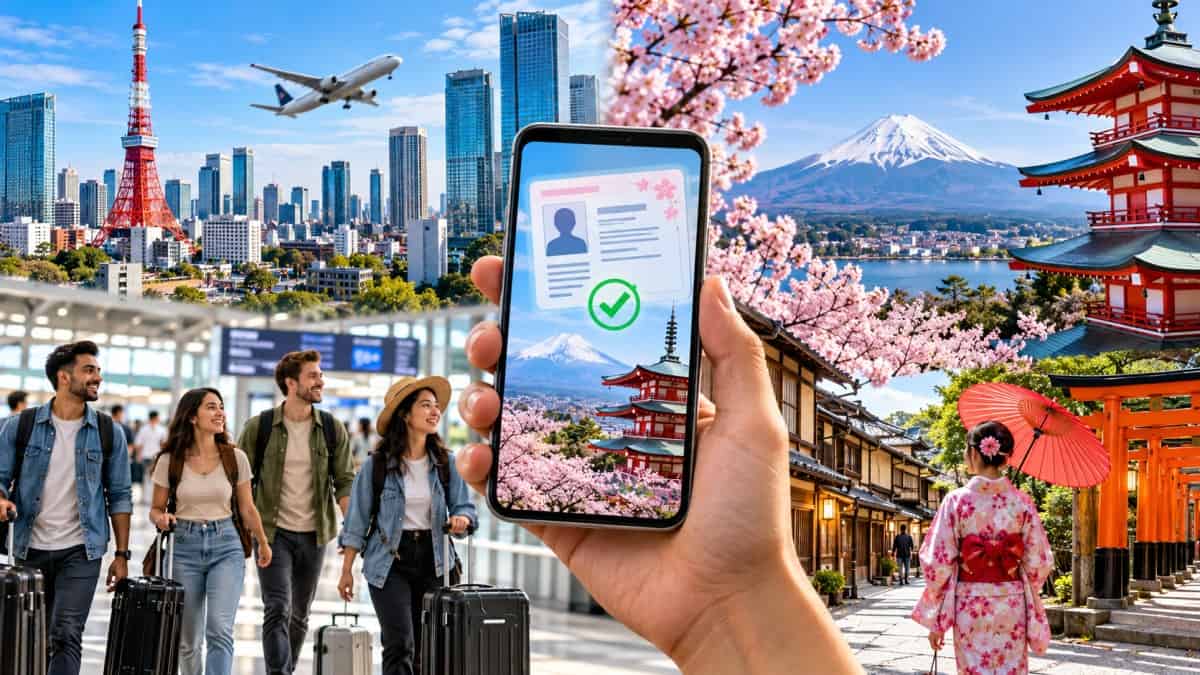
Japan’s electronic visa works differently from a traditional passport sticker. Travellers must display the official Visa Issuance Notice on a smartphone or another suitable device when checking in for their journey. The notice must appear through the appropriate online system with an internet connection. Airlines and other transport operators may check this information before accepting passengers.
Japan does not accept screenshots, downloaded PDF copies or printed versions as substitutes for the required live electronic display. This makes internet access particularly important at departure airports. Travellers should check their device, connection and visa record before leaving home. They must also carry a valid passport and meet Japan’s immigration requirements when arriving in the country.
Japan Visa Exemptions Remain Important for International Tourists
Not every international visitor requires a Japan eVISA. Japan maintains short-stay visa exemption arrangements covering 74 countries and regions under its published exemption list. Eligible passport holders from countries including the United Kingdom, the United States, Canada, Singapore, Malaysia and South Korea may travel without obtaining a tourism visa, provided they meet the applicable entry conditions.
Residence and nationality are therefore two separate considerations. For example, a visa-required foreign national legally residing in the UK may qualify to apply directly through JAPAN eVISA, although a British passport holder may already qualify for visa-free short visits. Travellers should confirm their individual position before paying an agency or submitting unnecessary applications.
Japan Tourism Benefits Extend From City Breaks to Cultural Holidays
Japan’s electronic visa arrangements can make holiday administration more convenient for eligible travellers. Visitors can plan journeys covering Tokyo’s shopping districts, Kyoto’s temples, Osaka’s entertainment areas and quieter regional destinations. The digital visa format reduces dependence on physical visa labels. However, it does not provide discounted airline tickets, free attraction admission or automatic transport benefits.
Holidaymakers must purchase flights, accommodation, intercity rail tickets and admission passes separately. They should compare transport options against their proposed itinerary rather than assuming one national rail pass provides the best value. Appropriate travel insurance can also protect against unexpected medical expenses. Japan’s Ministry of Foreign Affairs strongly recommends international travel medical insurance for overseas visitors.
Japan eVISA Rules Give Tourists Important Information Before Departure
Japan grants eVISA for its international travel and some pre-scheduled passenger ferry routes from and to Busan or Shanghai. Travelers should not assume that all international maritime routes are qualified for this. Direct applicants need to possess regular passports. The authorities also alert against fake websites imitating the official system and risks of errors that could cause delays or rejections. For tourists, the major advantage of this new system is that it makes electronic visiting permits more accessible. However, eligibility is limited, and obtaining a visa does not guarantee being accepted into Japan. Visitors should consult information on their nationality, residency, visa type, travel routes, and e-notifications before leaving. Hence, careful preparation is necessary to ensure the smooth conduct of the trip.
The post Japan Aligns With UAE, USA, and More for Easier eVISA Tourism Travel Access appeared first on Travel and Tour World




































































