










Taiwan and South Korea See New Holiday Boom as AI Chip Bonuses Lift Travel Spending
-
Travel, Food, Entertainment, Culture, Weather, Currency
-
-
9 mins
-
Travel and Tour World
-
Angana Dutta
-


Taiwan and South Korea are emerging as powerful outbound travel markets as AI chip bonuses strengthen spending among semiconductor workers. Official figures show nearly 48.5 million combined departures in 2025, creating fresh opportunities for airlines, hotels, cruise companies and premium destinations across Asia.
Both South Korea and Taiwan are experiencing a chip-related tourism boom. Taiwanese citizens made 18.94 million international trips in 2025. The number was even higher for South Korea at 29.58 million. Chip-related companies are heavily influencing tourism in these countries. Employees and investors of these companies are shaping international travel. South and East Asia are especially important to the chip industry and companies are heavily focusing on major technology and manufacturing centers, including China and Taiwan. Bonuses are shaping travel in these countries, but so are favorable exchange rates, travel restrictions, and pent up travel demand.
A technology windfall meets Asia’s travel economy
Taiwan and South Korea sit at the centre of the global semiconductor supply chain. Their factories produce many of the advanced chips and memory products needed for artificial intelligence, data centres, smartphones and modern vehicles.
That industrial strength now has a possible tourism consequence. Strong company earnings can reach households through salaries, performance awards, profit-sharing payments and rising share values.
Travel is one of the discretionary purchases that can benefit when workers feel financially secure. A large payment can turn a planned regional break into a longer holiday, a better hotel, a cruise or a premium flight.
This connection is commercially important, but it needs careful wording. Neither Taiwan nor South Korea publishes an official dataset that matches a traveller’s occupation, bonus payment and holiday booking.
The available evidence therefore shows two developments happening at the same time: a strong semiconductor economy and high outbound travel demand. It does not establish that every extra trip was funded by the chip industry.
Taiwan records strong outbound growth
Taiwan produced the clearer expansion in 2025. The island’s Ministry of the Interior said Taiwanese citizens made 18,944,436 outbound trips, up by about 12.2% from the previous year.
Japan dominated the market with 6.731 million visits. Mainland China followed with 3.238 million, while South Korea received 1.835 million Taiwanese visits.
Vietnam welcomed 1.214 million trips and Thailand received 1.027 million. Hong Kong also passed 1.6 million.
The official figures reveal a highly regional travel pattern. Japan alone accounted for 35.5% of Taiwanese outbound journeys, while the six leading markets captured more than four-fifths of the total.
| Leading first destination | Taiwanese trips in 2025 | Share of outbound total |
|---|---|---|
| Japan | 6.731 million | 35.5% |
| Mainland China | 3.238 million | 17.1% |
| South Korea | 1.835 million | 9.7% |
| Hong Kong | 1.626 million | 8.6% |
| Vietnam | 1.214 million | 6.4% |
| Thailand | 1.027 million | 5.4% |
The Taiwan Ministry of the Interior published these figures using National Immigration Agency records. They count journeys rather than unique people, so a frequent traveller appears more than once.
Taiwan’s performance matters beyond its population size. With about 23 million residents, the 2025 total was equivalent to roughly eight outbound departures for every ten residents.
That comparison does not mean eight in ten people travelled. It shows how repeat travel has become a central feature of the market.
South Korea remains an outbound giant
South Korea recorded 29,575,501 citizen departures in 2025, according to the Korea Immigration Service. That was 3% higher than the 28,720,773 departures registered in 2024.
The annual increase was moderate rather than explosive. However, the overall market remained enormous, creating sustained demand for airlines, airports, hotels and tourism businesses across Asia.
| Market | 2024 departures | 2025 departures | Annual change |
|---|---|---|---|
| Taiwan | About 16.88 million | 18.94 million | About 12.2% |
| South Korea | 28.72 million | 29.58 million | 3.0% |
This distinction is important for a credible interpretation. Taiwan experienced rapid annual growth, while South Korea maintained record-scale demand with a smaller increase.
For South Korea, the stronger opportunity may lie in travel value rather than passenger volume. Higher household rewards can support better rooms, upgraded flights, private transfers and specialised experiences without causing a matching jump in total departures.
Why AI chip bonuses matter to tourism
AI chip bonuses differ from ordinary monthly income because they can arrive as large, irregular payments. That makes them relevant to purchases that households can postpone, upgrade or book after an unexpected financial gain.
Potential travel choices include:
- A family holiday during a school break
- A luxury stay in Japan or Southeast Asia
- A cruise departing from a regional port
- A ski trip to Japan or Europe
- A premium-economy or business-class upgrade
- A long-haul journey delayed during the pandemic
Semiconductor compensation is also geographically concentrated. Taiwan’s technology economy is closely associated with Hsinchu, Taichung and Tainan, while South Korea’s chip production network stretches across Icheon, Cheongju, Pyeongtaek, Hwaseong and Yongin.
This concentration gives tourism companies a more useful target than a national advertising campaign. Travel sellers can study demand around technology parks, affluent residential districts and transport links used by semiconductor employees.
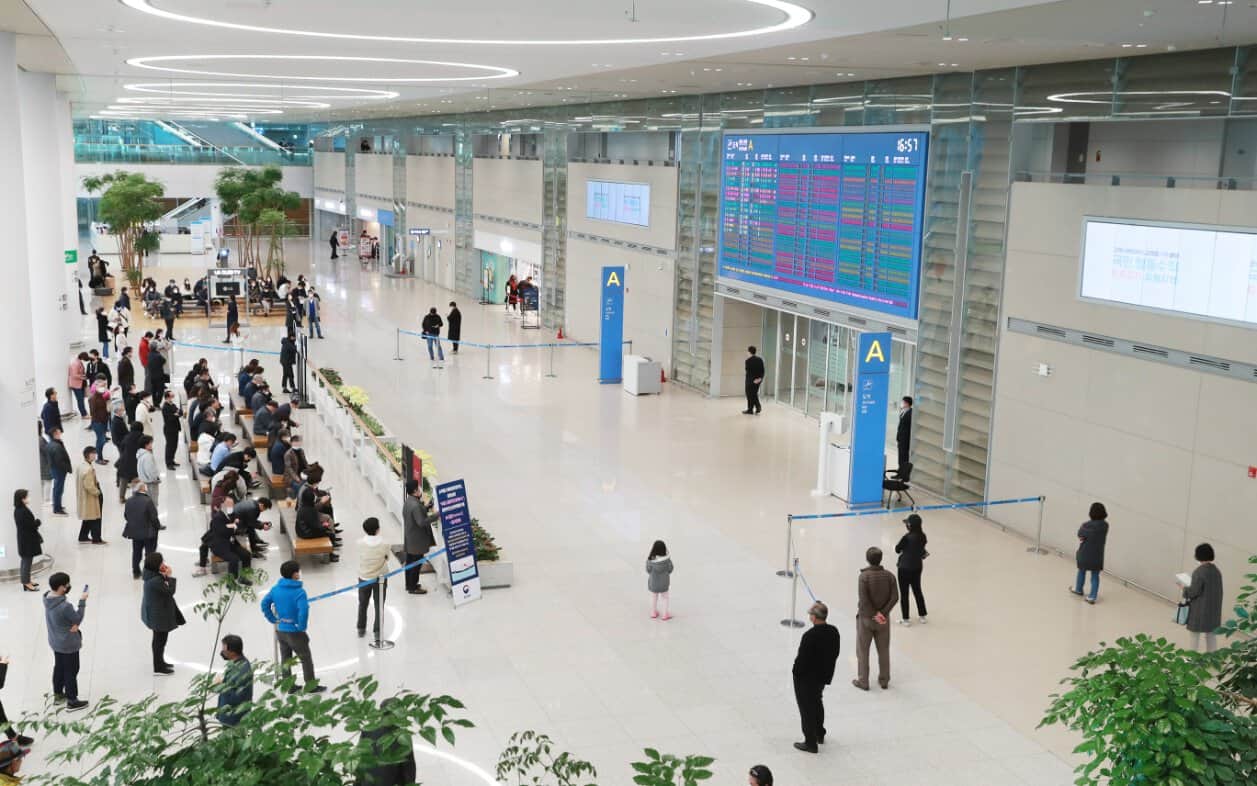
The same logic applies to airports. Taoyuan International Airport serves Taiwan’s largest international market, while Incheon International Airport remains South Korea’s main global gateway.
Regional facilities could also benefit when airlines connect industrial centres with popular leisure destinations. Yet any new route still depends on proven passenger demand, aircraft availability and regulatory approval.
A longer history lies behind the latest boom
The semiconductor story is only one part of the recovery. Outbound travel from both markets collapsed during border restrictions and rebuilt quickly after governments removed pandemic-era controls.
Families resumed postponed holidays. Companies restored business travel, and airlines returned capacity to established routes.
Taiwanese and South Korean travellers already had strong habits of taking short overseas breaks before the pandemic. Dense aviation networks made Tokyo, Osaka, Fukuoka, Bangkok, Da Nang and other Asian destinations practical for relatively short holidays.
The latest growth therefore rests on an established travel culture. Semiconductor income may strengthen that base, but it did not create it.
Currency and access remain powerful influences
Japan’s dominant position illustrates why price and access still matter. A favourable exchange rate can make hotels, restaurants, rail journeys and shopping feel better value to international visitors.
Short flying times also reduce the cost and difficulty of a holiday. Travellers can leave after work, spend a weekend abroad and return without taking a long period of annual leave.
Visa-free or simplified entry arrangements across many regional markets support this behaviour. Travellers still need to check passport validity, arrival forms and destination rules before departure because requirements can change.
Air capacity is another decisive factor. A large bonus cannot create a booking if seats are unavailable or fares rise sharply during a peak holiday.
This is why the new tourism cycle should be understood as a combination of household income, air access, currency value and established travel habits.
Airlines could see demand move towards premium cabins
Airlines serving Taiwan and South Korea may gain in two ways. The first is higher passenger volume on short regional services, particularly where schedules allow convenient weekend trips.
The second is premiumisation. Travellers with additional disposable income may pay for flexible tickets, extra baggage, airport lounges or upgraded seats.
Long-haul carriers could benefit if semiconductor workers move from frequent Asian breaks towards Europe, North America, Australia or New Zealand. Such a shift would be commercially valuable because long-haul premium passengers generate more revenue per journey.
Airlines should not assume that the whole market will move upwards together. Many travellers remain highly price-conscious and will continue comparing low-cost fares.
A two-track market could emerge. Premium customers may pay more for comfort, while mass-market travellers protect their budgets with shorter stays and discounted flights.
Hotels and tour operators gain a new high-value audience
Hotels can respond without treating every Taiwanese or South Korean guest as a luxury traveller. The opportunity lies in recognising distinct customer groups.
Urban hotels may gain from shopping and food-focused breaks. Resorts can package wellness, golf, beaches and private transfers, while ski operators can offer equipment, lessons and transport in one booking.
Tour operators could also design products around limited annual leave. A four-night trip with efficient airport transfers may appeal more than an open-ended itinerary.
Cruise companies have another opening. A single payment can make a balcony cabin or family cruise easier to afford, while home-region departures reduce the need for an additional long flight.
Local businesses may share the benefit through restaurants, guides, attractions, retailers and transport services. The value will depend on whether visitors spend beyond airports and large international hotels.
Destination marketers face a sharper competition
Japan starts from a position of strength because it already receives the largest share of Taiwanese travellers and a substantial South Korean market. Its mix of shopping, food, culture, rail access and seasonal attractions supports repeat visits.
Vietnam and Thailand can compete through resorts, wellness, dining and warmer weather. South Korea can also attract Taiwan’s growing visitor market with entertainment, beauty, food and city-break products.
Long-haul destinations face a different task. They must persuade travellers that a higher fare and longer journey deliver enough value.
Tourism boards could target semiconductor regions with campaigns tied to skiing, self-drive holidays, luxury rail, cruises or cultural events. Any campaign should rely on booking evidence rather than assuming that industry wealth automatically becomes tourism expenditure.
Government policy supports movement but does not direct spending
The governments of Taiwan and South Korea maintain immigration systems, airport infrastructure and digital border services that help process large passenger volumes. These systems reduce friction but do not determine where residents spend their holiday income.
Tourism strategies tend to focus more heavily on inbound visitors. Outbound growth is largely shaped by household choice, airline networks, destination access and prices.
For travellers, automated border gates can make departure and return more efficient where eligibility rules are met. They do not replace destination visas, electronic travel authorisations or arrival declarations.
Airport investment also helps carriers accommodate demand. Capacity improvements matter because traffic growth can otherwise produce congestion during national holidays and school breaks.
The economic gains will not be shared evenly
Semiconductor wealth is concentrated among direct employees, investors and connected businesses. It should not be presented as a nationwide rise in prosperity for every household.
Housing costs, living expenses and uneven wage growth still influence holiday decisions. Travellers outside the technology economy may continue choosing low-cost flights, shorter stays or fewer trips.
This creates a two-speed tourism market. One group may seek premium cabins and luxury hotels, while another continues to prioritise affordability.
Tourism businesses that understand both groups will be better placed than those building products around one national stereotype. Flexible pricing and clear product differences can serve each market without excluding either.
What travellers should know before booking
The new demand environment can create opportunities, but it can also raise prices during popular periods. Travellers should compare fares before major public holidays and check whether a refundable ticket provides useful protection.
They should also consider:
- Passport and entry requirements
- Destination arrival forms
- Travel insurance coverage
- Peak-season hotel cancellation rules
- Baggage fees on regional flights
- Currency movements before payment
- Airport transport and late-night arrival options
A bonus-funded trip still needs a realistic budget. Travellers should separate the headline fare from the total cost of accommodation, transport, meals, activities and insurance.
Future outlook must be measured against official data
The strongest forward indicators will be monthly departure totals, route capacity, hotel bookings and destination-specific arrival statistics. These can show whether premium demand grows after major compensation periods.
Official records currently support the case for a large and expanding outbound market. They do not yet isolate a direct AI chip bonuses effect.
Future reporting should compare travel growth in semiconductor regions with national averages. It should also track whether spending rises faster than passenger numbers.
Until those figures become available, the most accurate conclusion is that chip-sector rewards are an emerging tailwind. They sit alongside air connectivity, currencies, pent-up demand and regional accessibility.
Frequently asked questions
Are semiconductor bonuses proven to be causing more overseas trips?
No. Official departure data confirm strong outbound demand, but they do not identify travellers by employer or show how individual holidays were funded. The bonus effect is a credible emerging influence, not a proven single cause.
Which destinations are most popular with Taiwanese travellers?
Japan ranked first in 2025 with 6.731 million Taiwanese visits. Mainland China, South Korea, Hong Kong, Vietnam and Thailand were also major first destinations.
Should travellers expect higher fares because of stronger demand?
Prices can rise around public holidays and school breaks, but fares also depend on route capacity, fuel costs and airline competition. Booking early and checking the full fare conditions can reduce risk.
Conclusion
Taiwan and South Korea have large populations, advanced technology, and growing outbound tourism markets. Both have new direct flights and increasing demand for outbound travel. With the expansion of their semiconductor industries, employees are expected to spend their bonuses on upgrading their travel accommodations and itineraries. While bonuses may incentivize the American market to travel in 2026, the same is expected for the Asian market. Travel demand is high, and supply should meet bookings. If airlines, hotels and tourism boards want to cash in on this demand, they should carefully analyze bookings, spending and routes. Consumers also should analyze total costs to determine the best deals.
The post Taiwan and South Korea See New Holiday Boom as AI Chip Bonuses Lift Travel Spending appeared first on Travel and Tour World