










Türkiye Rail Boom Accelerates as Istanbul Turns Into a Global Connectivity Hub in 2026
-
Travel, Weather, Currency
-
-
12 mins
-
Travel and Tour World
-
Rituparna Dutta Choudhury
-


Türkiye rail expansion targets a $70bn future, reshaping Istanbul into a global Europe Asia transport hub.
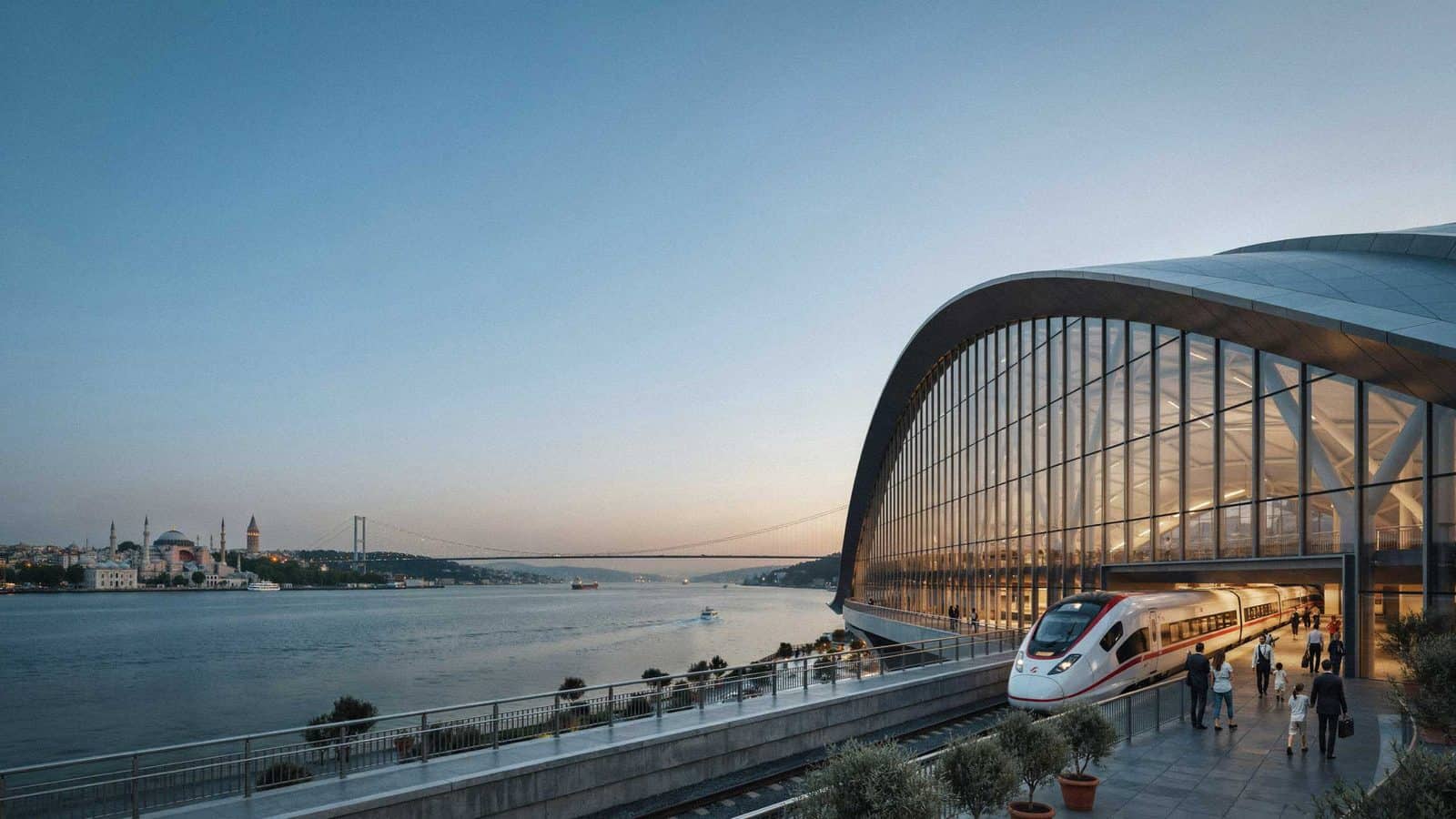
Turkey is transforming Istanbul and other geostrategic regions by reconstructing and expanding its existing railway lines. Governments, logistics businesses, and investors are tracking Turkey’s progress, anticipating the transformation of the transport of goods and people across the continents as early as 2026. For an estimated $70 billion, Turkey is creating a very large railway network of continental importance.
Most people think of the construction of Turkish Railways in the context of the building of new railway lines and the execution of quicker construction projects. But what most people do not understand is that with its railway networks, Turkey will have the opportunity to completely redesign the continental trade routes. This would make Turkey’s transport infrastructure have a significant impact beyond its borders.
This goes beyond rail. This offers the potential to make Turkey one of the major logistics hubs of Eurasia.
Türkiye’s Railway Strategy Is Becoming a Global Connectivity Game Changer
Türkiye’s rail transformation is centred around the 2053 Transport and Logistics Master Plan, a long-term strategy designed to expand railway capacity, increase freight movement and strengthen sustainable transport. The plan aims to increase the national railway network from approximately 13,919 kilometres to 28,590 kilometres by 2053, more than doubling the current system.
The scale of this ambition places Türkiye among the most aggressive railway expansion markets globally.
The country is targeting:
| Railway Development Goal | Current Position | Future Target |
|---|---|---|
| Total railway network | Around 13,919 km | 28,590 km by 2053 |
| Rail freight share | Around 5% | 22% |
| Rail passenger share | Around 0.96% | 6.2% |
| High-speed rail network | 2,251 km | Around 6,000 km by 2035 |
| Renewable energy use in rail | Growing | 35% of rail energy demand |
This expansion represents a fundamental shift in how Türkiye views transport. Instead of treating railways as only passenger infrastructure, authorities are positioning rail as an economic engine capable of attracting international trade, manufacturing and tourism.
For travellers, the impact could be equally significant. Faster connections between cities such as Istanbul, Ankara, Izmir, Bursa and eastern regions could change how international visitors explore Türkiye.
A traveller arriving in Istanbul may increasingly have the option to continue journeys by high-speed rail rather than relying on domestic flights. This creates opportunities for multi-city tourism routes, regional exploration and longer visitor stays.
The “What Others Are Missing” Factor: Türkiye Is Building a Trade Shield Against Global Disruptions
Many observers focus on Türkiye’s high-speed trains, but the bigger story is the country’s attempt to strengthen its position within the Middle Corridor, a trade route connecting China, Central Asia, the Caspian region, Türkiye and Europe.
The Middle Corridor has gained attention as companies and governments search for alternative supply routes due to geopolitical uncertainty affecting traditional pathways.
Türkiye’s railway investment gives the country an opportunity to become a crucial bridge between Asian manufacturing centres and European markets.
What others are missing is that this railway expansion is happening during a period when logistics resilience has become a global priority.
A modern railway network offers:
- Faster cargo movement
- Lower transportation emissions
- Reduced dependence on vulnerable routes
- Better connections between ports, industrial zones and markets
- Stronger regional tourism links
The combination of geography and infrastructure is creating a unique advantage.
Türkiye already sits at the intersection of three major economic zones:
| Region Connected Through Türkiye | Strategic Importance |
|---|---|
| Europe | Access to major consumer markets |
| Central Asia | Growing trade and energy connections |
| China and East Asia | Manufacturing and supply chain links |
The country’s railway strategy therefore represents more than transport development. It represents a long-term economic positioning strategy.
Istanbul Could Become the Railway Capital Linking Two Continents
Istanbul remains the centrepiece of Türkiye’s connectivity ambitions.
The city already holds a unique position because it physically connects Europe and Asia. The Marmaray rail tunnel under the Bosphorus demonstrated Türkiye’s ability to overcome complex geographical challenges by linking two continents through underground railway infrastructure.
The next phase focuses on expanding Istanbul’s role as a regional transport hub.
Future railway development around Istanbul aims to improve:
- International freight movement
- Passenger connections
- Airport accessibility
- Urban mobility
- European rail integration
The planned expansion of railway links through Istanbul will strengthen connections between Türkiye’s western borders and Asian-facing corridors.
This could create a new travel pattern.
Instead of Istanbul acting mainly as an arrival destination, it could increasingly become a gateway where visitors continue their journeys across Türkiye and neighbouring regions.
For tourism businesses, this creates new opportunities.
Hotels, tour operators, cruise operators and destination managers could develop railway-based itineraries connecting:
- Istanbul cultural routes
- Cappadocia experiences
- Aegean coastal destinations
- Eastern Anatolian heritage locations
Rail tourism could become a new growth segment.
Why International Investors Are Watching Türkiye’s Rail Market Closely
The railway transformation requires enormous financial resources.
Türkiye estimates that approximately $70 billion will be required for railway infrastructure and rolling stock investment over the next three decades.
Because of the size of the programme, Türkiye has increasingly turned towards international financing models, including Export Credit Agencies (ECAs), Multilateral Development Banks and commercial lenders.
This financing approach allows major projects to move forward while attracting international engineering and technology expertise.
One of the biggest examples is the Ankara–Izmir high-speed railway project, which received a €2.1 billion financing package backed by UK Export Finance in 2021.
Other large railway financing agreements have followed, demonstrating growing international confidence in Türkiye’s infrastructure pipeline.
The investment appeal comes from several factors:
Strategic Location
Türkiye provides direct access between Europe and Asia.
Growing Transport Demand
Population growth, tourism expansion and trade activity are increasing mobility requirements.
Sustainable Infrastructure Goals
Railway development supports emissions reduction targets.
Engineering Opportunities
Large tunnel, bridge and high-speed rail projects require international expertise.
Türkiye’s High-Speed Rail Network Is Moving Into a New Global Competition
Türkiye has already developed one of Europe’s largest high-speed railway systems.
Its existing high-speed rail network covers approximately 2,251 kilometres, placing it among the leading countries globally.
The country now aims to expand high-speed connectivity dramatically.
By 2035, Türkiye plans to reach approximately 6,000 kilometres of high-speed rail lines.
The expansion includes major corridors such as:
| Major Rail Project | Purpose |
|---|---|
| Ankara–Izmir High-Speed Railway | Connect central Türkiye with the Aegean region |
| Halkalı–Kapıkule Railway | Strengthen European connections |
| Mersin–Adana–Osmaniye–Gaziantep Corridor | Improve southern connectivity |
| Ankara–Sivas Expansion | Increase eastern access |
| Istanbul Railway Expansion | Strengthen international gateway role |
These projects are designed not only to reduce travel times but also to distribute economic growth across different regions.
A stronger rail network could encourage visitors to explore destinations beyond Istanbul and traditional coastal tourism areas.
This creates a major opportunity for Türkiye’s tourism industry.
Türkiye’s Railway Growth Could Transform the Future of International Tourism
The railway transformation underway across Türkiye is not only an infrastructure story. It is becoming a tourism development strategy that could change how international visitors experience the country.
For decades, Türkiye’s tourism industry has been concentrated around major destinations such as Istanbul, Antalya, Cappadocia, Izmir and coastal resorts. However, expanded rail connectivity could encourage travellers to move deeper into the country, unlocking destinations that have remained outside traditional international tourism routes.
High-speed rail can create a new tourism ecosystem where visitors combine multiple regions within one journey.
A traveller arriving in Istanbul could potentially experience:
- Historic Istanbul attractions
- Central Anatolian landscapes
- Cappadocia’s cultural heritage
- Aegean coastal cities
- Eastern Türkiye’s archaeological treasures
without depending entirely on domestic flights.
This shift could support longer stays, regional tourism spending and more balanced destination growth.
The impact could be particularly important for smaller cities connected to major rail corridors.
Improved accessibility often leads to:
- More hotel investment
- Growth in local businesses
- Expansion of guided tours
- Increased cultural tourism
- More domestic and international travel demand
What others overlook is that railway expansion is effectively creating a new tourism map for Türkiye.
The country is not simply building tracks. It is building pathways that could redirect future visitor flows.
Rail Versus Air: How Türkiye’s Transport Future Could Change Traveller Choices
Türkiye has one of the world’s busiest domestic aviation markets, with Istanbul serving as a major international aviation hub. However, increasing railway capacity could create a more balanced transport system.
Short domestic flights between major cities could increasingly compete with high-speed rail, especially when travellers consider airport transfers, security procedures and waiting times.
The comparison below highlights how future rail development could influence travel decisions.
| Transport Factor | Domestic Air Travel | High-Speed Rail Future |
|---|---|---|
| City centre access | Often requires airport transfers | Direct urban connections |
| Environmental impact | Higher emissions | Lower emissions |
| Passenger comfort | Limited movement | More space and mobility |
| Tourism flexibility | Fixed airport routes | Multiple regional connections |
| Regional development | Concentrated around airports | Supports connected cities |
Rail does not replace aviation completely.
Instead, Türkiye’s future mobility model is likely to involve cooperation between air and rail networks.
International visitors may arrive through Istanbul Airport and continue their journey through Türkiye’s expanding railway system.
This integrated model mirrors transport strategies used in countries such as Japan, France and Germany.
Türkiye’s Green Railway Vision Supports Global Sustainability Goals
Another major factor driving Türkiye’s rail expansion is sustainability.
The transport sector remains one of the largest contributors to global carbon emissions. Railways are increasingly viewed as a cleaner alternative for both passenger and freight movement.
Türkiye’s Transport and Logistics Master Plan aims for 35% of railway energy demand to come from renewable sources, supporting the country’s wider climate commitments.
The government has also announced a target of reducing greenhouse gas emissions by 41% by 2030 and reaching net zero by 2053.
Rail investment therefore supports multiple objectives:
- Reducing road transport dependence
- Lowering logistics emissions
- Improving energy efficiency
- Supporting sustainable tourism
- Building climate-resilient infrastructure
For global travellers increasingly choosing destinations based on sustainability credentials, Türkiye’s railway strategy could strengthen its appeal.
Future visitors may increasingly look for destinations offering lower-carbon travel options.
A country that provides efficient rail alternatives could gain a competitive advantage in the international tourism market.
The Financing Challenge: Türkiye’s Rail Dream Faces a New Test
While Türkiye’s railway ambitions are significant, delivering thousands of kilometres of new rail infrastructure requires continued access to finance.
The country has successfully attracted international lenders and export credit support, but future projects may face increasing complexity.
Large infrastructure programmes require:
- Government funding
- International banking support
- Export credit guarantees
- Development finance institutions
- Private sector participation
One challenge is that some export credit agencies supporting Türkiye projects are approaching exposure limits.
This means future railway expansion may require more diverse financial structures.
Potential solutions include:
- Greater involvement from multilateral development banks
- Public-private partnerships
- Green finance mechanisms
- Sustainable infrastructure bonds
The success of Türkiye’s railway strategy will depend not only on engineering capability but also on financial innovation.
The next phase will determine whether Türkiye can maintain its current momentum.
Comparison: Türkiye Versus Major Global Rail Markets
Türkiye is entering a competitive global railway environment where countries are investing heavily in high-speed and sustainable transport.
| Country | Railway Strength | Strategic Advantage |
|---|---|---|
| China | World’s largest high-speed rail network | Domestic connectivity and manufacturing strength |
| Japan | Advanced rail technology | Reliability and passenger experience |
| France | Established high-speed network | European connectivity |
| Spain | One of Europe’s largest high-speed systems | Tourism integration |
| Türkiye | Rapid expansion linking Europe and Asia | Strategic Eurasian position |
Türkiye’s advantage is not simply the number of kilometres of track.
Its unique opportunity comes from geography.
Few countries can connect European markets, Asian supply chains and Middle Eastern routes through one transport network.
This is the factor that could separate Türkiye from traditional railway markets.
What Could Slow Türkiye’s Railway Transformation?
Despite strong ambitions, several challenges could influence the speed of development.
Complex Geography
Türkiye’s landscape includes mountains, earthquake-prone regions and difficult terrain.
Many projects require:
- Long tunnels
- Large bridges
- Advanced engineering solutions
These increase construction costs and timelines.
Competing Investment Priorities
Türkiye continues to invest heavily in multiple sectors, including:
- Earthquake reconstruction
- Renewable energy
- Defence infrastructure
- Industrial development
Balancing these priorities will be essential.
Global Economic Conditions
Interest rates, currency pressures and international financing conditions could affect project costs.
Large infrastructure projects often require decades of financial planning.
However, Türkiye’s established railway experience and international partnerships provide a strong foundation.
Why The Middle Corridor Makes Türkiye More Important Than Ever
The global transport landscape is changing.
Companies are increasingly seeking resilient supply chains that can avoid excessive dependence on single routes.
This has increased attention on alternative corridors connecting Asia and Europe.
The Middle Corridor offers Türkiye a strategic opportunity.
The railway network could support:
- International freight movement
- Container transport
- Industrial trade
- Regional economic cooperation
The importance of this corridor extends beyond Türkiye.
It affects:
- European manufacturers
- Asian exporters
- Logistics companies
- Tourism operators
- International investors
What others get wrong is assuming Türkiye’s railway expansion is only a domestic development project.
It is becoming part of a much larger global connectivity competition.
The Future: Türkiye Could Become the Railway Bridge Between Continents
Türkiye’s railway transformation represents one of the most ambitious infrastructure strategies currently developing between Europe and Asia.
The combination of:
- A $70 billion investment vision
- A planned 28,590-kilometre railway network
- Expansion towards 6,000 kilometres of high-speed rail
- Strategic Middle Corridor positioning
- Sustainable transport objectives
creates a powerful opportunity.
The coming decade will determine whether Türkiye can convert its geographic advantage into a permanent global transport leadership position.
For travellers, the benefits could include faster journeys, easier multi-city exploration and access to destinations that were previously harder to reach.
For businesses, improved rail connectivity could mean stronger trade links and more reliable logistics.
For tourism, it could create an entirely new chapter.
Editorial Perspective: Why Türkiye’s Rail Strategy Matters for Global Travel
From a travel analytics perspective, Türkiye’s railway expansion should be viewed as a destination competitiveness strategy rather than simply a transport project.
Modern travellers increasingly value convenience, sustainability and authentic regional experiences.
Rail networks directly support these preferences.
A visitor who can comfortably combine Istanbul, Cappadocia, Ankara, Izmir and emerging destinations through efficient rail connections is more likely to extend their stay and increase spending.
The future of tourism will not only be shaped by airlines and airports.
It will also be shaped by countries that can create seamless movement after arrival.
Türkiye understands this changing travel behaviour.
Its railway investment represents an attempt to control the complete visitor journey — from international arrival to regional discovery.
The editorial view is clear: Türkiye’s rail revolution is not just about trains. It is about building a future tourism and trade ecosystem where connectivity becomes the country’s strongest competitive advantage.
Final Outlook: Türkiye’s Railway Ambition Could Redefine Eurasian Travel
Türkiye’s situation is different.
Türkiye’s rail systems operate across Drive, Economy, and Tourism segments.
Although help will always be needed for financing and building railways, the country recently built some very complicated rail systems.
This isn’t just about connecting cities. It’s about linking continents.
In a discerning customer travel market, the rail systems Türkiye is building could provide the first such, smart, sustainable, and immersive, trans-continental rail travel systems.
The rail systems of Türkiye are attracting a lot of attention.
The next question is if the rail systems of Türkiye will become the new rail systems connecting the future of Europe and Asia.
In your travel plans, the construction of modern rail systems of Türkiye should be considered for both travel and tourism investment.
The post Türkiye Rail Boom Accelerates as Istanbul Turns Into a Global Connectivity Hub in 2026 appeared first on Travel and Tour World