
















Poland is Now on the Radar for Budget Travel in Europe as US Travellers Seek More to See and Do This Autumn
-
Travel
-
-
5 mins
-
Travel and Tour World
-
Baydahi Roy
-


Budget Travel checks cover shared Schengen stay limits and separate entry rules for North Macedonia.
Americans comparing autumn holidays in Poland and four other European destinations face distinct cost and border considerations in October 2026. Official EU data puts Poland’s 2025 consumer price level at 73% of the EU average, while updated border guidance confirms that digital entry registration already operates. This guide to Budget Travel in Europe examines Kraków, Budapest, Prague, Porto and Ohrid through verified prices, destination information and entry requirements. It announces no new visa concession or holiday discount. Its immediate purpose is to help travellers compare complete costs and check eligibility before booking.
Budget Travel: What the Verified Evidence Shows
The strongest evidence concerns national price differences, destination attractions and existing entry rules. The percentages below are an editorial assessment of the story’s focus, based on the importance of those findings. They total 100% and are not official statistics, visitor shares or measured tourism impacts. HUF means the Hungarian forint.
| News Component | Share of Story | Officially Verified Finding | Relevance to Travellers | Official Source |
|---|---|---|---|---|
| Holiday costs | 40% | Poland’s 2025 consumer price level was 73% of the EU average. | Compare actual holiday quotations separately. | EU statistical release, 18 June 2026 |
| Destination choice | 25% | Official guidance documents historic sightseeing, thermal bathing and Douro access. | Match activities and transport to the budget. | National tourism information |
| Local transport | 10% | Budapest’s standard airport express single ticket costs HUF2,500. | Add airport access to total spending. | Official Budapest transport tariff |
| Border requirements | 25% | Schengen short stays generally follow a shared 90-in-180-day limit. | Check nationality, passport validity and previous visits. | Official EU entry guidance |
The findings support a practical comparison, but they do not establish Europe’s cheapest destination or guaranteed autumn savings. The previously supplied US$219 return fares and €40 nightly rentals remain unverified. Official evidence also does not establish a universal advantage from booking accommodation two or three weeks before departure. None of these claims should determine a confirmed spending plan. Within the same 2025 comparison, Bulgaria stood at 63% of the EU average and Romania at 65%. Poland therefore was not the lowest-priced country in that dataset. Even these comparable national figures cannot rank the cost of a particular city break, because travellers buy a different mix of services from resident households.
Understanding the Context Behind the Development
Five Destinations Offer Different Spending Choices
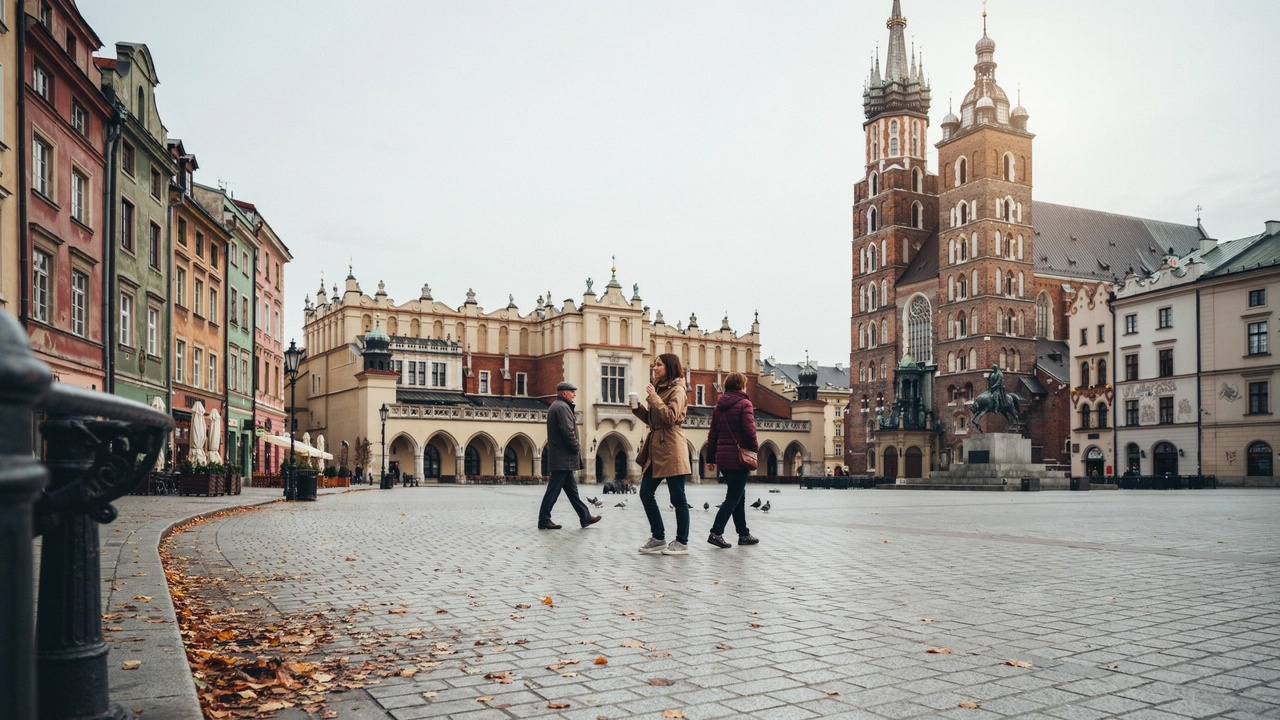
This story brings together price evidence and travel rules; no single new policy triggered a shared tourism change across these destinations. Kraków offers historic streets, its Main Market Square and surrounding parkland. Budapest combines urban sightseeing with thermal bathing, although Gellért Bath closed on 1 October 2025, with reopening planned for 2028. Prague provides castle grounds, courtyards, museums and gardens. Official tourism descriptions establish these attractions, but they do not guarantee cheaper accommodation or quieter conditions on every weekday. An itinerary centred on public streets and parkland involves different spending decisions from one built around paid museums and baths. Visitors should identify their preferred activities first, then calculate the admission budget. Destination appeal alone cannot establish the final cost.
Porto provides a base for the Douro Valley, with official guidance describing regular rail access and road connections. Ohrid offers a historic lakeside setting with recognised cultural and natural significance. These choices make Budget Travel in Europe a question of matching experiences to the full cost. A walking itinerary, thermal bath visit and vineyard excursion require different purchases. Compare admissions, transfers and accommodation on the same dates. These are alternative holiday ideas, rather than an assumed five-city circuit offering automatic savings. Regular rail access gives visitors a transport option to investigate, but does not establish the price of a complete wine excursion. Check whether vineyard admission, local transfers and the return journey are included before comparing alternatives.
Budget Travel in Europe: The Border Changes So Far
The Entry/Exit System began its phased introduction on 12 October 2025 and became fully operational on 10 April 2026. It digitally records eligible non-EU visitors’ passport information, border crossings and biometric data, including facial images and fingerprints. Digital records replace routine passport stamping for covered travellers. This is a registration process, not a visa or an extension of permitted stays. Poland, Hungary, Czechia and Portugal share the Schengen framework, so moving between them does not restart the allowance. For example, a visitor with 60 Schengen days already used within the relevant 180-day window generally has 30 remaining. Crossing into another participating country does not create a fresh allowance. The calculation matters when arranging several destinations within one holiday.
Economic releases followed a separate timetable. Figures published on 18 June 2026 placed Poland’s 2025 consumer price index at 73 against an EU benchmark of 100. That means a national price level 27% below the benchmark, not a 27% holiday discount. A 25 September 2026 release showed EU package holiday prices rose 3.2% annually in August, while passenger air transport prices fell 0.4%. The package measure records prices at purchase. For Budget Travel planning, these statistics provide context without establishing October prices for individual bookings.
Check Documents, Transport and the Next Border Milestone
US tourists generally qualify for 90 days within any 180-day period across Schengen, including relevant earlier visits. Other nationalities may need visas. For ordinary non-EU short stays, passports must have been issued within ten years on entry and remain valid three months beyond planned departure. North Macedonia follows separate rules: US visitors generally have 90 visa-free days within six months. Passports need three months’ validity beyond departure, travel medical insurance is required, and foreign visitors must register within 48 hours. Hotels normally handle registration; other guests should attend the local police station with their lodging owner.
- Calculate permitted stays: Include earlier Schengen visits; time in Ohrid does not reset the rolling allowance.
- Check supporting documents: Keep accommodation, onward travel and funding evidence available where required.
- Price airport access: Budapest’s ordinary 24-hour travelcard excludes the 100E Airport Express.
- Confirm attraction access: Check operating dates and booking conditions before paying for accommodation.
- Review full quotations: Include baggage, transfers, admission charges, taxes and card transaction fees.
- Monitor ETIAS: Applications remain closed; follow official launch instructions before taking action.
As of 17 October 2026, ETIAS is not operating or accepting applications. Published plans target the final quarter of 2026, but travellers must await the precise official launch announcement. The planned authorisation is separate from EES and carries an announced €20 fee, with exemptions including applicants under 18 or over 70. Meanwhile, additional autumn stays could support local businesses, but no reviewed evidence establishes a resulting rise in bookings or investment. Ohrid also faces documented tourism pressure, development and wastewater concerns. These issues underline the need to consider local conditions alongside price. The confirmed immediate effects concern entry checks and access to particular services. Any change in hotel occupancy, restaurant revenue or visitor confidence would require separate measurements. A destination shortlist cannot establish that additional demand has already materialised.
Budget Travel in Europe: A Clearer Autumn Travel Plan
Poland offers price context for Americans considering an autumn European holiday, while neighbouring and alternative destinations provide different experiences. Budget Travel depends on complete quotations, suitable transport and accurate entry checks. Confirmed facts include operational EES registration, shared Schengen stay limits and North Macedonia’s separate requirements. ETIAS remains a future authorisation requirement awaiting its precise launch announcement. Official evidence does not guarantee cheap rooms, lower total spending or increased tourism demand. Travellers should compare dates carefully, confirm attraction access and keep documents ready. For businesses, potential autumn demand remains an opportunity whose results require evidence. Follow official updates before departure.
The post Poland is Now on the Radar for Budget Travel in Europe as US Travellers Seek More to See and Do This Autumn appeared first on Travel and Tour World














































































