
















Portugal Introduces Lisbon Airport Taxi Fares, Sparking Tourist Cost Concerns in 2026
-
Travel
-
-
9 mins
-
Travel and Tour World
-
Rituparna Dutta Choudhury
-

Lisbon airport taxi fares start at €16. Discover new rules, night charges, payment rights and cheaper options.
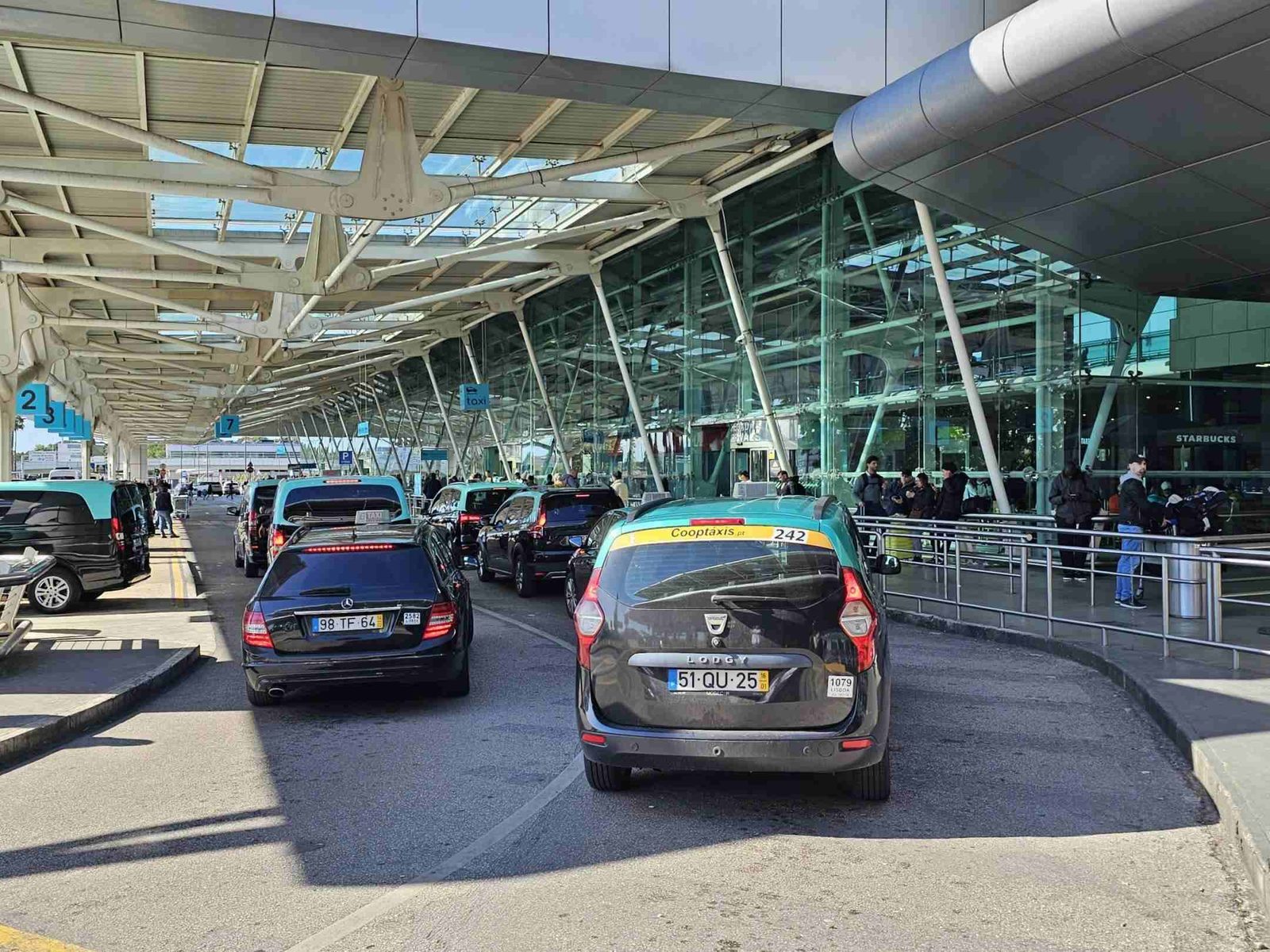
Image Credit: Lisbon Airport Taxi Stand
There would be fixed charges for this journey because of the pricing model of the taxis that started from 15th October 2026 from the €16 at the Lisbon Airport. There would be a justification behind this pricing model to ensure that the tourists are not getting exploited by the drivers or any other hidden charges and confusions in the fares. Due to the implementation of this pricing model, there would be day and night charges in the zones, in order to give more clarity to the tourists about the charges when they travel to the Portuguese cities. There are certain issues in this pricing system due to the charges for short distance journeys, which tourists have to pay a high amount compared to what they used to pay using meter earlier. There would be some rides in the airport costing up to €23 in this pricing system. This means that tourists will prefer other options like Lisbon Metro, Uber, and Bolt. The reason for implementing this system is the investigations of the police, as they found 67 offenses in the taxis.
Portugal’s New National Taxi Regulation Reveals Why Lisbon’s Airport Reform Is Bigger Than a Fare Change
The most important development behind Lisbon’s new airport taxi arrangements is the wider regulatory environment emerging across Portugal.
On 13 October 2026, the country’s official gazette, Diário da República, published Regulation No. 1324-A/2026, issued by the Mobility and Transport Authority, known as AMT.
The regulation establishes general rules for determining prices in public taxi transport.
Its significance extends beyond the traditional calculation of taxi charges.
The framework identifies cost recovery, reasonable profit, safety, accessibility, transparency and service quality as important considerations in tariff setting.
It also requires relevant authorities to consider local economic circumstances, demand patterns and passengers’ ability to afford transport.
These principles provide a useful benchmark against which Lisbon’s airport taxi system can be assessed.
The airport’s fixed-fare protocol is a separate arrangement, rather than a direct tariff imposed by the national regulation. Nevertheless, the two developments raise closely related questions about the balance between operator viability and passenger affordability.
This distinction is essential.
A predictable fare may reduce the risk of an unexpected charge, but the price still needs to be reasonable for the journey provided.
The national framework therefore offers a broader perspective on the debate surrounding Lisbon Airport.
The reform is not simply about eliminating disputed charges. It also highlights how Portugal intends to reconcile commercial sustainability with accessible transport.
Source: Diário da República — Regulation No. 1324-A/2026.
What Other Travellers Are Missing: Fixed Airport Fares Are Not Necessarily the Cheapest Option
The most immediate consumer issue is the difference between price certainty and actual savings.
Under the new airport arrangement, passengers travelling to destinations in Zone 1 pay €16 during weekday daytime hours, while Zone 2 journeys cost €19.
During the night, at weekends and on national public holidays, these prices increase to €20 and €23 respectively.
The charges cover up to four passengers and normally accommodated luggage.
These prices are confirmed by ANTRAL, one of Portugal’s principal taxi industry associations and a signatory to the airport protocol.
For tourists, this means the final price is established before departure.
However, the same pricing structure can produce different financial outcomes depending on distance.
A short journey to Alvalade falls within Zone 1, while a longer journey elsewhere in the same zone attracts the same fixed price.
This raises a question about proportionality.
Travellers are effectively paying for the destination category rather than the precise distance covered.
The system may benefit passengers whose journeys would otherwise attract high metered charges during congestion.
It could be less attractive for those travelling only a short distance.
Portugal’s new national regulation makes this issue particularly relevant because it explicitly includes financial accessibility and transparent tariff structures among its guiding principles.
The strongest consumer response is therefore to compare transport choices rather than assume that a fixed fare automatically represents a discount.
Lisbon Airport’s Taxi Prices Create a New Cost Comparison for Tourists and Families
The new arrangement becomes particularly interesting when comparing solo passengers with larger groups.
Portugal’s official tourism intelligence platform, TravelBI, confirms that the airport system includes different charges according to the destination, time of travel and vehicle capacity.
Larger vehicles carrying more than four passengers can attract fares ranging from €20 to €28.
| Passenger category | Zone 1 weekday daytime | Zone 2 weekday daytime | Zone 1 nights/weekends/holidays | Zone 2 nights/weekends/holidays |
|---|---|---|---|---|
| Up to four passengers | €16 | €19 | €20 | €23 |
| More than four passengers in an eligible larger taxi | €20 | €23 | €24 | €28 |
Source: ANTRAL’s published airport taxi protocol and Turismo de Portugal’s TravelBI platform. Daytime means 07:00–22:00 on weekdays.
The distinction matters for families and groups planning airport transfers.
Four people sharing a €16 taxi would pay an equivalent of €4 each.
Six people travelling together in an eligible larger taxi costing €20 would pay approximately €3.33 each.
These calculations demonstrate how the per-person expense changes when the vehicle cost is shared.
They also expose a frequently overlooked detail: larger groups do not automatically qualify for the standard four-passenger price.
For travellers, the practical consideration is to identify the appropriate vehicle capacity before joining the taxi queue.
The published fare should match the actual passenger count, destination zone and applicable time period.
Portugal’s New Taxi Rules Introduce a Crucial Question About Passenger Choice
One of the most significant findings in the official national regulation concerns the coexistence of fixed fares and metered taxi services.
Article 10 of Regulation No. 1324-A/2026 addresses major passenger transport locations, including airports and cruise terminals.
Where fixed tariffs operate alongside metered fares, the regulation requires passengers to be given a choice between the available options, with their conditions clearly displayed.
It also requires geographical fare zones to be presented in an understandable format.
This creates an important regulatory distinction for Lisbon.
The airport protocol establishes its own pricing arrangements, while the national framework sets wider principles for transport authorities developing specific tariff regulations.
The existence of national passenger-choice provisions does not, by itself, establish that every traveller at Lisbon Airport can demand a metered alternative to the protocol’s fixed fare. That depends on which legally applicable services and tariff arrangements are available.
Nevertheless, the provision offers a useful standard for assessing the future system.
Passengers should be able to understand the service they are purchasing, identify its price and recognise any available alternatives.
For the authorities, effective signage and clearly defined geographical boundaries will be essential.
Lisbon Airport Metro’s €1.90 Fare Highlights the Real Price of Transport Convenience
The new taxi pricing system also draws attention to Lisbon’s established public transport network.
Metropolitano de Lisboa confirms that a standard Carris/Metro ticket costs €1.90 in 2026. The Zapping fare for a Metro journey is €1.72, while a contactless bank-card journey costs €1.92.
The official 24-hour Carris/Metro ticket costs €7.25.
For a solo traveller, these prices create a substantial difference compared with the €16 daytime Zone 1 taxi fare.
A €1.90 Metro ticket costs €14.10 less than that taxi journey, excluding any additional transport needed to reach the final destination.
The airport operator confirms that the Metro connects Aeroporto station with Saldanha in approximately 20 minutes, with onward connections across Lisbon.
However, public transport is not equally convenient for everyone.
Visitors with large suitcases, children or limited mobility may prefer direct road transport.
The cost difference therefore represents a choice between affordability and convenience rather than proof that one mode is universally superior.
The new fare system makes that choice more visible.
Lisbon’s Airport Taxi Reform Could Influence How Tourists Compare Uber, Bolt and Licensed Taxis
The availability of alternative road transport services adds another dimension to the reform.
Lisbon Airport’s official transport guidance identifies a dedicated pickup location for app-based services such as Uber and Bolt at P2, Level 2, in the arrivals area.
The airport also advises passengers to use authorised transport services rather than accepting unsolicited approaches inside the terminal.
Fixed taxi prices could change how travellers compare these services.
Before the reform, passengers unfamiliar with local metered charges might have struggled to assess whether a taxi quotation was reasonable.
A published fare now provides a reference point.
If an app-based journey is quoted below €16, a price-sensitive traveller may choose that option. If the quotation exceeds the fixed taxi fare, a licensed taxi may appear more attractive.
This could encourage competition based on transparent pricing, vehicle availability and service quality.
However, there is not yet sufficient verified post-launch evidence to establish whether the reform has increased ride-hailing demand or reduced conventional taxi usage.
Those outcomes remain possibilities rather than confirmed market trends.
November 2026 Becomes a Major Test for Airport Taxi Accreditation and Service Standards
Another overlooked aspect of the reform is the difference between introducing new service rules and fully implementing the airport accreditation system.
ANTRAL confirms that the protocol took effect on 15 October 2026.
However, accreditation requirements controlling access to the airport taxi rank will become mandatory on a separately announced date.
This means the pricing reform and the access-control system are not being introduced simultaneously.
The distinction matters because the agreement covers more than fares.
Drivers participating in the arrangement must accept electronic payments and vouchers, provide accurate information and maintain vehicles in appropriate condition.
The protocol also prohibits refusing services and imposing additional charges based on the passenger’s payment method.
These requirements aim to improve consistency at one of Portugal’s most important international arrival points.
For passengers, the immediate benefit is a clearer set of service expectations.
For regulators and industry associations, the challenge is ensuring those expectations are applied consistently.
The accreditation system could eventually provide another mechanism for managing access to the airport rank, although its effectiveness cannot be assessed before implementation.
Portugal’s Airport Taxi Reform Reveals a Wider Challenge for Tourism Affordability
Lisbon’s experience illustrates a wider transport policy dilemma.
Visitors want protection from unexpected charges, but they also want reasonable prices.
Taxi operators need sufficient revenue to cover operating costs, while authorities must maintain accessible and dependable transport services.
Portugal’s national regulation explicitly recognises this balance.
It requires tariff decisions to consider operating costs, reasonable remuneration, economic accessibility and the circumstances of the local transport market.
These principles provide a useful framework for evaluating Lisbon’s airport initiative.
A fixed fare could improve confidence among international passengers who previously worried about disputed charges.
However, higher prices for short journeys could discourage some visitors from using conventional taxis.
Neither outcome can be measured reliably without post-implementation evidence.
The more meaningful assessment will therefore examine several indicators together: passenger complaints, pricing compliance, taxi availability, service refusals and transport affordability.
Such evidence would help determine whether the reform improves the overall arrival experience rather than merely making taxi charges easier to predict.
What Travellers Should Check Before Taking a Taxi from Lisbon Airport
For passengers arriving in Lisbon during October and November 2026, the new system makes advance planning particularly valuable.
The following checks can help travellers avoid confusion:
- Confirm the destination zone: Check whether the journey falls within Zone 1, Zone 2 or another published tariff area.
- Check the travel period: Night-time, weekend and national public holiday rates differ from weekday daytime charges.
- Consider the group size: Larger taxis carrying more than four passengers have separate fixed fares.
- Compare alternatives: Review the Metro fare and any available licensed ride-hailing quotation.
- Confirm the payment method: Participating airport taxis must accept electronic payments without an additional payment-method charge.
- Keep the receipt: Retain proof of payment and journey details if a complaint becomes necessary.
The Portuguese tourism authority also confirms that fixed-fare vouchers can be purchased at the Ask Me Lisboa airport tourism desk, which operates daily from 07:00 to 22:00.
Conclusion: Lisbon’s €16 Taxi Reform Is Really a Test of Fair Pricing, Not Just Tourist Protection
In this way, the matter of implementation of fixed prices for taxis in Portugal at Lisbon Airport is connected not only with the matter of fixed prices but also with the matter of safety and transparency of the public transport system. Citizens know that they will not pay more than €16 for their ride from the airport to the center, and none of them will have to cover the expenses for the meter. But the problem of pricing of the short rides still remains.
The regulation of the taxi market in Portugal should be analyzed considering the significance of the matter of the balance between appropriate pricing and quality service. The tourists arriving in the country will have to evaluate all advantages and disadvantages of using taxi, metro, and ride-sharing services.
When we consider the matter of tourist industry metrics, the effectiveness of the reform policy will be evaluated through the number of complaints, compliance with the prices, availability of the taxis, and satisfaction of the clients. In other words, the matter that Lisbon officials have to solve is not only the matter of overpricing but also the matter of convenient transport from the airport.
The post Portugal Introduces Lisbon Airport Taxi Fares, Sparking Tourist Cost Concerns in 2026 appeared first on Travel and Tour World














































































