
















Singapore Makes Travel Payments in Taiwan Easier as PayLah Now Works at Over 250,000 Merchants
-
Travel, Food, Currency
-
-
5 mins
-
Travel and Tour World
-
Baydahi Roy
-


Travel payments in Taiwan via PayLah carry a 2% conversion mark-up, with no extra service fee
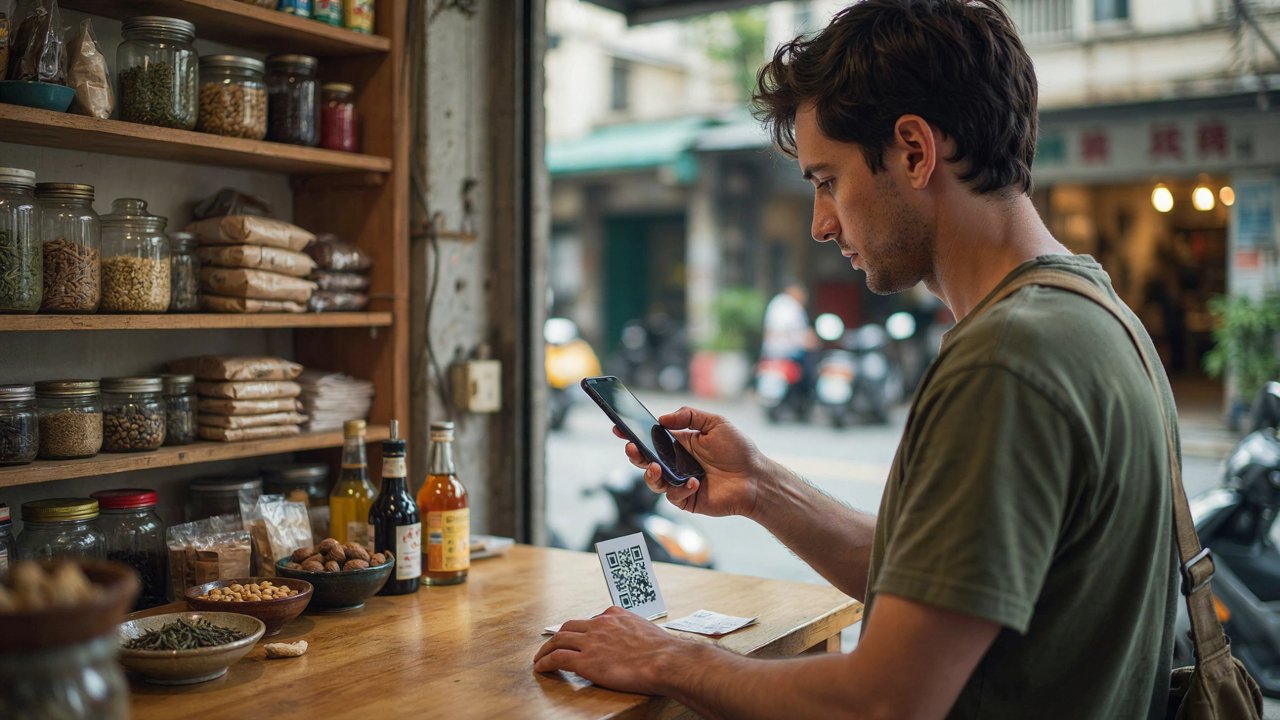
A new banking connection expanded Travel Payments in Taiwan on 21 October 2026, allowing more than three million users of a participating Singapore wallet to pay over 250,000 merchants. The service links the wallet with Taiwan’s TWQR payment network, giving eligible visitors another way to buy food, drinks and goods through an existing app. The immediate benefit is additional payment choice at participating businesses. Coverage remains incomplete, a 2% currency-conversion mark-up applies, and the announcement changes no visa, passport or immigration requirements.
Travel Payments: What the Evidence Establishes
The table separates operational changes from costs, promotional conditions and tourism context. Its percentages are an editorial assessment of the story’s emphasis, not official statistics, market shares or measured tourism effects. They total exactly 100%.
| News Component | Share of Story | Officially Verified Finding | Relevance to Travellers | Official Source Link |
|---|---|---|---|---|
| Merchant access | 35% | Over 250,000 merchants at launch; approximately two-thirds of the TWQR network | Check participating acceptance marks | Official launch notice |
| Payment costs | 25% | 2% conversion mark-up; no additional service fee beyond the applied conversion rate | Compare the final Singapore-dollar charge | Official fee conditions |
| Cashback | 15% | Up to S$3 during 16 November 2026–31 January 2027, subject to conditions | Check eligibility and redemption limits | Official promotion announcement |
| Tourism context | 10% | Singapore ranked among Taiwan’s ten leading visitor origins in 2025 | The service addresses an established visitor market | Government visitor statistics |
| Planned expansion | 15% | Broader Taiwan acceptance and reciprocal Singapore payments planned for 2027 | Future features require availability checks | Official implementation plans |
The evidence establishes a payment-service launch, not a proven increase in tourism demand. Merchant coverage, wallet registrations and visitor arrivals measure different things. None establishes additional spending caused by this connection.
Current Acceptance Still Has Limits
As of 22 October 2026, eligible users can scan supported merchant codes through the participating app. A TWQR label alone should not replace checking provider compatibility. The announcement’s two-thirds coverage estimate equals roughly 66.7%, but it does not describe the share of all Taiwanese businesses accepting the wallet.
Why the Connection Matters to Visitors
The practical importance lies at the shop counter. Existing wallet users gain another way to pay without installing a separate Taiwanese payment app. Participating food outlets and retailers can accept those customers through an additional channel. The benefit concerns purchases during a visit, rather than changes to transport, accommodation or border access.
From an April Agreement to an October Launch
The cross-border payment initiative was announced in April 2026. The consumer service launched on 21 October, connecting the Singapore wallet to participating Taiwanese merchants.
For Travel Payments in Taiwan, this marks the move from an announced connection to an available service. The separately announced cashback campaign starts on 16 November 2026 and ends on 31 January 2027.
How Existing Payment Systems Came Together
The Direct Trigger Was Network Integration
The official launch statement connects the rollout directly to the earlier payment-network initiative. TWQR supplies a common QR standard, while the participating wallet provides the customer interface. Settlement arrangements in Taiwan support completion of transactions between institutions. This operational connection explains how the service became available.
Established Travel Links Provide Context
Government figures identify Singapore as an existing major source of visitors. That supports the service’s relevance to travellers, but does not prove tourism demand caused the launch. Network integration is the confirmed mechanism; established travel flows provide context. Future commercial effects remain unmeasured.
Travel Payments Figures Need Careful Interpretation
The launch figures cover more than three million wallet users and over 250,000 Taiwanese merchants. They measure potential access and acceptance, not completed tourist purchases. The approximate coverage estimate is neither a precise merchant census nor a measurement of visitor spending.
Separately, Taiwan recorded 8.575 million visitor arrivals during 2025, according to government figures published on 24 June 2026. Singapore appeared among the ten leading origins. These arrivals predate the payment launch and include different travel purposes, so they cannot demonstrate its effect.
What Official Announcements Confirm
The official product information confirms that the app displays the Taiwan-dollar price, exchange rate and Singapore-dollar total before approval. Some codes fill in amounts automatically; others require manual entry. Eligible people can also use the wallet without holding an account at its issuing bank, subject to registration requirements. These are product conditions, not government changes to entry permission.
Tourism Benefits Remain Focused on Everyday Purchases
Travel Payments can support eligible leisure and business visitors making purchases at participating merchants. The confirmed improvement is another accepted payment method. There is no evidence in the announcement of higher hotel occupancy, additional bookings or increased average visitor expenditure. Any wider tourism effect requires subsequent evidence.
Convenience Does Not Guarantee Lower Costs
The commercial significance is wider acceptance of an existing wallet. However, the published 2% mark-up means convenience should be assessed alongside cost. No additional service fee does not mean free currency conversion. Travellers should compare the displayed Singapore-dollar total with alternatives instead of assuming a familiar app offers the lowest price.
Taiwan Joins an Existing Regional Payment Offering
The wallet already supports participating overseas QR payments in Malaysia, Thailand and Indonesia. Taiwan extends that geographical coverage. These markets use different local networks, so support in one destination does not establish universal acceptance elsewhere. The relevant comparison is access through a familiar wallet, rather than identical merchant coverage or transaction costs.
Cashback Requires More Than a Qualifying Purchase
The campaign offers up to S$3 without minimum spending. Eligible users must have made no overseas QR payments through the wallet during the previous 12 months. Redemption is limited to once per customer monthly, with 20,000 redemptions available each month. Qualifying transactions cover Taiwan, Malaysia, Thailand and Indonesia.
Check Acceptance Before Paying
Eligible visitors should prepare the app before relying on it abroad. The immediate task is checking payment compatibility and costs, rather than changing travel bookings.
- Update the participating app before departure.
- Confirm that the merchant supports the wallet.
- Check the merchant name and purchase amount.
- Review the exchange rate and Singapore-dollar total.
- Check the payment confirmation before leaving.
- Retain another payment option for unsupported merchants.
These steps address the service’s practical limits. Its launch does not remove the need to meet normal entry requirements.
Travel Payments in Taiwan: The Announced Next Stage
Full participating TWQR coverage is expected in 2027. Planned features include major retailers scanning customer-generated codes and eligible banking-app users in Taiwan paying participating Singapore SGQR merchants. No precise launch date is given for each feature. These remain announced plans, not functions travellers should assume are already available. www.dbs.com
Greater Choice, With Costs and Coverage Still Important
Singapore visitors now have another option for Travel Payments in Taiwan, with wider access to participating food and retail merchants. The service offers familiar app use and visible conversion details, but the two per cent mark-up remains relevant. Acceptance is incomplete, and cashback depends on dates, previous overseas use and monthly limits. Further coverage and reciprocal Singapore payments are planned for 2027, although individual launch dates remain unspecified. The verified benefit is greater payment choice during a visit. Higher arrivals, stronger bookings and increased tourism spending have not been established. Travellers should check official updates and merchant acceptance before paying.
The post Singapore Makes Travel Payments in Taiwan Easier as PayLah Now Works at Over 250,000 Merchants appeared first on Travel and Tour World




































































