
















California Aligns with Georgia and Others as US Extends Ebola Entry Controls Redirecting Africa Linked Travellers Through 3 Airports
-
Travel, Health
-
-
6 mins
-
Travel and Tour World
-
Debomita Dutta
-


California aligns with Georgia as US extends Ebola controls, routing eligible Africa-linked travellers through JFK, Dulles and Atlanta for screening.
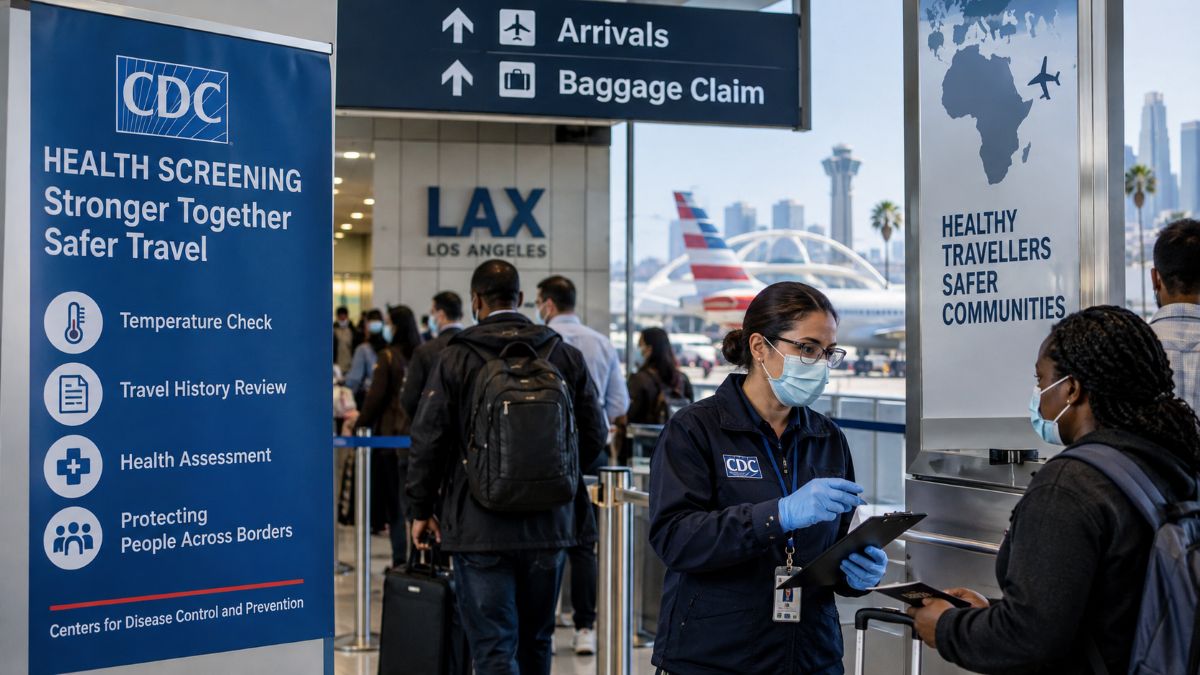
California aligns with Georgia and others as US extends Ebola Entry Controls redirecting Africa linked travellers through 3 airports, creating a coordinated system that combines federal screening with state-level monitoring. Recent travel to Uganda or South Sudan is now a requirement for passengers to enter from New York JFK, Washington Dulles or Atlanta, and recent travel from the Democratic Republic of the Congo imposes a more stringent 21-day flight restriction. It continues to be the hub of onward travel and the public health follow-up, with California maintaining that position; a complete travel history is essential before embarking on any journey to the US.
US Ebola Travel Rules Depend on Your Complete 21-Day Journey
The controls follow recent physical presence, not merely a traveller’s passport, nationality or the departure city printed on a ticket. A connecting flight or intermediate airport stop can therefore change whether someone may board, must wait or needs to enter through a designated screening gateway.
| Travel history before US arrival | Current consequence |
|---|---|
| In DRC during the previous 21 days | Commercial boarding to the US is not permitted until Day 22, including for US citizens and nationals. A DRC airport stop counts even when the passenger remains aboard the aircraft. |
| In Uganda or South Sudan, but not DRC, during the previous 21 days | Permitted travellers are rerouted through JFK, Dulles or Atlanta for public-health screening. Transit through either country can count. |
| Covered non-US citizens or nationals, including lawful permanent residents | Entry may be suspended unless an exception or approved public-health process applies. |
| Outside all three countries for more than 21 days | Ebola public-health entry screening is not required under the current arrangement. |
The legal distinction matters. US citizens and nationals are excluded from the Federal Register’s entry-suspension order, but they remain subject to the separate commercial-flight restriction after recent presence in DRC. Certain military, government, humanitarian, law-enforcement and public-health exceptions may also apply.
For travellers, this makes itinerary history more important than ticket branding. Someone departing from Nairobi, Brussels, Doha, Dubai or Istanbul may still be affected if an earlier sector involved DRC, Uganda or South Sudan. Airlines may need to rebook eligible passengers through one of the three screening airports.
Why California Matters Even Though LAX Does Not Screen Arrivals
The Federal Register identifies LAX and Chicago O’Hare among major American gateways connected with international air corridors from Central and East Africa. However, CDC lists only JFK, Washington Dulles and Atlanta as designated Ebola entry-screening airports.
| State | Airport | Present role in the Ebola response |
|---|---|---|
| Georgia | Hartsfield–Jackson Atlanta | Designated entry-screening airport |
| New York | John F. Kennedy International | Designated entry-screening airport |
| Virginia | Washington Dulles International | Designated entry-screening airport |
| California | Los Angeles International | Major gateway named in the federal risk analysis; not a screening location |
| Illinois | Chicago O’Hare International | Major gateway named in the federal risk analysis; not a screening location |
California’s role can begin after the first US health checkpoint. CDC may provide a traveller’s contact details to state or local health authorities for follow-up and support. A person screened in Georgia, New York or Virginia may therefore continue to California while remaining within the national monitoring system.
This is the overlooked meaning of California’s alignment. It describes a national chain involving airline rerouting, federal airport screening and state-level follow-up—not five identical health gateways.
One Transit Stop Can Disrupt an Entire US Itinerary
The least obvious rule is that transit counts.
For DRC, even an intermediate aircraft stop can activate the 21-day commercial-flight restriction. This applies whether the traveller leaves the aircraft or remains in their seat. For Uganda or South Sudan, a connecting journey can result in rerouting through a designated US screening airport.
That detail matters for multi-country business trips, humanitarian journeys, family visits and regional holidays. Travellers should examine every flight sector and airport stop from the preceding 21 days—not only their main destination.
A gateway change can affect:
- separate airline tickets;
- checked-baggage transfers;
- domestic connections;
- airport hotel bookings;
- rail or road transfers from the original arrival airport.
The immediate traveller risk is therefore often logistical rather than medical. A valid ticket may still require airline intervention, a new US gateway and a longer connection. Building additional time into the journey is more valuable than assuming screening will fit inside an ordinary layover.
What Travellers Face at JFK, Dulles or Atlanta
CDC’s airport process is structured, but it does not place every arriving traveller into quarantine. Eligible passengers are:
- escorted to a designated screening area;
- asked about their journey and possible symptoms;
- given a temperature check;
- observed by CDC personnel for signs of illness;
- enrolled in automated health-monitoring messages;
- assessed more closely when their route or activities suggest greater exposure risk.
Most people without symptoms can continue to their final destination after screening. A traveller with fever or another Ebola-compatible symptom receives an additional medical assessment. If CDC suspects Ebola, that person is transferred to hospital for evaluation, isolation and care.
For most symptom-free passengers, the practical challenge is additional processing, possible rerouting and connection management—not automatic quarantine.
Rising Case Numbers Explain the Extended US Controls
CDC’s 15 October update recorded 9,235 confirmed cases and 4,444 confirmed deaths associated with the outbreak.
| Location | Confirmed cases | Confirmed deaths | Important context |
|---|---|---|---|
| Democratic Republic of the Congo | 9,212 | 4,441 | Main centre of the outbreak |
| Uganda | 20 | 2 | Also one probable case and one probable death; no active confirmed case reported |
| Kenya | 2 | 1 | Cases linked to the wider regional event |
| France | 1 | 0 | Patient recovered |
The figures remain subject to revision as investigations and data standardisation continue.
South Sudan had reported no confirmed case, yet federal authorities retained it within the controls because of its proximity to affected parts of DRC, cross-border population movement and limited healthcare capacity. Uganda also remains included because continued movement from DRC creates the possibility of another imported case.
The federal assessment reports that contact tracing in DRC had fallen to 80%, below the stated 95% operational threshold. It also warns that the actual scale of the outbreak could be two to four times larger than surveillance figures indicate. CDC describes the event as the second-largest recorded Ebola outbreak and says about 500 personnel are involved in the response, including more than 120 deployed to affected countries.
Airport Screening Does Not Mean Ebola Is Spreading in America
Bundibugyo virus disease can incubate for two to 21 days. An infected person does not transmit the virus before symptoms begin. Infection occurs through direct contact with infectious bodily fluids or contaminated materials—not simply through sharing an airport terminal with an asymptomatic passenger.
CDC reports no US case associated with this outbreak and considers the likelihood of Ebola spreading to the United States very low. The airport system is preventive. It concentrates screening at three gateways, collects reliable contact details and enables rapid medical referral if symptoms appear.
Essential Checklist for US-Bound Travellers
- Reconstruct the full previous 21 days, including transit points and aircraft stops where you did not disembark.
- Ask the airline whether your first US arrival must be JFK, Dulles or Atlanta.
- Allow additional time for rerouting, screening, baggage collection and onward connections.
- Keep your US telephone number, accommodation and final-destination details accurate.
- Do not fly when ill. Isolate, contact the local health department and disclose your recent travel before seeking in-person care.
- During a monitoring period, CDC advises avoiding international and cruise travel and notifying the responsible health department before another journey.
In conclusion, California aligns with Georgia and others as US extends Ebola Entry Controls redirecting Africa linked travellers through 3 airports because the response reaches far beyond the first health checkpoint. Entry screening is conducted at JFK, Washington Dulles and Atlanta, and continues at California, Illinois and other states, where public-health monitoring is conducted. The controls are not aimed at nationality, but at recent travel history; they are not a blanket ban on Africa. For passengers, it is now necessary to check each stop taken in the last 21 days to prevent rerouting, missed connections or being denied boarding for travelers.
The post California Aligns with Georgia and Others as US Extends Ebola Entry Controls Redirecting Africa Linked Travellers Through 3 Airports appeared first on Travel and Tour World














































































